
Quick Answer: What is oud?
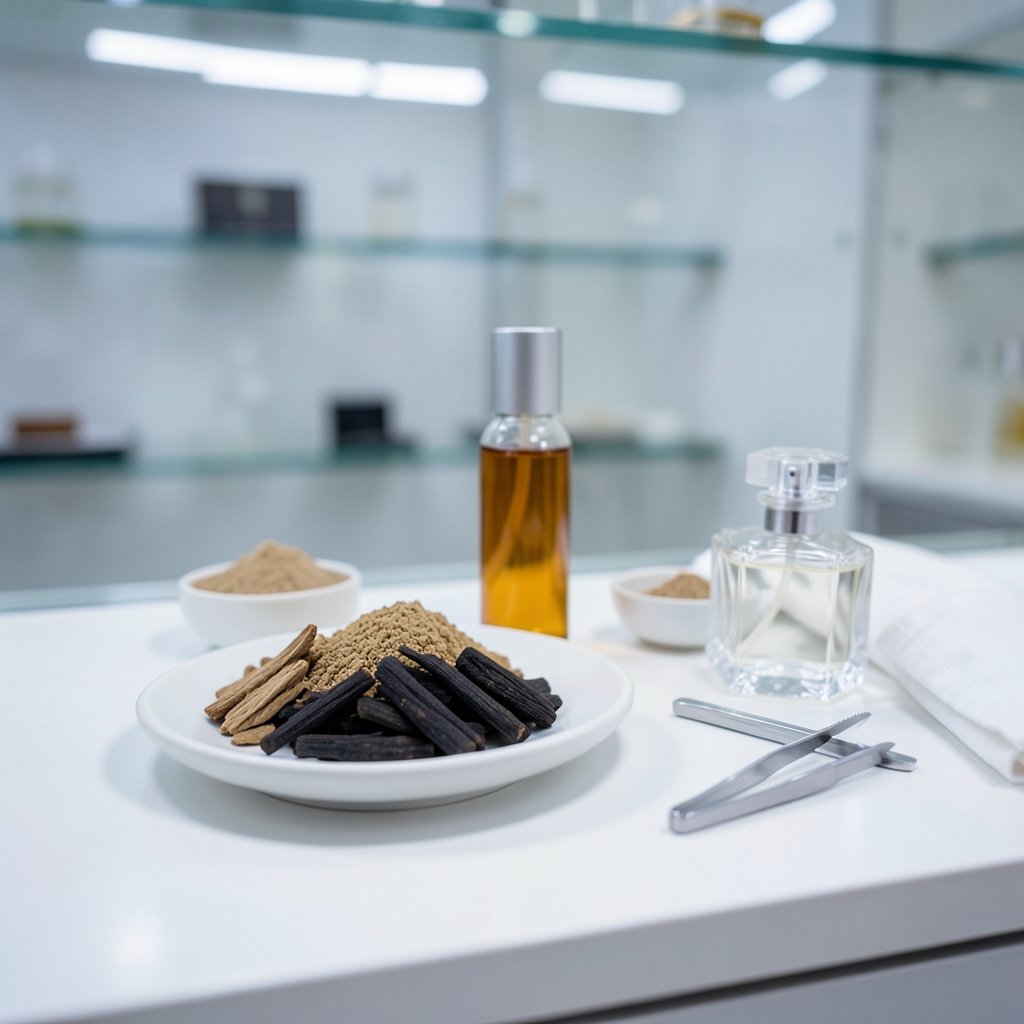
Oud is a dark, fragrant resin that forms inside certain trees in the genus Aquilaria and Gyrinops when they are wounded and infected, usually by fungi. It is not a wood itself but a defence response the tree produces, and it is sold as oil, chips, powder and finished perfume.
The same material travels under many names: agarwood, aloeswood, eaglewood, gaharu and chénxiāng. It shows up in perfumery, incense burning and traditional medicine, and it differs sharply from the synthetic “oud” accords used in cheaper fragrances, which mimic the smell without containing any resin.
Before buying or burning anything labelled oud, compare the resin grade, the country of origin, whether the material is wild or plantation-grown, the form (oil, chips, powder), the certification paperwork, and the price per gram.
A Scent That Starts With a Wound
What does oud actually smell like, and why do people pay more for it than almost any other raw material in perfumery? The answer begins with a sick tree.
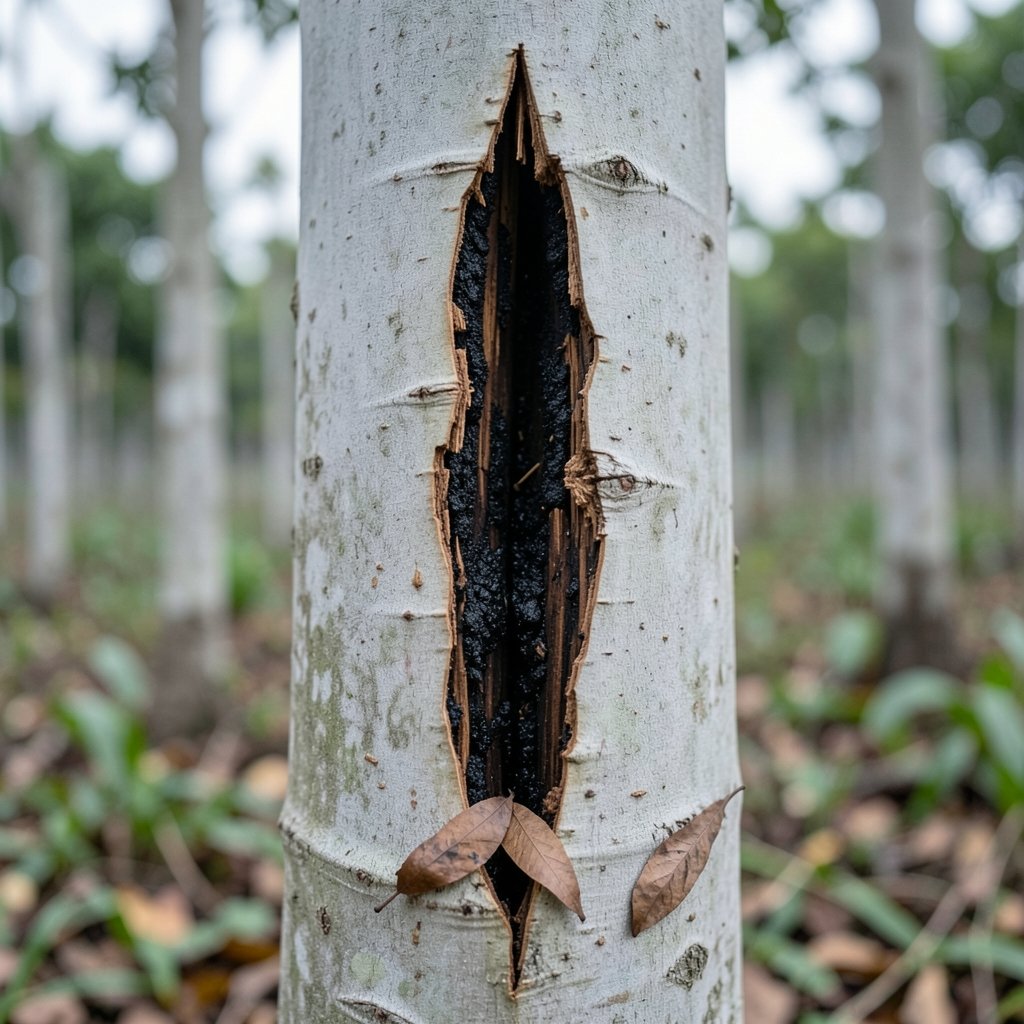
Oud is the dark, aromatic resin that forms inside certain tropical trees after they are damaged and infected. The tree does not make it on purpose for human noses. It makes it to survive. When the bark is wounded, fungi get in, and the tree floods the injury with a sticky, scented substance that seals the breach and fights the infection. Over years, that substance darkens, hardens and concentrates. What perfumers treasure is essentially a scar.
That origin story explains almost everything about oud: why it is scarce, why it is expensive, why quality varies so wildly, and why so much of what is sold as “oud” contains none of it at all.
Which Trees Produce Oud
Oud comes from trees in the genera Aquilaria and Gyrinops, which belong to the family Thymelaeaceae. These are evergreen trees native to tropical forests stretching from India and Bangladesh through Myanmar, Thailand, Laos, Vietnam, Cambodia, Malaysia and Indonesia.
Here is the part that surprises most people: a healthy Aquilaria tree contains almost no oud. You could cut down a mature tree in a pristine forest and find nothing worth selling. Only a minority of wild trees ever produce high-grade resin, and those that do have usually been wounded, often decades earlier.
The trigger is infection, typically by fungi such as Fusarium species, though the exact organisms and wound types that produce the best resin are still debated among researchers. The tree’s immune response does the rest.
The Many Names for One Material
Oud travels under a confusing pile of names, which is one reason shoppers get lost.
| Name | Where it is used | What it refers to |
|---|---|---|
| Oud | Arabic-speaking world | From the Arabic word ʿūd; now the common global term |
| Agarwood | English, trade and science | The standard English name for the resin and the wood |
| Aloeswood | Older English texts | Historical name, unrelated to aloe vera |
| Eaglewood | Southeast Asia, older trade | Regional trade name |
| Gaharu | Malay and Indonesian | The local market term |
| Chénxiāng | Chinese | Literally “sinking incense,” a nod to resin-heavy pieces |
That last name points to something practical. High-grade oud is dense enough to sink in water, while low-resin wood floats. Traders have used this sink-or-float test for centuries as a rough quality check, and it remains one of the simplest ways to sort material.
Why Oud Is So Expensive
Three forces push oud prices into the stratosphere.
The first is time. Resin develops over years to decades after infection. There is no way to rush a tree into producing a fine grade of oud on demand.
The second is randomness. Most wild trees never produce much resin at all, and the trees that do produce the best material are rare. Supply cannot simply be scaled up by planting more trees.
The third is pressure on wild populations. Overharvesting and habitat loss have hit these species hard. The IUCN Red List assesses Aquilaria malaccensis as Vulnerable, and all Aquilaria and Gyrinops species were listed in CITES Appendix II in 2004, meaning international trade requires permits.
Put those together and you get a material where a single kilogram of top-grade wood can cost more than a car, and where fraud is common. The CITES listing matters for buyers too: legal international trade in oud should come with paperwork, and a seller who cannot explain provenance is a red flag.
Wild Versus Plantation Oud
For decades, virtually all oud came from wild forests. Today, plantations inoculate trees with fungi to induce resin, partly to take pressure off wild populations. This has changed the market in ways buyers should understand.
| Factor | Wild oud | Plantation oud |
|---|---|---|
| Age of resin | Often decades | Usually a few years |
| Aroma complexity | Generally deeper and more layered | Often simpler, sometimes sharper |
| Consistency | Highly variable | More predictable batch to batch |
| Supply | Limited and shrinking | Growing |
| Price | Very high | Moderate to high |
| Legal paperwork | Essential | Still required for cross-border trade |
Neither category is automatically better. A well-managed plantation can produce pleasant, honest oud, and a badly processed wild batch can smell like burnt rubber. What matters is transparency: a seller who states clearly which one you are buying is worth more trust than one who trades on mystery.
How Oud Is Used
Oud appears in three main arenas.
Perfumery. Oud is a major note in Middle Eastern perfumery and has spread into Western niche and designer fragrances. The smell is usually described as woody, smoky, leathery, animalic and slightly sweet, though the profile shifts enormously with origin and grade. Oud oils are often aged, and some connoisseurs treat them like wine.
Incense. Burning small chips of agarwood on a low heat source is an old tradition across Asia and the Middle East. The wood smoulders rather than flames, releasing smoke in slow ribbons. This is one of the most accessible ways for a beginner to smell real oud.
Traditional medicine. Oud appears in traditional medicine traditions in Asia and the Middle East. It is worth being clear that traditional use is not the same as proven clinical benefit, and anyone considering oud for a health reason should treat it as a cultural practice rather than a treatment.
Real Oud Versus “Oud” on a Label
Walk into a perfume shop and you will find dozens of bottles promising oud. Many contain no agarwood at all. Perfume houses use synthetic oud accords and other woods, such as sandalwood, to create an oud-like impression, and that is not necessarily dishonest as long as the marketing does not imply otherwise.
The practical question is what you actually want. If you want the smell of oud as a style, a good synthetic accord can be excellent and costs a fraction of the real thing. If you want the material itself, you need to buy from a specialist who sells oil, chips or powder and can tell you where it came from.
A few habits separate careful buyers from disappointed ones:
- Ask for the species and country of origin. “Oud” alone tells you nothing.
- Ask whether it is wild or plantation material.
- For international purchases, ask about CITES documentation.
- Request a small sample before committing to a full bottle or a large batch of chips.
- Be suspicious of prices that seem too good. Genuine high-grade oud has never been cheap.
The most common mistake is buying a bargain “pure oud oil” from an unknown seller and judging the whole material by it. One bad bottle convinces people that oud smells harsh or medicinal, when the truth is they never smelled real oud. The second most common mistake is the opposite: assuming everything expensive is authentic. Price signals scarcity, not honesty.
What Oud Smells Like in Practice
Descriptions of oud can sound like wine tasting notes, so here is a plainer guide. Real oud oil tends to open sharp and woody, sometimes with a barnyard or leather edge that puts beginners off. Give it twenty minutes. The dry-down is usually where oud earns its reputation: warm, resinous, slightly sweet, and long-lasting on skin.
Chips burned as incense are gentler and more immediately appealing, which is why many people recommend starting there. A small quantity goes a long way, and the smoke lingers in a room for hours.
Origin matters as much as grade. Material from different countries carries different reputations among traders, and regional preferences shape how oud is graded and priced. There is no single international grading standard, so sensory judgment and origin remain the main tools.
Sustainability and the Future of Oud
The story of oud is a story of scarcity meeting demand. Wild populations of Aquilaria have been depleted across much of their range, and the CITES listing exists precisely because trade pressure became unsustainable.
Plantation cultivation is the most significant change in the industry. Inoculation lets growers induce resin in younger trees, which shortens the supply chain and reduces pressure on wild forests. It does not fully replace wild material in the eyes of connoisseurs, but it has made oud more available and more traceable.
For buyers, sustainability is more than an ethical footnote. Traceable, legally traded oud is the only kind you can reliably verify, and supporting plantation material reduces demand for wood of uncertain origin. If you care about the future of the material, ask the awkward questions.
Conclusion
Oud is not a wood, a brand or a single smell. It is a resin born from injury, produced by a handful of tropical trees in a slow fight against infection, and it has become one of the most coveted and most imitated materials in the world. Understanding what it is makes you a much harder person to fool. Know the species, know the origin, know whether you are buying resin or an impression of it, and start small. The first time you smell genuine oud, the price tags stop looking arbitrary. For more on fragrance materials and how to evaluate them, explore the guides at
Frequently Asked Questions
Is oud the same as agarwood?
Yes. Oud and agarwood refer to the same resinous material, with “oud” coming from Arabic and “agarwood” being the standard English trade and scientific term. Aloeswood, eaglewood, gaharu and chénxiāng are also names for it. The confusion arises because “oud” is also used loosely for perfumes that merely smell like the material.
Does real oud perfume contain actual agarwood?
Some do and many do not. Niche houses and specialist oud sellers may use genuine oud oil, while most mass-market fragrances labelled oud rely on synthetic accords and other woods. Neither approach is wrong, but the price difference is enormous, and labels rarely spell out which one you are getting.
Why is oud so expensive?
Three reasons combine: resin takes years to decades to form, only a minority of wild trees ever produce high-grade material, and wild populations are under pressure from overharvesting and habitat loss. All Aquilaria and Gyrinops species are listed in CITES Appendix II, which adds paperwork and cost to international trade.
Can I burn oud wood at home?
Yes, and it is the easiest way to experience real oud. Place a small chip on a low-heat burner or a piece of charcoal and let it smoulder rather than flame. Start with a tiny piece, keep a window cracked, and expect the smoke to linger for hours. Chips are also a cheaper entry point than oil.
Is oud safe to use on skin?
Oud oil is widely worn as perfume, usually diluted, but reactions vary from person to person. Patch-test a small amount on the inner arm and wait a day before applying more widely. Anyone with sensitive skin, allergies or a medical condition should check with a qualified health professional before regular use.
How can I tell real oud from a fake?
There is no single test, but provenance is the strongest signal. Ask for the species, country of origin, whether it is wild or plantation material, and CITES documentation for cross-border purchases. Request a sample first, and treat prices that seem far below market as a warning rather than a bargain.



