
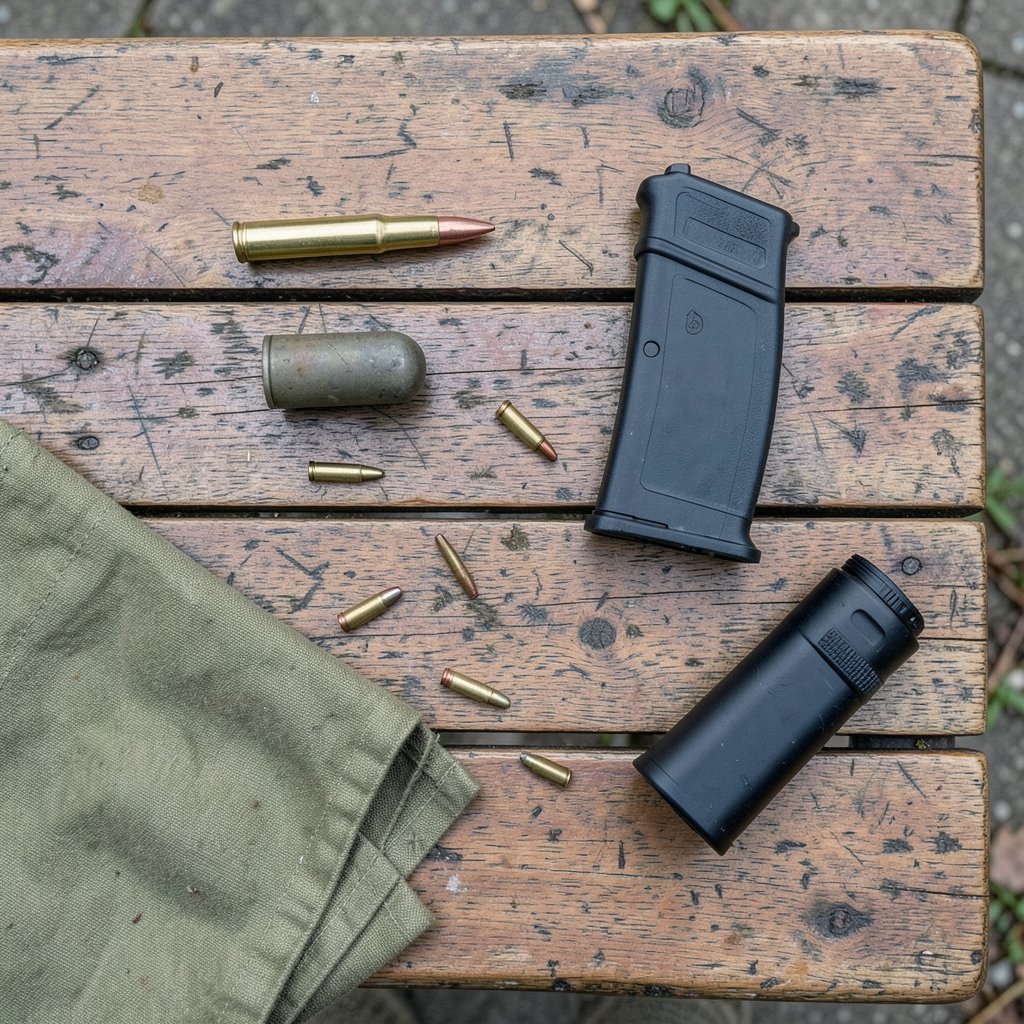
What if one rifle could fire a heavy, quiet round for close work and a fast, flat-shooting round for distance, using nothing but a magazine swap? That is the basic promise of 300 BLK, also written as .300 AAC Blackout. It is one of the most talked-about cartridges in the modern rifle world, and also one of the most misunderstood. Some shooters treat it as a do-everything wonder round. Others dismiss it as a niche caliber for suppressor owners. The truth sits somewhere in the middle, and it is worth unpacking carefully before anyone spends money on a new upper, a barrel, or a few hundred rounds of ammunition.
What Is 300 BLK?
300 BLK is a rifle cartridge developed by Advanced Armament Corp. together with Remington and introduced commercially around 2010 to 2011. It was standardized by SAAMI, the organization that publishes voluntary industry standards for ammunition and chambers in the United States. The name itself is a trademark of AAC, which is why the full designation is usually written as .300 AAC Blackout.
The design is clever in its simplicity. Take a .223 Remington case, which is the parent of the 5.56×45mm round that most AR-15s fire. Neck it up to accept .30 caliber bullets. Then push the shoulder back and shorten the neck so the finished cartridge still fits inside a standard AR-15 magazine. The result is a round that feeds from the same magazines, uses the same bolt face, and drops into the same rifle platform with a barrel change.
That lineage matters more than it first appears. It means a shooter does not need an entirely new rifle, a new lower receiver, or a new magazine collection. The .30 caliber bullet selection opens up a huge range of weights, from light supersonic loads to very heavy subsonic ones.
The Supersonic and Subsonic Split
Most cartridges are designed around one job. 300 BLK was designed around two, and that duality is the heart of its identity.
Supersonic loads typically use bullets in the 110 to 125 grain range. Pushed fast, they produce a flat trajectory at typical carbine distances. Their energy is broadly comparable to the 7.62×39mm round used in many AK-pattern rifles, which is a reasonable benchmark for a mid-power rifle cartridge.
Subsonic loads use much heavier bullets, often around 190 to 220 grains or more. These travel below the speed of sound, which means they avoid the sharp supersonic crack that gives away a shot. Energy drops substantially in this mode, often cited in the 500 foot-pound class depending on the load and barrel length. That is a meaningful drop, and it changes what the round is good for.
The trick is that both types feed from the same magazine and fire from the same barrel. Barrel twist is usually optimized for the heavy subsonic bullets, commonly 1:7 or 1:8, which still stabilizes the lighter supersonic loads well. This is why 300 BLK owners often describe the caliber as two cartridges in one.
| Feature | Supersonic 300 BLK | Subsonic 300 BLK |
|---|---|---|
| Typical bullet weight | 110–125 grains | 190–220+ grains |
| Sound signature | Sharp crack | Quiet, especially suppressed |
| Effective range | Moderate | Short |
| Energy | Comparable to 7.62×39mm | Much lower, roughly 500 ft-lb class |
| Best use | Hunting, general shooting | Suppressed close-range work |
Why Suppressors Made This Cartridge Famous
A major design goal behind 300 BLK was effective suppressed use. A suppressor tames the muzzle blast, but it cannot remove the sonic boom of a bullet traveling faster than sound. Subsonic ammunition solves that problem, and 300 BLK was built to run subsonic loads reliably in a semi-automatic rifle.
This is why the cartridge became closely associated with short-barreled rifles and suppressor setups. A compact rifle firing heavy subsonic bullets is a genuinely different tool from a standard carbine. It is quieter, shorter, and handier in tight spaces.
There is a catch that trips up plenty of first-time buyers. In the United States, suppressors are regulated under the National Firearms Act of 1934, which requires registration and a tax stamp. Short-barreled rifles fall under the same law. So the “quiet rifle” fantasy comes with paperwork, waiting periods, and a fee before anyone even buys the ammunition. That regulatory reality is part of the cartridge’s story, whether or not it is part of its marketing.
How 300 BLK Compares to Other Rounds
Context helps here. 300 BLK sits in a crowded field, and each round has a clear personality.
| Cartridge | Bullet diameter | Typical role | Notes |
|---|---|---|---|
| 5.56×45mm | .224 | General-purpose carbine | Flatter, faster, lighter bullets |
| 300 BLK | .308 | Dual-role suppressed and supersonic | Same bolt and magazines as 5.56 |
| 7.62×39mm | .311 | Mid-power rifle | Similar supersonic energy to 300 BLK |
| .300 Whisper | .308 | Wildcat predecessor | Similar concept, not SAAMI-standardized |
That last row matters. .300 Whisper is a similar wildcat cartridge developed by J.D. Jones. It shares the same basic idea, but it was never standardized by SAAMI the way 300 BLK was. Shooters sometimes use the names interchangeably, which causes confusion at gun counters and reloading benches. They are not identical, and treating them as such can lead to chamber and pressure mistakes.
If someone is weighing a caliber swap against other purchases, it helps to think in the same practical terms as any other gear decision. The same careful comparison applies whether someone is choosing a rifle setup or sorting through options like car leases under 300 month no money down that actually works for a daily driver. The lesson is the same: match the tool to the real job, not the marketing.
What Actually Works in Practice
First-hand experience from the range and the reloading bench points to a few practical truths that rarely make it into spec sheets.
Barrel length changes everything. Subsonic loads lose velocity in short barrels, and some factory subsonic ammunition that runs perfectly in a 16-inch barrel can dip dangerously close to the sound barrier or fail to cycle in a very short one. Buyers should match ammunition to barrel length, not the other way around.
Gas system tuning is not optional. Subsonic and supersonic loads produce very different pressure curves. A rifle that runs both without adjustment is possible, but it usually needs an adjustable gas block or a buffer weight chosen with care. Many cycling problems blamed on the cartridge are really tuning problems.
Cheap subsonic ammunition is a gamble. Bullet stability depends on twist rate and bullet length. A heavy bullet that keyholes on paper is not a bargain, it is a safety issue. Shooters should test any new load at close range on paper before trusting it.
Magazines matter less than people think, but only just. Standard 5.56 magazines usually work, though some brands feed the fatter .30 caliber bullets more smoothly than others. It is worth testing a few.
Common Mistakes People Make
The most common mistake is buying 300 BLK expecting it to replace a general-purpose rifle. It will not. Supersonic performance is respectable but not dramatic, and subsonic performance is deliberately limited. The cartridge shines in a specific role, and buyers who understand that role are happy with it.
The second mistake is confusing it with other .30 caliber cartridges. The naming is genuinely messy. 300 BLK is not .300 Winchester Magnum, not .308 Winchester, and not .300 Whisper. Each has different dimensions, pressures, and uses. Mixing them up at the ammunition shelf is an expensive error at best.
The third mistake is skipping the paperwork reality. Suppressor ownership and short-barreled rifles involve legal requirements that vary by country and, in the U.S., by state. Hunting rules also vary widely. Many states set minimum energy or caliber requirements for game, and subsonic 300 BLK loads may not qualify for larger animals. Checking local regulations before a hunt is not optional.
The fourth mistake is assuming all ammunition is created equal. Factory loads vary enormously in velocity, bullet construction, and reliability. A load that cycles in one rifle may not cycle in another. Testing before trusting is the only reliable rule.
Reloading and Ammunition Availability
300 BLK became one of the more widely produced AR-15 alternative calibers, with factory loads from multiple manufacturers. That availability is a real advantage over obscure wildcats. Brass can be formed from .223 Remington cases, which makes reloading economical for those who already load that cartridge.
Reloaders should treat 300 BLK with respect. The small case capacity and the wide range of bullet weights mean that a load safe with one bullet can be dangerous with another. Published load data from reputable sources is essential, and pressure signs should never be ignored. The cartridge rewards careful work with excellent versatility, but it punishes shortcuts.
For anyone comparing gear budgets, the calculus is familiar. Just as shoppers weigh best noise cancelling headphones under 300 against their actual listening habits, shooters should weigh 300 BLK against their actual shooting habits. Quiet performance has value, but only if the shooter genuinely needs it.
Who Should Consider 300 BLK
The cartridge makes the most sense for a few specific groups. Hunters working at close to moderate range with supersonic loads get a capable, hard-hitting option in a familiar platform. Suppressor owners who want a quiet, compact rifle get one of the best factory-supported options available. Shooters who already own an AR-15 and want a second upper for a different role get an easy path to variety.
It makes less sense for shooters who want one rifle to do everything, for long-range precision work, or for anyone in a jurisdiction where suppressors and short barrels are heavily restricted. Those buyers are usually better served by a different caliber.
The history of the platform itself is a reminder that good design often comes from unexpected places. The same is true of instruments and tools that quietly became standards in their fields, much like how the clarinet, a 300 year old woodwind, became a jazz orchestra star by adapting to new demands. Cartridges follow the same pattern: the ones that last are the ones that solve a real problem well.
Conclusion
300 BLK is not a magic round, and it is not a fad. It is a carefully engineered solution to a specific set of problems: how to fire heavy subsonic bullets quietly and light supersonic bullets effectively from the same compact rifle, using the same magazines and bolt as a standard AR-15. That design brief explains both its strengths and its limits. Supersonic loads deliver mid-power rifle performance comparable to 7.62×39mm. Subsonic loads trade energy for silence and shootability. The cartridge rewards shooters who understand the trade-off and punishes those who expect it to be something it is not. For the right owner, it is one of the most versatile additions to a rifle collection. For the wrong one, it is an expensive lesson in reading the fine print.
Frequently Asked Questions
What does 300 BLK stand for?
300 BLK stands for .300 AAC Blackout. The cartridge was developed by Advanced Armament Corp. with Remington and introduced around 2010 to 2011. The “BLK” is simply an abbreviation of Blackout, and the full name is a trademark of AAC.
Is 300 BLK the same as 5.56?
No. They share a parent case and fit the same AR-15 platform, magazines, and bolt face, but 300 BLK uses .30 caliber bullets while 5.56 uses .224 caliber bullets. A rifle can be converted between them with a barrel change, but the ammunition is not interchangeable.
Can you shoot supersonic and subsonic ammo from the same 300 BLK rifle?
Yes. That dual capability is the defining feature of the cartridge. Supersonic loads typically use 110 to 125 grain bullets, while subsonic loads use heavy bullets around 190 to 220 grains or more. Some rifles need gas system tuning to run both reliably.
Is 300 BLK good for hunting?
It can be, depending on the load, the game, and local regulations. Supersonic loads offer energy broadly comparable to 7.62×39mm and suit close to moderate range hunting. Subsonic loads carry much less energy, and many states set minimum energy or caliber rules, so hunters should check local requirements first.
Why is 300 BLK so popular with suppressors?
Because it was designed for suppressed use. Subsonic loads avoid the supersonic crack that a suppressor cannot eliminate, making the rifle genuinely quiet. Suppressors and short-barreled rifles are regulated under the National Firearms Act in the United States, which requires registration and a tax stamp.
Is 300 BLK the same as .300 Whisper?
No. They are similar in concept, but .300 Whisper is a wildcat cartridge developed by J.D. Jones and was never standardized by SAAMI. 300 BLK is the SAAMI-standardized version. The two should not be treated as identical, especially when reloading or checking chamber compatibility.



