

What actually changes in your build when you pick PBT instead of ABS, or POM instead of either? Most comparisons stop at sound and shine. That leaves out the part that bites you later: how each plastic behaves while you are still building, modding, and maintaining the board.
The material you choose shapes your workflow long before you press a single key. It decides how legends get printed, how stubbornly a spacebar warps, how easily a switch pulls free, and how often you have to clean grease off your home row. In 2027, with more small-batch keycap makers and more custom boards than ever, those small differences add up fast. Here is what each plastic actually asks of you, from the factory floor to your desk.
Why the Plastic Choice Is Really a Workflow Choice
Every keycap starts as pellets fed into a mould. The polymer’s structure decides how that mould behaves, how the legends get applied, and how the finished cap survives years of finger oil. Three families dominate: PBT (polybutylene terephthalate), ABS (acrylonitrile butadiene styrene), and POM (polyoxymethylene, also called acetal).
The key split is crystalline versus amorphous. PBT and POM are semi-crystalline, meaning their molecules pack into ordered regions as they cool. ABS is amorphous, so its molecules stay jumbled. That one structural fact explains most of the workflow differences below, from shrinkage to legend printing to how a cap feels under your fingertip.
PBT: The Durable Default and Its Moulding Quirks
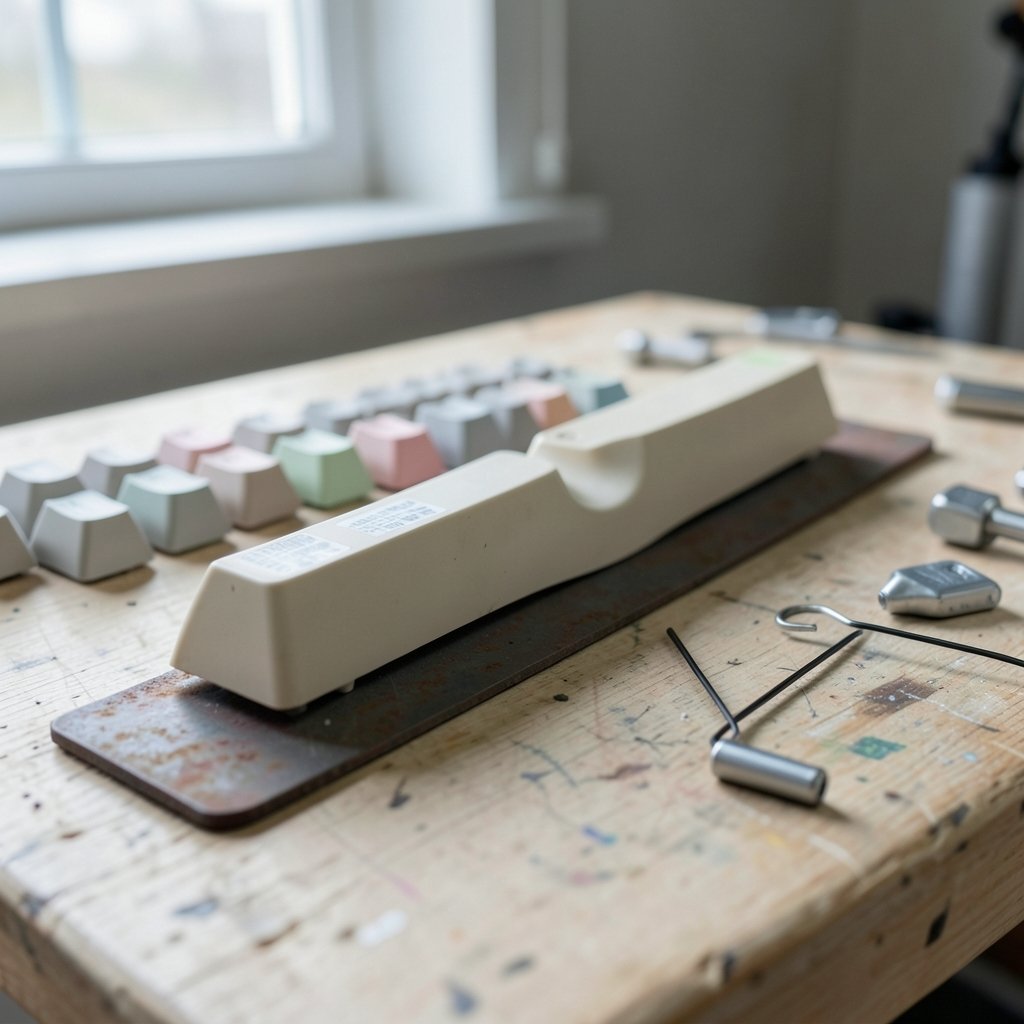
PBT has become the safe recommendation for most buyers, and for good reason. It resists the greasy shine that shows up on heavily used keys, and it holds dye-sublimated legends well because it tolerates higher heat during printing.
That durability has a cost on the production side. Semi-crystalline polymers shrink more during cooling, and they shrink less predictably than amorphous ones. For a mould designer, that means longer cooling cycles, careful gate placement, and extra attention to warpage on long keys like the spacebar. If you have ever opened a PBT set and found a spacebar with a slight banana curve, you have met this problem firsthand.
What This Means in Practice
- Expect occasional warp on long keys. Test-fit the spacebar and stabilizers before you commit. A warped bar can bind or rattle.
- Legends are usually dye-sublimated. The dye sinks into the plastic rather than sitting on top, so it does not wear off quickly.
- Sound leans higher and sharper. Community reports describe PBT as “clackier,” though this is subjective and not measured by any standard.
For a deeper look at how the two most common plastics compare on shine, feel, and sound, this breakdown of PBT vs ABS keycaps durability shine feel sound compared is a useful companion read. (ASTM Plastics Standards overview)
ABS: Easier to Mould, Faster to Shine
ABS is the veteran of the keycap world. It is amorphous, which makes it easier to mould at lower temperatures and more forgiving on tolerances. Double-shot legends, where a second colour is moulded into the cap, are traditionally an ABS strength. The plastic flows well, bonds cleanly, and takes sharp, crisp lettering.
The trade-off shows up months later. ABS is softer and more prone to developing a polished sheen where your fingers rest. On a daily-driver board, the WASD cluster and spacebar can go glossy within a year or two of heavy typing or gaming. That shine is cosmetic, not structural, but it changes how the board looks and feels.
Workflow Notes for ABS Builders
- Cleaning helps but does not reverse shine. A gentle wipe removes oil; the polished surface underneath stays.
- Double-shot legends are effectively permanent. They will outlast the surface finish.
- ABS is lighter and often cheaper, which matters for budget builds and for anyone experimenting with colourways.
If shine resistance is your top priority, ABS will test your patience. If crisp legends and easy availability matter more, it earns its place.
POM: The Stiff, Slippery Outlier
POM is the least common of the three for full keysets, and that rarity is part of its workflow story. It is semi-crystalline like PBT, but with very low friction and high stiffness. Those properties make it popular for switch components and for specialty caps, yet full POM sets are harder to source and often made in smaller batches.
Low friction sounds great until you think about legends. POM is slippery and chemically stubborn, which makes some printing methods harder to bond. Makers who use it tend to rely on processes suited to its surface. Its stiffness also means less give under the finger, which some typists love and others find harsh.
Where POM Fits a Build
- Specialty and accent caps. Its slick feel and stiffness suit single keys or themed sets.
- Switch-adjacent parts. POM’s low friction is a natural fit for moving components.
- Small-batch sourcing. Expect longer lead times and fewer colour options than PBT or ABS.
POM is not the everyday choice, but it is worth understanding. Treat it as a specialist material rather than a default.
Side-by-Side: How the Three Materials Compare
| Property | PBT | ABS | POM |
|---|---|---|---|
| Structure | Semi-crystalline | Amorphous | Semi-crystalline |
| Shine resistance | High | Low to moderate | High |
| Moulding difficulty | Higher (shrinkage, warpage) | Lower | Higher |
| Common legend method | Dye-sublimation | Double-shot, laser | Varies by maker |
| Typical feel | Crisp, textured | Smooth, slightly softer | Stiff, slick |
| Availability | Wide | Very wide | Narrow |
| Best for | Daily drivers, long-term wear | Budget builds, crisp legends | Specialty and accent caps |
The table has one major caveat: material grade matters as much as material family. Glass-filled PBT, different ABS blends, and varied POM formulations can shift properties enough to blur the lines. A premium ABS set can outlast a cheap PBT one. Judge the specific product rather than relying only on the label.
The Moulding and Shrinkage Problem Nobody Warns You About
Here is the mistake that trips up first-time builders: assuming a keycap set will fit perfectly out of the box. Semi-crystalline plastics like PBT and POM shrink during cooling, and that shrinkage is not always uniform across a part. The result is caps that sit slightly tight or loose, stems that grip too hard or too softly, and long keys that bow.
Amorphous ABS shrinks less and more predictably, so fit tends to be more consistent. That is a quiet advantage for anyone assembling a board for the first time.
Practical Steps to Handle It
- Dry-fit before final assembly. Seat a few caps on their switches and check stem grip.
- Test the spacebar and stabilizers early. Long keys are where warpage shows up.
- Keep spare stems or a puller handy. Tight PBT caps can be stubborn to remove.
- Do not force a warped key. If it binds, contact the seller rather than bending it.
If you are already tuning the sound of your board, the way you handle the case and plate interacts with keycap material. This guide to the keyboard foam mod sound differences actually changes explains how damping choices stack with cap material.
Legends, Printing, and Long-Term Maintenance
Legend method follows material closely. Dye-sublimation suits PBT because the plastic handles the heat, and the dye bonds into the surface for legends that resist fading. ABS more often gets double-shot or laser-etched treatment, and double-shot legends are effectively permanent because they are moulded, not printed.
Maintenance workflows differ too:
- PBT needs occasional cleaning to lift finger oil; shine develops slowly.
- ABS benefits from regular gentle wiping, though shine still creeps in on hot spots.
- POM is slick and easy to wipe, but its low-friction surface can feel different under the finger over time.
A soft cloth and mild soap handle all three. Avoid harsh solvents, which can dull or damage any plastic surface.
Matching Material to Your Actual Workflow
The right pick depends on how you use the board, not on which plastic wins an abstract contest.
- Heavy daily typing or gaming: PBT is the safer long-term bet for shine resistance and legend durability.
- Budget builds and colour experiments: ABS keeps costs down and offers the widest colourways.
- Specialty accents and stiff-feel fans: POM earns its niche, provided you can find the set.
- First-time builders: ABS or well-reviewed PBT sets with consistent fit reduce assembly headaches.
If your workflow leans on software as much as hardware, note that tooling choices follow the same logic of matching the tool to the job. A practical use claude writing workflow that actually works shows how picking the right tool early saves rework later, much like choosing the right plastic before you buy.
What Changes in 2027
Forward-looking claims deserve caution. There is no verified 2027-specific standard or product lineup to cite, so treat predictions as informed expectations rather than facts. Still, a few trends seem reasonable to watch:
- More small-batch makers experimenting with POM and blended plastics, which could widen availability.
- Better moulding tolerances as more manufacturers invest in quality control for long keys.
- Clearer material labelling, helping buyers judge grade rather than just family.
- Continued dominance of PBT for premium sets, with ABS holding the budget and colourway market.
The underlying physics will not change. Crystalline plastics will still shrink more than amorphous ones, and ABS will still shine sooner under heavy use.
Common Mistakes to Avoid
New builders repeat the same errors, and most are avoidable with a little foresight.
- Buying on material name alone. Grade and brand matter as much as the plastic family.
- Skipping the dry-fit. A five-minute test saves an hour of frustration.
- Ignoring the spacebar. It is the key most likely to arrive warped.
- Over-cleaning ABS. Aggressive scrubbing accelerates the shine you are trying to slow.
- Assuming sound claims are measured. Descriptions like “thocky” and “clacky” are community shorthand, not standards.
Keep expectations realistic and test before you commit, and the material choice becomes a simple, low-stress decision.
Conclusion
PBT, ABS, and POM are not interchangeable labels on a spec sheet. Each one asks something different of the people who mould it, print it, and live with it. PBT rewards patience with long-term durability and stubborn legends. ABS trades shine resistance for easy moulding and crisp double-shot lettering. POM stays a specialist, prized for stiffness and low friction but limited in supply. The smartest workflow is the one that matches the plastic to how you actually use the board, then verifies fit before final assembly. Pick with your habits in mind, test the long keys, and let the material do the job it was chosen for.
FAQ
Is PBT better than ABS for keycaps?
Neither wins outright. PBT resists shine and holds dye-sublimated legends well, which suits long-term daily use. ABS is easier to mould, often cheaper, and supports crisp double-shot legends. The better choice depends on whether you value shine resistance or budget and colour variety more.
Why do ABS keycaps get shiny?
ABS is softer and more prone to polishing where fingers rest. Over months of heavy use, the surface smooths into a sheen on hot spots like the spacebar and WASD cluster. Cleaning removes oil but does not reverse the polished surface underneath.
Are POM keycaps worth it?
For most people, POM is a specialist pick rather than a default. Its low friction and stiffness suit accent caps and switch-adjacent parts, but full sets are harder to find and offer fewer colour options. Choose it for feel and specialty use, not as a general everyday set.
Why do PBT spacebars sometimes arrive warped?
Semi-crystalline plastics like PBT shrink during cooling, and that shrinkage is not always uniform across long parts. The result can be a slight curve on spacebars and other long keys. Dry-fitting early and testing stabilizers helps you catch it before final assembly.
Do keycap materials change typing sound?
They influence it, but the effect is subjective. Community reports describe PBT as sharper and ABS as deeper, yet no standard measures these claims. Plate material, foam, and switch type often matter as much as the keycap plastic.
Can I mix PBT, ABS, and POM keycaps on one board?
Yes, and many builders do it for accents. Keep in mind that mixing materials can create small differences in height, feel, and sound across the board. Test the mix on a few keys first to make sure the result feels consistent under your fingers.



