

What if the vacuum you buy today is the one you actually keep using two years from now? That is the real question behind the search for the best cordless stick vacuum. Plenty of models look great in a store aisle and feel like a chore by week three. The difference rarely comes down to the biggest number on the box. It comes down to how the machine fits your floors, your furniture, your battery habits, and the kind of mess you actually make. (Robot vacuum cleaning solution alternatives that actually)
This guide walks through what matters, what gets oversold, and how to compare models without falling for marketing tricks. It also covers the mistakes people make most often, because those are usually the reason a stick vacuum ends up in a closet instead of a cleaning caddy.
Start With Your Floors, Not the Spec Sheet
The single biggest mistake buyers make is shopping by suction number. Manufacturers report airflow in different units and under different conditions, so air watts, pascals, and kilopascals are not directly comparable across brands. There is no single harmonized standard for cordless stick vacuums, which means a headline number tells you very little about real-world performance.
What matters more is the match between the machine and your floor type. A vacuum tuned for deep carpet needs strong airflow and a motorized brush roll that agitates fibers. A vacuum tuned for hard floors needs good edge pickup and a soft roller that does not scatter debris. If you have a mix of both, look for a model that ships with two floor heads or a head that switches modes automatically.
For homes with mostly carpet, brush roll design and how the head handles embedded grit matter as much as surface crumbs. A dedicated upright or a canister often outperforms a stick on thick pile, so compare a stick with a traditional carpet machine before committing. If carpet is your priority, this breakdown of the best vacuum for carpet is a useful starting point for understanding what lifts dirt from pile. (Robot vacuum cliff sensors fail black carpet works)
Hard floors tell a different story. On tile and hardwood, fine dust and hair are the enemy, and a soft roller head with a wide mouth tends to do better than a stiff bristle brush that flicks debris backward. The best stick vacuum for a hard-floor home is usually light, maneuverable, and easy to steer around table legs.
Runtime Is a Range, Not a Number
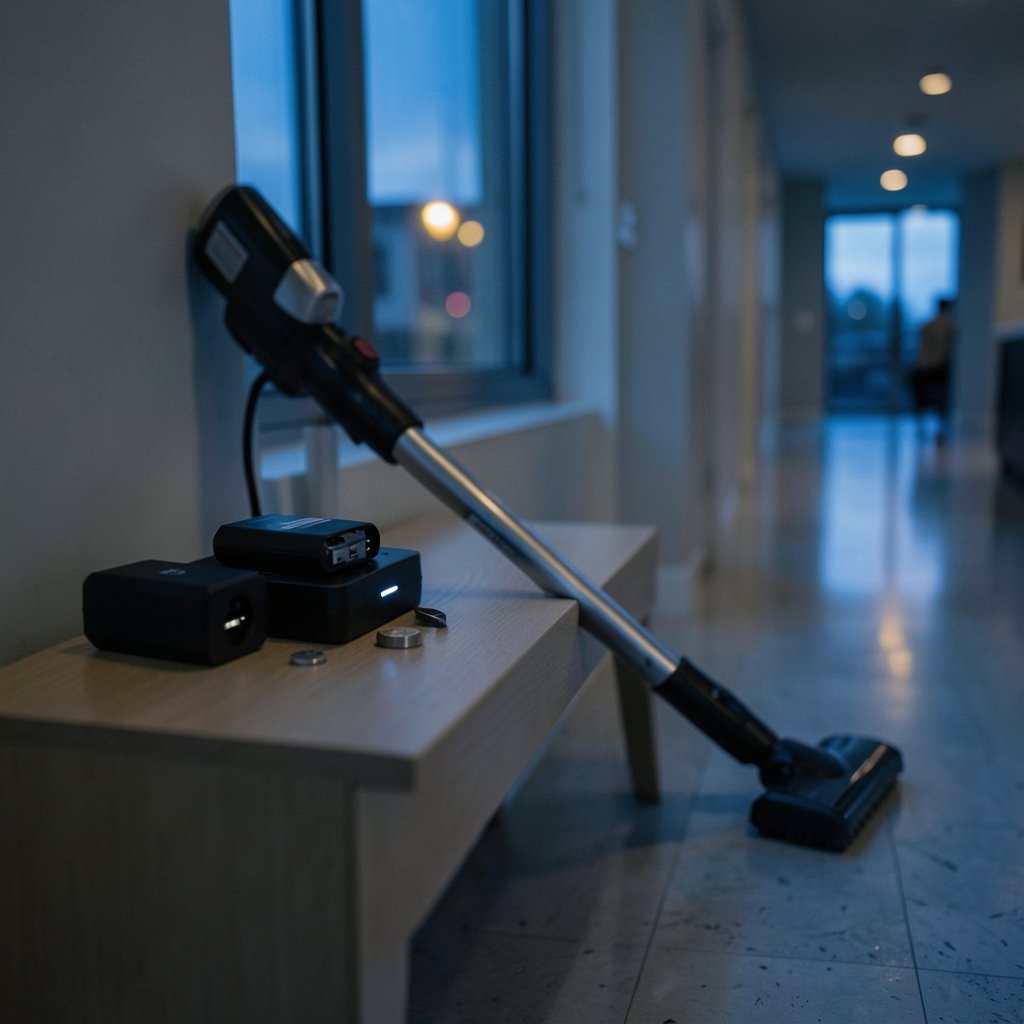
Advertised runtime is almost always measured in the lowest power mode with a non-motorized tool attached. Switch to high power, add a motorized brush roll, and runtime can drop by roughly half or more. That gap between the box claim and reality is one of the most common sources of buyer disappointment.
A practical approach is to treat the advertised maximum as a ceiling and plan for roughly half of it during normal use. If a model claims 60 minutes, expect something closer to 25 to 35 minutes of real cleaning with a powered head on mixed floors. For a small apartment, that is plenty. For a three-bedroom house with pets, it may mean a mid-clean recharge.
Two features change the math considerably:
- A removable battery lets you swap in a charged pack and keep going, or replace the cell years later when capacity fades.
- A trigger or boost mode gives you short bursts of extra power for spot messes without draining the pack on every pass.
Most cordless stick vacuums use lithium-ion cells. Some brands make batteries user-replaceable, while others seal them inside the housing. Under EU rules on batteries and waste, including the Batteries Regulation (EU) 2023/1542 that entered into force on 17 August 2023 with phased application, design and recycling requirements are shifting. For a buyer, the takeaway is simple: a replaceable battery extends the life of the whole machine. A sealed one turns a healthy vacuum into e-waste the moment the cell degrades.
Weight, Balance, and the Overhead Problem
Stick vacuums typically weigh between 1.5 and 3.5 kg, but the number on the spec sheet hides a bigger issue: where the weight sits. Models with the motor and battery mounted at the top feel heavier in the hand, especially when you lift the wand to clean cobwebs, curtain rails, or ceiling corners. Models with the mass lower down feel more stable on the floor but can be awkward on stairs.
The practical test is simple. Hold the vacuum at arm’s length with the wand extended, the way you would to reach a high shelf. If your wrist starts to complain within a few seconds, daily use will be a grind. Balance matters more than total weight for most people, and it is the reason two vacuums with identical spec sheets can feel completely different in a hallway.
For anyone with limited grip strength or shoulder issues, a lighter machine with a shorter wand and a low-mounted motor is usually the smarter buy than a heavier flagship with more power.
Filtration Claims Deserve Skepticism
“HEPA” on a vacuum box is usually a manufacturer claim, not a certified standard. The recognized benchmark for high-efficiency filters is EN 1822, and a vacuum that genuinely meets it will usually say so clearly and back it up with third-party verification. Many machines use multi-stage filtration that works well without ever earning the HEPA label, so the absence of the word is not automatically a red flag. The presence of the word, however, is not proof of anything either.
If allergies or fine dust are a concern, look for sealed systems, washable pre-motor filters, and a post-motor filter that is easy to access and replace. A vacuum that leaks dust back into the room defeats the purpose, no matter how strong the suction.
Dust Bin Size and the Emptying Habit
Cordless stick vacuums have small bins, often between 0.3 and 0.7 liters. That is a deliberate trade-off for portability, and it means frequent emptying is normal rather than a defect. The question is how pleasant the emptying process is.
Look for a bin with a wide opening and a release mechanism that dumps contents cleanly into the trash without requiring you to reach inside. Bins with narrow throats and internal cyclones tend to clog with hair and pet fur, forcing you to pull the mess out by hand. That small design detail shapes whether you actually use the vacuum or avoid it.
If you share a home with a long-haired human or a shedding dog, hair wrap around the brush roll is the real enemy. Some models include combs or anti-tangle fins that strip hair as the roller spins. Others require a scissors session every couple of weeks. This guide to robot vacuum long human hair actually works covers the tangle problem in more depth, and the same principles apply to stick vacuums with powered heads.
Navigation and Sensors: What Carries Over From Robots
Stick vacuums do not navigate on their own, but the sensor technology conversation is still relevant because the same components show up in both product categories. Lidar and camera-based systems each have strengths and weaknesses, and understanding them helps you judge claims about “smart” features on premium sticks. This comparison of robot vacuum lidar vs camera navigation key differences pick explains the trade-offs clearly.
More practically, stick vacuums rely on simpler sensors: a brush roll stall detector, a bin-full indicator, and sometimes a floor-type sensor that adjusts power automatically. Those small features matter more day to day than any app connection.
Common Mistakes That Undermine a Good Vacuum
Even a well-chosen stick vacuum underperforms when owners repeat the same handful of errors. Here are the ones that show up most often.
Skipping filter maintenance. Washable filters need rinsing every few weeks and full drying before reinstallation. A damp filter breeds odor and kills airflow. A clogged one makes a strong vacuum feel weak.
Overfilling the bin. Running the bin past the fill line forces debris back into the cyclone and reduces suction. Empty after every session or two, not once a month.
Ignoring the brush roll. Hair, thread, and carpet fibers wrap around the roller and drag on the motor. A quick check every couple of weeks prevents most performance complaints.
Charging wrong. Leaving a lithium-ion pack on the charger indefinitely in a hot garage shortens its life. Store and charge at room temperature.
Expecting a stick to replace a full-size vacuum. A stick is a quick-response tool for daily crumbs and hard floors. Deep carpet extraction still belongs to a machine built for it.
Where the Stick Vacuum Fits in a Cleaning Routine
The best cordless stick vacuum is rarely the only vacuum in a well-equipped home. It is the one you grab for the cereal spill, the entryway grit, and the kitchen floor before guests arrive. That role rewards different qualities than a weekly deep clean does: light weight, fast deployment, a bin you can empty in seconds, and a battery that holds enough charge for ten minutes of focused work.
That is why the “best” model changes with the household. A studio apartment dweller with hard floors and a cat needs something very different from a suburban family with stairs, carpet, and a golden retriever. Matching the tool to the job beats chasing the top of any ranking.
For homes that want to combine vacuuming and mopping in one pass, a combo unit can replace two appliances. This look at the best robot vacuum mop combos actually cleans floor covers what separates a genuinely useful combo from a gimmick, and the same logic applies when comparing stick vacuums with mopping attachments. A stick with a mop pad is handy for sticky kitchen spots, but it will not scrub grout.
If you are weighing a stick against a traditional canister or upright, the best vacuum mop combo guide is a good reference for how wet-and-dry cleaning fits into a routine. And if you already own a robot and just want a lightweight companion for stairs and upholstery, the calculation is easier: prioritize battery replaceability and a low-mounted motor over raw power.
Battery Care and Longevity
A cordless vacuum lives and dies by its battery. Lithium-ion packs degrade fastest when they are kept at full charge in high heat or run to zero repeatedly. A few habits stretch the useful life of a pack by years.
Store the vacuum at room temperature rather than in a hot garage or a freezing shed. Recharge after use rather than leaving it plugged in for days. If the model has a removable pack, buy a spare and rotate them so neither sits at 100 percent indefinitely.
When a battery finally fades, check whether a replacement is sold separately before you assume the whole vacuum is dead. Many “broken” stick vacuums are simply working with a worn cell. This guide to robot vacuum wheel stuck error it happens fix it fast covers a related troubleshooting mindset: most failures are mechanical or power-related, and a systematic check saves an unnecessary purchase.
Matching the Vacuum to the Home
Here is a quick reference for how priorities shift by household type.
| Household situation | Priority feature | What to deprioritize |
|---|---|---|
| Small apartment, hard floors | Light weight, soft roller head | Maximum suction, large bin |
| Carpeted bedrooms, pets | Motorized brush roll, anti-tangle fins | Ultra-slim wand design |
| Stairs and multi-level home | Low-mounted motor, removable battery | Large dust bin |
| Allergy-sensitive household | Sealed filtration, washable filters | App connectivity |
| Mixed floors, daily quick cleans | Two floor heads, fast bin release | Long maximum runtime claims |
The pattern is consistent: the features that matter are the ones you touch every day, not the ones printed in bold on the box.
Conclusion
Finding the best cordless stick vacuum comes down to honest questions rather than spec-sheet arithmetic. What are your floors made of? How much weight can you comfortably hold at arm’s length? Will you replace a battery in three years, or replace the whole machine? Does the bin empty cleanly, or does it fight you every time?
Answer those, and the shortlist narrows fast. Prioritize a replaceable battery, a brush roll suited to your flooring, a bin you can dump without touching the mess, and a weight and balance you can live with. Treat suction figures and runtime claims as marketing until independent testing backs them up. Do that, and the vacuum you buy this year will still be the one you reach for long after the novelty wears off.
Frequently Asked Questions
Is a cordless stick vacuum strong enough to replace a full-size vacuum?
For hard floors, quick cleanups, and low-pile carpet, yes. For deep cleaning thick carpet, a full-size machine with stronger airflow and a larger bin still does a better job. Many households keep both: the stick for daily messes, the full-size for weekly deep cleans.
How long does a cordless stick vacuum battery actually last per charge?
Advertised maximum runtime is measured in the lowest power mode with a non-motorized tool. With a powered brush roll on high, expect roughly half or less of the claimed figure. Plan around realistic runtime, not the box number, and consider a model with a removable battery for longer sessions.
Are HEPA filters on stick vacuums worth paying extra for?
Only if the claim is verifiable. “HEPA” on a vacuum is usually self-declared rather than certified to a recognized standard like EN 1822. A sealed multi-stage filtration system with washable filters often performs well even without the label, so look for third-party verification rather than the word alone.
Should I buy a stick vacuum with a removable battery?
It is one of the smartest features to prioritize. Removable lithium-ion packs let you swap in a charged battery mid-clean and replace the cell years later when capacity fades. Sealed batteries turn an otherwise healthy vacuum into waste once they degrade.
How often should I clean the filters and brush roll?
Rinse washable filters every few weeks and let them dry completely before reinstalling. Check the brush roll every couple of weeks for hair and thread, especially in homes with pets or long hair. Regular maintenance preserves suction far more than upgrading to a more powerful model.
Do stick vacuums work well on pet hair?
They can, provided the brush roll is designed to resist tangling. Look for anti-tangle fins or combs that strip hair as the roller spins, and avoid bins with narrow throats that clog with fur. Empty the bin after every session in heavy-shedding homes.



