
What if the machine you choose lasts fifteen years and quietly saves you hundreds in water and electricity, while the one next to it on the showroom floor costs the same and drains your wallet every single month? That gap is real, and it almost never shows up on the price tag. Picking the best laundry machine is less about chasing a brand name and more about understanding how these machines actually use energy, water, and time. This guide walks through what matters, what the labels really mean, and where shoppers most often go wrong.
Start With the Two Things That Actually Cost You Money
Most people walk into a store and look at price, color, and drum size. That is understandable, but it skips the two numbers that decide your long-term cost: how much energy the machine uses and how much water it drinks. Both are governed by rules that vary by region, and both are printed on the label if you know where to look.
In the United States, minimum efficiency requirements for clothes washers are set at the federal level, with the current standards having taken effect back in 2018. Energy use in a washer is dominated by one thing: heating the water. That single fact reshapes the whole buying decision. A machine that washes well in cold water will cost far less to run than a machine that only performs with hot cycles, no matter what the sticker says.
In Europe, the picture changed on 1 March 2021. The old A+++ scale was scrapped and labels returned to a simple A to G range, measured more strictly than before. A machine that boasted A+++ under the old system often maps to a lower letter under the new one. That is not a downgrade in the machine; it is a stricter ruler. Shoppers comparing an old listing to a new one need to keep that in mind, or they will draw the wrong conclusion.
The European rules go further than labels. Regulation (EU) 2019/2023, which also applied from 1 March 2021, sets minimum energy efficiency, washing performance, and durability requirements, including spare-parts availability, for household washing machines sold in the EU. In plain terms: a machine sold there has to clear a floor, and parts have to be obtainable for a set period. That durability angle matters more than most buyers realize.
Front-Loader or Top-Loader? The Honest Answer
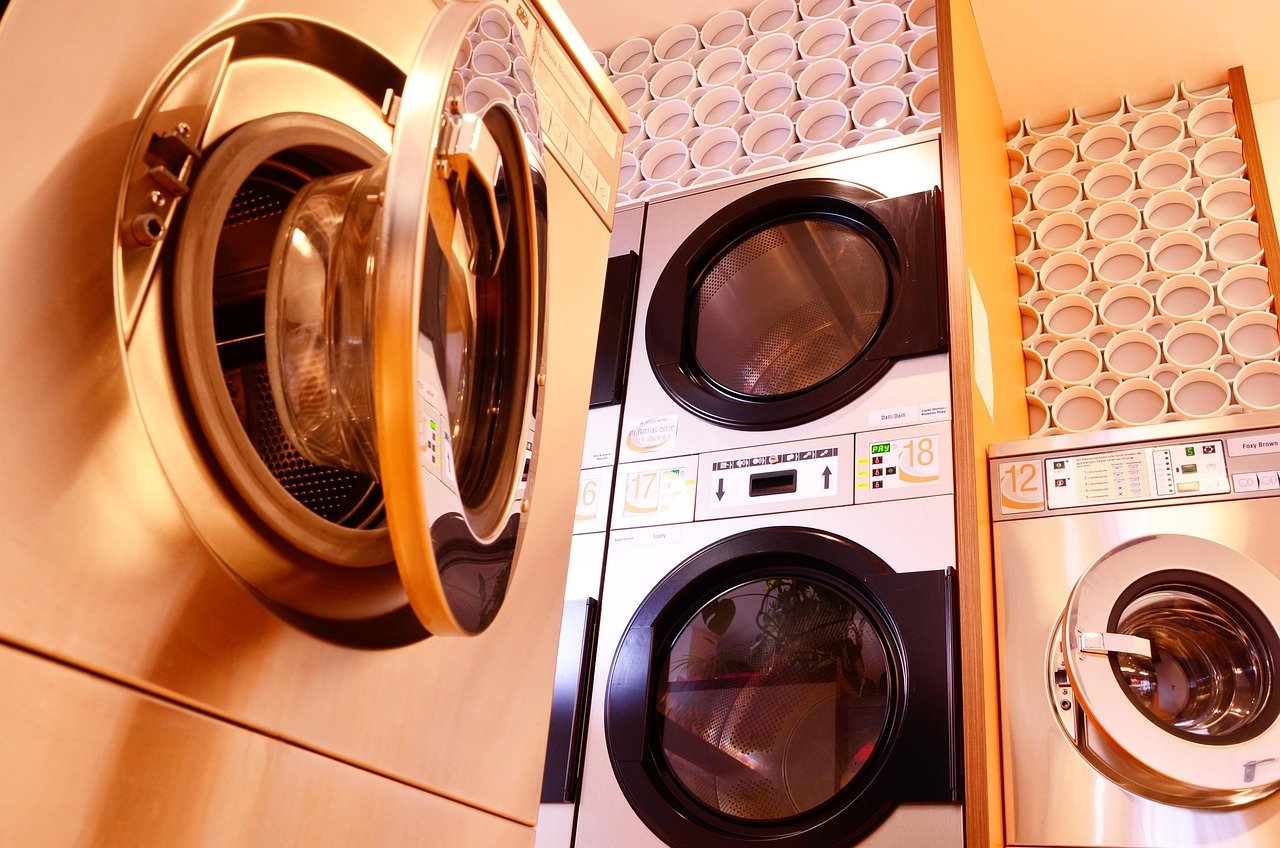
Front-loading machines generally use less water and less energy than top-loaders. This is a long-standing pattern confirmed across consumer-organization and government testing, though high-efficiency top-loaders have narrowed the gap considerably. Treat it as a general trend, not a promise about any specific model.
| Feature | Front-Loader | Top-Loader |
|---|---|---|
| Water use | Generally lower | Generally higher, though HE models close the gap |
| Energy use | Generally lower | Higher, especially with hot washes |
| Cycle time | Often longer | Often shorter |
| Loading comfort | Bend and reach | Drop-in from above |
| Typical capacity | 4–5+ cu ft (US) | Similar range in the US |
The trade-off is real. Front-loaders tend to run longer cycles and require more bending. Top-loaders are easier on the back and often faster. If a short cycle time is non-negotiable, a high-efficiency top-loader can make sense. If running costs top your list, a front-loader usually wins.
The Capacity Trap: Cubic Feet Versus Kilograms
Here is a mistake that catches cross-border shoppers constantly. American machines are sold by drum volume in cubic feet, commonly around 4 to 5 or more for front-loaders. European machines are sold by kilograms of cotton load, commonly 7 to 10 kg. These are not directly comparable. A “10 kg” European machine and a “4.5 cu ft” American machine are not the same thing described two ways, and converting between them with a quick mental formula will mislead you.
What actually works in practice: match capacity to your real weekly load, not to the biggest number on the shelf. A household of two rarely fills a huge drum, and oversized machines waste water and energy on partial loads. A family of five with sports kit and towels will regret a small drum far more than a large one. The right size is the one you fill most weeks, not the one you fill on laundry day after a holiday.
Read the Efficiency Metrics Properly
In the U.S., efficiency is rated using two metrics: Modified Energy Factor (MEF), measured in cubic feet per kilowatt-hour per cycle, and Water Factor (WF), measured in gallons per cubic foot per cycle. Higher MEF is better. Lower WF is better. It is easy to mix those two directions up, and plenty of shoppers do.
The qualification criteria for the leading efficiency certification were most recently tightened with a specification carrying a 2025 effective date. If you are comparing models, check the specification version rather than assuming every machine on the shelf meets the newest bar. Older stock can linger.
For anyone who wants to understand how machines are increasingly judged on automated sensing and load detection, the same pattern of “the machine decides for you” shows up in other appliance categories, and it is worth reading about how machines read and interpret input before you trust an auto-sensing cycle with your delicates.
Where Independent Testing Fits In
The two most established independent testers are Consumer Reports in the U.S. and Which? in the UK. Both run lab tests and publish rankings, and both are subscription-based. Both also update continuously, which means “best” changes with every test cycle. No single list stays accurate for long.
Reliability data is the weak spot in this whole category. There is no government reliability database for washing machines. The best public signals are member surveys from consumer organizations and repair-industry data. Brand-level reliability claims in marketing deserve real skepticism, because a company that makes excellent machines and a company that markets aggressively can sound identical in a brochure.
A practical habit that works: pick two or three models that fit your budget and space, then check whether each appears in a recent independent test. If a model is not tested, you are buying on faith. That is fine if the price is low, but it is a poor bet at a premium.
Running Costs: The Habits That Beat the Machine
The machine matters, but habits matter more. Cold-water washing is the single biggest lever on running cost, because heating water dominates a washer’s energy use. Modern detergents are formulated for cold cycles, so the old assumption that hot water is required for a clean wash no longer holds for everyday loads.
A few habits that genuinely pay off:
- Wash in cold water for all but heavily soiled or sanitizing loads.
- Run full loads rather than half loads whenever possible.
- Use the shortest cycle that gets the job done for lightly soiled clothes.
- Clean the filter and check hoses regularly to avoid expensive failures.
- Leave the door ajar between cycles on a front-loader to prevent mold and odor.
That last point is the mistake people make most often with front-loaders. A closed door traps moisture, and the resulting smell gets blamed on the machine when it is really a maintenance habit. Wiping the door seal and leaving it open costs nothing and prevents a problem that is genuinely hard to reverse once it sets in.
For readers curious about how sensor-driven appliances make decisions on their own, the logic behind physical AI in machines that act is a useful parallel, because laundry machines increasingly sense load weight and soil level and adjust themselves.
Drying: The Half of the Job People Forget
A washer is only half a laundry setup, and the dryer often undoes the savings. Heat-pump condensing dryers use substantially less energy than resistance dryers, but they are less common and pricier in the U.S. and more established in Europe and Asia. If you are shopping in a market where heat-pump dryers are widely sold, they are the most efficient option there and worth the higher price for heavy users.
If you are not ready for that step, the practical move is to air-dry what you can and reserve the dryer for things that need it. Towels and bedding dry well on a line or rack in many climates. It sounds old-fashioned, and it works.
Budget-conscious buyers often compare appliance running costs the way they compare cloud bills, and there is a similar lesson in how Azure virtual machine costs hit small projects: the headline price is rarely the real cost, and usage patterns decide the bill. Laundry works the same way.
Matching the Machine to Your Home
Space, plumbing, and noise decide more purchases than most reviews admit. A machine that does not fit the alcove is not a bargain at any price. Measure the opening, the doorway it has to pass through, and the clearance for hoses before you fall in love with a model.
Noise matters more than shoppers expect. If the machine sits near a bedroom or a shared wall, check decibel ratings where published, and read owner comments about spin-cycle noise specifically. Spin is the loud part.
If you are assembling a whole kitchen or utility space and comparing appliance categories at once, the same discipline applies to coffee gear: reading about the best espresso machine for home shows how much of a purchase decision comes down to matching the machine to your actual daily routine rather than the spec sheet.
Common Mistakes That Cost Real Money
The pattern of buyer errors is remarkably consistent. People buy too large, chase a brand name over a tested model, ignore the label version, and skip the maintenance that keeps a machine alive. Others assume a higher price guarantees reliability, which the thin reliability data does not support.
A quieter mistake: buying a machine with cycles you will never use. Twenty programs sound generous until you realize you will run two of them for a decade. Simplicity often serves better than a crowded control panel.
And one more, specific to anyone shopping across markets: do not compare a U.S. cubic-foot rating to a European kilogram rating and assume one machine holds more. They measure different things, and the comparison will lead you astray every time.
Conclusion
The best laundry machine is not the one with the longest feature list or the loudest marketing. It is the one that fits your space, matches your real weekly load, washes well in cold water, and comes with efficiency numbers you have actually read and understood. Front-loaders usually win on running costs, top-loaders often win on convenience, and heat-pump drying is the most efficient option where it is available. Check independent tests for the specific model, treat brand reliability claims with caution, and remember that habits like cold washing and leaving the door open will save more over a decade than any single feature. Buy for the fifteen years, not the showroom moment.
Frequently Asked Questions
Are front-loading washers always more efficient than top-loaders?
No. Front-loaders generally use less water and energy, and that is a well-documented trend, but high-efficiency top-loaders have narrowed the gap significantly. The specific model and how you use it matter more than the loading style alone.
What do MEF and WF mean on a washer label?
MEF stands for Modified Energy Factor, measured in cubic feet per kilowatt-hour per cycle, where higher is better. WF stands for Water Factor, measured in gallons per cubic foot per cycle, where lower is better. Mixing up the direction of those two is a common and costly mistake.
Why did European washing machine energy labels change in 2021?
The old A+++ scale was replaced with a stricter A to G scale on 1 March 2021, measured with a tougher method. Machines that showed A+++ under the old label often map to a lower letter now. The machine did not get worse; the ruler got stricter.
Is a bigger drum always better?
Not usually. An oversized machine wastes water and energy on partial loads, and a household of two rarely fills a large drum. The right capacity is the one you fill most weeks, not the largest number on the shelf.
How much does water temperature really affect running costs?
A great deal. Heating water dominates a washer’s energy use, so cold-water washing is the single biggest lever on running cost. Modern detergents are formulated for cold cycles, so everyday loads rarely need hot water.
Can I trust brand reputation for reliability?
Treat it with caution. There is no government reliability database for washing machines, and the best public signals come from consumer-organization member surveys and repair-industry data. Check whether a specific model appears in a recent independent test rather than relying on brand reputation alone.



