
What if the air inside your home is dirtier than the air outside? For millions of households, that is exactly the case, and the culprits are tiny particles you cannot see. Two names come up again and again in air quality discussions: PM2.5 and PM10. They sound like technical jargon, but the difference between them shapes what you breathe, what your air purifier actually removes, and how you should ventilate a kitchen or bedroom.
This guide breaks down the real-world distinction between PM2.5 and PM10 indoors, where each comes from, why one is far more dangerous than the other, and what practical steps genuinely reduce exposure. No hype, no scare tactics, just the science and the fixes that work.
What PM2.5 and PM10 Actually Mean
Both terms describe particulate matter (PM), a catch-all for solid particles and liquid droplets suspended in air. The number after “PM” refers to the particle’s aerodynamic diameter in micrometers (µm), which is about one-millionth of a meter.
- PM10 covers particles with a diameter of 10 micrometers or less.
- PM2.5 covers particles with a diameter of 2.5 micrometers or less.
Here is the part many people miss: PM2.5 is a subset of PM10. Every PM2.5 particle is also counted as PM10, but not the other way around. A grain of fine sand might be 50 µm and counts as neither. A speck of flour dust at 8 µm counts as PM10 only. The smoke from a frying pan, at well under 1 µm, counts as PM2.5. (Particulates (PM2.5 and PM10))
For scale, a human hair is roughly 70 µm wide. PM10 particles are about one-seventh of that width. PM2.5 particles are so small that around 30 of them could line up across a single hair.
Why the Size Difference Matters for Your Lungs
The body’s defense systems are built to trap larger particles. Nose hairs, mucus, and the cilia lining your airways catch most PM10 before it travels deep. Those particles tend to deposit in the upper respiratory tract, and the body clears them relatively efficiently.
PM2.5 behaves differently. These particles slip past the nose and upper airways and reach the alveoli, the tiny air sacs deep in the lungs where oxygen enters the blood. From there, the smallest fractions can cross into the bloodstream and circulate to other organs. This is why health agencies treat fine particles as the more serious threat and regulate them separately.
The practical takeaway for a homeowner: a filter or purifier rated for PM10 is not doing the job on PM2.5. You need to look at the fine-particle rating specifically.
Where Each Type Comes From Indoors
Indoor particulate levels rarely match outdoor levels because homes generate their own pollution. The sources differ by particle size.
| Source | Mainly PM2.5 | Mainly PM10 |
|---|---|---|
| Cooking (frying, broiling, toasting) | Yes, dominant source | Some |
| Candles and incense | Yes | Minor |
| Tobacco smoke | Yes | Minor |
| Fireplaces and wood stoves | Yes | Some |
| Walking, vacuuming, dusting | Minor | Yes, resuspension |
| Outdoor dust and pollen infiltration | Minor | Yes |
| Pet dander and shed skin | Some | Yes |
| Unvented gas stoves and heaters | Yes | Minor |
Two patterns stand out. First, combustion is the big PM2.5 engine in most homes. Anything that burns, from a gas burner to a scented candle, releases fine particles. Second, human activity stirs up PM10. Simply walking across a carpet resuspends settled dust, and vacuuming without a good filter can spike PM10 for a while afterward.
Cooking deserves special attention. In homes without smoking, frying and broiling are often the single largest contributor to indoor PM2.5. Searing meat or heating oil to its smoke point can push kitchen particle counts far above background levels within minutes.
How PM2.5 and PM10 Move Through a Home
Particle size governs behavior in the air, and this has real consequences for where you place equipment and how you ventilate.
PM10 settles quickly. Larger particles are heavy enough that gravity pulls them onto floors, shelves, and furniture within minutes to hours. That is why dust accumulates on surfaces and why disturbing it re-launches it into the air.
PM2.5 stays airborne far longer. Fine particles can remain suspended for hours or even days, drifting from the kitchen into bedrooms and living rooms. They follow air currents, so a poorly sealed door does little to contain cooking fumes.
This difference explains a common mistake: people vacuum a room and assume the air is now clean. Vacuuming removes settled PM10 from the floor but can simultaneously aerosolize fine dust and PM2.5, temporarily worsening air quality unless the vacuum has a sealed HEPA filtration system.
What the Guidelines and Standards Say
Regulators separate the two pollutants because they carry different risks. The World Health Organization tightened its global air quality guidelines in 2021, setting updated annual and 24-hour reference values for both PM2.5 and PM10. The prior version dated to 2005, and the 2021 update reflects years of additional health evidence showing harm at lower concentrations than previously assumed.
In the United States, the EPA lowered the primary annual PM2.5 standard in 2024 to 9 µg/m³. The 24-hour PM10 standard has stood at 150 µg/m³ since 1987. These are outdoor National Ambient Air Quality Standards, and notably, the US has no binding indoor air quality standard for either pollutant. Indoor guidance from agencies like the EPA and professional bodies such as ASHRAE is advisory rather than enforceable.
That gap matters. Your indoor air is largely your own responsibility, which is why understanding the PM2.5 versus PM10 split pays off directly.
Measuring Both: What Monitors Actually Report
Consumer air quality monitors typically report PM2.5, PM10, or both. A few practical notes from real-world use:
- PM2.5 readings are usually the more useful number for health, since fine particles drive most of the risk.
- Cheap optical sensors can misreport PM10, especially in humid conditions or when counting dust, because they estimate size from light scattering rather than weighing particles directly.
- Watch the trend, not a single number. A monitor that jumps from 5 to 150 µg/m³ when you start frying is telling you something useful even if the absolute value is imperfect.
- Placement matters. A monitor near the stove will read high during cooking. One across the room tells you what you are actually breathing.
If a monitor only shows PM2.5, you can still act on it. Fine particles are the priority, and PM10 tends to track alongside them during combustion events.
Practical Steps That Actually Reduce Indoor Particles
The fixes below are ranked roughly by impact. Most households get the biggest gains from the first three.
- Run the range hood every time you cook. Turn it on before you start heating oil and leave it running a few minutes after you finish. A hood that vents outdoors is far better than a recirculating one. If yours recirculates, check that the filter is clean.
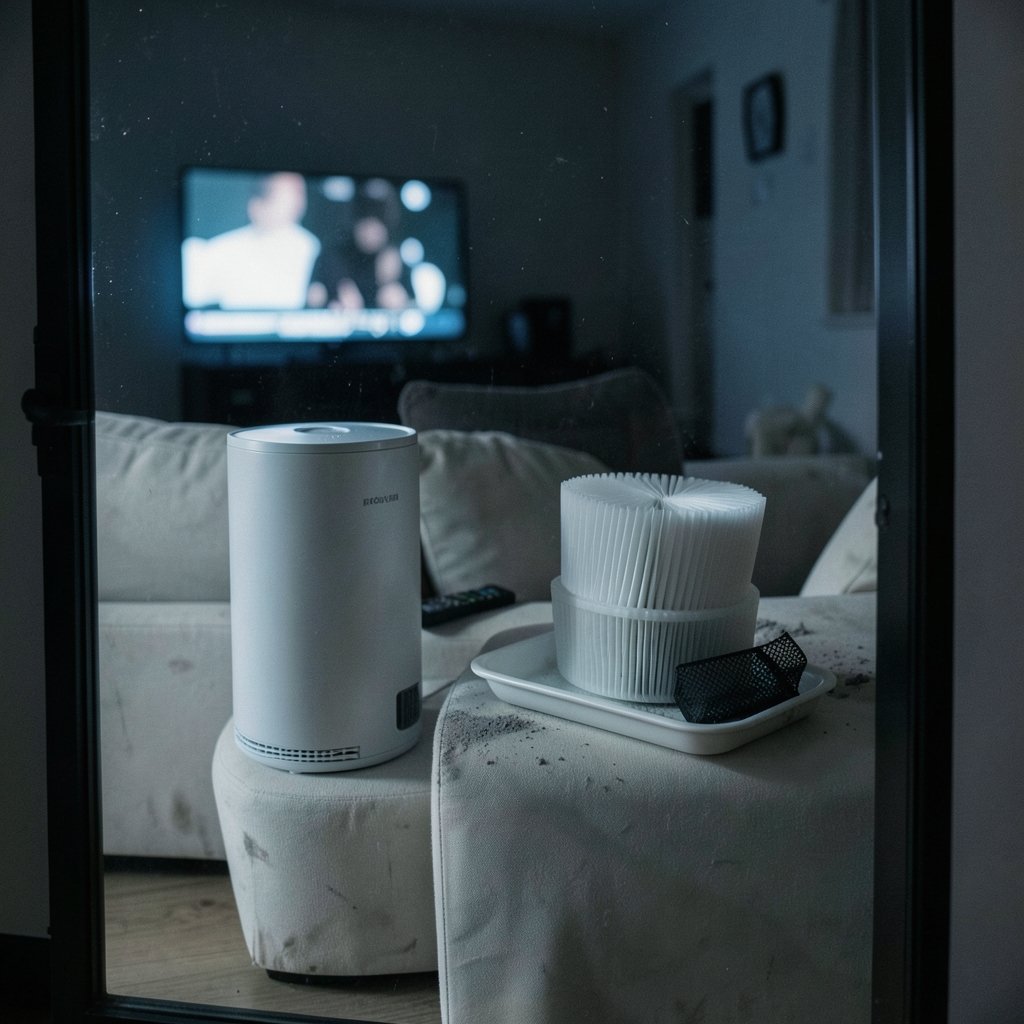
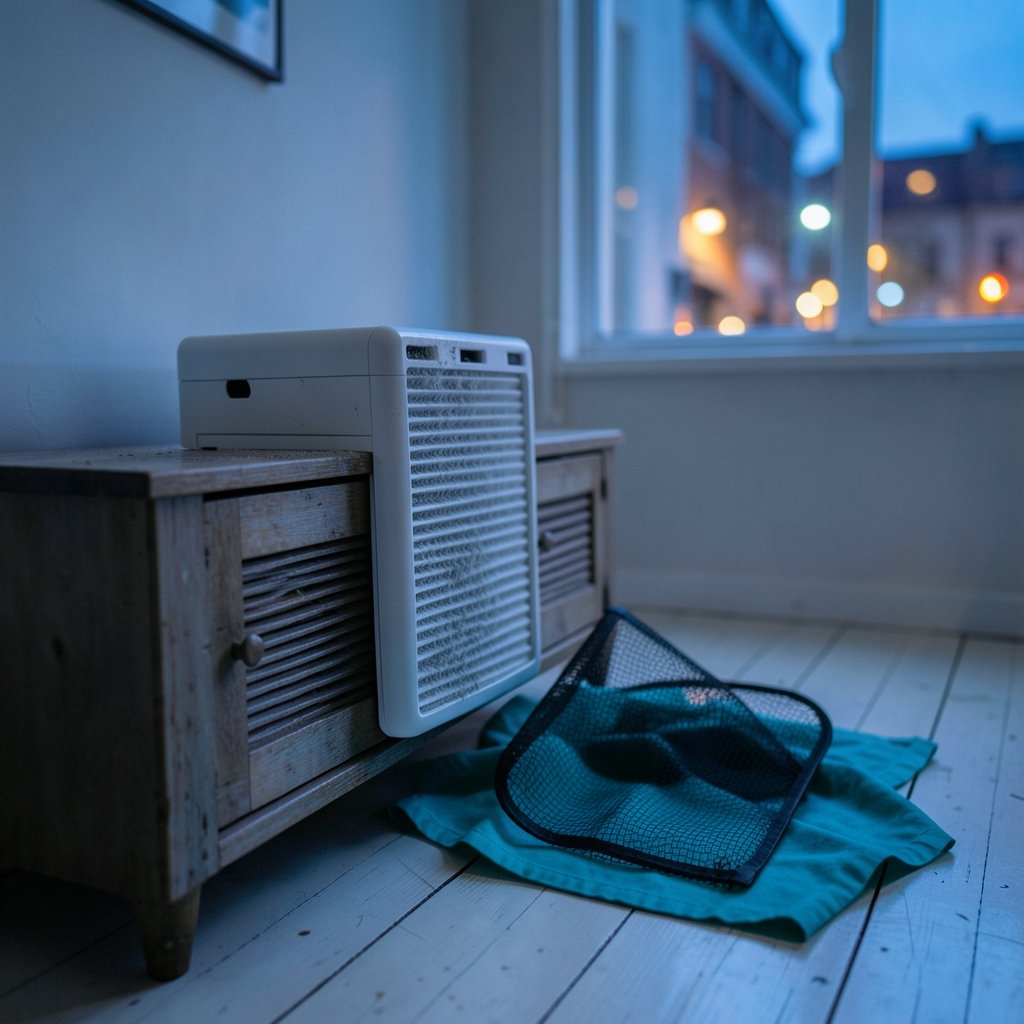
- Use a HEPA air purifier sized for the room. Look for a clean air delivery rate (CADR) matched to the room’s square footage. HEPA filters capture PM2.5 effectively; a purifier marketed only for “dust” may not.
- Ventilate strategically. Opening windows during and after cooking or cleaning dilutes indoor particles, but check outdoor conditions first. On a high-pollution day, ventilation can backfire.
- Upgrade your vacuum. A vacuum with a sealed HEPA system and a good brush roll captures fine dust instead of blowing it back out. Cheap bagless models are notorious for this.
- Reduce combustion sources. Limit candles and incense, keep fireplaces well maintained, and never run a gas stove or generator without proper venting.
- Control dust at the source. Door mats, regular damp dusting, and washable floor coverings cut the PM10 that gets kicked up daily.
For anyone setting up a home office or bedroom workspace, the same principles apply to accessories and airflow. A well-organized desk area with clean cable management and good ventilation helps, and if you are outfitting a laptop setup, choosing the right connectivity gear keeps things tidy. This guide to the best usb c hub for macbook air is a handy reference for that side of the desk.
Common Mistakes to Avoid
A few habits quietly undermine good intentions:
- Running an air purifier in a closed, unventilated kitchen while cooking. The purifier helps, but the hood is the primary tool. Use both.
- Trusting a “PM2.5 filter” label on a cheap device without checking CADR or filter grade.
- Vacuuming right before guests arrive and assuming the air is cleaner. It may be worse for the next hour.
- Ignoring the bathroom and basement. Mold spores and damp dust add to particle loads in rooms people forget to ventilate.
Where the Two Overlap and Where They Diverge
It helps to think of PM2.5 and PM10 as two lenses on the same problem. On a smoky day, both rise together because combustion produces particles across a range of sizes. On a dry, dusty day with no cooking, PM10 may climb while PM2.5 stays low. That is why a single “air quality” number can mislead.
For most homes, the priority order is clear: control PM2.5 first, because it carries the greater health risk and is harder to see and remove. Then manage PM10 through cleaning and dust control. The good news is that the same tools, ventilation and filtration, address both.
If you are also thinking about bigger home upgrades that affect airflow and daily comfort, the trade-offs are worth understanding before you commit. A look at automatic door opener for home options shows how entry systems interact with sealing and ventilation, which in turn affects how particles move between rooms.
Conclusion
PM2.5 and PM10 are not rivals so much as a hierarchy. PM10 is the visible dust you can wipe away; PM2.5 is the invisible smoke that reaches deep into your lungs and stays in the air for hours. Both matter, but fine particles deserve most of your attention because they carry the bigger health burden and are harder to eliminate.
The practical path forward is refreshingly simple. Vent your kitchen, run a properly sized HEPA purifier, upgrade your vacuum, and cut unnecessary combustion. None of these require a lab or a big budget, just a bit of attention to how air moves through your home. Measure if you can, act on the trends, and remember that the smallest particles are usually the ones worth chasing.
Frequently Asked Questions
Is PM2.5 worse than PM10 for health?
Yes, generally. PM2.5 particles are small enough to reach the deepest parts of the lungs and can cross into the bloodstream, while PM10 mostly deposits in the upper airways. Health agencies regulate PM2.5 more strictly for this reason.
Does a HEPA filter remove both PM2.5 and PM10?
A true HEPA filter captures the vast majority of particles at both sizes, including fine PM2.5. The catch is that the purifier must be sized correctly for the room and the filter must be genuine HEPA, not a basic dust screen.
Can PM2.5 be higher indoors than outdoors?
Yes. Cooking, candles, and unvented combustion can push indoor PM2.5 well above outdoor levels, especially in kitchens during frying. Without good ventilation, those particles linger for hours.
How can I tell which particles are in my home?
A consumer air quality monitor that reports PM2.5 and PM10 gives you a useful picture. Watch how readings change when you cook, vacuum, or open windows to identify your main sources.
Do candles and incense really affect indoor air?
Yes. Both are combustion sources that release fine particles. Even short burning sessions can raise PM2.5 noticeably in a small, poorly ventilated room.
Is opening windows always the best way to lower particles?
Not always. Ventilation dilutes indoor pollution, but if outdoor air is smoky or dusty, opening windows can make things worse. Check outdoor conditions and rely on filtration when the air outside is poor.



