
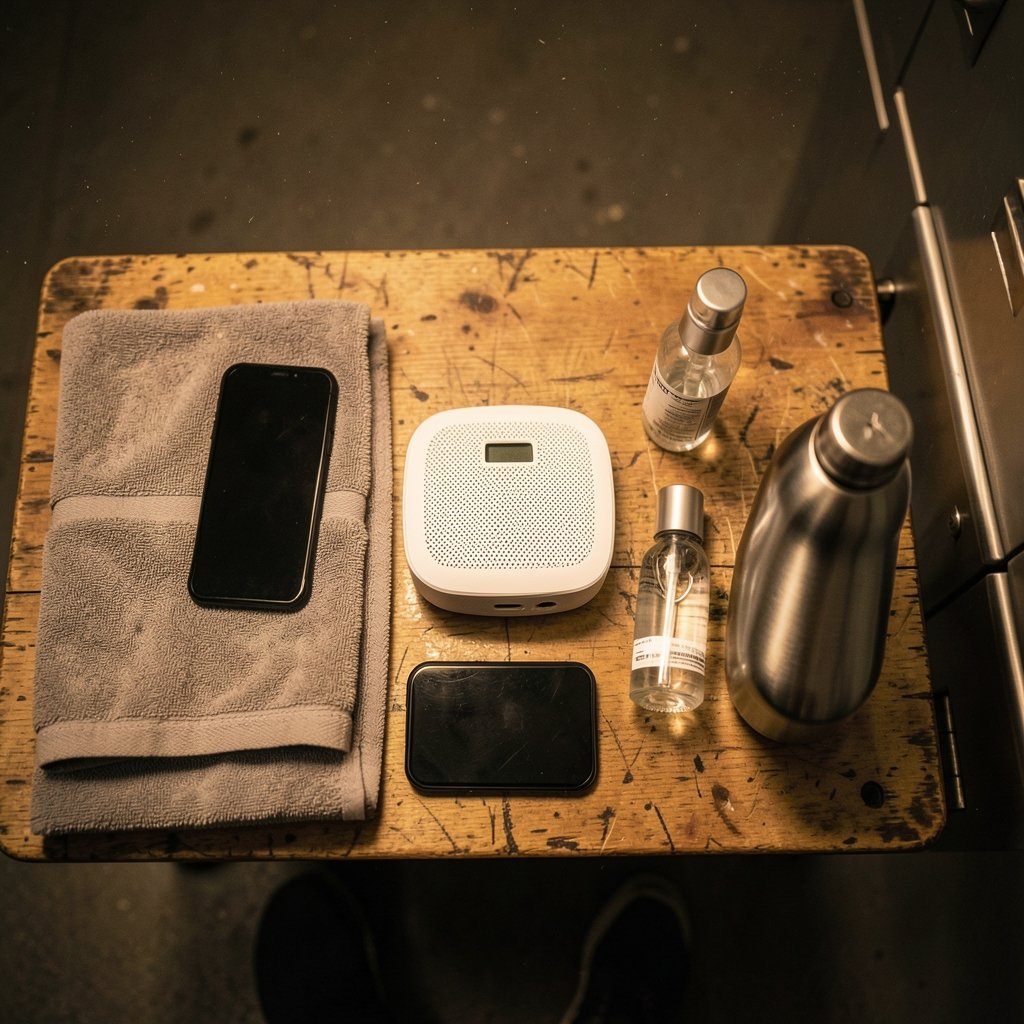
Open the air quality app on your phone, and you’ll see a number labeled “VOC” or “TVOC.” It might read 150, or 0.42, or “Good.” Then you open a window, and the number plunges. But what is that figure actually telling you? Here’s the uncomfortable truth: most consumer VOC readings are not measurements of pollution in the way a thermometer measures temperature. They’re relative indices shaped by firmware, baselines, and sensor chemistry. Understanding that difference changes how you should read the number, trust it, and act on it.
What a VOC Sensor Is Really Detecting
Volatile organic compounds are carbon-based chemicals that evaporate at room temperature. They come from paints, adhesives, furniture, cleaning sprays, cooking, and even your own breath. Thousands of different compounds fall under the VOC umbrella, and they behave very differently from one another.
A consumer VOC sensor doesn’t identify individual compounds. Most devices use metal-oxide (MOX) sensors, which work by heating a tiny sensing layer and watching how its electrical resistance changes when reducing gases land on it. That resistance change is not a concentration. It’s a signal that firmware converts into an arbitrary index, often on a 0 to 500 scale.
This is the single most important caveat in the whole field: a MOX sensor output is a relative index, not a calibrated measurement in parts per billion. Two identical sensors in the same room can report different numbers depending on how long they’ve been running and what baseline they’ve learned.
Why “TVOC” Is Not One Standardized Number
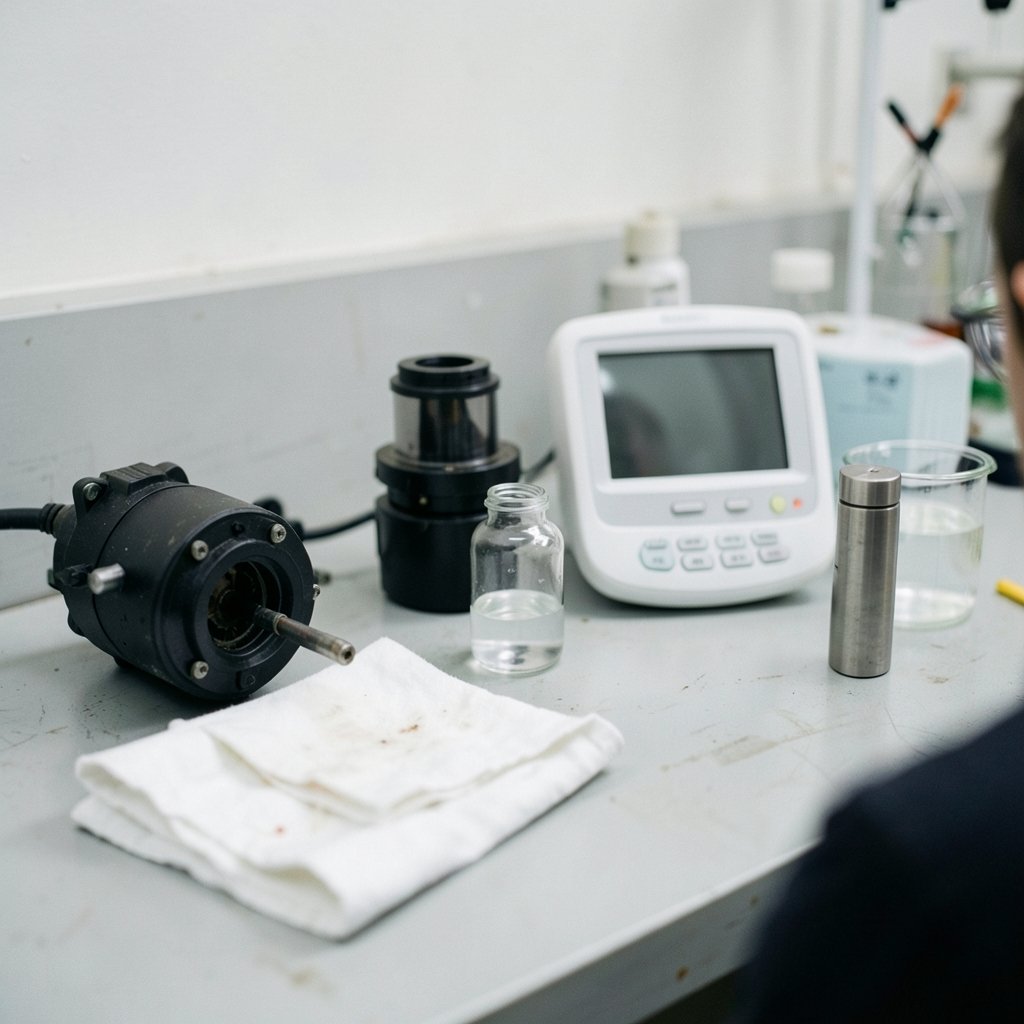
The term TVOC (total volatile organic compounds) sounds precise. It isn’t. Different devices define it differently, which is why comparing readings across brands is close to meaningless.
| Sensor Type | What It Outputs | Typical Use | Calibrated? |
|---|---|---|---|
| MOX (metal-oxide) | Relative index (e.g., 0–500) | Consumer monitors, smart home devices | No, relative only |
| PID (photoionization) | Concentration in ppb or ppm | Occupational hygiene, industrial testing | Yes, with calibration |
| Electrochemical | Compound-specific response | Targeted gas detection | Depends on target gas |
A photoionization detector (PID) using a 10.6 eV lamp is the reference approach for absolute TVOC readings. It ionizes VOC molecules and counts the resulting current, reporting real concentrations. Even then, it responds unevenly across compounds, so a PID reading is still not a complete picture.
If you’ve ever compared two air quality gadgets and wondered why they disagree, this is why. It’s the same kind of mismatch you’d find comparing specs across unrelated product categories, like trying to line up Leonardo AI pricing plans and features explained against a completely different software suite. The labels look similar; the underlying units don’t match.
How the Index Scale Works in Practice
Many consumer sensors follow a convention where 100 represents a learned baseline. Values below 100 suggest cleaner-than-baseline air; values above suggest more VOCs than usual. The sensor continuously adapts its baseline, usually assuming that the cleanest air it has recently seen represents “normal.”
That auto-baselining behavior has real consequences:
- A slow, gradual rise in VOCs may be absorbed into the baseline and never flagged.
- Moving the device to a new room resets its reference point, so readings shift even if the air doesn’t change.
- A device that spent a week in a stuffy bedroom will treat that stuffy air as normal.
In practice, the most useful thing a consumer VOC index tells you is direction and timing: did the number jump when you started cooking? Did it fall when you opened a window? Treat it as a trend indicator, not a verdict.
Common Mistakes People Make With VOC Readings
First-hand experience with these devices surfaces the same errors again and again. Here are the ones that matter most.
Mistake one: treating the number as a health threshold. A reading of 200 on one device means nothing comparable on another. There is no universal “safe” index value, because the index isn’t a concentration.
Mistake two: ignoring warm-up. MOX sensors need minutes to hours to stabilize after power-on. Readings taken immediately are unreliable and often wildly high or low.
Mistake three: forgetting humidity and temperature. MOX readings drift with humidity and temperature. Many modules include compensation, but residual error remains. A humid bathroom will skew results.
Mistake four: assuming “VOC” means only VOCs. These sensors also respond to carbon monoxide, ethanol, and other reducing gases. A reading labeled VOC can be inflated by sources that aren’t VOCs at all.
Mistake five: expecting compound identification. A consumer sensor cannot tell you whether the spike is formaldehyde or limonene. For that, you need lab testing or a compound-specific instrument.
What Actually Works: Practical Tips
If you want useful information from a consumer VOC monitor, a few habits make a real difference.
- Let it run continuously. Leave the device powered for days so the baseline stabilizes in your actual environment.
- Watch relative changes, not absolute values. Note the number before and after specific events: cooking, cleaning, opening windows, bringing in new furniture.
- Place it sensibly. Keep it away from direct sunlight, radiators, and right next to the stove. Mid-room at breathing height is a reasonable default.
- Ventilate on spikes. A sharp rise during cooking or cleaning is a cue to ventilate, regardless of the exact number.
- Cross-check with context. If you just painted a room, trust your nose and the label on the can more than the gadget.
This pattern of “use the tool for what it’s actually good at” shows up everywhere in consumer tech. Home monitoring devices carry the same lesson: coverage details matter more than the headline number, as a look at home and household insurance coverage options makes clear. The spec sheet and the real-world behavior are two different things.
Where the Numbers Come From: Sensor Chemistry in Plain Terms
Underneath the app display sits a small heater and a sensing layer. When reducing gases contact the heated surface, oxygen ions on the surface react, freeing electrons and lowering resistance. The firmware watches that resistance, applies temperature and humidity compensation, and maps the result onto a scale.
Because different compounds produce different resistance changes, the mapping is inherently approximate. Alcohols, aromatics, and terpenes all nudge the sensor by different amounts. Without calibration against a known gas, there is no way to convert the index back into a specific concentration.
This is why manufacturers describe their VOC output as an index rather than a measurement. The concept is documented in module datasheets and application notes, where the index is explicitly framed as relative and adaptive. Anyone who wants to dig deeper into how adaptive scales and baselines are described in technical documentation will find the same pattern of careful hedging in other fast-moving technical fields, much like the caveats surrounding Apple private cloud compute and Google cloud in 2026.
When You Actually Need Real Measurements
Consumer indices are fine for spotting trends. They are not fine for answering “is my air safe?” If you need defensible numbers, the path looks different:
- Compound-specific testing for formaldehyde or other target chemicals, using lab methods or calibrated instruments.
- Professional indoor air quality assessment when someone in the household has symptoms that track with the building.
- Occupational hygiene instruments such as PIDs when the question involves workplace exposure limits.
Regulatory and occupational reference values exist for specific compounds, not for “TVOC” as a single figure. Exposure limits are set compound by compound, which is exactly why a single aggregate number can’t substitute for them.
Reading the Number Without Overreading It
The healthiest relationship with a consumer VOC monitor is a simple one. Use it as a change detector. It tells you when something in your home released VOCs, and it tells you when ventilation cleared them. That’s genuinely useful information, and it’s available in real time.
What it can’t do is tell you the concentration, the compound, or the risk. Those require calibration and chemistry that a small, inexpensive sensor simply doesn’t have. Once you accept that limit, the readings become a practical ventilation prompt rather than a source of anxiety.
There’s a broader pattern here too. Sensors, models, and indices are tools with defined scopes, and stretching them beyond those scopes causes trouble. The same discipline applies when interpreting research shifts in other fields, such as the Zuckerberg Chan CZI Biohub AI biomedical shift, where headline claims and measured evidence are rarely the same thing.
Conclusion
VOC sensor readings are best understood as a relative signal, not an absolute measurement. Consumer devices built on MOX sensors track changes in air chemistry and translate them into an adaptive index, usually anchored to a learned baseline of 100. They respond to humidity, temperature, and non-VOC gases, and they drift as their baseline updates. Professional instruments like PIDs report real concentrations, but even those respond unevenly across compounds.
So the next time your monitor jumps from 80 to 300 while you’re searing a steak, believe the jump and open a window. Just don’t treat the number as a medical reading. It isn’t one, and it was never designed to be.
Frequently Asked Questions
What does a VOC reading of 100 mean?
On many consumer devices, 100 represents the sensor’s learned baseline, meaning air roughly as clean as the cleanest air the device has recently recorded. Values above 100 indicate more VOCs than that baseline; values below indicate less. It is a relative index, not a concentration in parts per billion.
Can a VOC sensor tell me if my air is safe?
No. Consumer VOC sensors output a relative index rather than a calibrated concentration, and they cannot identify which compounds are present. Safety judgments for specific chemicals require compound-specific testing or calibrated professional instruments.
Why do two VOC monitors in the same room show different numbers?
Each device learns its own baseline, applies its own compensation for humidity and temperature, and maps the sensor signal onto its own scale. Because the outputs are relative indices rather than standardized concentrations, identical air can produce different numbers on different devices.
Are PID sensors more accurate than MOX sensors?
For absolute concentration measurements, yes. Photoionization detectors report readings in parts per billion or parts per million and are used in occupational hygiene. Metal-oxide sensors report a relative index and are not calibrated to a concentration. Both respond unevenly across different compounds.
How long does a VOC sensor need to warm up?
Metal-oxide sensors typically need minutes to hours to stabilize after power-on, and their readings immediately after startup are unreliable. Many devices also need days of continuous operation to settle into a stable baseline for a given room.
Do VOC readings go up when I cook or clean?
Often, yes. Cooking, cleaning sprays, new furniture, and paints all release VOCs, and a sharp rise during these activities is a normal, expected signal. It’s a useful cue to ventilate, even though the exact number should not be read as a concentration.
That final FAQ entry captures the core lesson: the sensor is doing its job when it flags a change, not when it assigns a verdict. Keep that framing in mind and the readings stay useful. When a spike appears, ventilate, then watch whether the number returns toward baseline. If it doesn’t, look for a persistent source—new furniture, a stored solvent, a slow leak from a cleaning product—rather than chasing the number itself. If someone in the home reports symptoms that track with the readings, treat that as a prompt for professional assessment, not for more gadget-watching. And if you ever need a defensible figure for a specific compound, reach for calibrated instruments and lab methods. The index tells you when; everything else requires what and how much. Used within that scope, a consumer VOC monitor is a modest but honest tool—one that nudges you toward fresh air and away from false certainty.



