
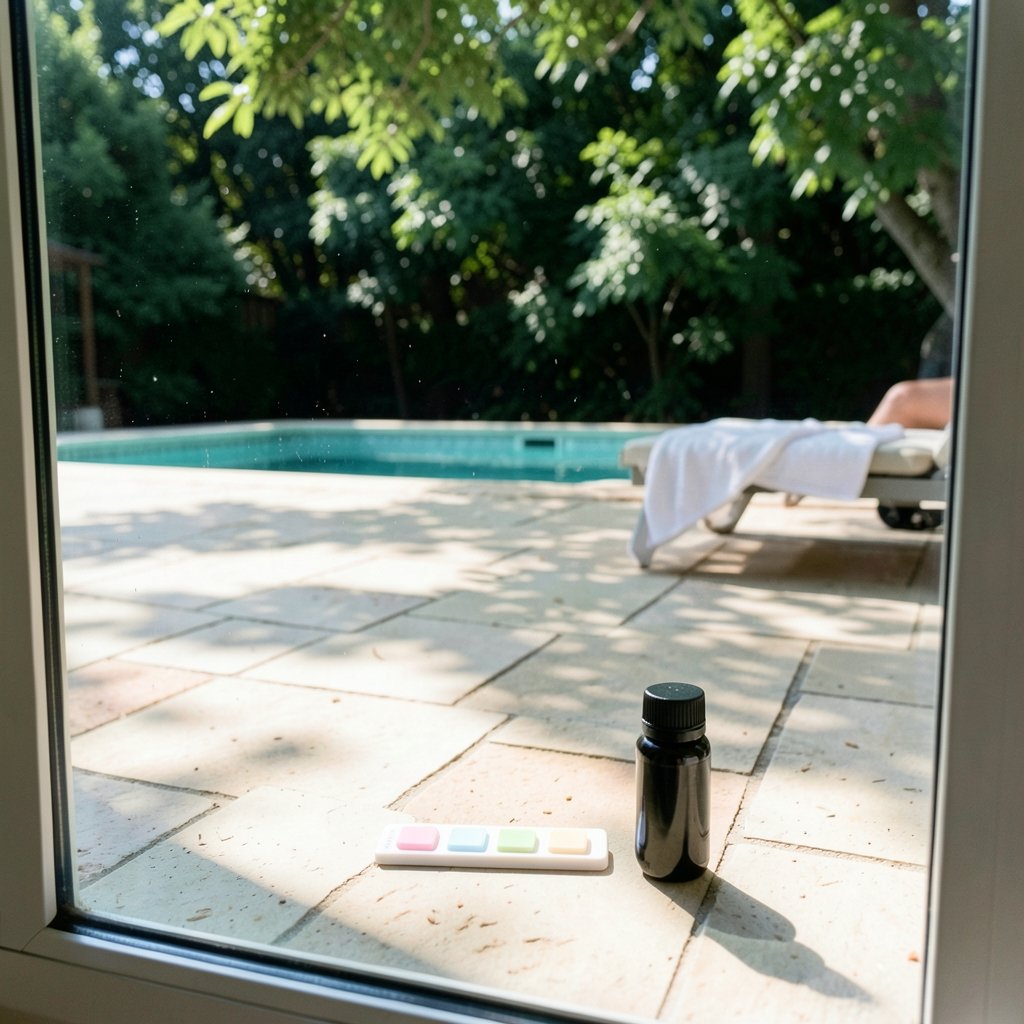
Can a small plastic stick dipped in water for two seconds really tell you whether it is safe to swim? That is the promise of pool test strips, and it is mostly true, with some important caveats. Strips are fast, cheap, and easy enough that people actually use them consistently. But they are also the most misread piece of pool equipment in the average backyard. Colors fade, pads bleed into each other, and expired strips give answers that look confident and are simply wrong.
This guide covers what strips measure, where their limits sit, how to read them without fooling yourself, and when to put the strip down and reach for a drop-test kit instead.
What Pool Test Strips Actually Measure
A pool test strip is a plastic wand with several reagent-soaked pads. You dip it, shake off the excess, wait the specified time, and compare each pad to a printed color chart. Most consumer strips read three to six parameters:
| Parameter | What it tells you | Typical strip precision |
|---|---|---|
| Free chlorine | Active sanitizer killing germs | Coarse, often wide steps |
| Total chlorine | Free chlorine plus chloramines | Coarse |
| pH | Acidity and alkalinity balance | Usually 0.2 to 0.4 steps |
| Total alkalinity | pH buffering capacity | Wide ranges |
| Calcium hardness | Scale and corrosion risk | Wide ranges |
| Cyanuric acid | Stabilizer level | Very coarse |
The number of pads varies by product, so read the label before assuming a strip covers everything you care about. A three-way strip will not tell you about stabilizer buildup, and stabilizer is one of the most common reasons a pool “holds chlorine” poorly.
Free Chlorine vs. Total Chlorine
This distinction matters more than any other on the strip. Free chlorine is the chlorine still available to kill bacteria and viruses. Total chlorine includes free chlorine plus combined chloramines, the used-up byproducts that cause the sharp “pool smell” and red eyes.
When free and total chlorine read the same, your water is in good shape. When total chlorine sits noticeably higher than free chlorine, chloramines are accumulating and you need to shock. Many people smell chlorine at a pool and assume there is too much sanitizer. Usually the opposite is true: the smell is chloramines, and free chlorine may be low.
Where Strips Are Strong and Where They Fall Short
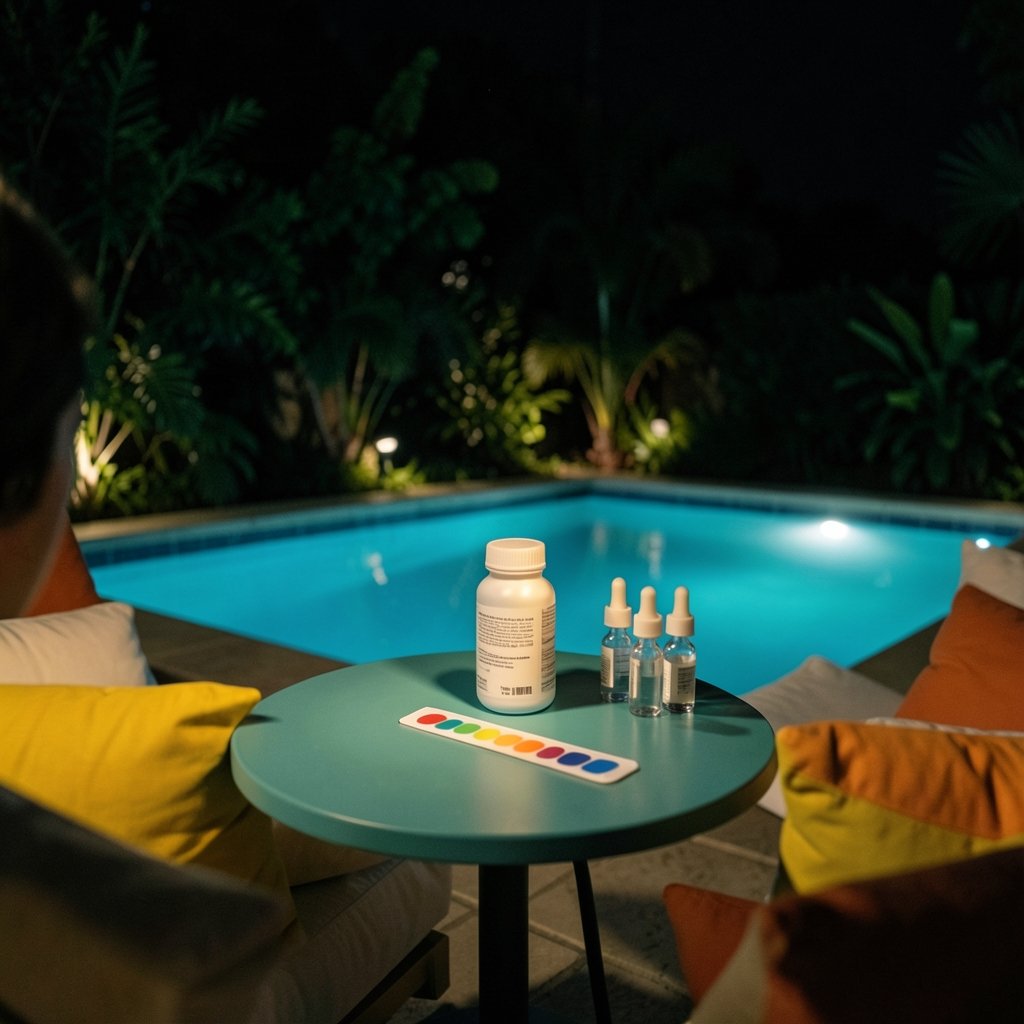
Strips win on speed and compliance. A test that takes ten seconds gets done daily. A drop test that takes five minutes gets done weekly, if that. For routine monitoring between more precise checks, strips are genuinely useful. (Router bufferbloat test fix cut latency under load good)
The weaknesses are real, though. Colorimetric strips are generally less precise than liquid DPD drop tests or electronic photometers. Reading a color against a printed chart is subjective, and lighting changes the answer. A pad that looks “7.4” under warm patio light can look “7.8” under shade. That is not a small difference when you are chasing pH stability.
Two practical problems show up again and again:
- Bleed between pads. Dip too long or shake too hard and reagent from one pad contaminates its neighbor. Chlorine pads are especially prone to this.
- Blaming the strip for the reader. Most “bad strip” complaints trace back to wet fingers in the container, a cap left open in a hot shed, or reading at 30 seconds when the instructions say 15.
There is also a regulatory misunderstanding worth clearing up. The EPA regulates pool sanitizers as antimicrobial pesticides, but it does not approve or certify test strips themselves. When a strip label says “EPA-registered,” it usually refers to the sanitizer being tested, not the strip. That does not make strips unreliable, but it does mean the label is not the accuracy guarantee people assume.
How to Read a Strip Without Fooling Yourself
Reading a strip is a skill, and small habits separate a useful reading from a random number. Here is a routine that works in practice.
- Read the insert once, fully. Dip time, shake method, and wait time all change results. Some brands say 15 seconds, some say 30. Follow the specific product.
- Take the sample away from the return jet. Water straight from a return is not representative of the pool body.
- Dip to the marked depth, then remove. Do not swirl for ten seconds if the instructions say dip once.
- Shake off excess water gently. Flick once or twice. Do not blot the pads on a towel.
- Read in indirect daylight, not direct sun and not shade. Hold the strip against the chart at eye level.
- Read the most important pad first. Chlorine and pH pads shift as they dry, so read them before the slower pads.
- Log the numbers. A single reading means little. A trend over two weeks tells you whether alkalinity is drifting.
A common mistake is reading the strip twice: once at 15 seconds and again at two minutes, then picking whichever number looks better. That is not testing, it is shopping for an answer. Take one reading at the specified time and write it down.
Another mistake is trusting a strip that has been sitting in a hot garage since last summer. Strips degrade with moisture and heat. Most manufacturers print a use-by date and specify keeping the container sealed. Expired strips can give false readings, and a false “chlorine is fine” reading is worse than no reading at all.
When Strips Are Not Enough
Strips are a screening tool, not a laboratory. There are specific situations where a drop test or photometer should take over.
Public and commercial pools are a different story entirely. Pool standards and many state health codes specify test methods and frequency for public pools, often requiring DPD or comparable methods rather than strips. If you manage a commercial pool, strips may be fine for spot checks but will not satisfy reporting requirements.
Persistent problems also deserve better tools. If chlorine keeps reading low despite additions, or pH will not hold, a strip cannot tell you why. High cyanuric acid can reduce chlorine’s effectiveness and can interfere with some test methods. Strips that include a CYA pad are common but coarse, so a precise stabilizer reading usually needs a different test. The same applies to calcium hardness and to metals, which most strips ignore completely.
Startup and recovery are the other moment to upgrade. Opening a pool, recovering from a green pool, or adjusting after heavy rain involves large chemical changes. During those windows, a drop test’s precision is worth the extra minutes. Once the pool is stable, strips are fine for daily checks.
If you are already the type to verify your tools, the same instinct applies elsewhere. Testing whether your network holds up under load rather than just idling fast, or confirming a storage card actually stores what it claims, are both exercises in healthy skepticism. Pool strips sit in that same category: cheap instruments that reward a little doubt.
Storage, Shelf Life, and the Mistakes That Ruin Strips
Most strip failures happen before the strip touches water. The reagent pads are sensitive to moisture, heat, and light, and a few habits destroy them quickly.
- Never store strips in a hot shed or car. Heat degrades reagents faster than anything else.
- Keep the cap closed and dry. Wet fingers in the tube introduce moisture that ruins the whole batch.
- Do not pour strips into an unlabeled container. You lose the chart, the use-by date, and the instructions in one move.
- Buy the size you will finish. A 100-strip bottle that lasts three years is a false economy if it expires in eighteen months.
- Check the date before you trust a reading. If the bottle is past its date, replace it. Do not “test it against a known sample” and call it good.
There is a related trap with pool chemicals themselves. Chlorine and pH adjusters are hazardous materials, and their labels carry handling and storage information for good reason. If you are stocking up, treat the labels as instructions rather than decoration.
Matching the Strip to Your Pool Type
Not every pool needs the same strip. The right choice depends on how the pool is sanitized and what tends to drift.
| Pool type | Priority readings | Why |
|---|---|---|
| Chlorine tablet pool | Free chlorine, pH, cyanuric acid | Tablets add stabilizer continuously |
| Saltwater pool | Free chlorine, pH, stabilizer, salt | Salt cells raise pH over time |
| Chlorine-free or peroxide | Manufacturer-specific parameters | Standard strips may not apply |
| Spa or hot tub | Free chlorine, pH, alkalinity | Small volume shifts fast |
| New plaster pool | pH, calcium hardness, alkalinity | Surface curing drives chemistry |
Saltwater owners in particular get burned by skipping the stabilizer pad. A salt cell produces chlorine, but cyanuric acid protects that chlorine from sunlight. Without a stabilizer reading, owners chase low chlorine by turning up the cell, which shortens its life and does not solve the problem.
Spa owners face the opposite issue: a 400-gallon tub can swing from perfect to unpleasant in a day. For small volumes, daily strip checks are genuinely the right tool, backed by a drop test weekly.
A Realistic Testing Routine
A workable weekly rhythm looks like this. Test with strips three or four times a week, always at roughly the same time of day and away from the return jet. Log free chlorine, total chlorine, and pH every time. Check alkalinity and stabilizer once a week. Once a month, or any time a strip reading looks strange, confirm with a drop test. (Test fake sd card capacity before you lose your data)
That last step is the one people skip, and it is the one that catches problems. A strip that suddenly reads zero chlorine after a week of steady readings is more likely a bad strip or a testing error than a real crash. Confirm before you dump in shock.
If you want a broader habit of verifying instruments before trusting them, the same logic applies to checking for DNS, IP, and WebRTC leaks in a VPN: the tool says it is working, but only an independent check proves it. Pool strips deserve the same suspicion, just with less jargon. (Test if your vpn working ip dns kill switch checks)
Conclusion
Pool test strips are a good tool used well and a bad tool used carelessly. They are fast enough to test daily, cheap enough to keep on hand, and accurate enough for routine monitoring of chlorine, pH, and alkalinity. They are not precise instruments, they do not replace drop tests for stabilizer and hardness, and they will lie to you if they are expired, damp, or read under the wrong light.
The practical formula is simple: store them cool and dry, follow the dip and wait times exactly, read once in indirect daylight, write the numbers down, and confirm anything surprising with a better test. Do that, and a two-second dip becomes a genuinely useful signal about whether the water is ready for swimmers.
Frequently Asked Questions
How accurate are pool test strips compared to drop tests?
Strips are less precise than liquid DPD drop tests or electronic photometers. They are fine for spotting trends and catching obvious problems, but their color steps are wide and reading them is subjective. Use strips for frequent checks and a drop test when you need a precise number, especially for stabilizer and calcium hardness.
Why does my strip show high total chlorine but low free chlorine?
That pattern means chloramines have built up. Total chlorine includes free chlorine plus combined chloramines, the used-up byproducts that cause pool smell and irritation. When total sits above free, the pool needs shock and likely better circulation or bather load management.
Do pool test strips expire?
Yes. Reagent pads degrade with moisture, heat, and age, and most manufacturers print a use-by date on the container. Expired strips can give false readings, including a false “everything is fine.” Replace the bottle once it is past date rather than trusting the result.
Can I use pool test strips for a public or commercial pool?
Usually not as the only method. Pool standards and many state health codes specify test methods and frequency for public pools, often requiring DPD or comparable methods rather than strips. Check your local code before relying on strips for required records.
Why do my strip colors look muddy or bleed together?
That usually means the strip stayed in the water too long, was shaken too hard, or came from a container that has taken on moisture. Follow the exact dip and wait times, shake off excess gently, and keep the cap closed with dry hands. If the whole bottle reads oddly, replace it.
Does an “EPA-registered” label on strips mean the EPA certified their accuracy?
No. The EPA regulates pool sanitizers as antimicrobial pesticides, but it does not approve or certify test strips themselves. An “EPA-registered” claim on a strip label typically refers to the sanitizer being tested, not to the strip’s accuracy.



