

Quick Answer: What are real world examples of brain computer interfaces?
Real-world brain-computer interfaces already exist in hospitals, research labs, and even consumer electronics stores. The most established examples are cochlear implants, which restore hearing for hundreds of thousands of people, and deep brain stimulation systems that calm tremors in Parkinson’s disease. In research settings, intracortical systems like BrainGate let paralyzed participants move robotic arms and type with their thoughts, while companies such as Synchron and Neuralink have begun early human trials of implanted devices.
It helps to separate decoding systems, which read neural signals and translate them into commands, from stimulation systems, which send electrical current into the nervous system. Some experts count only the decoding devices as true BCIs, while others include stimulation hardware.
Before trusting any claim about a BCI, compare its regulatory status, whether results are peer-reviewed, the invasiveness of the implant, the size of the participant group, and the gap between marketing language and published data.
Cochlear implants have been commercially available since the mid-1980s, and roughly a million people worldwide now hear through a device that talks directly to the auditory nerve. That single fact quietly settles a common debate: brain-computer interfaces are not science fiction. They are already in operating rooms, rehabilitation clinics, and, in weaker forms, on store shelves. What follows is a grounded tour of the systems that actually work today, the ones still proving themselves, and the ones that are mostly hype.
The Most Deployed BCI on Earth Is in People’s Ears
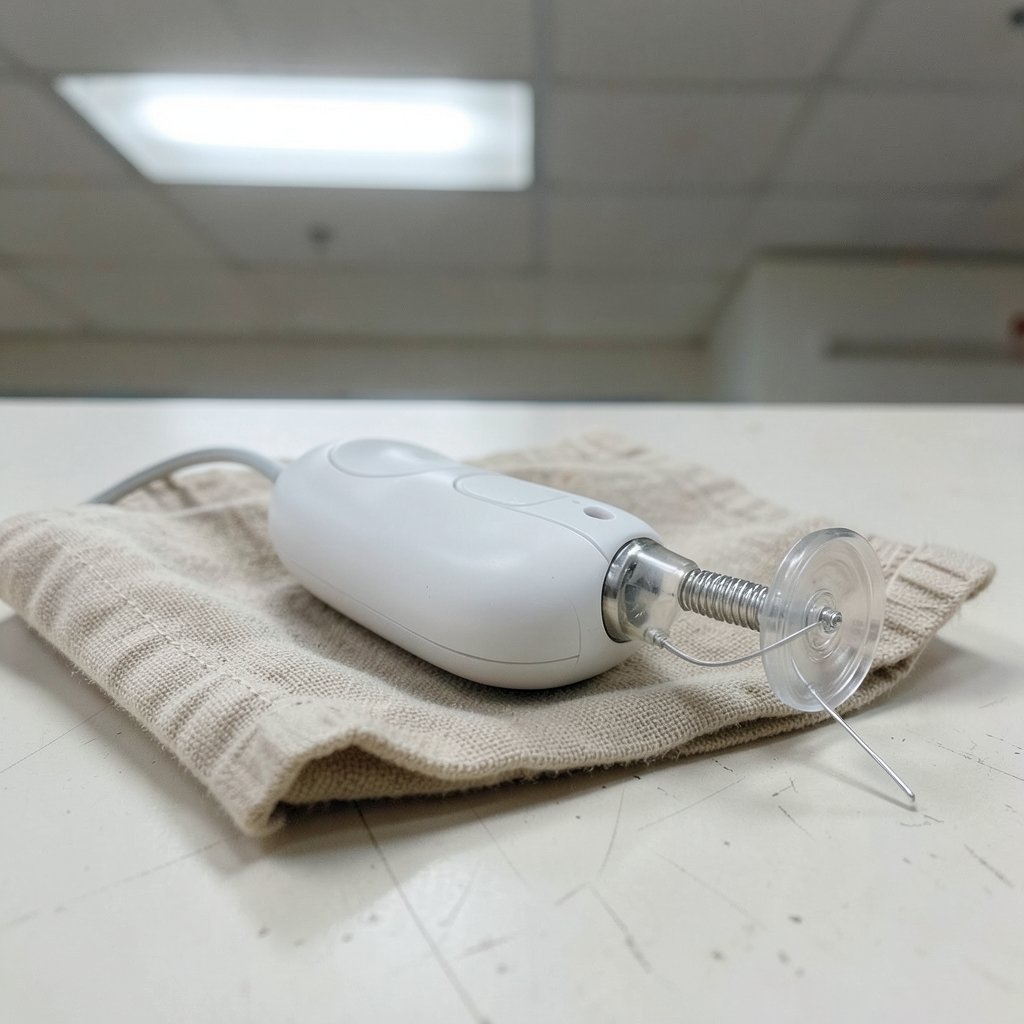
A cochlear implant is a small device that sits behind the ear, with an electrode array threaded into the cochlea. A microphone captures sound, a processor converts it into electrical pulses, and the auditory nerve carries those pulses to the brain. Multichannel commercial implants arrived in the mid-1980s, and the technology has since become routine pediatric care in many countries.
It is a genuine neural interface, and it is also the best argument that BCIs can move from lab to mainstream. The lesson for anyone watching this field: the devices that scale are usually the ones that solve one narrow problem extremely well, not the ones with the flashiest demo videos.
Deep Brain Stimulation: A BCI With a Definitional Catch
Deep brain stimulation (DBS) uses implanted electrodes to deliver continuous electrical pulses to specific brain regions. It became an approved treatment for Parkinson’s disease and essential tremor in 1997, and an FDA-approved responsive system for epilepsy followed in 2013. For patients whose medications no longer control their symptoms, the change can be dramatic.
Here is the wrinkle that trips up newcomers. DBS mostly writes to the brain rather than reading from it. Strict definitions of a brain-computer interface require two-way communication, or at least decoding of neural intent. So some researchers classify DBS as neuromodulation rather than a BCI. Others point out that newer closed-loop systems sense brain activity and adjust stimulation in response, which blurs the line entirely. If you are comparing devices or reading research, check which definition the authors are using before drawing conclusions.
BrainGate: The Longest-Running Intracortical Program
BrainGate is the academic program that put intracortical BCIs on the map. Starting around 2004 at Brown University, it places a small array of microelectrodes into the motor cortex of participants with tetraplegia. Those electrodes pick up the firing patterns of neurons that once controlled the hand, and software translates the patterns into cursor movement, robotic arm control, or typed text.
The landmark peer-reviewed report appeared in Nature in 2006, and the program has continued publishing on point-and-click control, typing, and self-feeding. What makes BrainGate instructive is its pace. Two decades of careful, incremental work have produced real capability and real publications, but no consumer product. That is what responsible clinical research looks like, and it is a useful benchmark for judging faster-moving companies.
Synchron’s Stentrode: Avoiding Open-Brain Surgery
The Stentrode, made by Synchron, takes a different route. Instead of opening the skull, surgeons deliver the device through the jugular vein and position it against the wall of a blood vessel near the motor cortex. It received FDA Breakthrough Device designation in 2020, and the company reported a first U.S. implantation in 2024 under an investigational trial.
The trade-off is signal quality versus safety. Endovascular devices pick up less precise neural activity than penetrating electrodes, but they avoid brain surgery, which matters enormously for risk. In practice, that means simpler movements and communication tasks rather than dexterous robotic control. Anyone weighing these systems should ask a simple question: what specific task does the device let a user complete, and has that result been published?
Neuralink: Big Claims, Early Data
Neuralink implanted its first human participant in January 2024, announced by Elon Musk, and the company reported that the participant could control a computer cursor by thought. A second implantation was reported later that year. The company’s implant uses thin, flexible threads of electrodes inserted by a surgical robot.
The honest caveat is that these milestones came through company announcements rather than peer-reviewed papers. That does not make them false, but it does mean they should be treated as preliminary. When a company controls the narrative, the details that matter, like long-term electrode stability, signal decay, and adverse events, tend to arrive later. Skepticism is not cynicism here; it is just good reading practice.
The Utah Array and the Workhorse Behind Many Studies
Many academic BCIs, including BrainGate, rely on the Utah array, a small square of silicon spikes manufactured by Blackrock Neurotech. It has been used in research participants for roughly two decades, making it the most battle-tested intracortical sensor available. Blackrock has pursued regulatory pathways toward a commercial implant.
The practical takeaway for readers tracking this field is that the sensor is often the bottleneck. Electrodes degrade, scar tissue forms, and signal quality drifts over years. A device that works beautifully on day 30 may behave differently on day 300. Any claim about a BCI should be read with a timeline attached.
Consumer EEG Headsets: Real, but Modest
Walk into an electronics store and you can buy an EEG headset from Emotiv, Muse, or NeuroSky. These devices read electrical activity from the scalp and feed it to apps for meditation feedback, attention training, or research. They are non-invasive, relatively cheap, and genuinely measure brain activity.
They are also far behind implanted systems in capability. Scalp EEG is fuzzy, easily contaminated by muscle movement and electrical noise, and limited in what it can read. Marketing materials sometimes imply thought control of complex software; in practice, users typically get simple state detection. The gap between a $300 headset and a $100,000 implant is the single most misunderstood fact in this field.
Restoring Movement and Speech: The 2023 Breakthroughs
Two research threads deserve attention because they changed what people thought was possible.
First, a brain-spine interface reported by EPFL and CHUV researchers in 2023 let a paralyzed participant stand and walk by routing decoded brain signals to a stimulator on the spinal cord, effectively bridging a broken connection. Second, a Nature paper in 2023 described an implant that decoded speech at roughly 62 words per minute, several times faster than previous systems.
These are not products. They are proofs of concept in single participants or small groups. But they show the direction: BCIs are moving from moving a cursor to restoring functions people have lost. For families affected by paralysis or severe speech loss, that trajectory matters more than any product launch.
How the Main Examples Compare
| System | Type | Invasive? | Status | Typical Use |
|---|---|---|---|---|
| Cochlear implant | Stimulation | Yes (surgical) | Approved, routine | Restoring hearing |
| Deep brain stimulation | Stimulation | Yes (surgical) | Approved | Parkinson’s, tremor, epilepsy |
| BrainGate | Decoding | Yes (intracortical) | Research | Cursor, robotic arm, typing |
| Synchron Stentrode | Decoding | Yes (endovascular) | Investigational trial | Communication, simple control |
| Neuralink | Decoding | Yes (intracortical) | Early human trials | Cursor control |
| Consumer EEG headsets | Decoding | No | Commercial | Meditation, attention apps |
What Actually Works in Practice, and What People Get Wrong
The most common mistake is treating all BCIs as one category. A cochlear implant and a consumer EEG headset share almost nothing beyond the label. The second mistake is assuming that a demo video equals a product. Demos are curated; trials are messy.
A third, subtler error is ignoring the support burden. Implanted systems require surgery, calibration sessions, technical support, and long-term follow-up. Users and caregivers should ask who provides that support, how often the hardware is updated, and what happens if the manufacturer walks away. Those questions rarely appear in press coverage, but they decide whether a device is livable. (NINDS Health Information: Disorders)
For anyone thinking about digital security around medical and personal devices, basic habits go a long way. Understanding what a computer virus actually is helps patients and families protect the laptops and tablets used for therapy apps and remote appointments, and learning how to prevent computer viruses is a sensible first step before connecting any medical device to a home network. (How to choose the best antivirus for your computer) (Brain–computer interface)
Regulation and the Road Ahead
Regulators are catching up. The FDA issued non-binding guidance on implanted brain-computer interfaces in 2021, framing how sponsors should think about clinical trials and device safety. That guidance is a signal that the agency expects more applications, not fewer.
The next few years will likely bring more trial registrations, more peer-reviewed papers, and more attempts to commercialize. The field’s credibility will depend on publishing results, including failures. A device that helps one participant in one lab is a beginning, not a breakthrough.
If you want to follow this space without being misled, use the same checklist you would use for any medical technology. Check the regulatory status, look for peer-reviewed publications, count the participants, and note the date of the most recent update. And when a story sounds too good to be true, remember that the most successful BCI in history is a hearing device that rarely makes headlines.
Conclusion
Real-world brain-computer interfaces span a wide range, from cochlear implants that have restored hearing to hundreds of thousands of people, to early-stage implants that let a handful of participants move a cursor with their thoughts. Deep brain stimulation blurs the definitional line, BrainGate shows what two decades of careful research produces, and consumer EEG headsets show how far marketing can drift from capability. The technology is real, uneven, and moving faster than the vocabulary used to describe it. The reader’s best defense is a simple habit: separate what has been approved and published from what has merely been announced.
Frequently Asked Questions
Are brain-computer interfaces available to the general public today?
Some are. Cochlear implants and deep brain stimulation systems are approved medical devices used routinely. Consumer EEG headsets are sold openly, though their capabilities are limited to simple state detection and research use. Decoding implants that restore movement or speech remain in clinical trials.
What is the difference between invasive and non-invasive BCIs?
Invasive systems place electrodes inside the skull or on the brain surface, which yields clearer signals but requires surgery and carries risk. Non-invasive systems read signals through the scalp, which is safer and cheaper but produces noisier data. The trade-off between signal quality and safety drives most design choices in the field.
Can a brain-computer interface read your thoughts?
Not in the mind-reading sense. Current systems read specific neural patterns associated with intended movement or attempted speech, and they require calibration with the user. They cannot access abstract thoughts or memories. Headlines suggesting otherwise usually describe narrow laboratory tasks.
How long have brain-computer interfaces existed?
Longer than most people assume. Multichannel cochlear implants reached the market in the mid-1980s, deep brain stimulation was approved for Parkinson’s disease and tremor in 1997, and academic intracortical work like BrainGate began around 2004. The concept dates back decades earlier.
What should patients ask before joining a BCI trial?
Ask who sponsors the trial, whether results will be published, what the surgical risks are, how long the hardware is expected to last, and what follow-up support is provided. It also helps to ask what happens to the device if the trial ends or the company changes direction.
Do consumer EEG headsets work for controlling computers?
They can control simple software, such as meditation apps or basic games, but they are not reliable for precise computer control. Muscle movement and electrical noise interfere with scalp signals. For tasks like screen recording or everyday computing, standard input devices remain far more practical than any consumer BCI.



