
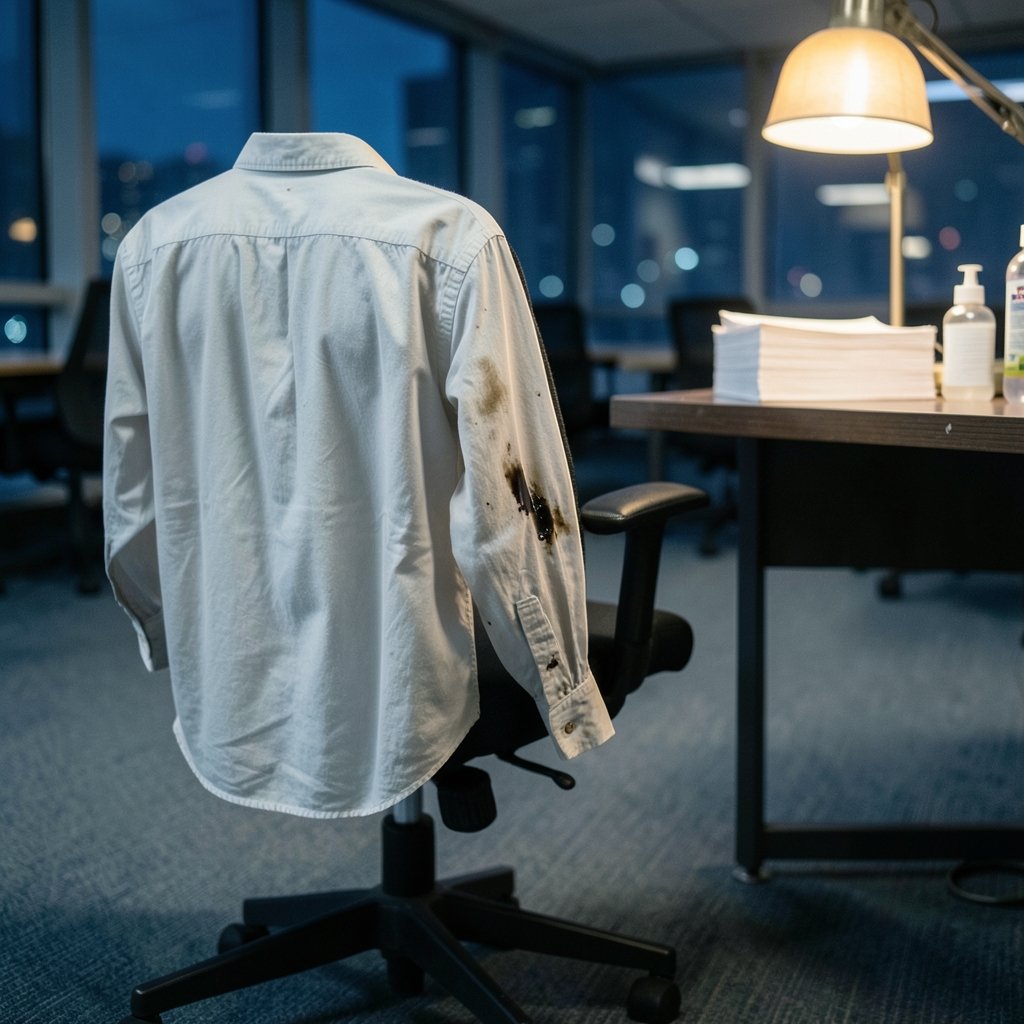
A drop of olive oil slips off the spoon and lands on your favorite shirt. Or a French fry leaves a shiny patch on your jeans. Or a bike chain grazes your trouser leg. What happens next decides whether the stain disappears in one wash or becomes a permanent shadow. So here is the question worth asking: do you actually know what to do in the first sixty seconds?
Most people reach for water first. That is usually the wrong move. Oil and water do not mix, and plain water can push grease deeper into the fibers before any soap has a chance to lift it. The good news is that oil stains are among the most fixable marks on fabric, provided you act quickly and use the right order of steps. This guide walks through what works, what backfires, and how to handle the tricky cases, from silk blouses to set-in stains discovered weeks later.
Why Oil Stains Behave Differently from Other Stains
Coffee, wine, and grass stains are mostly water-based. Oil is not. Grease molecules cling to fabric fibers and repel water, which is why a simple rinse does nothing and why a greasy patch can survive an entire wash cycle.
Two forces are at work. First, capillary action pulls liquid oil into the spaces between fibers, so the stain spreads outward and downward. Second, oils oxidize over time when exposed to air, and oxidized oil turns yellow and bonds more stubbornly to the fabric. That is why a fresh stain lifts easily and a six-month-old stain on a white tee looks like a permanent bruise.
The practical takeaway is simple: speed matters more than any product. A stain treated within an hour is a different problem from one treated after a week.
The First Sixty Seconds: What to Do Immediately
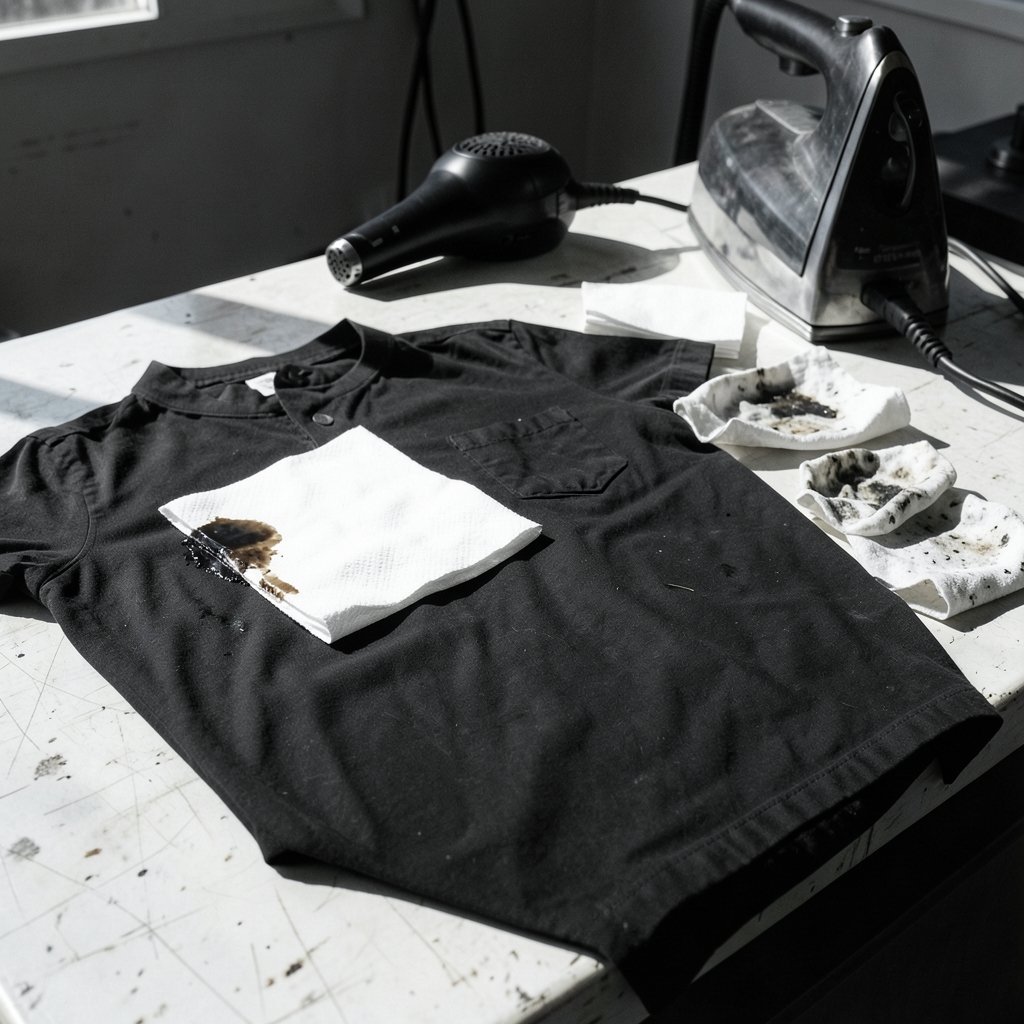
Before you touch detergent, deal with the excess. The goal is to remove as much surface oil as possible without pushing it deeper.
- Blot, never rub. Press a clean paper towel or cloth onto the stain. Rubbing spreads the oil sideways and can fray or pill the fabric. Work from the outside of the stain inward so you do not enlarge it.
- Do not add water yet. Water alone can drive grease further into the weave. Wait until you have applied a surfactant.
- Do not apply heat. A hair dryer, a hot iron, or a tumble dryer will set the oil. Keep the garment away from heat until the stain is gone.
- Change the blotting material often. A saturated paper towel just redeposits oil. Use a fresh section each time.
If you are dealing with a machine rather than fabric, the same logic applies to coffee equipment, where oils build up and turn rancid; the approach for how to remove coffee oil from coffee maker parts follows a similar degreasing principle.
Absorbent Powders: The Overnight Trick That Actually Helps
For fresh oil, a dry absorbent powder is the gentlest first move. Cornstarch, baking soda, baby powder, and fuller’s earth all work by wicking oil out of the fibers before you add any liquid.
Here is the method that works in practice:
- Lay the garment flat.
- Pile a generous mound of powder over the stain, covering it completely and extending a little beyond the edges.
- Press gently so the powder contacts the fabric, then leave it for at least 30 minutes. For heavier stains, leave it several hours or overnight.
- Brush or shake the powder off. If it has turned clumpy or yellowish, the oil is coming out; repeat with fresh powder.
- Only then move on to washing.
A common mistake is skimping on the powder. A thin dusting does almost nothing. You want a small hill of it. Another mistake is skipping this step entirely on dry-clean-only fabrics, where powder pretreatment is often the safest thing you can do at home.
The Detergent Rule: Soap Before Water
Surfactants in detergent are what actually lift oil from fabric. The key is concentration. If you dilute detergent in a basin before it touches the stain, you weaken the effect right where you need it. (Surfactant)
The technique that works:
- Apply a small amount of liquid laundry detergent or grease-cutting dish soap directly to the stain, undiluted.
- Gently work it in with your fingers or a soft-bristled brush. Do not scrub hard; agitation should be light.
- Let it sit for 10 to 15 minutes so the surfactants can surround the oil molecules.
- Rinse with the warmest water the care label allows.
- Launder as normal.
Dish soap is a popular choice because it is formulated to cut grease on dishes. It is effective on many fabrics, though it can be harsh on delicate fibers and may strip some dyes. Liquid laundry detergent is gentler and usually the better default for colored or fine garments. Enzyme detergents are often recommended for oil, but their real strength is protein stains like blood and grass; for pure grease, ordinary surfactants do most of the work.
Reading the Care Label Before You Commit
The single most reliable instruction is the one sewn into the garment. In the United States, manufacturers are required to provide washing instructions under the Federal Trade Commission’s Care Labeling Rule, formally 16 CFR Part 423, which has governed clothing care labels since 1971. The FTC also publishes a plain-language explanation of what clothing care labels mean, which is worth reading once so you understand symbols and terms like “dry clean only.”
Why does this matter for oil stains? Because the label tells you the maximum water temperature, whether bleach is safe, and whether the item should never see water at all. Ignoring it is how a grease stain turns into a shrunken wool sweater.
A quick reference for matching method to fabric:
| Fabric type | Best first move | Water temperature | Watch out for |
|---|---|---|---|
| Cotton, linen | Powder, then detergent | Warm or hot if label allows | Hot water can fade dark dyes |
| Polyester, nylon | Detergent directly | Warm | Heat can set oil permanently |
| Wool, cashmere | Absorbent powder only | Cool, minimal agitation | Shrinkage and felting |
| Silk | Powder, then professional clean | Cool if washable | Water spotting and dye loss |
| Dry-clean-only | Solvent spot cleaner or pro | None | Home washing can distort the garment |
Hot or Cold Water? The Honest Answer
Advice on temperature conflicts across sources, and for good reason: the right answer depends on the fiber and the dye, not on a universal rule. Hot water melts and rinses grease more effectively, which is why it helps on sturdy cottons. But hot water can also set stains on some fabrics, shrink wool, and fade colors.
The balanced approach is to use the warmest temperature the care label permits, and no hotter. When in doubt, start warm rather than hot. If one wash does not lift the stain, do not increase the heat dramatically; instead, repeat the pretreatment and wash again. Air-dry the garment until you are certain the stain is gone, because dryer heat will bake in whatever remains.
When the Stain Is Already Set
A stain you discover days or weeks later is harder but rarely hopeless. The oxidized oil has bonded more tightly, so you need patience rather than force.
Try this sequence:
- Apply a paste of baking soda and a little water, or a dedicated enzyme-based stain remover, and let it sit for 30 minutes.
- Work in undiluted detergent and let it dwell for 20 minutes.
- Wash at the warmest safe temperature.
- Air-dry and inspect. If a faint shadow remains, repeat up to two more times.
For very old stains, a soak in oxygen bleach (color-safe, not chlorine) followed by a normal wash often helps on white and light-colored cottons. On dark fabrics, test any treatment on an inside seam first.
Dry-Clean-Only Fabrics and Solvent Spot Cleaners
Wool suits, silk dresses, and structured jackets usually should not be washed at home. Water can cause shrinkage, loss of shape, and water rings. For these, a solvent-based spot cleaner (often labeled dry-cleaning fluid) is the standard home option for small grease marks.
Use it correctly:
- Work in a well-ventilated area, away from flames and pilot lights.
- Test on a hidden area first.
- Apply to a clean white cloth, then dab the stain from the outside in.
- Let it dry fully before wearing.
Solvent-based cleaners are flammable and should be handled according to the product label. For anything valuable, structured, or heavily stained, a professional dry cleaner is the safer and often cheaper choice in the long run. The same caution applies to digital cleanup tasks, where the wrong tool can cause more damage than the original problem; if you have ever wondered what is adware and how do you remove it safely, you will recognize the pattern of testing before committing. (EPA Safer Choice)
Common Mistakes That Turn a Small Spot into a Permanent Mark
Even careful people make these errors. Watch for them.
- Rubbing instead of blotting. Friction spreads oil and damages fibers.
- Wetting before soaping. Water pushes grease deeper.
- Using too little detergent. Diluted soap underperforms.
- Skipping the powder step on delicate fabrics. It is often the only safe pretreatment.
- Applying heat too early. Irons and dryers set oil.
- Treating a dry-clean-only garment at home. Shrinkage is irreversible.
- Giving up after one wash. Many stains need two or three rounds.
A Practical Checklist for the Next Spill
When oil hits fabric, run through this sequence in order: blot the excess, apply absorbent powder, brush it off, apply undiluted detergent, wait, rinse at the warmest safe temperature, wash, and air-dry before inspecting. If the stain persists, repeat rather than escalate. If the garment is dry-clean-only, use powder and a solvent spot cleaner, or take it to a professional.
Keeping a small stain kit at home makes this fast: cornstarch, a grease-cutting dish soap, liquid laundry detergent, a soft brush, white cloths, and oxygen bleach. Stored together, they turn a panic into a two-minute routine. The same preparedness principle applies to digital housekeeping, such as knowing how to remove bloatware from Windows 11 before performance suffers; small problems are easiest to fix early.
Conclusion
Oil stains are not the enemy. Panic, heat, and rubbing are. The formula that works is unglamorous but reliable: blot the excess, pull oil out with an absorbent powder, apply concentrated detergent before any water, respect the care label, and air-dry until you are sure the stain is gone. Fresh stains almost always come out. Set-in stains usually surrender after two or three patient rounds. Delicate and dry-clean-only fabrics deserve professional help rather than home experiments. Treat the stain in the first hour, and you will rarely need to think about it again.
Frequently Asked Questions
Does dish soap really remove oil stains from clothes?
Yes, for many fabrics. Dish soap is formulated to cut grease, and its surfactants lift oil from fibers effectively when applied undiluted. It can be harsh on delicate fabrics and may affect some dyes, so test on a hidden seam first. Liquid laundry detergent is a gentler alternative for colored or fine garments.
Can I use hot water on an oil stain?
Sometimes, but not always. Hot water helps melt and rinse grease on sturdy cottons, yet it can set stains on some fabrics and shrink wool or silk. Use the warmest temperature the care label permits, and never exceed it. When unsure, start warm rather than hot.
What should I do if the oil stain is already set?
Treat it with a baking soda paste or enzyme stain remover for 30 minutes, then work in undiluted detergent for 20 minutes and wash at the warmest safe temperature. Air-dry and inspect. Repeat up to two more times if a shadow remains. Old stains often need several rounds.
Can I wash a dry-clean-only garment at home to remove oil?
It is risky. Water can shrink wool, distort structured garments, and leave rings on silk. For small grease marks, use an absorbent powder and a solvent-based spot cleaner in a ventilated area, or take the item to a professional dry cleaner.
Why did my oil stain get worse after washing?
Heat is the usual culprit. If the garment went through a dryer or was ironed before the oil was fully removed, the stain can set permanently. Water applied before detergent can also push grease deeper. Air-dry stained items until you confirm the mark is gone.
How long should I leave absorbent powder on an oil stain?
At least 30 minutes for light stains, and several hours or overnight for heavier ones. Use a generous mound rather than a thin dusting, and repeat with fresh powder if it turns clumpy or yellowish. Powder pretreatment is especially useful on delicate fabrics where harsh treatment is unwise.



