
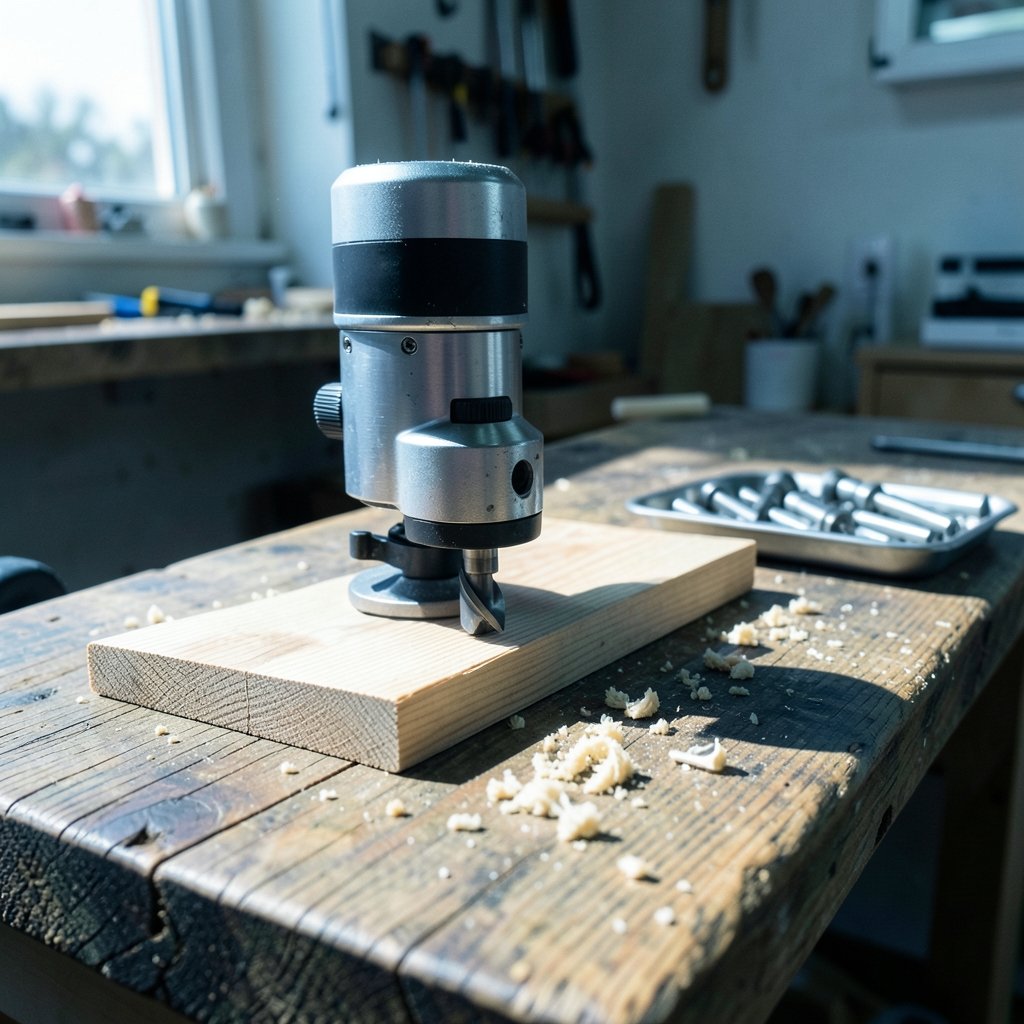
What actually happens when a spinning piece of carbide meets a plank of oak at 24,000 rpm? That question determines every clean edge, every crisp profile, and every scary kickback in a woodshop. The answer is the router bit, the small but mighty cutting tool that turns a plain router into one of the most versatile machines in woodworking. Get the bit right and the work looks effortless. Get it wrong and you get burn marks, chatter, torn grain, or worse.
This guide walks through what router bits are, how they are sized and held, which profiles do which jobs, how to run them safely, and how to keep them cutting like new. It is written for people who want practical answers rather than a catalog tour.
What Is a Router Bit, Exactly?
A router bit is a rotary cutting tool with a shaped cutting edge, mounted in a router or a spindle shaper and spun at high speed to cut wood, plastic, or composites. The profile of the cutting edge determines the shape of the cut. That is the whole idea in one sentence: change the bit, change the shape.
Terminology varies by region. In North America, woodworkers say “router bit.” In the United Kingdom and much of Europe, the same tool is often called a router cutter, and tooling for a spindle moulder (shaper) is called a spindle moulder cutter. The physics does not change, but buying the wrong search term can send you to the wrong product page.
Bits are typically made from high-speed steel (HSS) or carbide. Carbide-tipped and solid carbide bits generally hold an edge longer, especially in abrasive woods and composites, which is why they dominate serious shop use. HSS still has fans for very fine, clean cuts in softwoods and for budget work.
Shanks, Collets, and Why Size Matters

Every bit has a shank, the smooth cylindrical portion that the router grips. Common shank diameters are 1/4 inch and 1/2 inch in imperial markets, and 6 mm and 8 mm in metric markets. The bit is held by a collet, a split sleeve that squeezes the shank when the nut is tightened.
Here is the practical rule that experienced users repeat constantly: 1/2-inch shanks are generally preferred for large-diameter bits because they are stiffer and safer at high speed. A big panel-raising bit on a 1/4-inch shank is asking for vibration and flex. The collet must match the shank exactly. A 6 mm bit in a 1/4-inch collet (or the reverse) is a genuine safety hazard, not a minor inconvenience.
A few habits that prevent most collet problems:
- Insert the bit so the shank sits at least two-thirds of the way into the collet, but never so deep that the collet bottoms out.
- Tighten the collet nut firmly with the correct wrench, not by hand.
- Keep collets clean. Dust and dried resin reduce grip.
- Replace a collet that shows scoring or galling rather than tightening harder.
If you have ever fought with a router that refuses to accept a bit properly, the problem is often the machine rather than the cutter. A quick pass through the common router login and setup fixes mindset applies here too: check the basics before assuming the tool is broken.
How Bits Are Described: The Numbers That Matter
Manufacturers describe bits with a handful of dimensions, and reading them correctly saves money and fingers.
| Specification | What It Tells You | Why It Matters |
|---|---|---|
| Cutter diameter | Width of the cutting circle | Larger diameters need lower spindle speeds |
| Cutting length | Depth of the cutting edge | Limits how deep one pass can go |
| Overall length | Total bit length | Determines reach and clearance |
| Number of flutes | How many cutting edges | More flutes mean smoother feed and faster cutting |
| Bearing or guide type | Whether the bit follows a template or edge | Bearing-guided bits are the backbone of pattern work |
Bearing-guided bits deserve special mention. A small ball bearing above, below, or at the tip of the cutter rides along a template or the workpiece edge, transferring that shape to the cut. Flush-trim and pattern bits rely on this, and it is the reason template routing feels almost like tracing.
The Profiles You Will Actually Use
Walk into any supplier and you will see hundreds of bits. In practice, a small core set covers most work.
Straight bits cut flat-bottomed grooves, dados, and mortises. Spiral bits (up-cut and down-cut) are straight bits with helical flutes; up-cut spirals clear chips aggressively and can lift the work, while down-cut spirals press the surface down and reduce tearout on veneered or brittle material.
Flush-trim and pattern bits use a bearing to copy a shape from a template. Chamfer and round-over bits soften edges. Cove, ogee, and bead bits create decorative mouldings. Rabbeting bits cut a shoulder along an edge, usually with a bearing to control the width. Dovetail and slotting bits handle joinery and grooves. Panel-raising bits are large-diameter cutters that produce the raised field on cabinet doors.
There is a useful analogy in networking hardware: the right component does one job well. Just as a modem router combo simplifies a home network by combining roles, a well-chosen multi-profile or combination bit set can simplify a small shop. The catch is the same in both cases. Combined tools are convenient, but a dedicated tool usually performs better at its one task.
Safety: Speed, Feed Direction, and Guarding
Router-bit safety comes down to four things: correct feed direction, adequate speed for the bit diameter, secure workholding, and guarding. Skip any one and the risk climbs fast.
Feed direction is the mistake beginners make most often. On a router table, you feed the workpiece from right to left across the bit, against the rotation. Feeding with the rotation lets the cutter grab the wood and pull it through, which is the classic cause of kickback. Handheld routing follows the same principle: move the router left to right along the edge for an outside cut.
Speed matters because a large-diameter bit at full speed is genuinely dangerous. Big bits should run at lower spindle speeds. Many routers publish a chart showing maximum safe rpm for a given bit diameter, and it is worth taping that chart near the machine.
Depth of cut is the other quiet risk. Taking a full-depth pass in hardwood overloads the bit and the router. Two or three lighter passes produce a cleaner cut and far less stress on the tool and the operator.
Workholding and guarding complete the picture. Clamp the work, use push sticks and featherboards on the table, and never reach near a spinning bit. For anyone setting up a router table for the first time, the workflow of using a router table safely for clean cuts is worth reading before the first board goes across the cutter.
One more practical point: a dull bit is both a safety issue and a quality issue. Dull cutters increase kickback and burn risk because the operator pushes harder and the bit grabs rather than slices.
Choosing Bits Without Wasting Money
Bit shopping rewards a little discipline. A few guidelines that hold up in real shops:
Buy the best bit you can afford for the jobs you do most. A cheap straight bit that gets used weekly is a false economy. Buy individual bits for specialty profiles you need once. Buy a set only when the profiles genuinely overlap with your work. And check the shank size against your router before ordering, because a great 1/2-inch bit is useless in a trim router with a 1/4-inch collet.
Material choice follows the work. Carbide for abrasive hardwoods, MDF, and composites. HSS for fine clean cuts in softwood and for budget-conscious setups. Coated bits for extended life in production settings.
Storage matters more than people expect. Bits knocking around in a drawer chip their edges. A simple indexed bit case or a rack keeps cutting edges apart and makes the right bit easier to find.
Maintenance, Sharpening, and When to Replace
Router bits wear. The cutting edge dulls, resin builds up, and performance drops. The signs are predictable: burn marks on the workpiece, fuzzy edges, a bit that needs more push, and a higher-pitched sound.
Cleaning is the easiest maintenance win. Pitch and resin buildup create friction and heat, which shortens edge life. A bit cleaner and a soft brush handle most of it. Avoid soaking carbide in harsh solvents for long periods.
Sharpening is possible for many bits, especially straight and spiral cutters, but bearing-guided profile bits are trickier because the bearing and the profile geometry interact. For most hobbyists, replacing a worn profile bit is more practical than sharpening it. Professionals often send bits out to a sharpening service. (OSHA)
Store bits so the edges never touch anything hard. A little oil on steel shanks prevents rust. And keep a log, informal as it may be, of which bits get used most, because that tells you where to invest in quality.
Router Bits in the Wider Workshop
The router bit sits inside a system. The machine, the collet, the table, the fence, the featherboards, and the operator’s habits all interact. That is why a bit that performs beautifully in one setup chatters in another.
It is a bit like tuning a home network. A bufferbloat test and fix addresses latency under load in networking the way feed rate and depth of cut address chatter in routing: the underlying component is fine, but the operating conditions need adjustment. Similarly, a smart-home device that misbehaves after a reboot has a troubleshooting path not unlike a router that starts cutting poorly after a bit change. The fixes for a Matter device offline after a router restart follow the same logic of checking connections and resetting state. (Router (woodworking)))
The point is not that woodworking and networking are the same. It is that good results come from understanding the whole system rather than blaming one part.
Conclusion
The router bit is a small tool with an outsized role. It decides the profile, the finish, the speed, and much of the safety margin in any routing operation. Understanding shank sizes and collet matching, reading bit dimensions correctly, choosing profiles that match real work, feeding against rotation, running large bits slower, and keeping edges sharp covers the vast majority of what matters.
Start with a few quality bits in the profiles you use most. Add specialty cutters as projects demand them. Respect the speed chart. Take lighter passes. And treat dullness as a warning rather than a nuisance. Do those things and the router becomes what it is meant to be: a precise, repeatable shaping tool rather than a source of surprises.
Frequently Asked Questions
What is the difference between a router bit and a router cutter?
They are the same tool under different regional names. North American woodworkers typically say router bit, while UK and European woodworkers often say router cutter. Tooling for a spindle moulder is usually called a spindle moulder cutter.
Is a 1/2-inch shank always better than a 1/4-inch shank?
Not always, but it is the safer default for large-diameter bits. A 1/2-inch shank is stiffer and resists flex and vibration better at high speed. For small bits and trim routers, a 1/4-inch or 6 mm shank is perfectly appropriate.
How fast should I run a router bit?
It depends on cutter diameter. Large-diameter bits must run at lower spindle speeds, and most router manufacturers publish a maximum safe rpm chart by bit diameter. Follow that chart rather than running everything at full speed.
Why does my router bit burn the wood?
Burn usually comes from a dull bit, too slow a feed rate, or taking too heavy a cut in one pass. A sharp bit, a steady feed, and lighter multiple passes solve most burning problems.
Can router bits be sharpened?
Many straight and spiral bits can be sharpened, and professionals often send them to a sharpening service. Bearing-guided profile bits are harder to sharpen correctly because the bearing and profile geometry interact, so replacement is often more practical for hobbyists.
What causes kickback when routing?
Kickback usually comes from feeding the workpiece in the same direction as the bit rotation, from an overloaded cut, or from a dull bit that grabs instead of slices. Always feed against rotation, take lighter passes, and keep the work firmly clamped and guarded.



