

What if the biggest problem in your garden isn’t the seeds, the watering schedule, or the weather, but something you can’t see at all? Soil is a strange thing: it looks like dirt, but it works like a living system. It holds nutrients, controls water, and quietly sets the pH that decides whether your plants can actually eat what you feed them. A soil testing kit is the cheapest way to peek inside that system. But here’s the catch: the shelf is crowded with strips, capsules, probes, and digital meters, and they don’t all do the same job. This soil testing kits buying guide cuts through the noise so you buy the right tool, sample correctly, and read the results without fooling yourself.
Start With the One Number That Matters Most

If a buyer only remembers one thing from this guide, it should be this: soil pH is the most reliably useful measurement for home gardeners. pH controls how available nutrients are to plant roots. A soil packed with phosphorus and potassium is still useless to plants if the pH is badly off, because the nutrients get chemically locked up. That’s why pH-only kits are cheap, common, and often perfectly adequate for basic decisions.
The full picture usually covers pH plus N-P-K: nitrogen, phosphorus, and potassium. Most consumer kits measure these by colorimetry — you mix a soil sample with a reagent, wait, and compare the color against a chart. It sounds crude, and honestly, it is somewhat crude. But for a gardener trying to decide whether to add lime or back off the fertilizer, a rough pH reading plus a nutrient snapshot beats guessing entirely.
What the Color Chart Can and Can’t Tell You
Colorimetric and “rapid” field kits are generally less precise than laboratory analysis. University extension services tend to describe home kits as useful for screening and education, not as a substitute for lab results when real money or real decisions depend on accurate nutrient levels. So calibrate your expectations: a kit answers “is this soil roughly acidic or alkaline, and is anything wildly out of range?” It does not answer “exactly how many pounds of phosphorus per acre does this field need?”
That distinction matters, and it’s the single biggest source of buyer disappointment. People buy a twenty-dollar kit expecting lab numbers and feel cheated when the color looks “somewhere between medium and dark.” It isn’t a scam; it’s a screening tool doing what screening tools do.
The Main Kit Types, Compared Honestly

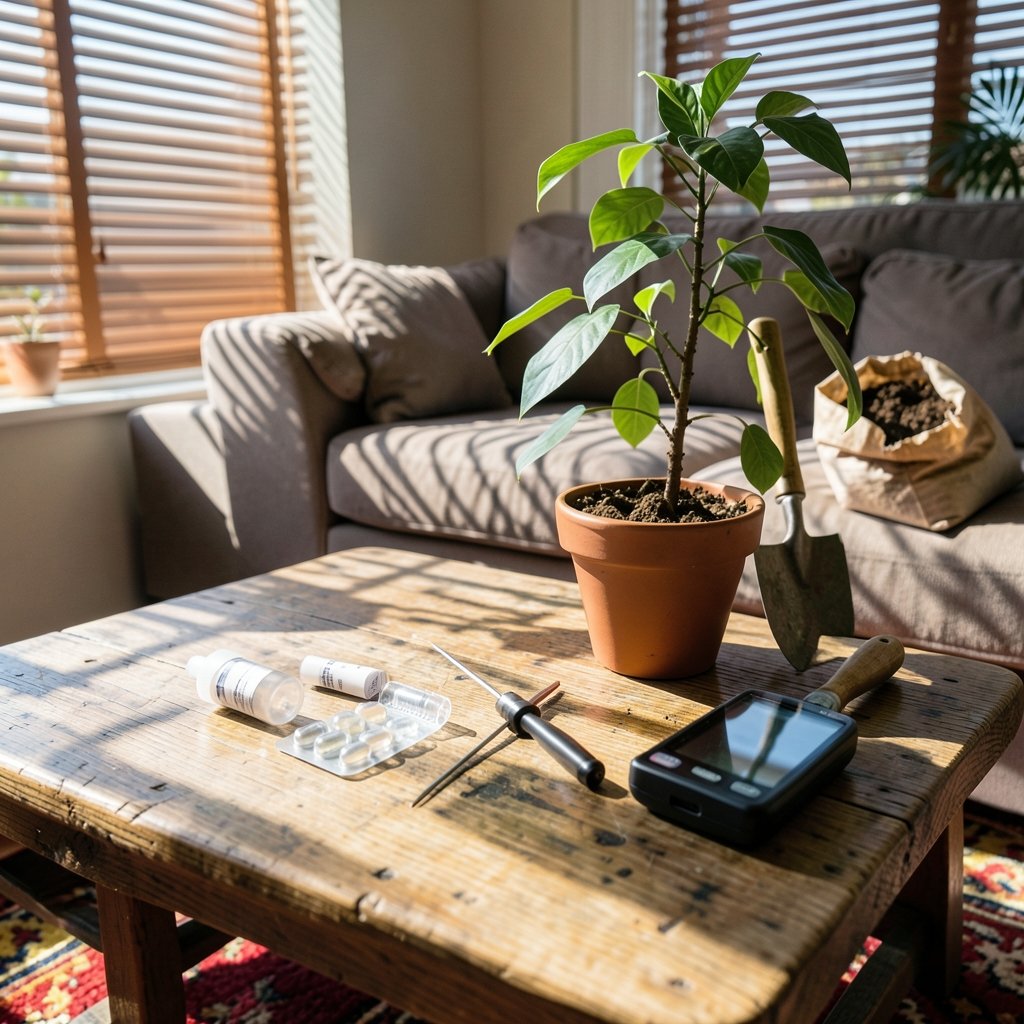
Before you compare brands, compare categories. Each format trades accuracy against cost, convenience, and repeatability.
| Kit type | What it measures | Accuracy | Best for | Watch out for |
|---|---|---|---|---|
| Test strips | pH, sometimes N-P-K | Low to moderate | Quick pH checks, teaching kids, rough screening | Color hard to read in dim light; single-use |
| Capsule or reagent kits | pH and N-P-K via color comparison | Moderate | Gardeners testing a few beds a year | Reagent shelf life; subjective color matching |
| Electronic probe meters | pH, moisture, sometimes light | Varies widely | Frequent spot checks if calibrated | Inexpensive units drift; need calibration |
| Lab test (mail-in or extension) | pH, nutrients, organic matter, CEC, sometimes lead | High | Serious decisions, new plots, urban gardens | Higher cost; wait time for results |
The cost trade-off is straightforward: multi-test kits and electronic meters cost more upfront but may pay off with repeated use, while single-use strips are cheapest per test and least precise. That’s a market observation, not a hard rule — your own testing frequency decides the math.
Why Electronic Meters Deserve Extra Skepticism
Digital soil meters look scientific. A screen with a number feels more trustworthy than a color chart. But accuracy varies widely, and inexpensive electronic probes are known to drift and need calibration. A meter that reads pH 6.5 today and 7.2 tomorrow on the same soil is worse than useless, because it gives you false confidence. If you go digital, budget for a calibration routine and treat the first reading of any session as a warm-up, not gospel.
Sampling Technique Beats Kit Brand Every Time
Here is the uncomfortable truth: proper sampling technique matters more than which kit you buy. A premium kit fed a bad sample produces bad results. A cheap kit fed a good sample produces useful ones. Standard guidance from soil scientists is consistent: take multiple sub-samples from a defined depth, mix them thoroughly, and test the composite.
For lawns and gardens, that depth is often around 6 inches (15 cm). The logic is simple. Soil isn’t uniform; one spot near the fence may be compacted clay while the middle of the bed is loamy. Testing a single scoop tells you about that scoop, not your garden.
- Divide the area into zones. Separate beds with different histories, soil types, or crops. Don’t mix the vegetable patch with the lawn.
- Take 8 to 10 sub-samples per zone. Walk a zigzag pattern so you’re not sampling only the good-looking spots.
- Dig to the correct depth. About 6 inches for lawns and garden beds. Remove surface litter first.
- Mix the sub-samples in a clean bucket. This composite is what you actually test.
- Let the sample dry slightly if the kit requires it. Follow the kit’s instructions exactly on this.
- Clean your tools between zones. A rinse prevents cross-contamination.
Common Sampling Mistakes That Ruin Results
- Sampling right after fertilizing, which skews readings badly
- Testing only one spot and treating it as the whole yard
- Using a rusty trowel or a galvanized bucket, which can contaminate trace measurements
- Testing soaking-wet soil when the kit specifies dry
- Skipping zones and averaging everything into one meaningless number
Timing matters too. Test before planting or fertilizing season, and avoid testing shortly after a fertilizer application. Recent applications distort the picture, and you’ll chase a nutrient number that isn’t really there.
When a Kit Isn’t Enough: Lab Tests and the Lead Question
Consumer kits have a blind spot, and it’s worth naming plainly. Lab-based tests report on far more parameters: organic matter, cation exchange capacity (CEC), micronutrients, and sometimes heavy metals. Most consumer N-P-K kits measure none of these. If you’re starting a new garden, managing a large plot, or making decisions that cost real money, a lab test through an extension service or commercial lab is the better tool.
The health angle deserves its own paragraph. Public-health and extension resources recommend soil testing for lead, especially in urban gardens and near older housing, because consumer N-P-K kits do not test for contaminants. Lead doesn’t show up on a color chart. If you’re growing food in city soil or near an older building, contaminant testing isn’t optional paranoia — it’s basic diligence. Local guidance varies by jurisdiction, so check what your area recommends.
Reading Units Without Getting Lost
Units and interpretation differ between kits and labs. You may see ppm (parts per million) on one report and lbs/acre on another. Some kits give index ratings (“low, medium, high”) instead of concentrations. Before buying, check what units the kit reports and whether it provides interpretation guidance. A number without a recommendation is just trivia.
Matching the Kit to Your Actual Life
The best kit is the one you’ll actually use correctly and repeatedly. A few practical profiles:
The container gardener with a handful of pots needs pH plus a rough nutrient read. Strips or a small capsule kit are plenty. If you’re also outfitting a workspace with gear, the same logic of buying for real use rather than spec sheets applies to things like a webcam worth buying for beginners and everyday use — match the tool to the job.
The raised-bed vegetable grower should test pH and N-P-K at the start of each season, and consider a lab test every few years for organic matter and CEC.
The lawn obsessive benefits from pH testing plus a lab baseline, since lawn fertility programs lean heavily on accurate numbers.
The urban food grower needs a lab test for lead before anything else. No kit replaces that.
If you enjoy methodical buying decisions — checking specs, verifying claims, refusing to pay for features you won’t use — the mindset is the same one behind a gaming keyboard buying checklist to verify before you pay. Verify what the product actually does before handing over money.
What to Check Before You Pay
- Expiration dates on reagents. Old reagents give wrong colors.
- What’s in the box. Refills, extra capsules, and test tubes affect real cost per test.
- Units and interpretation guide. Does it tell you what to do with the number?
- Number of tests included. Divide total price by tests to find true cost.
- Calibration instructions for any electronic meter.
- Whether it covers contaminants. Spoiler: most don’t, and the listing should say so.
Interpreting Results Without Overreacting
A single test is a snapshot, not a verdict. Soil changes slowly, and kit readings carry error bars. Treat results as directional. If pH reads low, that’s a signal to consider lime — not a command to dump it in. If nitrogen reads high, that’s a reason to skip fertilizer, not to celebrate.
Retest after major interventions, but give them time to work. And keep notes: date, zone, kit used, readings. A simple log turns scattered numbers into a trend, and trends are what actually guide decisions.
For readers who like structured verification in other purchases too, the discipline of checking claims against reality shows up everywhere — from a tablet worth buying for beginners and everyday use to a budget gaming chair worth buying without regret. The principle holds: know what you’re measuring before you measure it.
Conclusion
A soil testing kit won’t magically fix your garden, but it will stop you from guessing. Buy for the measurement you actually need — pH first, N-P-K second, lab tests when the stakes are high or contaminants are a concern. Sample properly, with multiple sub-samples mixed into a composite at the right depth. Time your test before fertilizing, not after. Read the units, keep a log, and treat every reading as a direction rather than a decree. Do those things, and even a modest kit becomes a genuinely useful instrument. Skip them, and the most expensive kit on the shelf is just a box of colored water.
Frequently Asked Questions
Are cheap soil testing kits accurate enough to trust?
For pH, often yes — pH is the most reliably useful measurement for home gardeners, and even basic kits give a workable reading. For N-P-K, expect screening-level accuracy, not lab precision. Colorimetric kits are generally less precise than laboratory analysis, so use them to spot big imbalances, not to fine-tune fertilizer rates.
How many spots should I sample in my garden?
Aim for 8 to 10 sub-samples per zone, taken in a zigzag pattern and mixed into one composite sample. Sampling technique matters more than kit brand, so this step is where accuracy is won or lost. Separate zones with different soil, crops, or histories, and clean tools between them.
Do I need a lab test instead of a home kit?
If you’re making high-stakes decisions, starting a new garden, or growing food in urban soil near older housing, yes. Lab tests report organic matter, cation exchange capacity, micronutrients, and sometimes heavy metals — parameters most consumer kits don’t measure. Public-health and extension resources recommend lead testing for urban gardens specifically.
When is the best time to test soil?
Test before planting or fertilizing season. Avoid testing shortly after a fertilizer application, because recent applications skew readings and you’ll chase numbers that aren’t really there. Retesting after major amendments is fine, but give the soil time to respond first.
Why does my electronic soil meter give different readings each time?
Inexpensive electronic meters are known to drift and need calibration. Accuracy varies widely across models, so a meter that changes readings on the same soil is giving you false confidence rather than data. Follow the calibration instructions, and if readings stay erratic, switch to a colorimetric kit or a lab test.
What units will my results be in?
It depends on the kit. You may see ppm, lbs/acre, or index ratings like low, medium, and high. Units and interpretation differ between kits and labs, so check before buying whether the kit reports concentrations or ratings and whether it includes guidance on what the numbers mean for your plants.



