
South Korea Weighs Doubling Its Stock Rescue Fund as Market Swings Deepen
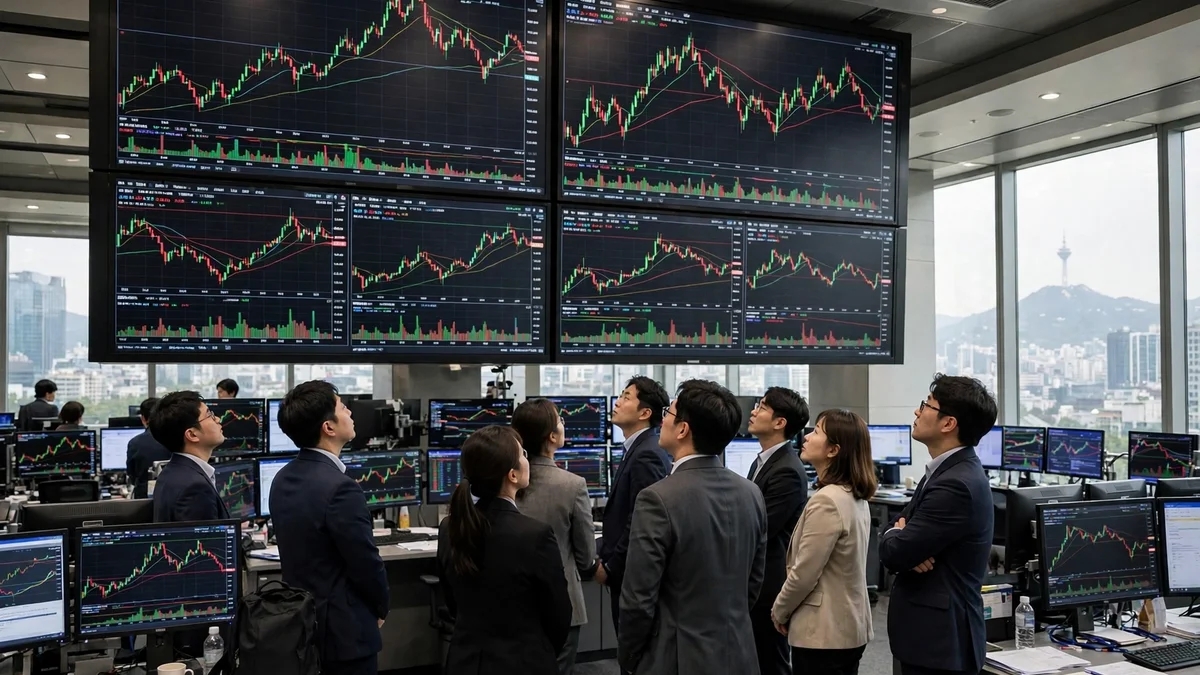
South Korea is weighing a sharp expansion of its stock market stabilization fund, with talks under way that could roughly double the rescue fund as officials prepare for the possibility of stepping into the market. Bloomberg reported on 27 November that authorities are considering enlarging the fund, which currently holds 10.76 trillion won in pledged commitments, or about 8 billion dollars, as sharp swings in equities put Seoul’s markets under strain.
The discussions centre on the country’s five largest financial groups — KB, Shinhan, Hana, Woori and NH NongHyup — each weighing raising its commitment to as much as 2 trillion won. Together the five have pledged 4.7 trillion won, and if all five raise their pledges, the fund’s total would climb from 10.76 trillion won to 16.06 trillion won.
Nothing is decided yet. Any increase remains under discussion, and officials have not said whether the fund will actually be used. But the pace of the talks, and the meetings scheduled around them, show how seriously Seoul is taking the recent volatility in its stock market, where a sharp sell-off in chip shares has rattled investors and wiped out large parts of the year’s earlier gains.
Key takeaways
- South Korea’s stock stabilization fund holds 10.76 trillion won in pledged commitments, and talks are under way to expand it, possibly to around 20 trillion won.
- The five biggest financial groups — KB, Shinhan, Hana, Woori and NH NongHyup — are each weighing pledges of up to 2 trillion won, against 4.7 trillion won combined today.
- The fund was created in 2020 and has never bought stocks, even during the 2022 Legoland crisis, so any purchase would be a first.
- Banks are cautious because bigger pledges weigh on their capital ratios, and they want regulators to ease the risk-weight burden on committed funds.
- Citi Research sees the fund growing to between 20 trillion and 40 trillion won, and says 1 trillion to 2 trillion won could be drawn from existing pledges as early as December.
| Item | Detail |
|---|---|
| Fund | Securities Market Stabilization Fund, created in 2020, funded by pledges from banks, insurers and securities firms |
| Current size | 10.76 trillion won in commitments, about 8 billion dollars |
| Possible size | 16.06 trillion won if the five big groups raise pledges to 2 trillion won each; around 20 trillion won with other contributors |
| Big five pledges now | 4.7 trillion won combined; KB, Shinhan, Hana and Woori at 1 trillion won each, NH NongHyup at 700 billion won |
| Largest contributor | Korea Development Bank, which asked contributors whether they could meet existing pledges and add more |
| Key dates | Fund committee met on Sunday 29 November; financial authorities meet the five group chiefs on Monday 30 November |
| Market context | Kospi rose 4.34 percent to 4,915.68 on Friday 27 November, with Samsung up 4.55 percent and SK Hynix up 5.41 percent |
What the rescue fund is and why it exists
The Securities Market Stabilization Fund is a pool of money pledged by financial companies and related institutions to support the stock market during sharp downturns. It was set up in 2020, during the pandemic market turmoil, and it works on a capital-call basis: institutions promise money up front and pay it in only when they are asked to, within the limits they have committed.
The fund’s size has also shrunk in relative terms since it was created. When it was set up, its 10.76 trillion won equalled about 0.94 percent of the combined market value of Kospi and Kosdaq stocks, according to Citi Research. The market has grown sharply since then, so the same money now covers a much smaller share of it.
How the talks to double the fund are unfolding
The talks began in earnest when the Korea Development Bank, the fund’s largest contributor and its lead manager, asked participating firms on 23 November whether they could meet their existing pledges and how much more they could commit. That inquiry, reported by Yonhap and others, set off internal reviews across the financial sector. Each of the five big groups is now examining how much extra it could pledge and how the commitment would be divided among its subsidiaries.
The shape of a deal is already visible. KB, Shinhan, Hana and Woori each pledged 1 trillion won through their banks when the fund was created, and each is weighing raising that to 2 trillion won. NH NongHyup’s 700 billion won commitment is split among its bank, life insurer, brokerage and nonlife insurer, and it is examining a plan to double its combined contribution to 1.4 trillion won. If all five groups go to 2 trillion won each, their combined share rises by 5.3 trillion won, from 4.7 trillion won to 10 trillion won.
Why the banks are pushing back
For all the talk of doubling, the banks are cautious, and their caution is about capital. A larger commitment weighs on a bank’s capital ratios even before any cash is paid in, because a portion of an undrawn pledge counts toward risk-weighted assets.
That arithmetic bites because the five holding companies are already close to a threshold that matters to their shareholders. As of the end of September, their common equity tier 1 ratios ranged from 13.05 percent to 13.83 percent, barely above the 13 percent level associated with expanded shareholder returns. Simply raising commitments sharply increases risk-weighted assets, and the Seoul Economic Daily reported that contributing more than 1 trillion won in additional capital would be difficult for individual banks on that basis.
There is also a question of timing. Even if the groups agree in principle, new commitments are expected to take one to two months to clear internal reviews and board approvals. That is why Citi economist Kim Jin-wook suggested authorities could collect 1 trillion won to 2 trillion won from existing pledges for possible investment as early as December, before the expansion is finalised. A larger commitment and earlier timing, he wrote, could raise the effectiveness of the signal the fund sends to the market.
What analysts think the fund should look like
Citi Research has put the most detailed numbers on the table. In a report released on Thursday 26 November, economist Kim Jin-wook said the fund could expand to between 20 trillion won and 40 trillion won as Korea’s equity market has grown since 2020 — roughly 0.47 percent to 0.95 percent of the combined market value of Kospi and Kosdaq stocks today.
Kim also raised the possibility of a government capital injection into the Korea Development Bank if the fund expands to the upper end of the range. The government would have more than enough fiscal capacity to provide support, he wrote, given chip-driven excess tax revenue for 2026. That observation links the fund’s future to the same semiconductor boom that has driven the market’s swings: the chip cycle is both the source of the volatility and, through tax receipts, a potential source of the money to steady it.
The market gave a hint of what is at stake on Friday 27 November, when the Kospi climbed 4.34 percent to 4,915.68, with Samsung up 4.55 percent and SK Hynix up 5.41 percent. The rebound showed how fast sentiment can turn. The pressure is regional: foreign money was leaving Taiwan stocks at a record pace, as our coverage of foreign money leaving Taiwan stocks explains. For the background, see our report on how Korean stocks collapsed after their 116 percent surge and how China’s market support statement sparked a stock rally.
What it means for investors and the market
For investors, the most important fact is that nothing has been deployed yet. The fund is a promise of money, not money in the market, and the talks are about the size of the promise. The signal matters, but a signal is not a purchase, and officials stress that no decision on intervention has been made.
The other point is the cost. If the banks win relief on risk weights, the expansion becomes cheaper for them and more likely to happen at scale. If they do not, the fund may grow more slowly, or the groups may pledge less than the 2 trillion won each now under discussion.
Checklist: what to watch next
- Watch the Financial Services Commission meeting on Monday 30 November for the agreed size of the increase and any statement on deployment.
- Watch whether each of the five groups confirms a pledge of up to 2 trillion won, and how NH NongHyup splits its increase across its affiliates.
- Watch for any easing of the risk weight on fund contributions, which would make a larger expansion easier for the banks to carry.
- Watch for a capital call of 1 trillion to 2 trillion won from existing pledges in December, which would be the first real money moving.
- Watch the Kospi and the chip shares, Samsung and SK Hynix, for signs of whether the volatility is easing or building again.
- Watch for any comment from the Finance Ministry or the Bank of Korea on whether the fund will actually be used, since no decision has been made yet.
Frequently asked questions
How big is South Korea’s stock stabilization fund now?
The fund holds 10.76 trillion won in pledged commitments, about 8 billion dollars. The five largest financial groups account for 4.7 trillion won of that total.
How big could the fund become?
If the five big groups each raise pledges to 2 trillion won, the total would climb to 16.06 trillion won, and with other contributors it could reach around 20 trillion won. Citi Research sees a range of 20 trillion to 40 trillion won.
Has the fund ever bought stocks?
No. The fund was created in 2020 and has never bought stocks, including during the 2022 Legoland crisis. Any purchases now would be a first of this kind since the 2008 global financial crisis.
Why are the banks reluctant to pledge more?
Bigger pledges weigh on capital ratios even before cash is paid, because part of an undrawn commitment counts toward risk-weighted assets. The five groups’ core capital ratios were 13.05 to 13.83 percent at the end of September.
When could money actually reach the market?
New commitments would take one to two months to clear internal reviews and board approvals. But 1 trillion won to 2 trillion won could be collected from existing pledges as early as December, according to Citi Research.
What is the fund meant to do?
It is a pool of pledged money from financial institutions, designed to support the stock market during sharp downturns. Institutions pay in only when asked, on a capital-call basis.
Bottom line
South Korea’s stock rescue fund is on the verge of its biggest change since it was created. Talks to double it — from 10.76 trillion won toward 20 trillion won, with the five biggest groups each weighing pledges of up to 2 trillion won — show officials preparing for possible intervention, even as they insist no decision has been made.
For now, the fund remains a promise rather than a purchase. Its history says it may stay that way: it has never been used. But a promise twice as large, backed by the country’s biggest banks and its state development bank, is a different kind of signal from the one Seoul has sent before. Whether that signal is enough to calm the market will be tested in the weeks ahead, starting with what is agreed on Monday and what, if anything, is collected from existing pledges in December.


