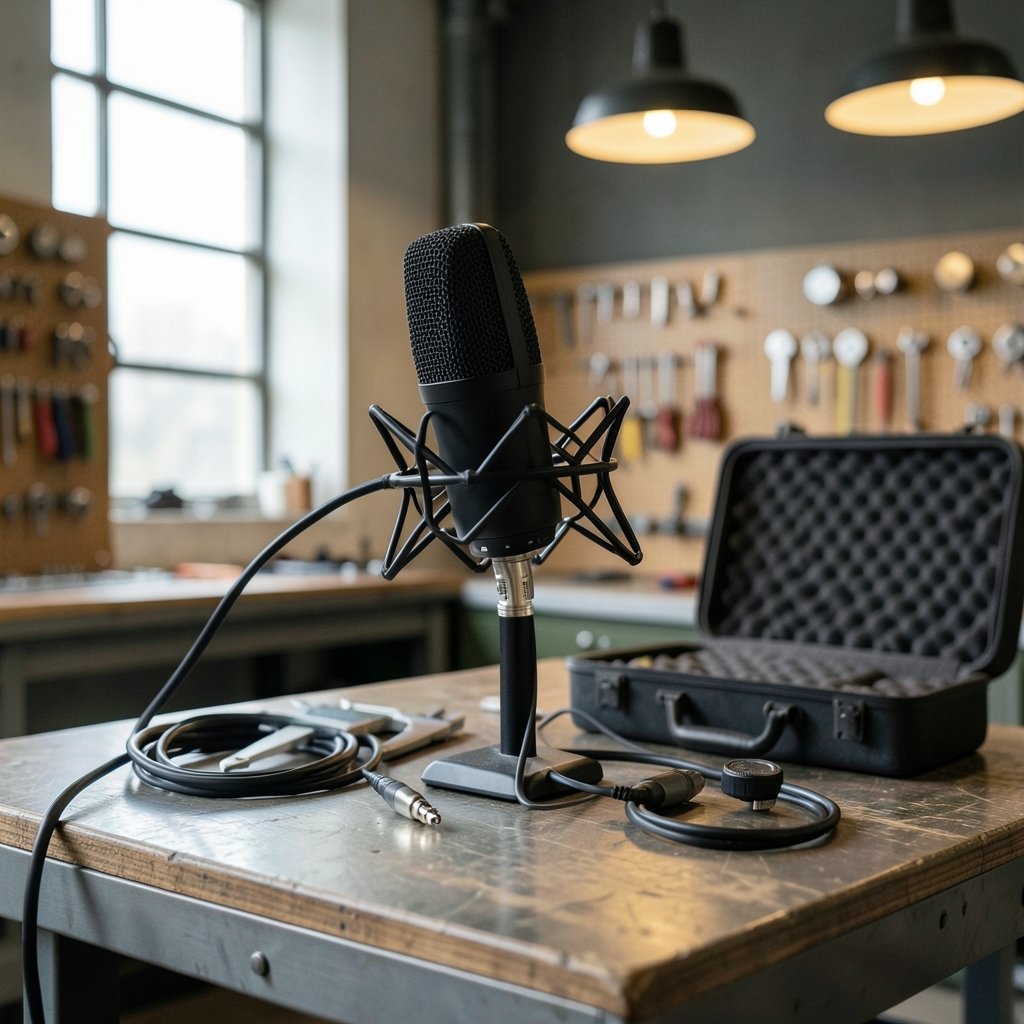
Why does it feel like a new streaming microphone hits the market every other week? Because it does. Audio has quietly become the most competitive corner of creator gear, with lighting brands, peripheral makers, and legacy audio companies all pushing USB models at streamers, podcasters, and gamers at home. The result is a launch cycle that moves fast and produces a lot of noise, some of it literal.
For anyone trying to make sense of these releases, the useful question is not “which mic is newest?” but “what does this launch actually change?” A bigger capsule, a wireless connection, a mute button you can stick across the room. Each launch promises something specific, and some of those promises matter far more than others. Here is a practical look at the current wave of streaming microphone launches, what the models have in common, and how to judge a new release without getting swept up in the marketing.
What a Streaming Microphone Launch Usually Means Now
A decade ago, a microphone launch meant a studio product with an XLR connector and a price tag that made hobbyists wince. That pattern has flipped. Most launches aimed at streamers are plug-and-play USB microphones, often with USB-C, sometimes with RGB lighting, and almost always with a cardioid pickup pattern.
The GXTrust launch of its Emita II line and GXT 238 Auron is a good example of the shape these releases take. The Emita II Streaming Microphone with Table Stand sits at €79.99, the Emita II+ with a boom arm at €89.99, and the illuminated Auron at €49.99. Both Emita II models use a 16mm condenser capsule and a cardioid pattern designed to focus on the speaker’s voice while cutting background noise, plus pop and wind filters, a metal-alloy casing, and an external shock mount to reduce vibration.
Look closely and you can see the formula: a capsule spec, a pickup pattern, a couple of practical extras, a few price tiers, and a design detail that photographs well. That is not a criticism. It is simply what buyers are being offered, and knowing the formula helps you read the next announcement more clearly.
The Specs That Keep Showing Up, and Which Ones Matter
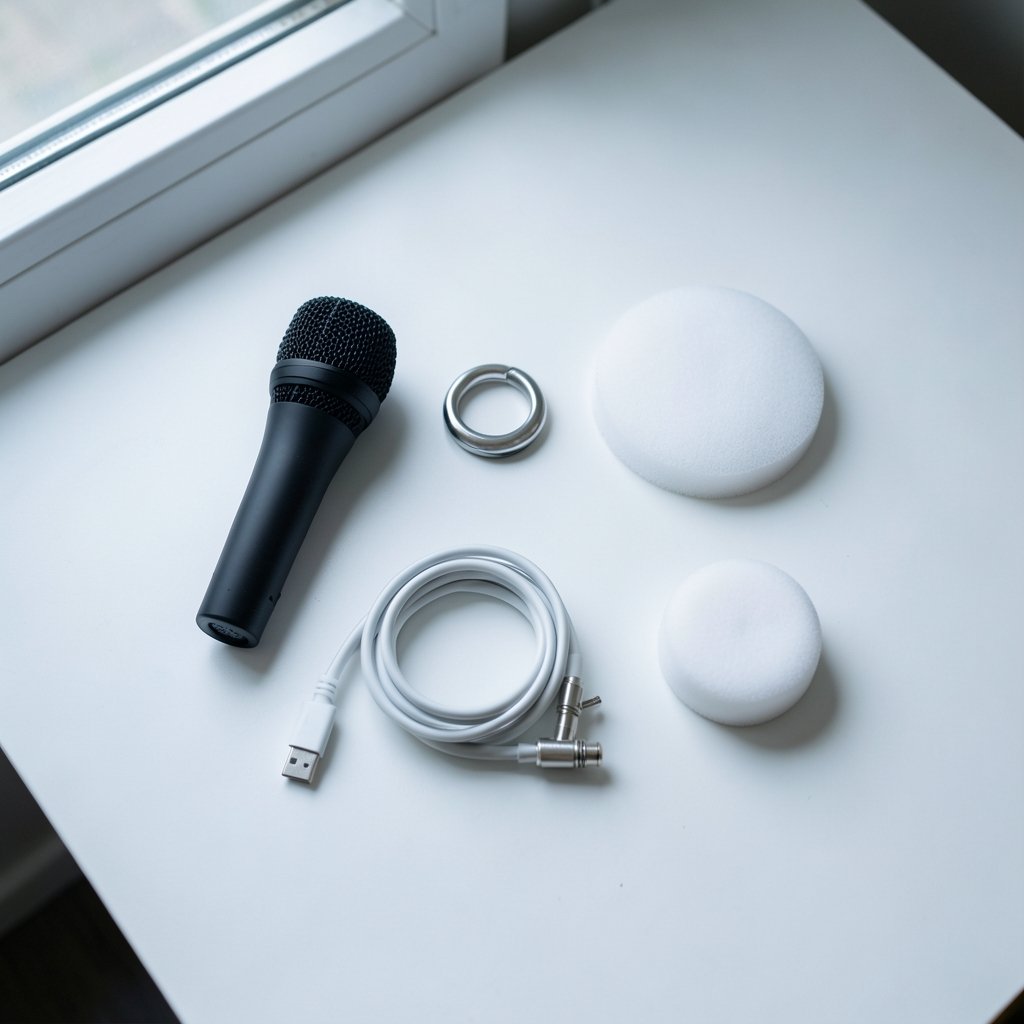
Across recent launches, a handful of terms repeat. Some are genuinely useful. Others are decoration.
| Spec or feature | What it does | How much it matters |
|---|---|---|
| Cardioid pickup pattern | Captures sound from the front, rejects the sides | High. The default for solo streaming |
| Condenser capsule size | Affects detail and sensitivity | Medium. Bigger is not automatically better in an untreated room |
| USB-C connection | Simple setup, no interface needed | High for beginners |
| RGB lighting | Looks good on camera, shows mute status | Low for audio, real value for presentation |
| Built-in mute control | Kills the mic without software | High. Used constantly in practice |
| Shock mount | Reduces desk thumps and vibration | High if you type or bump the desk |
| 32-bit recording | Extra headroom against clipping | Medium to high, depending on your gain habits |
The pattern to notice is that the features affecting your daily stream, like mute, shock mounting, and connection type, tend to be cheaper to add than the ones that affect raw audio character. A launch can be packed with convenience features and still sound ordinary. That is not a trick, just a different set of priorities.
USB-C and Plug-and-Play: The Baseline, Not the Bonus
If a new streaming microphone does not connect over USB in some form, it is aimed at a different buyer. Corsair’s first USB condenser microphone, the VOXARA, leans hard into this. It uses a large 25mm condenser capsule, records in 32-bit audio for a wide dynamic range and extra headroom against clipping, and works with the Elgato ecosystem including Wave Link 3.0 for routing and mixing audio sources. It also carries ARGB lighting through the mic cap.
The 32-bit detail deserves a plain explanation. More bits in the recording does not make your voice sound better on its own. What it does is give you room to set gain a little hot without harsh distortion when you get loud. For streamers who shout during a boss fight, that is a genuinely practical benefit. For someone who speaks at a steady volume, it is insurance rather than a transformation.
USB-C also solves a problem that used to trip people up constantly: mismatched connectors and drivers. When a mic is class-compliant over USB, it usually appears in your system without extra software. That is the quiet reason USB models dominate the streaming market. The launch language sounds technical, but the benefit is simple. You plug it in and it works.
Wireless and Battery Life: The New Front in Mic Launches
The most interesting shift in recent launches is the move away from cables on the desk. The amaran Mic, the lighting brand’s first audio product, pairs a 30mm dynamic capsule with built-in AI noise reduction, wired or wireless recording, and up to 60 hours of battery life. It uses a supercardioid pickup pattern to focus on the sound in front of it and reduce noise from the sides, and it is priced at €99.
The reasoning behind it is refreshingly honest. As Maxwell Miranda, Global Product Marketing Manager at amaran, put it: “If you look at a streamer’s desk, there are a lot of cables, so the ability to have it wireless does free them up from a lot of clutter.”
That is the real pitch. Not better audio, but a less annoying desk. Whether wireless suits you depends on your setup. A mic that can sit anywhere without a cable is great for creators who move around or record away from the desk. It also introduces a battery to manage, which is a new habit to build. In practice, the people who love wireless mics are the ones who remember to charge them.
Maono’s PD500W takes a hybrid approach. It launched globally after a Kickstarter campaign that raised more than double its funding goal, and it offers XLR connectivity for an external mixer alongside a USB-C wireless receiver for phones, tablets, cameras, and laptops. The capsule is a 30mm dynamic with a 50 Hz to 16 kHz frequency response, outputting 48 kHz, 24-bit audio over XLR or through the receiver. It also includes AI background noise reduction.
Dynamic Versus Condenser: The Choice Behind the Spec Sheet
Recent launches split cleanly into two camps, and the split matters more than any single feature.
Condenser microphones like the Emita II and the Corsair VOXARA are sensitive and detailed. They capture nuance well. They also capture your keyboard, your fan, and the neighbor’s dog. In a quiet, treated room, they shine. In a bedroom with a humming PC, they demand more work.
Dynamic microphones like the amaran Mic and the Maono PD500W are less sensitive by design. They reject more of the room and tend to sound tighter and more focused on the voice. For streamers in imperfect spaces, which is most streamers, that is often the smarter pick.
The Audio-Technica AT2040USB sits in the dynamic camp with a hypercardioid pattern, a shock mount, a multistage foam mesh windscreen, and a converter sampling up to 24-bit/96 kHz. A hypercardioid pattern is even more focused than cardioid, which helps isolate your voice but also means mic placement matters more. Point it slightly off-axis and you will hear the difference.
If you are unsure which camp fits you, it helps to start from your room rather than the spec sheet. The guide on how to choose a microphone that fits your actual recording needs walks through that decision in practical terms.
Flexibility Features: Patterns, Mute Buttons, and Modes
A quieter trend in launches is adjustability. The SPC Gear AXIS offers variable directionality with four polarity settings: cardioid, bi-directional, stereo, and omni-directional. It also includes a recording volume knob, a 3.5mm headphone jack, a touch mute button, and adjustable RGB backlight, all in a metal frame on a stable base.
Multi-pattern mics are useful if you ever record more than one person or want a roomier sound. For a solo streamer, cardioid will be the setting you leave it on, and the extra patterns are insurance for future projects. That is worth knowing before you pay extra for flexibility you may never use.
Mute controls are the opposite: almost everyone uses them, and the design choices are getting creative. LORGAR’s SMP40 Streaming Microphone Pro builds on its Voicer line with RGB lighting, platform integration, and what it describes as an industry-first self-powered wireless remote mute button. A mute button you can keep across the desk, or on a controller, solves a real problem. Reaching for a software mute mid-sentence is exactly when things go wrong.
CHERRY XTRFY’s Ngale series, the brand’s first microphones, pairs a large capsule and a low-cut filter with retro-inspired RGB that indicates mute status. The low-cut filter, sometimes called a high-pass filter, trims low-frequency rumble from your desk and room. It is a small feature that quietly improves clarity, and it is worth checking for on any new model.
What Actually Changes Your Stream, and What Does Not
Here is the honest sorting that most launch coverage skips.
Things that reliably improve your stream: a pickup pattern suited to your room, a shock mount or boom arm that keeps the mic off the desk, a mute control you can reach instantly, and a connection that does not fight your software.
Things that help only in specific situations: 32-bit recording if you run hot gain, wireless if cables genuinely limit you, multi-pattern switching if you record guests, and RGB if presentation is part of your brand.
Things that rarely change much: capsule size on its own, marketing language about studio-grade sound, and the number of features on the box.
A new launch can be excellent and still not be the right mic for you. The practical move is to match the feature list to the problem you actually have, then check how the mic behaves in software. If your audio sounds off after setup, the culprit is often not the mic at all. The fix for Bluetooth earbuds with a muffled mic on PC follows the same logic: check the input device, the gain, and the processing before blaming the hardware.
Where Launches Fit in a Real Setup
A microphone is one piece of a chain, and launches in one category often expose weak links in another. A sensitive new condenser will reveal a noisy room. A wireless mic will reveal how often you forget to charge things. A premium model will reveal that your stream software is applying aggressive noise suppression that makes everything sound underwater.
That is why it pays to think about the whole setup. If you are weighing a budget model against a more expensive one, the breakdown of whether premium streaming microphones are worth it for a small gaming channel is a useful reality check. And if your audio is fine but your software is fighting you, the guide to which streaming software works well with OBS in practice covers the settings that matter.
The same launch cycle is happening in every category around your mic. New webcams arrive with better sensors, and new lights arrive with better color accuracy. Knowing what a launch actually delivers helps you decide where your next dollar goes, whether that is audio, video, or lighting.
How to Judge the Next Launch Without Getting Swept Up
When the next streaming microphone announcement lands, a short checklist cuts through the hype fast.
- Identify the capsule type and pickup pattern first. Everything else follows from these two.
- Check the connection: USB-C, XLR, wireless, or a hybrid. Match it to your gear, not to the spec sheet.
- Look for practical controls: mute, gain, headphone monitoring, and a low-cut filter.
- Ask whether the mounting suits your desk. A table stand picks up thumps. A boom arm does not.
- Ignore the adjectives and find the numbers: capsule size, bit depth, sample rate, battery life.
- Read what real users say about room noise, not just voice quality.
Most launches will pass three or four of these checks. Very few pass all six. That is normal, and it is fine. The goal is not the perfect mic. It is the mic that solves your specific problem at a price you are happy with.
Conclusion
Streaming microphone launches are arriving faster than ever, and the range is wider than it has been in years. Budget USB models with solid capsules, premium condensers with 32-bit recording, wireless dynamic mics built for cluttered desks, and multi-pattern options for creators who record more than themselves. The competition is good news for buyers, because it pushes practical features like mute buttons and shock mounts down into cheaper models.
The trick is to read each launch for what it changes rather than what it promises. A bigger capsule is not automatically better in a noisy room. Wireless is not automatically better if you forget to charge. RGB is not audio, but it is not nothing either. Match the feature list to your room, your habits, and your software, and the right microphone becomes much easier to spot. The launches will keep coming. With a clear checklist, you can let most of them pass and pay attention only when something genuinely fits.
Frequently Asked Questions
What is the difference between a condenser and a dynamic streaming microphone?
A condenser microphone is more sensitive and captures more detail, which suits quiet, treated rooms. A dynamic microphone is less sensitive, rejects more room noise, and tends to sound tighter on the voice, which suits typical bedrooms and untreated spaces. Neither is better overall. The right choice depends on how much background noise your room has.
Do I need a USB-C microphone or an XLR one?
USB-C microphones are plug-and-play and need no audio interface, which makes them the simplest starting point for streamers. XLR microphones require an interface or mixer but offer more flexibility and upgrade paths. Some newer models, like the Maono PD500W, offer both, which is useful if you might grow into a larger setup later.
Does 32-bit recording actually improve my stream audio?
Not directly. Bit depth affects dynamic range and headroom, not tone. The practical benefit of 32-bit is that loud moments are less likely to clip and distort. If you set your gain carefully and speak at a steady volume, you may never notice the difference. If you get loud on stream, it is worthwhile insurance.
Are wireless streaming microphones reliable enough for regular streaming?
They can be, provided you manage battery life and accept the charging habit. Wireless models like the amaran Mic offer up to 60 hours of battery, which covers many sessions. The main risk is forgetting to charge before a stream. Treat it like any other battery-powered gear and keep a charging routine.
What does a cardioid pickup pattern mean in practice?
Cardioid captures sound from the front of the microphone and rejects sound from behind and the sides. For a solo streamer, that means your voice is picked up clearly while your keyboard, fan, and room reflections are reduced. It is the most common pattern on streaming microphones for exactly this reason.
Do RGB lights on a microphone affect sound quality?
No. RGB lighting is a visual feature. Its practical value is presentation and, in some models, showing mute status at a glance. It does not change how the microphone captures audio. Judge the mic on its capsule, pattern, and controls, then treat lighting as a separate design choice.