
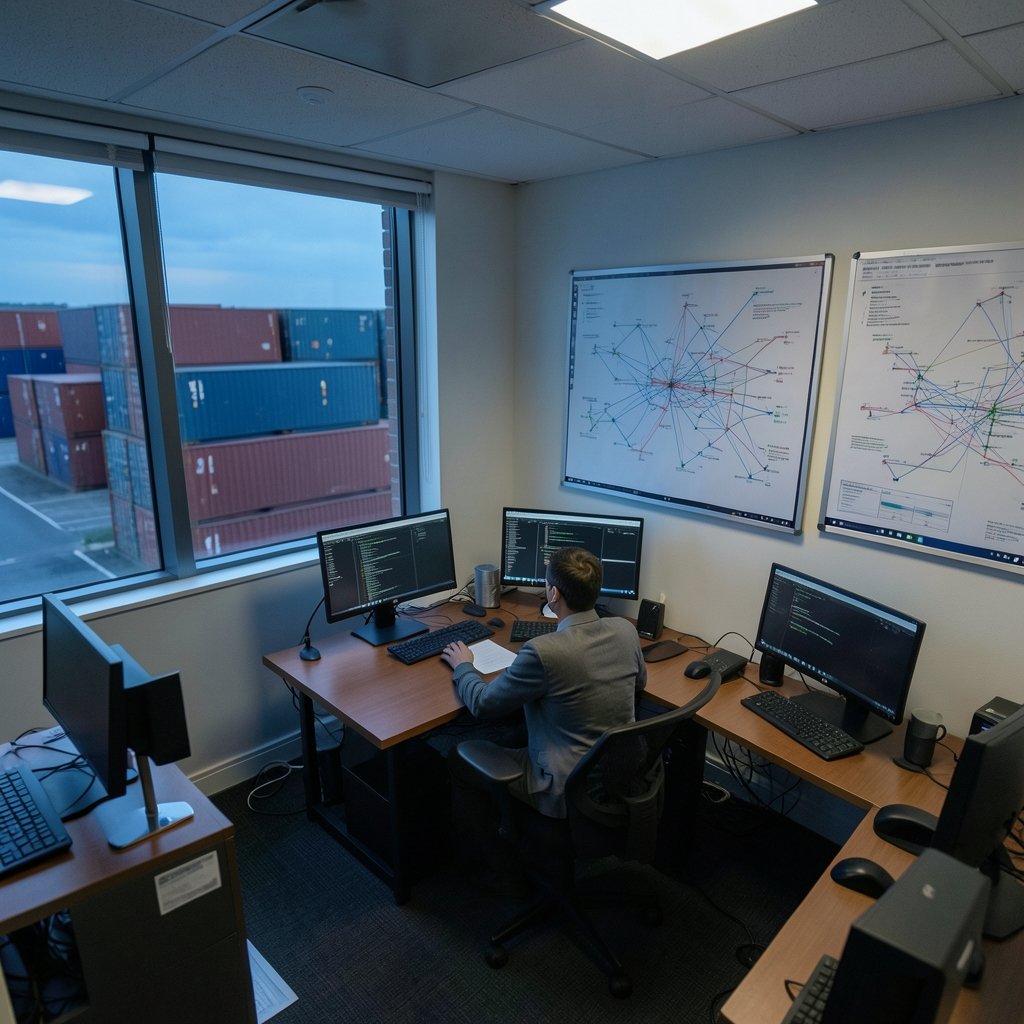
What do you do when a supplier calls to say its systems have been breached, and your data was sitting on them? That moment is the real test of supply chain security. It is not the policy document you signed two years ago. It is the scramble to figure out what broke, what data left the building, and whether your customers are exposed.
Supply chain security troubleshooting is the discipline of finding, containing, and fixing weaknesses that enter your organization through vendors, software dependencies, and third-party services. It is part detective work, part negotiation, and part engineering. This article breaks down how to do it well, from the first alert to the final post-mortem, with the mistakes that trip up even experienced security teams. (Best internet security australia)
Why Supply Chain Troubleshooting Is So Hard
Most security incidents happen inside systems you control. Supply chain incidents happen in systems you do not. That single difference explains most of the pain.
When a vendor is compromised, you often learn about it late, get partial information, and have limited power to force a fix. A 2020 study by the Ponemon Institute found that 51 percent of organizations had experienced a data breach caused by a third party, and many did not discover it for months. The SolarWinds Orion compromise, disclosed in December 2020, is the textbook example: attackers compromised a trusted software vendor and distributed malicious updates to thousands of customers, including US government agencies.
The troubleshooting challenge is structural. You cannot log into your supplier’s network. You cannot read their code. You depend on their honesty, their speed, and their security maturity. Good troubleshooting means building the visibility and contractual leverage you need before the incident, then using it calmly when things go wrong.
Start With Visibility: You Cannot Fix What You Cannot See

The first troubleshooting step is almost always the same: build an accurate map of who touches your data and systems. Most teams discover during an incident that their vendor list is incomplete, outdated, or both.
A practical approach:
- Pull every vendor from procurement records, accounts payable, and cloud billing. Financial data is often more accurate than security inventories.
- Identify which vendors process sensitive data, have network access, or ship software into your environment.
- Rank them by criticality: what breaks if this vendor disappears or turns hostile tomorrow?
- Assign an owner to each critical vendor and record the security contact, not just the sales contact.
The NIST Cybersecurity Framework 2.0, released in February 2024, added a Govern function that explicitly covers supply chain risk management. It is a useful structure because it pushes organizations to treat supplier risk as a board-level concern rather than an IT afterthought. If your troubleshooting keeps stalling because nobody has authority to demand answers from a vendor, the problem is governance, not technology.
Diagnosing the Incident: Triage Questions That Actually Help
When a supply chain incident lands, teams waste hours on the wrong questions. Instead of asking “how did this happen,” ask these first:
| Question | Why it matters |
|---|---|
| What data did the vendor hold, exactly? | Scoping determines legal and customer obligations |
| Was access read-only or write-capable? | Write access means potential tampering, not just theft |
| Which of our systems accepted vendor code or credentials? | Defines the blast radius |
| Is the vendor still compromised right now? | Determines whether to cut connectivity immediately |
| What are our contractual notification timelines? | Drives the clock on disclosure |
A common mistake is trusting the vendor’s initial statement. Early information is usually incomplete. Treat the first briefing as a starting point, request written confirmation of scope, and keep your own timeline of what you knew and when. Regulators and customers will ask for it.
For teams that also manage physical security alongside digital controls, the same triage logic applies to hardware vendors and access systems. It helps to understand how connected devices are secured before an incident, which is why guides like home security systems: 8 best picks for every home are worth reading even for corporate buyers evaluating smart locks and cameras on office premises.
The Software Dependency Problem
Modern applications are mostly other people’s code. A typical application pulls in hundreds of open-source libraries, each with its own maintainers and vulnerabilities. Log4Shell (CVE-2021-44228), disclosed in December 2021, showed how fast this can go wrong: a single logging library used across millions of systems required emergency patching worldwide within days.
Troubleshooting dependency risk comes down to three habits:
- Maintain a software bill of materials (SBOM). This is a machine-readable list of every component in your software. Without it, you cannot answer “are we affected?” in under a day.
- Automate dependency scanning in CI/CD. Manual review does not scale. Scanners should block builds with known critical vulnerabilities.
- Track end-of-life components. Unmaintained libraries are the quiet killers. They rarely make headlines but sit unpatched for years.
NIST SP 800-161 Revision 1, published in May 2022, provides detailed guidance on cybersecurity supply chain risk management, including how to structure SBOM and supplier assessment practices. It is dense but practical, and it is the reference many auditors now expect you to know.
Contractual Leverage: The Troubleshooting Tool Nobody Reads
Here is a hard truth from practice: the fastest way to get a vendor to cooperate during an incident is a contract clause. Teams that negotiate security terms only at renewal often find themselves begging for information at 2 a.m.
What actually works in contracts:
- Notification windows. Require notice of a breach within 24 to 72 hours, in writing, with defined scope details.
- Audit and assessment rights. The right to request evidence, questionnaires, or independent reports.
- SBOM delivery. For software vendors, require a current SBOM and notice of material changes.
- Remediation timelines. Specify how quickly critical vulnerabilities must be patched, with escalation paths.
- Termination for cause. The exit ramp matters when a vendor repeatedly fails.
A common mistake is signing these clauses and never testing them. Run a tabletop exercise once a year where you simulate a vendor breach and walk through the notification process. You will find the gaps: the contact who left the company, the clause that references a system nobody uses anymore, the legal team that was never briefed.
Regulatory Pressure Is Reshaping the Field
Troubleshooting does not happen in a vacuum. Governments are increasingly demanding evidence of supply chain diligence.
In the United States, Executive Order 14017, signed in February 2021, directed a broad review of supply chain risks across critical sectors, including semiconductors and critical minerals. The EU Cyber Resilience Act, which entered into force in December 2024, imposes security requirements on products with digital elements sold in the EU, with main obligations applying from December 2027. The direction of travel is clear: proving you manage supplier risk is becoming a legal requirement, not a nice-to-have.
For security leaders, this means troubleshooting documentation matters as much as the fix itself. Keep records of assessments, incident timelines, and remediation evidence. When a regulator asks how you handled a vendor breach, a clean paper trail is your best defense.
Building a Troubleshooting Runbook That Works Under Pressure
Incident response plans often fail because they are written for a calm room. A supply chain runbook needs to work when half the team is asleep and the vendor’s account manager is on vacation.
A workable structure:
- Detection and intake. One channel for vendor breach reports, with a named on-call owner.
- Scoping within four hours. Answer the triage questions above, even if answers are provisional.
- Containment decision. Cut connectivity, rotate credentials, or isolate systems. Decide fast; you can always restore access.
- Communication tree. Pre-drafted templates for customers, regulators, and internal teams.
- Vendor escalation. Named executive contacts on both sides, with a defined cadence for updates.
- Recovery and verification. Do not trust “we fixed it” without evidence. Request confirmation from an independent party where possible.
- Post-incident review within two weeks. Focus on process failures, not blame.
Practical tip from teams that do this well: keep a one-page “vendor emergency card” for each critical supplier with contacts, contract references, and data scope. During an incident, nobody has time to search a shared drive.
Common Mistakes That Wreck Supply Chain Troubleshooting
Even mature teams stumble in predictable ways. Watch for these:
- Treating the vendor’s timeline as the truth. Vendors under pressure minimize. Cross-check with your own logs.
- Over-rotating on one supplier. A single breach notice can consume all attention while a second, quieter issue goes unaddressed.
- Skipping the data map. If you do not know what the vendor held, you cannot scope the incident. Build the map before you need it.
- Ignoring fourth parties. Your vendor’s vendors matter too. Ask who they subcontract to.
- Forgetting operational technology. Industrial and building systems often sit outside the security program. If your facilities team manages connected locks or cameras, review options such as best smart locks for home security to understand the security features worth demanding from vendors.
- No rehearsal. A runbook nobody has practiced is a wish list.
Measuring Whether Your Troubleshooting Is Improving
You cannot manage what you do not measure. Useful metrics include:
- Mean time to scope a vendor incident, from report to confirmed data impact.
- Percentage of critical vendors with current security assessments.
- SBOM coverage across production software.
- Contract coverage for notification and audit clauses.
- Tabletop exercises completed per year, with findings closed.
Track these quarterly. Trends matter more than any single number, and a rising mean time to scope is an early warning that your vendor inventory has drifted.
Conclusion
Supply chain security troubleshooting rewards preparation over heroics. The teams that handle vendor incidents well are not luckier; they have a current vendor map, tested contracts, SBOMs they can actually query, and a runbook someone has practiced. When the call comes, they scope fast, contain decisively, and communicate clearly.
Start small. Pick your ten most critical suppliers this month, confirm their security contacts, and check whether your contracts give you the right to ask hard questions. That single exercise will surface more gaps than any framework assessment. And when you do face a real incident, remember the goal is not to look calm. It is to find the truth quickly and limit the damage.
Frequently Asked Questions
What is supply chain security troubleshooting?
It is the process of identifying, containing, and resolving security problems that originate with third parties, such as vendors, software dependencies, or service providers. It covers incident triage, scoping, containment, vendor communication, and post-incident review.
How quickly should a vendor notify us of a breach?
Best practice is 24 to 72 hours after confirmed discovery, in writing, with defined scope details. Anything longer than 72 hours significantly limits your ability to contain downstream impact. Put the exact window in your contract.
What is an SBOM and why does it matter?
A software bill of materials is a machine-readable inventory of every component in a piece of software. It matters because it lets you answer “are we affected?” within hours instead of days when a widely used library has a critical vulnerability.
Do small companies need a supply chain security program?
Yes, in proportion to their risk. A small firm with ten vendors still needs a vendor list, security contacts, and basic contract clauses. The scale changes; the principles do not. Start with the suppliers who hold your most sensitive data.
What should we do first when a vendor reports a breach?
Scope the incident before fixing anything. Confirm what data the vendor held, whether access was read-only or write-capable, and which of your systems accepted vendor code or credentials. Then decide on containment, such as cutting connectivity or rotating credentials.
How often should we test our supply chain incident response?
At least once a year, and ideally after any significant vendor change. Run a tabletop exercise simulating a vendor breach, walk through notification and escalation, and close the gaps you find. Untested plans fail under pressure.



