

What do a hip replacement, a wobbly knee, and a bathroom remodel have in common? They all make a person look at an ordinary toilet and think, “That thing is way too low.” An elevated toilet seat is one of the simplest, cheapest home changes a person can make, yet it is also one of the most misunderstood. Get the height right and it quietly protects your knees, your balance, and your dignity. Get it wrong and you have added a loose, slippery platform to the one room in the house where falling hurts most.
This guide walks through what elevated seats actually are, who benefits, how high they should go, and the installation mistakes that turn a helpful aid into a hazard. (Spider man brand new day showtimes find book seats)
What “Elevated Toilet Seat” Actually Means
The phrase covers a family of products, and sellers use the terms loosely. In practice, an elevated toilet seat (also called a raised toilet seat or a toilet seat riser) is any device that raises the sitting surface above the height of the existing bowl.
There are two broad designs:
- Add-on risers sit on top of the existing seat or replace it, clipping or bolting onto the bowl. They typically add roughly two to six inches of height, depending on the model.
- Standalone commodes are separate chairs with their own frame, often used bedside or in a shower. They are not attached to plumbing at all.
A related term, comfort height or right height, refers to a toilet manufactured taller in the first place. These are common in new homes and usually put the seat at around 17 inches, versus roughly 15 inches for a standard older toilet. If you are replacing a toilet anyway, buying a comfort-height model can be smarter than stacking a riser on a low bowl.
Why Height Matters More Than Most People Think
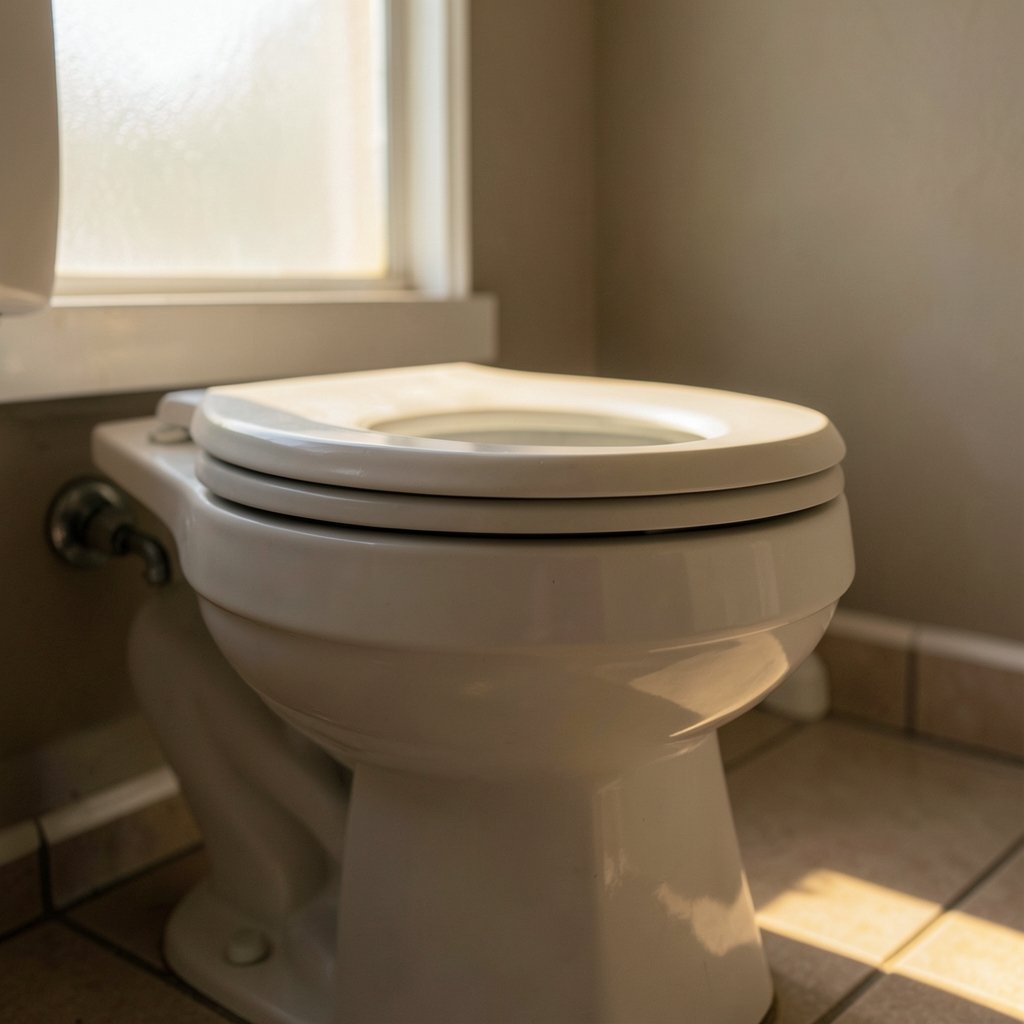
Toileting is a surprisingly demanding movement. Sitting down and standing up from a low seat requires hip and knee strength, ankle flexibility, and enough balance to control the descent. When any of those fade, the bathroom becomes the riskiest room in the house.
That is why raised seats appear so often in occupational therapy and physiotherapy advice. They are a low-cost home modification that shortens the distance a person has to lower themselves and push back up. Less range of motion means less strain on healing joints and less chance of a stumble.
The stakes are not trivial. Falls are a leading cause of injury among older adults worldwide, and bathrooms combine hard floors, slippery surfaces, and awkward transitions. A stable raised seat reduces one of those risk factors at a cost of a few dozen dollars.
Who Benefits From a Raised Seat
Elevated seats are not only for older adults. The list of people who genuinely benefit is longer than most shoppers expect:
| Situation | Why a raised seat helps |
|---|---|
| Hip or knee replacement | Keeps the joint within safe bending limits during recovery |
| Arthritis in hips, knees, or spine | Less bending means less pain on every trip |
| Balance problems or dizziness | Shorter sit-to-stand motion with less sway |
| Post-surgery restrictions | Some surgeons forbid bending past 90 degrees for weeks |
| General weakness or fatigue | Standing up takes noticeably less effort |
| Pregnancy, late stages | Reduces strain on hips and lower back |
A physical or occupational therapist can advise on whether a raised seat is appropriate and how high it should be. For anyone recovering from joint surgery, that guidance is worth asking for before buying anything, because the wrong height can work against a prescribed movement restriction.
How High Should an Elevated Seat Be?
There is no single correct number, but there is a well-established benchmark. The 2010 ADA Standards for Accessible Design, which took effect in March 2012, set the seat height for accessible toilets at 17 to 19 inches measured to the top of the seat. That range is the reference point most manufacturers design toward.
For context, a typical older residential toilet sits around 15 inches to the seat, while a comfort-height model lands near 17 inches. That two-inch gap explains why so many people find standard toilets uncomfortable as they age.
A practical rule of thumb many therapists use: the person should be able to sit down and stand up without having to drop or lunge. If the knees end up higher than the hips when seated, the seat is likely too low. If the feet dangle or the person has to slide forward to reach the floor, it is too high. Both extremes increase fall risk.
The Main Types Compared
Shoppers face a genuinely confusing shelf. Here is how the common options stack up.
| Type | Typical height added | Stability | Best for |
|---|---|---|---|
| Clip-on riser | 2 to 4 inches | Moderate | Short-term recovery, travel |
| Bolt-on raised seat | 2 to 6 inches | High | Long-term daily use |
| Raised seat with arms | 2 to 6 inches | High | People who need push-off support |
| Locking hinged riser | 2 to 5 inches | High | Households where the seat must fold away |
| Comfort-height toilet | Built in, about 17 inches | Very high | Anyone replacing a toilet anyway |
Two features deserve special attention. First, arms. For anyone with weak legs or balance issues, armrests do more for safety than extra height alone, because they give the user something to push against. Second, locking mechanisms. A riser that shifts sideways mid-transfer is worse than no riser at all.
What Actually Works in Practice
A few practical points separate a good installation from a frustrating one.
Measure before buying. Sit on the existing toilet and note where the knees sit relative to the hips. Measure from the floor to the top of the current seat. Add the riser height and check the total lands somewhere near 17 to 19 inches for an adult.
Check the bowl shape. Elongated and round bowls need different seat shapes. A riser sold for a round bowl will overhang or wobble on an elongated one. This is the single most common buying mistake.
Test the fit with body weight. Once installed, grip the seat and push sideways and forward before trusting it. A properly fitted riser should not slide, rock, or lift at the front edge. If it does, the brackets are loose or the wrong model.
Keep the bathroom dry. Raised seats do not fix slippery floors. A bath mat and good lighting matter just as much as the seat itself.
Watch for cleaning problems. Add-on risers create crevices where splashes collect. Models that lift off the bowl for cleaning are worth the extra cost for anyone who cares about hygiene.
Do not stack risers. Two risers bolted together is an unstable tower waiting to fail. If the height is still wrong, switch to a taller single model or a comfort-height toilet.
Installation Basics
Fitting most bolt-on risers takes about fifteen minutes and a screwdriver.
- Remove the existing seat and lid, keeping the mounting bolts.
- Clean and dry the bowl rim thoroughly.
- Set the riser in place and align the mounting holes.
- Hand-tighten the bolts evenly, alternating sides so the seat sits level.
- Attach any brackets or locking clamps per the instructions.
- Test for movement with body weight before first use.
For clip-on models, the process is faster but the fit matters more. Push down firmly on all four corners and check that the clips have engaged. A riser that lifts when you stand up is not secure.
Common Mistakes People Make
The most frequent error is buying on height alone and ignoring stability. A tall, wobbly riser is a fall waiting to happen. The second is skipping the bowl-shape check. The third is assuming a raised seat is only for elderly users, which leads some post-surgery patients to tough it out unnecessarily.
A less obvious mistake is leaving a riser in place forever when it is no longer needed. Raised seats are aids, not permanent fixtures for everyone. Once mobility returns, a seat that is too high can make sitting down harder, because the feet no longer reach the floor comfortably.
Finally, some people install a riser and never tell anyone in the household. Family members then trip over an unfamiliar raised surface in the dark. A night light solves this cheaply.
When a Raised Seat Is Not Enough
An elevated seat handles height and, with arms, some push-off support. It does not solve every bathroom problem. Grab bars mounted to studs, a shower chair, and better lighting may all be needed. If a person cannot stand safely even with arms and a raised seat, a commode chair or professional assessment is the next step, not another gadget.
Anyone managing a household with mobility aids will recognize the pattern: small fixes work best when they are part of a system. The same logic applies to digital housekeeping, where a single overlooked setting can quietly cause trouble. Just as it pays to know how to reclaim space when your NAS recycle bin eats storage, it pays to audit the bathroom for the one loose fitting that could cause a fall.
Matching the Seat to the Person, Not the Product Page
Marketing photos show smiling models rising effortlessly from a spotless bathroom. Real life involves a narrow doorway, a towel rail that is not a grab bar, and a person who is tired at 3 a.m. The purchase decision should start with three questions: How much height is needed? Is push-off support required? Will the seat stay put under real body weight?
Answer those honestly and the product choice becomes obvious. Skip them and the riser ends up in a closet next to the shower stool nobody uses.
Conclusion
Elevated toilet seats are one of the highest-value, lowest-cost changes a household can make. They reduce the strain of sitting and standing, shorten the distance a healing joint has to travel, and cut fall risk in the room where falls do the most damage. The benchmark to aim for is roughly 17 to 19 inches to the top of the seat, the range used in accessible design standards, adjusted for the individual’s comfort and reach.
The difference between a helpful aid and a hazard comes down to fit. Match the riser to the bowl shape, bolt it down properly, test it with body weight, and add arms if balance is a concern. Do that, and a raised seat becomes what it should be: an unremarkable piece of hardware that quietly keeps someone safe every single day.
Frequently Asked Questions
How high should an elevated toilet seat be?
For most adults, the top of the seat should land between 17 and 19 inches from the floor, the range used in accessible design standards. A standard older toilet sits around 15 inches, so a riser adding two to four inches usually gets most people into the right zone. The real test is comfort: the person should sit and stand without lunging or sliding.
Do raised toilet seats fit all toilets?
No. Riser seats are shaped for either round or elongated bowls, and fitting the wrong shape causes overhang and wobble. Measure the bowl length and shape before buying, and check the mounting hole spacing. Clip-on models are the least forgiving, while bolt-on risers tend to fit a wider range of bowls.
Can I use a raised toilet seat after hip replacement surgery?
Yes, they are commonly used during recovery, but the height should follow the surgeon’s or therapist’s instructions. Some hip precautions restrict how far the joint may bend, so the seat needs to keep the hips above the knees. Ask the care team for a target height rather than guessing.
Are elevated toilet seats safe?
They are safe when properly fitted and stable. The risks come from loose brackets, the wrong bowl shape, or stacking two risers together. Before trusting a new seat, push it sideways and forward with body weight. If it shifts or lifts, refit or replace it.
What is the difference between a raised toilet seat and a commode?
A raised toilet seat attaches to an existing toilet and raises the sitting height. A commode is a standalone chair with its own frame and a removable bucket, used bedside or where plumbing is not available. Some people use both at different times.
Does insurance or Medicare cover a raised toilet seat?
Coverage varies by plan and country, and it usually requires a documented medical need such as a mobility limitation or recovery from surgery. A prescription or therapist recommendation often helps. Check with the specific insurer or health service before assuming a purchase will be reimbursed.



