A Steady November Jobs Report Gives the Fed Room to Fight Inflation
US job growth is expected to hold steady in November, and that steadiness is exactly what gives the Federal Reserve room to keep its attention where it wants it: on inflation. Economists surveyed by Bloomberg expect the jobs report due on Friday from the Bureau of Labor Statistics to show nonfarm payrolls rose by about 90,000 in November, with the unemployment rate holding at 4.1 percent.
A number in that range would extend a stretch of solid hiring that followed robust household spending and business investment in the third quarter, when the economy accelerated at its fastest pace in three years. It would also leave the labor market healthy enough that Fed officials do not need to worry about jobs when they meet on December 8 and 9, freeing them to focus on prices that remain well above their goal.
That is the central tension in the American economy right now. Hiring is strong enough to support spending, yet inflation is still running hot enough to keep the Fed leaning toward higher interest rates. The November report will not settle that tension, but it will show whether the balance is holding or starting to tip.
Key takeaways
- Economists expect about 90,000 new jobs in November, with unemployment steady at 4.1 percent, according to Bloomberg.
- October hiring came in far stronger than expected at 165,000 jobs, with upward revisions adding 84,000 jobs to August and September.
- Job openings are expected to show about 7.5 million vacancies in October, well above the 6.6 million recorded in December 2025.
- Core inflation, the Fed’s preferred measure, ran at 3.3 percent in October, far above the central bank’s 2 percent target.
- Bloomberg Economics forecasts a 25-basis-point interest-rate hike at the Fed’s December 8-9 meeting, followed by a pause in 2027.
| Indicator | Latest reading or forecast | Why it matters |
|---|---|---|
| Nonfarm payrolls, November | About 90,000 jobs expected | A steady gain would confirm hiring is holding up without overheating |
| Unemployment rate | Expected to hold at 4.1 percent | A low, stable rate removes pressure on the Fed to support jobs |
| Nonfarm payrolls, October | 165,000 jobs added, above all forecasts | Showed the summer slowdown was milder than first reported |
| Job openings, October | About 7.5 million vacancies expected | Healthy demand for workers, up from 6.6 million in December 2025 |
| Core PCE inflation, October | 3.3 percent from a year earlier | Well above the Fed’s 2 percent target, the case for a hike |
| Next Fed meeting | December 8-9 | A rate hike is widely expected at this meeting |
What the November Jobs Report Is Expected to Show
The headline number will be the change in nonfarm payrolls, and the consensus is modest by the standards of the past few years. Economists expect an increase of about 90,000 jobs in November. Other forecasts cluster a little higher, near 95,000, but the message is the same either way: hiring continues, at a pace that is solid rather than spectacular.
That pace would put job growth over the past three months higher than it was in August, a sign that the labor market found its footing again after a soft patch. The unemployment rate is expected to hold at 4.1 percent, the same level as October, when it edged down even as more than 400,000 people entered the labor force.
Taken together, the week should paint a picture of an economy that is still expanding. The question is whether that expansion is strong enough to keep inflation elevated, and the jobs report is the single most important piece of evidence the Fed will get before its December meeting.
Why Steady Hiring Points the Fed Toward Inflation
The Federal Reserve has two jobs: keeping Americans employed and keeping prices rising at around 2 percent a year. When hiring is weak, the first job dominates. When hiring is steady, the second one takes over. That is where the economy stands now, and it explains why Fed officials are widely seen pushing forward with an interest-rate hike at their December 8-9 meeting.
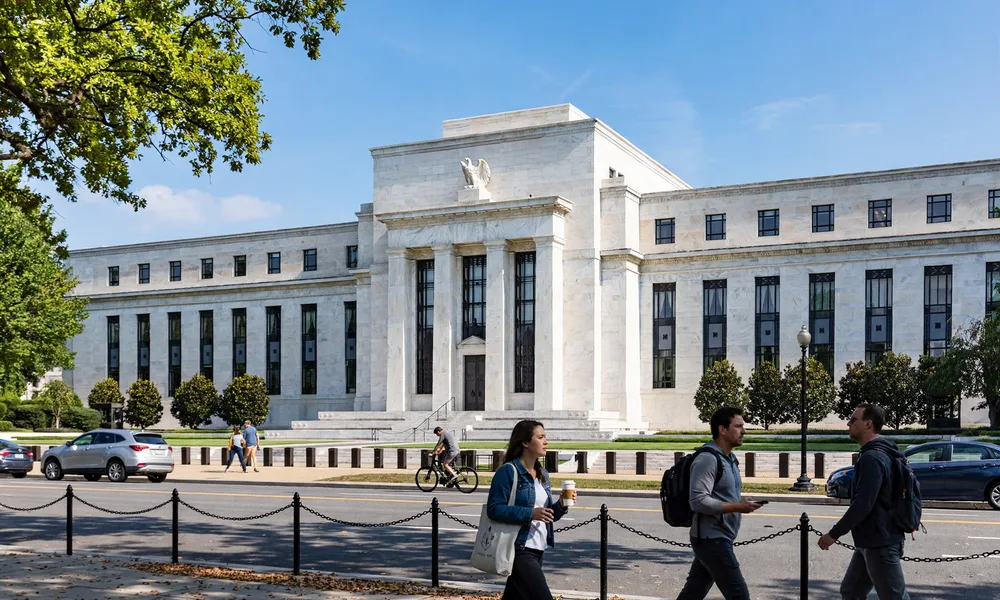
Fed Chair Kevin Warsh described employment conditions as quite positive last week and said the central bank was focused on prices. That is a clear signal of priorities. With the unemployment rate low and job openings plentiful, officials see little reason to hold back on fighting inflation for the sake of the labor market.
The inflation numbers give them plenty to worry about. The Fed’s preferred measure, the core personal consumption expenditure price index, came in at 3.3 percent for October compared with a year earlier. That is hotter than analysts expected, and the last time it came in below the 2 percent target was more than five years ago. Headline inflation has also stayed stubborn, with economists expecting the broader measure to have climbed further in recent months.
The October Report Set the Tone
To understand why expectations for November are what they are, it helps to look back one month. The October jobs report surprised almost everyone. Employers added 165,000 jobs, topping all forecasts, after economists had expected a gain of only about 65,000. The unemployment rate dipped to 4.1 percent, and revisions added a combined 84,000 jobs to the August and September totals.
So far this year, employers have added an average of 86,000 jobs a month. That is slower than the hiring booms of the early 2020s, but it is more than enough in an economy where the break-even pace of hiring, the rate needed to keep unemployment steady, has fallen to just over 5,000 jobs a month, according to an estimate by Yale University’s Budget Lab.
What a December Rate Hike Would Mean for Households and Businesses
A quarter-point hike in December would be the second increase of the year, following a rise in September and a decision to leave rates unchanged in October. At the start of 2026, traders expected two rate cuts by year-end. Instead, the Fed has moved in the opposite direction, and markets are pricing in a hike in December and another by March next year.
For households, higher rates mean more expensive borrowing. Mortgage rates, car loans and credit card rates all tend to move with the Fed’s benchmark, though not always in lockstep. The housing market has already felt the pressure: mortgage rates have spent time above 7 percent this year, and higher borrowing costs have kept many would-be buyers on the sidelines. A further hike would extend that squeeze, even as steady hiring supports incomes.
For businesses, the effects cut both ways. Companies that are investing heavily, particularly in artificial intelligence infrastructure, face higher financing costs for equipment and data centers. At the same time, steady hiring and resilient consumer spending give them confidence to keep investing. The tension between those two forces is one reason business investment has stayed strong even as rates have risen.
The broader risk is that the Fed tightens too much and tips a resilient economy into a slowdown. That is why Bloomberg Economics expects a pause in 2027 after a December hike: the central bank wants to squeeze inflation without breaking the labor market that is currently giving it the freedom to act. The November jobs report is the first test of whether that balance is still holding.
What to Watch After the Report Lands
The headline payrolls number will dominate the coverage, but the details underneath it will tell the Fed more about what to do. Wage growth is the first place to look. If average hourly earnings accelerate beyond the recent 0.4 percent monthly pace, it would suggest pay pressures are building, which tends to feed into services inflation. If wage growth cools, the Fed has more room to be patient. Breadth matters too: if November’s gains narrow to a handful of industries, it would suggest the labor market is less robust than the headline implies, while broad-based gains would confirm the strength seen in October.
The rest of the week adds context. Separate surveys of manufacturers and service providers are both projected to show robust activity, and consumer sentiment is expected to rise for a second month as gasoline prices fall. If those readings agree with the jobs report, the case for a December hike becomes very hard to argue against.
Your Checklist: Reading the Jobs Report Like the Fed Does
- Check the headline payrolls number against the forecast of about 90,000, and note whether the surprise is large or small.
- Look at the unemployment rate and whether it held at 4.1 percent or moved in either direction.
- Read the wage figures: monthly growth near 0.4 percent and annual growth near 3.1 percent are the recent benchmarks.
- Scan the revisions to the prior two months, which have been large and often upward this year.
- Check how broad the hiring was across industries rather than focusing on a single sector.
- Compare the report with the job openings data, expected at about 7.5 million vacancies, for a fuller picture of labor demand.
Frequently Asked Questions
When is the November jobs report released?
The Bureau of Labor Statistics releases the November employment report on Friday, December 4, 2026, at 8:30 a.m. Eastern time. It is the final major piece of labor market data before the Federal Reserve meets on December 8-9.
How many jobs are expected in November?
Economists surveyed by Bloomberg expect nonfarm payrolls to have risen by about 90,000 in November, with other forecasts clustering near 95,000. Either figure would be below October’s 165,000 but still a solid pace of hiring.
What is the unemployment rate expected to be?
The unemployment rate is expected to hold at 4.1 percent, unchanged from October, when it edged down even as more than 400,000 people joined the labor force.
Why would strong hiring lead to higher interest rates?
When hiring is steady and unemployment is low, the Fed can focus on its other mandate: keeping inflation near 2 percent. Strong hiring supports spending, which can keep prices elevated, so officials see room to raise rates to cool demand without risking mass job losses.
How high is inflation right now?
The Fed’s preferred measure, core PCE inflation, was 3.3 percent in October compared with a year earlier, well above the 2 percent target. It has not come in below target in more than five years.
What does Bloomberg Economics forecast for the December meeting?
Bloomberg Economics forecasts a 25-basis-point rate hike in December, followed by a pause in 2027. That is a forecast based on current data, and it could change if the jobs report or inflation data surprise.
Bottom Line
The November jobs report is shaping up as a confirmation rather than a revelation. If payrolls land near 90,000 and unemployment holds at 4.1 percent, the story is continuity: a labor market that is steady enough to let the Federal Reserve keep fighting inflation, and an economy that is growing fast enough to make that fight necessary. The Fed’s December meeting would then be about how much to hike, not whether to hike at all.
The risks sit on both sides. A much stronger report would raise the odds of a bigger move, while a much weaker one would force officials to weigh jobs against prices for the first time in months. Either way, the report will set the tone for the final weeks of the year, and for a central bank that has spent 2026 moving in the opposite direction from what markets expected at the start of it.