

What if the single biggest mistake people make when buying a washer-dryer isn’t picking the wrong brand, but picking the wrong type of machine entirely? That question sits at the heart of every “washing machine with dryer best” search. The honest answer is that there is no universal winner. There is only the machine that fits your space, your laundry habits, and your tolerance for waiting. This guide walks through what separates a good combo from a frustrating one, where buyers routinely go wrong, and how to match the appliance to real life rather than to a spec sheet.
Start With the Type, Not the Model
Before comparing a single model against another, decide which category you actually need. The phrase “washing machine with dryer” gets used loosely, and that looseness costs people money.
A washer-dryer combo is one unit with one drum that washes and then dries. It fits under a counter, needs only one water connection and one power point, and suits flats, small homes, and rentals where stacking two machines is impossible.
A separate washer and dryer pair gives you two dedicated machines. You can wash one load while drying another, the dryer typically holds a full wash load, and if one machine breaks, the other keeps working.
| Factor | Washer-dryer combo | Separate washer + dryer |
|---|---|---|
| Footprint | One unit, one connection | Two units, stacked or side by side |
| Drying capacity | Usually lower than wash capacity | Matches or exceeds wash capacity |
| Drying speed | Slower, often partial loads | Faster, full loads |
| Venting | Generally none needed (condenser drying) | Vented types need ducting; condenser and heat-pump types do not |
| Failure impact | One fault can stop washing and drying | Functions stay independent |
| Best for | Tight space, no ducting, small households | Families, heavy laundry, full-load drying |
Most combo units dry by condensing moisture rather than venting it outdoors, which is exactly why they work in flats without ductwork. That single design fact explains both their convenience and their limits.
The Capacity Trap Almost Everyone Falls Into
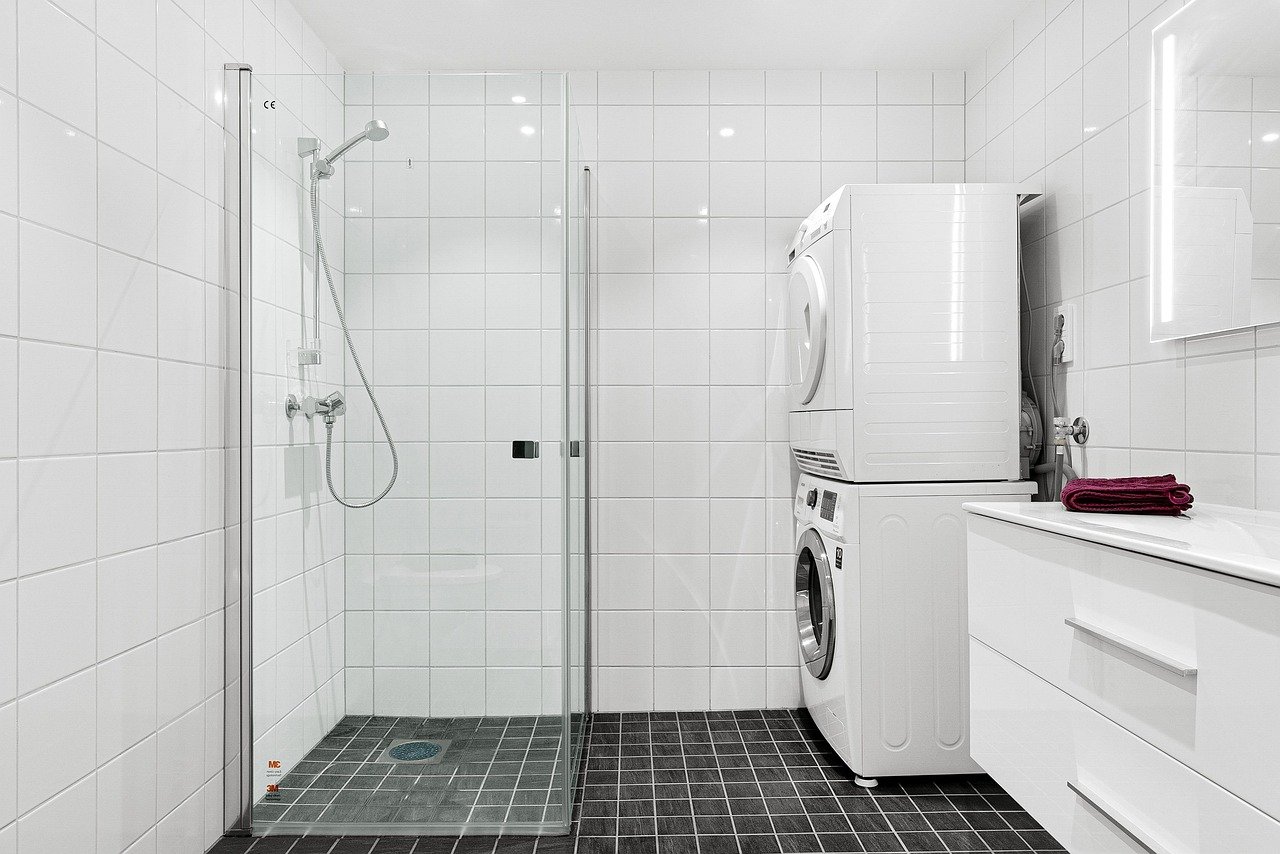
Here is the detail that catches more buyers than any other: on a combo, the drying capacity is usually lower than the washing capacity. An 8 kg wash / 5 kg dry rating is a common pattern. That means a full wash load often cannot be dried in one go. You wash 8 kg, then split the drying into two cycles, or hang half the load.
In practice, this changes how you use the machine. A combo rewards people who run smaller, more frequent loads. It punishes households that save up a week of laundry and expect to wash and dry it all in one evening.
If your household produces several full loads a week, a separate heat-pump dryer is usually the more practical partner for a washer. Heat-pump dryers are the most efficient dryer type available and are increasingly offered in premium combos too, though the exact energy savings vary by model and test method, so treat any single percentage claim with suspicion.
Read the Energy Label Properly
In the EU, washer-dryers have been rated on a rescaled A to G energy label since 1 March 2021, under the ecodesign and energy labelling rules for household washing machines and washer-dryers. The key thing to understand is that a washer-dryer label reports energy use for the wash-and-dry cycle, not just the wash cycle. A combo can look efficient on the wash figure and far less impressive once drying is included.
In the US, the equivalent guidance comes through ENERGY STAR, which maintains separate criteria for clothes washers and for all-in-one washer-dryer combinations, plus federal efficiency standards. Criteria versions change over time, so check the current version rather than a number you remember from an old review.
One more caution: test standards differ by region. International washing and drying performance standards are not the same as the US test procedures, so comparing a capacity figure or an energy figure across regions is unreliable. Compare like with like, within your own market.
Match the Machine to Your Actual Habits
Buyers who end up happy tend to choose based on routine, not aspiration. A few practical patterns are worth recognising.
Small household, limited space, no ducting. A heat-pump combo is often the sensible pick. It washes and dries in one footprint, needs no vent, and handles a few loads a week comfortably.
Family with daily laundry. A separate washer and a heat-pump dryer usually wins. Full loads dry in one cycle, and a breakdown does not take out both functions.
Rental or flat where you may move. A combo travels better and installs almost anywhere with a cold water supply and a drain.
Anyone who hates waiting. Be realistic: combo drying cycles are long. If you routinely need dry clothes fast, a combo will test your patience.
When you do start comparing models, it helps to look at how the best brands in this category are actually judged rather than trusting a single star rating. A structured look at what separates reliable washer-dryer brands from the rest will save you from buying on badge alone: washing machine with dryer best brand.
Mistakes That Cost Money and Sanity
A handful of errors show up again and again in real installations and real ownership.
Buying on wash capacity alone. Check the dry capacity and the wash-and-dry energy figure. If the dry rating is well below your typical load, you will be splitting cycles forever.
Ignoring the drainage and water setup. Condenser combos either drain continuously or collect water in a tank you empty by hand. Neither is difficult, but the tank option means remembering to empty it. If you are placing the machine somewhere water could pool, plan for detection as well; guidance on where to position a leak sensor under a washing machine is worth reading before installation day, not after: water leak sensor under washing machine where place it it.
Skipping maintenance. Combo units have more components in one box and a reputation for lingering smells if the drum and seals are neglected. A regular hot maintenance wash and a wiped door seal make a genuine difference to both smell and lifespan. A practical routine for how to clean a washing machine so it stops smelling and lasts longer is the cheapest reliability upgrade you can buy: clean washing machine so it stops smelling lasts longer.
Assuming a combo is as fast as a dryer. It is not. Plan drying around overnight or while you are out.
Overlooking repair economics. Because a combo concentrates washing and drying in one appliance, a single failure can disable both functions. Independent reliability surveys are the best guide here; check the most recent published survey year rather than a general reputation.
Features Worth Paying For, and Ones to Skip
Some features earn their price on a combo. Others are marketing.
Worth prioritising:
- Heat-pump drying where available, for lower running costs.
- A clear wash-and-dry energy rating, not just a wash rating.
- Adjustable dry levels, so you can stop a cycle when clothes are ready to hang rather than bone dry.
- A decent spin speed, because the faster the spin, the less water the dryer has to remove.
- Delay start, which pairs well with long drying cycles and off-peak electricity.
Usually skippable:
- Huge wash capacity paired with a small dry capacity. The numbers flatter the machine and frustrate the owner.
- App connectivity you will never use.
- Dozens of programmes when five cover your life.
How to Compare Two Models in Five Minutes
When you are standing in a shop or scrolling a product page, run this sequence. It cuts through most of the noise.
- Check the dry capacity against your typical load size.
- Find the wash-and-dry energy figure on the label, not the wash-only figure.
- Confirm the drying type: condenser, heat pump, or vented (rare on combos).
- Check the longest drying time and decide whether that fits your routine.
- Look up the current reliability survey for the brand.
- Confirm installation needs: water inlet, drain or water tank, and clearance for the door and hoses.
- Read the manual’s maintenance section before buying, not after.
That last step sounds tedious, but it tells you more about ownership than any showroom demo. If the manual demands frequent filter cleaning or tank emptying you will not do, the machine is wrong for you.
Where Combos Genuinely Win
It is easy to be cynical about washer-dryers, and unfair. In the right setting they are excellent.
They solve a real problem: no space and no ducting. In a city flat, a combo turns a cupboard into a laundry. It washes and dries overnight on a delay timer, and you wake up to dry clothes. It needs one connection and one drain. It moves house with you. For a single person or a couple, that is a genuinely good appliance, and the drying capacity limit rarely bites because the loads are small anyway.
The trouble starts when a household of four buys a combo expecting family-sized throughput. That is not a machine fault. It is a mismatch, and it is avoidable with five minutes of honest arithmetic about weekly laundry volume.
Conclusion
The best washing machine with a dryer is not a single model that tops a chart. It is the machine whose drying capacity, drying type, energy figure, and maintenance demands match how you actually live. If space and ducting are tight and your loads are modest, a heat-pump combo is a smart, efficient answer. If you dry full loads several times a week, a separate washer and heat-pump dryer will almost always serve you better.
Decide the category first. Then check the dry capacity, read the wash-and-dry energy label, confirm the installation requirements, and pick a brand with a solid recent reliability record. Do that, and the machine you buy will still feel like the right choice two years in, which is a far better test than any star rating.
Frequently Asked Questions
Is a washer-dryer combo as good as separate machines?
For small households with limited space and no ducting, a combo is excellent and often the only practical option. For families drying full loads regularly, separate machines are better because the dryer handles a complete wash load and a breakdown does not disable both functions.
Why is the drying capacity lower than the washing capacity on a combo?
It reflects the engineering limits of drying in the same drum used for washing. A common pattern is 8 kg wash to 5 kg dry, meaning a full wash load usually needs splitting into two drying cycles. Check both figures before buying.
Do washer-dryers need to be vented outside?
Generally no. Most combos dry by condensing moisture rather than venting it outdoors, which is why they suit flats without ductwork. They do need either a drain connection or a water tank that you empty by hand.
How much does a washer-dryer cost to run?
That depends on the model’s wash-and-dry energy rating and how often you dry. In the EU, the label reports energy per 100 cycles for the combined wash-and-dry cycle, so compare that figure rather than the wash-only number. Heat-pump drying is the most efficient option where available.
How long does a combo take to wash and dry a load?
Longer than most people expect. Drying cycles on combos are typically much slower than on a dedicated dryer, and a full wash-and-dry programme can run for several hours. A delay-start timer helps by running the cycle overnight.
How do I stop a washer-dryer from smelling?
Run a hot maintenance wash regularly, wipe the door seal after each use, leave the door ajar between cycles, and clean the lint filter. Combos concentrate more components in one unit, so consistent basic care matters more than it does on a simple washing machine.



