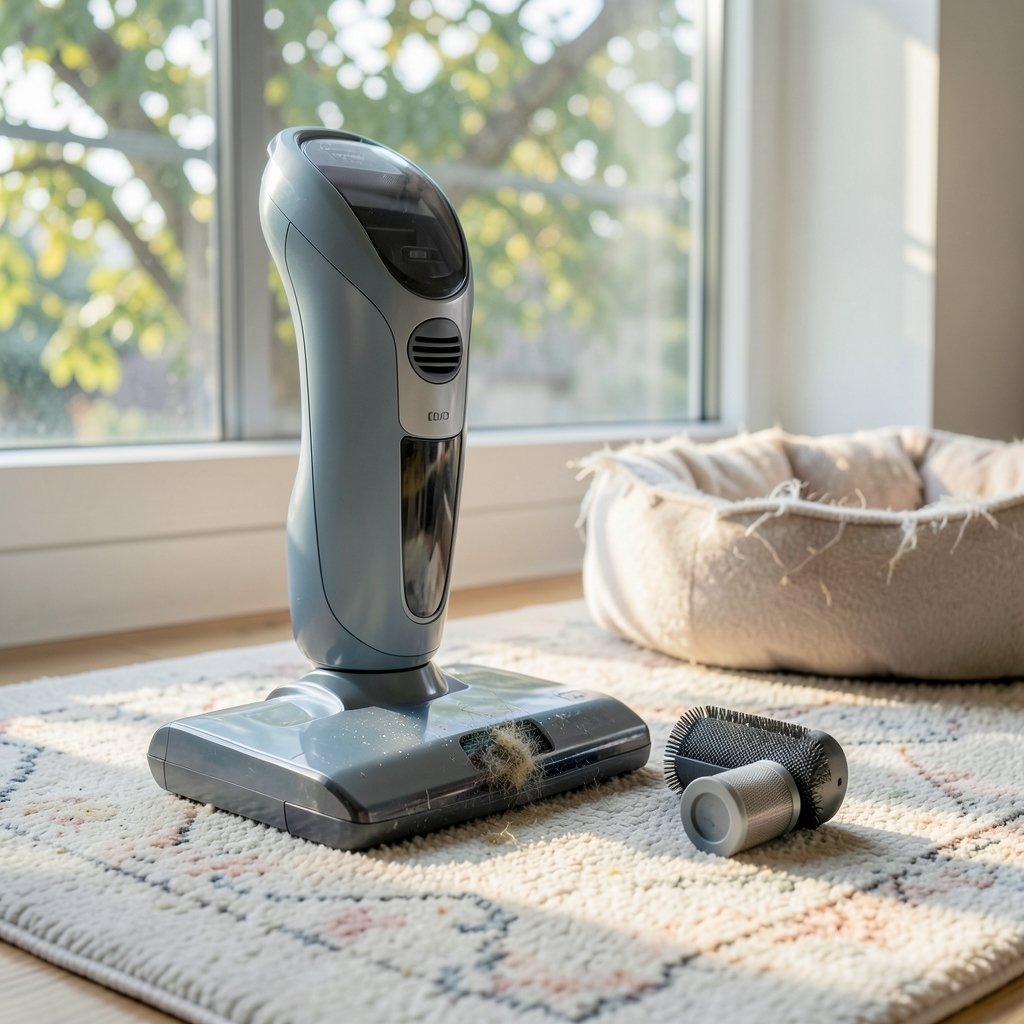
Have you ever vacuumed a rug twice and still watched a tumbleweed of dog fur roll across the floor like it owns the place? If so, you already know the dirty secret of the vacuum aisle: most machines are built for dust, not for the gritty sand, embedded dander, and endless hair that pets bring in. A good pet vacuum cleaner is not simply a stronger vacuum. It is a machine whose brush roll, airflow path, filter, and bin are designed around the specific mess animals create.
This guide breaks down what actually matters, where shoppers waste money, and how to match a vacuum to your floors, your pets, and your patience level.
Why Pet Hair Is a Different Kind of Mess
Pet hair is not uniform. Short, stiff Labrador fur sits on top of carpet like grit. Long cat hair wraps around spinning brush rolls like thread on a spool. Fine undercoat from a husky or a German shepherd floats into the air and settles into fabric, upholstery, and baseboard corners. Add dander, tracked-in clay litter, and the occasional kibble crumb, and you have a debris cocktail that clogs weak machines fast.
That is why a vacuum that performs well on a bare floor test can fail miserably in a pet household. Airflow, measured in cubic feet per minute, lifts debris. Suction, measured as water lift or sealed pressure, pulls it out of carpet pile. Agitation, provided by a rotating brush roll, loosens hair that has woven itself into fibers. A vacuum needs all three working together. A machine with huge suction but a wimpy brush roll will skim over a hairy carpet. A machine with a great brush roll but a leaky seal will leave a trail behind.
The Features That Actually Matter
A Brush Roll You Can Live With
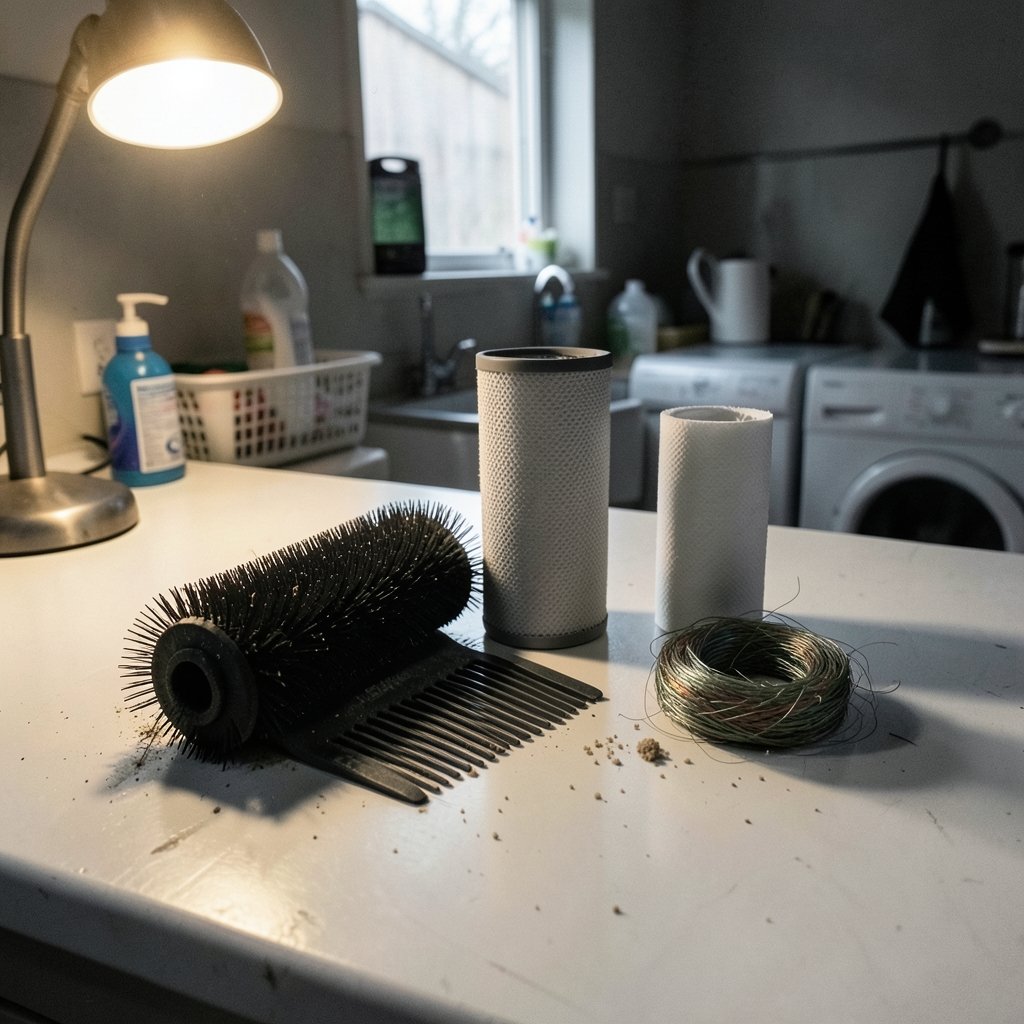
Tangle-resistant brush rolls are the single biggest quality-of-life upgrade for pet owners. Many modern vacuums use rubber or finned brush rolls instead of stiff bristles, which resist hair wrap. Others include combs or guards that strip hair off as the roll spins. If you have long-haired pets or humans with long hair in the house, check for this feature before anything else. Cutting wrapped hair off a brush roll with scissors every two weeks gets old quickly.
Sealed Filtration and HEPA Claims
HEPA filtration gets printed on boxes like a magic word, but the label alone tells you little. What matters is whether the entire system is sealed, meaning air cannot bypass the filter and escape back into the room through seams. Look for vacuums that state “sealed HEPA” or “fully sealed system” rather than just “HEPA filter.” For allergy sufferers, this is the difference between cleaning the air and simply redistributing it.
Bin Size and Emptying Design
Pet households fill bins fast. A small canister means constant trips to the trash, and every emptying moment releases a puff of fine dust. Look for bins in the one-liter range or larger for cordless models, and two liters or more for uprights and canisters. Bottom-empty bins dump debris downward, which is tidier than pulling a filter cage out through a cloud of dander.
Weight, Reach, and Stairs
A vacuum you dread hauling upstairs will sit in the closet. Cordless stick vacuums win on convenience but often trade away raw power and runtime. Uprights clean deep carpet well but can be heavy on landings. Canisters offer reach for stairs and upholstery but require dragging the body along. Be honest about your home’s layout before buying.
Runtime and Battery Reality
Cordless vacuums advertise big runtime numbers, but those figures usually come from the lowest power setting with a non-motorized tool attached. Running a motorized pet tool on high power can cut runtime dramatically. If a cordless vacuum will be your only machine, check the runtime on the highest setting, not the eco mode.
Matching the Vacuum to Your Floors
Different flooring demands different strengths. The table below summarizes where each vacuum type tends to shine in pet homes. These are general patterns based on how each design works, not lab rankings.
| Vacuum type | Best for | Watch out for |
|---|---|---|
| Upright with powered brush roll | Wall-to-wall carpet, heavy shedding | Heavy on stairs, bulky storage |
| Canister with turbo or power head | Mixed floors, stairs, upholstery | Dragging the body, hose tangles |
| Cordless stick | Quick daily touch-ups, hard floors | Short high-power runtime, small bins |
| Robot vacuum | Maintenance between deep cleans | Misses edges, struggles with long hair |
| Handheld | Cars, pet beds, sofa cushions | Not a whole-home solution |
For homes with mostly hard flooring and a few rugs, a cordless stick with a soft roller and a separate motorized pet tool handles most days well. For carpeted homes with double-coated dogs, an upright or canister with a genuine powered brush roll remains the workhorse. If you are shopping specifically for heavy shedding, this comparison of the best vacuums for pet hair covers how the top contenders handle embedded fur.
Where Robot Vacuums Fit In
Robot vacuums have gotten genuinely good, but they are maintenance machines, not deep-cleaning machines. A robot running daily keeps the hair load low enough that your weekly deep clean takes half the time. That alone is worth it for many pet owners. The catch is that long hair and pet fur wrap around robot brush rolls and drive wheels, and fine dust cakes the filter quickly. Models with rubber extractors and self-emptying bases reduce the hassle considerably.
If you want a robot that also scrubs hard floors, a combo unit can replace a mop for daily upkeep. This roundup of the best robot vacuum mop combos that actually clean floors explains which designs scrub rather than smear. Just keep expectations realistic: robots handle surface debris and light pet hair well, but they will not pull years of ground-in fur out of a plush carpet.
Common Mistakes Pet Owners Make
Buying on suction specs alone. Marketing numbers are measured in ideal conditions. Real-world performance depends on the seal, the brush roll, and the head design.
Skipping filter maintenance. A clogged filter strangles airflow, and airflow is what carries debris into the bin. Rinseable filters should be washed monthly and dried fully before reinstalling. Never put a damp filter back in.
Ignoring the brush roll until it stops spinning. Hair wrap reduces agitation gradually, so performance fades without any dramatic failure. A quick visual check every couple of weeks prevents surprise breakdowns.
Vacuuming pet beds and couches with the wrong tool. The floor head is not built for fabric. Use an upholstery tool or a turbo brush, and vacuum pet beds regularly rather than only when they look dirty.
Assuming one vacuum does everything. Most happy pet households end up with two tools: a deep cleaner for carpets and a quick grab-and-go machine for crumbs and fur tumbleweeds. That split is practical, not excessive.
Forgetting the mess pets make beyond hair. Litter tracked across a hallway and food scattered around a bowl are part of the same cleaning job. Some households even keep a dedicated small vacuum near the feeding station. The same logic applies to keeping a machine handy for everyday spills and quick pickups, much like knowing where to find takeout food near me when you need good food fast saves time on a busy night: convenience tools earn their place by being close at hand.
Maintenance Habits That Keep Performance High
A pet vacuum is a tool, and tools need upkeep. Follow a simple rhythm:
- Empty the bin after every deep clean, and never let debris reach the fill line.
- Check the brush roll every two weeks and cut away wrapped hair with scissors.
- Wash or replace filters monthly, and let them air-dry for at least 24 hours.
- Inspect the hose and floor head for blockages whenever suction drops.
- Replace worn belts, filters, and brush strips according to the manual.
- Wipe the bin and seals occasionally to prevent odor buildup.
Owners who follow this routine often get years of strong performance from mid-priced machines, while neglectful owners of premium vacuums wonder why suction faded within a year. Maintenance beats price tag more often than people expect.
Noise, Allergies, and Household Comfort
Pets often fear vacuums, and loud machines make the problem worse. Quieter models exist, but there is a trade-off: sound insulation and high airflow rarely coexist cheaply. If your dog panics, vacuum in a separate room while the pet is settled elsewhere, and introduce the machine gradually with treats nearby. For allergy sufferers, the bigger win is sealed filtration plus frequent emptying, since the dust cloud released during emptying is often worse than anything the vacuum emits while running.
How to Test a Vacuum Before the Return Window Closes
Stores rarely let you vacuum a hairy carpet in the aisle, so use the return period as your trial run. Sprinkle a measured pinch of uncooked rice or sand on a section of carpet, run one pass, and inspect what remains. Then check the brush roll for wrap after a single whole-home clean. Listen for a change in pitch that suggests a partial clog. If the bin fills with grit you did not know was there, that is a good sign about the machine and a slightly alarming sign about your carpet.
Conclusion
A good pet vacuum cleaner is not the most expensive machine on the shelf or the one with the flashiest spec sheet. It is the vacuum with a tangle-resistant brush roll, a sealed filtration system, a bin you can empty without a dust storm, and a weight and runtime that fit how you actually clean. Match the type to your floors, keep the filters and brush roll clean, and consider pairing a deep cleaner with a quick cordless or robot for daily upkeep. Do that, and the fur tumbleweeds lose their territory for good.
Frequently Asked Questions
What is the best type of vacuum for pet hair?
For carpeted homes with heavy shedders, an upright or canister with a motorized brush roll usually performs best because it combines strong airflow with real agitation. For hard floors and daily touch-ups, a cordless stick with a tangle-resistant brush roll is more practical. Many pet households do best with one deep cleaner plus one quick machine.
Do I really need a HEPA filter for pet dander?
A HEPA filter helps only if the vacuum’s system is sealed so air cannot bypass the filter. Look for models that explicitly state a sealed system. For allergy sufferers, consistent filter maintenance and careful bin emptying matter just as much as the filter rating itself.
How often should I clean a pet vacuum’s brush roll?
Check it every two weeks, and more often during heavy shedding seasons. Long hair wraps gradually and reduces cleaning performance before you notice any obvious problem. Cutting away wrapped hair with scissors takes a minute and prevents bigger issues.
Are robot vacuums good for pet hair?
Robots are excellent for daily maintenance and keeping surface fur under control, especially models with rubber extractors and self-emptying bases. They are not a substitute for periodic deep cleaning on plush carpet. Think of a robot as a maintenance layer, not the whole strategy.
Why does my vacuum lose suction when I vacuum pet hair?
Pet hair and fine dander clog filters, hoses, and brush roll ends faster than ordinary dust. Check the filter first, then the hose for blockages, then the brush roll for wrap. A damp or overloaded filter is the most common culprit behind sudden suction loss.
How much should I expect to spend on a good pet vacuum?
Useful pet vacuums exist across a wide price range. Mid-priced uprights and canisters with sealed filtration and decent brush rolls handle most homes well. Spending more typically buys quieter operation, better sealing, lighter weight, or smarter features rather than dramatically better pickup. Prioritize brush roll design and filtration over extras.