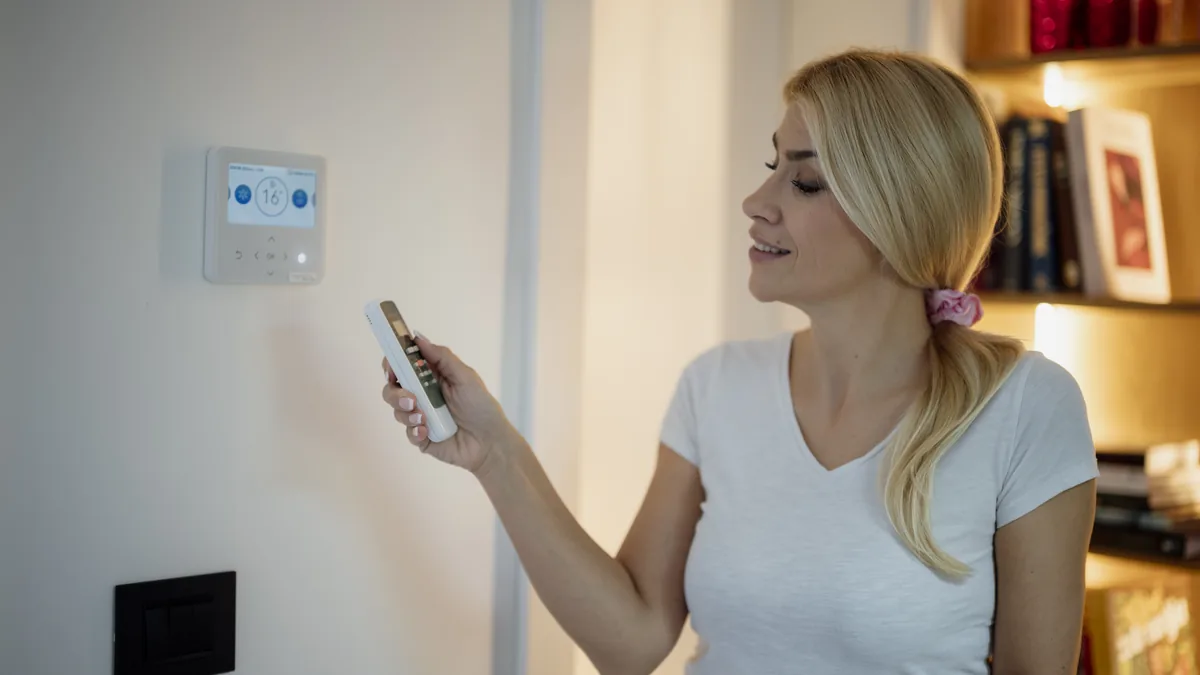
A smart thermostat is a wall-mounted control for your heating and cooling that connects to the internet and learns from how you live. It replaces the basic dial thermostat that has sat on hallway walls for decades, and it does the same core job: telling your boiler, heat pump or air conditioner when to run and when to stop. The difference is that it can be adjusted from a phone, follows a schedule that changes by itself, and uses sensors and weather data to decide how hard the system needs to work.
The reason people buy one is usually money. Heating and cooling are the largest energy cost in most homes, often around half of the total bill, so even a small improvement in timing adds up. A smart thermostat saves energy mainly by not heating or cooling an empty home, by easing off at night, and by avoiding sharp spikes from reheating a cold house all at once.
Not every home benefits equally, and not every model suits every heating system. This guide explains what a smart thermostat is, how it works, the main types on sale, where the savings come from, and what to check before you buy one.
Key takeaways
- A smart thermostat controls heating and cooling like a normal thermostat, but adds internet control, learning schedules and remote sensors.
- Most savings come from heating and cooling less when nobody is home, not from a more efficient boiler.
- Typical reported savings are around 8 to 12 percent on heating and cooling bills.
- Check compatibility with your heating system and wiring before buying, especially with an older boiler or no common wire.
- A smart thermostat collects data about when you are home, so check its privacy settings.
What a smart thermostat actually is
A smart thermostat is a programmable thermostat with a Wi-Fi connection, a processor, and usually a small touchscreen. It mounts where a standard thermostat sits and wires into the same low-voltage terminals that switch heating and cooling on and off. From the outside it is a neat display showing the current and target temperatures; inside, it is a small computer that runs schedules, talks to an app, and receives updates over the internet.
The word smart covers three abilities that a basic thermostat does not have. First, remote control: you can change the temperature from your phone, from work or from the train home. Second, learning: many models watch when you adjust the temperature and build a schedule from that pattern. Third, awareness: it can use motion sensors, room sensors and local weather forecasts to judge whether the house is occupied and how cold it is outside. Together these let it make small decisions all day that a fixed schedule cannot.
Smart thermostats are a common example of the Internet of Things, the name for everyday objects that connect to the internet and share data. Here the object is a heating control, and the data is room temperature, humidity, occupancy and your settings. That connection makes remote control and learning possible, and it is also why privacy settings matter more than for a simple dial on the wall.
How a smart thermostat works
A thermostat compares two numbers: the temperature in the room and the temperature you have asked for. When the room is colder than the target, it calls for heat; when it reaches the target, it switches off. A smart thermostat follows the same rule, but adds more information first: the time of day, whether anyone is home, the weather outside, and how long your home takes to warm up.
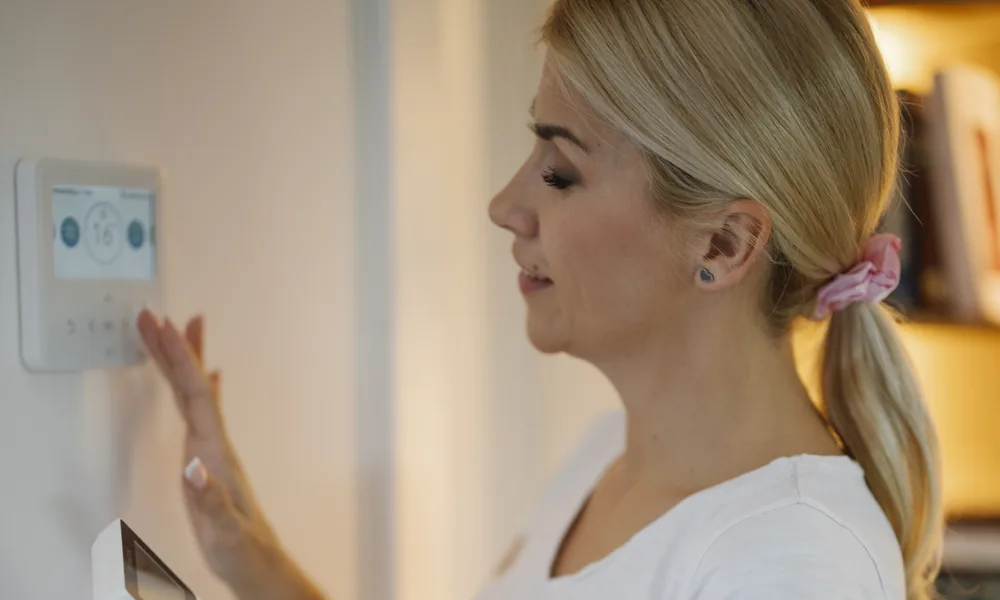
Learning models build a schedule by observing you. For the first week or two, you set the temperature by hand, and the device records when you turn the heating up in the morning, down at night, and off when you leave. After that it applies that pattern automatically. Geofencing adds another layer: using your phone location, it eases the heating down when you leave and back up as you head home.
Many models also manage humidity, and some control hot water or a second zone. They wire into the heating system like a normal thermostat and draw power from it or a plug-in adapter. This is where how Wi-Fi works in your home matters: far from the router, the thermostat may lose its connection and fall back to its stored schedule, losing remote control and learning updates until the signal returns.
Smart thermostats at a glance
| Feature | What it does |
|---|---|
| Remote control | Change temperature and mode from a phone app anywhere with internet |
| Learning schedule | Builds a heating pattern from your manual adjustments over the first weeks |
| Geofencing | Uses your phone location to lower heating when you leave and restore it on return |
| Room sensors | Extra sensors measure temperature in bedrooms and balance heating across rooms |
| Weather adjustment | Uses local forecasts to start heating earlier on cold days and ease off on mild ones |
| Energy reports | Shows monthly heating hours and estimated savings in the app |
| Voice control | Works with common voice assistants for hands-free temperature changes |
| Zoned control | Some models control separate heating zones or hot water on their own schedules |
Types of smart thermostat
The simplest type is the connected programmable thermostat. It has Wi-Fi and an app, but it does not learn: you set the schedule and it follows it. These are usually the cheapest smart models, suiting people with a regular routine who want remote control without handing decisions to an algorithm.
Learning thermostats watch your adjustments, build a schedule automatically, and refine it as seasons change. They usually include occupancy sensing and weather data, and they are the models most often quoted in energy-saving claims. They cost more and need a week or two of normal use before the schedule settles; where routines change weekly, they can be more annoying than helpful.
A third type is built around room sensors. Instead of measuring temperature only where the thermostat sits, usually in a hallway, these place small wireless sensors in bedrooms and living rooms, so the thermostat heats the room you are using. That fixes a common complaint: a warm hallway while the bedroom stays cold. Sensors run on batteries that need replacing every year or two.
Benefits and drawbacks
The main benefit is lower energy use without much daily effort. Manufacturers and independent testers commonly report savings of around 8 to 12 percent on heating and cooling. The biggest gains appear where heating used to run all day while nobody was in, or where the schedule was never set properly. If your heating is already well controlled and your home is well insulated, the savings will be smaller.
The drawbacks start with cost and compatibility. A smart thermostat costs several times more than a basic programmable model, and it may need professional installation if your wiring is unusual or your system has no common wire. Some older boilers and rented homes are not suitable, and a landlord’s permission is needed before changing a thermostat in a rented property.
Privacy is the other real drawback. A smart thermostat knows when you are home, when you sleep, and when you go on holiday, because it records occupancy and temperature around the clock. Check what the manufacturer collects, whether it shares usage data, and whether you can delete your history. Keep the device updated, use a strong unique password, and turn on two-factor authentication.
Where smart thermostats make the most difference
Smart thermostats pay back fastest in homes with unpredictable schedules. If your working hours change, if you travel often, or if the house is empty on some weekdays and full on others, adjusting heating from a phone and letting geofencing handle the rest beats any fixed schedule. The same applies to larger homes, where heating every room all day is expensive and room sensors can focus heat where people are.
By contrast, a small, well-insulated flat with one occupant and a regular routine may see only modest savings. The heating load is small, the schedule is simple, and a basic programmable thermostat already does most of the job. In that case the main reason to buy a smart model is convenience, not payback. If you are setting up a smart home with lights, locks and speakers, a thermostat fits naturally into the same routines, but on its own it is not a must-have for every household.
Smart thermostat vs a regular thermostat
A regular thermostat does one thing: it holds a room at a set temperature, either with a single target all day or a timetable you set yourself. It is cheap and reliable, and it keeps working even if your internet goes down. A smart thermostat adds remote control, learning, occupancy sensing and weather data, but it needs Wi-Fi, a cloud account and updates to deliver them, and it costs more. The choice comes down to how much your routine varies: a steady household may notice little difference, while one with shifting schedules or cold rooms will notice it every week. Either way, it is a control device, not a heating upgrade, and it cannot fix poor insulation or an oversized boiler.
Checklist: before you buy a smart thermostat
- Check compatibility with your boiler, heat pump or cooling system, including whether a common wire is present.
- Measure your Wi-Fi signal at the thermostat location and improve it if it is weak.
- Decide whether you need learning, room sensors or geofencing, or just remote control.
- Read the privacy policy and check data collection and two-factor authentication.
- Confirm whether installation is a do-it-yourself job or needs a heating engineer.
- Check that the model works with your voice assistant and other smart home devices.
Frequently asked questions
Does a smart thermostat really save money?
It can. Reported savings are usually 8 to 12 percent on heating and cooling, largest where heating ran while nobody was in. A well-insulated home with a good schedule saves less.
Will a smart thermostat work with my boiler?
Most modern combi and system boilers work with them, but some older systems and heat pumps need specific models or extra wiring. Check the compatibility tool and your boiler manual first.
What happens if the Wi-Fi goes down?
The heating does not stop. The thermostat follows its stored schedule and you can still adjust it on the device. Remote control, voice control and learning updates pause until the connection returns.
Do I need a common wire?
Many models need a common wire, or C-wire, for continuous power. Some include a power adapter, and some run on batteries with limited features. Check how your chosen model handles a missing C-wire.
Can a smart thermostat control hot water?
Some models control a hot water cylinder on its own schedule, and some manage a second heating zone. Check the specification rather than assuming every model includes hot water control.
Is my data safe on a smart thermostat?
It collects occupancy and temperature data, which reveals when you are home. Use a strong unique password, turn on two-factor authentication, and review the privacy settings to limit sharing.
The bottom line
A smart thermostat is a better control for your heating, not a new heating system. It saves energy by matching heating hours to real life: warming the house when you are there, easing off when you are not, and planning around the weather instead of a fixed timetable. In homes with shifting routines or uneven rooms, that is worth the price.
Before you buy, check compatibility with your heating system, confirm the Wi-Fi signal where the thermostat will sit, and read the privacy settings. Pick the features you will actually use, whether that is learning, room sensors or simple remote control, and ignore the rest. A thermostat that fits your home will quietly save energy for years.