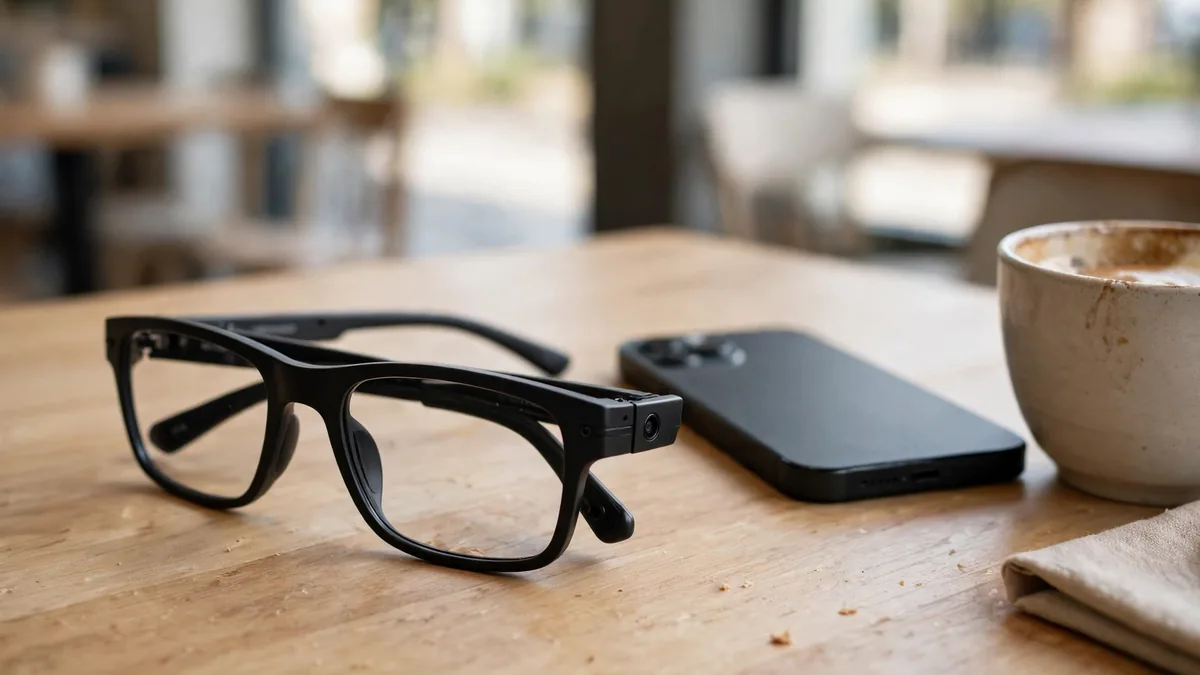
An AI wearable is a device you wear on your body that uses artificial intelligence to understand what is happening around you and help you in the moment. Unlike a phone, which you have to pull out and look at, an AI wearable is always there: listening, watching, sensing, and ready to answer. It might be glasses that translate a street sign, a pin that takes notes in a meeting, or a watch that notices an irregular heartbeat before you do.
The idea is not new — fitness trackers and smartwatches have collected body data for years. What is new is the AI layer: small sensors, microphones, and cameras combined with large language models that understand speech, images, and context. The result is a device that does not just record your life but interprets it, turning raw data into answers, reminders, and warnings.
This article explains what an AI wearable is, how the technology works, the main types on the market, the benefits and risks, and where the category is heading — a clear, jargon-free picture for buyers and the curious alike.
Key takeaways
- An AI wearable is a body-worn device that uses AI to sense, understand, and respond to your surroundings in real time.
- The main types are AI glasses, AI pins and pendants, smartwatches, smart rings, and hearables such as AI earbuds.
- They work by combining sensors and microphones with cloud or on-device AI models that interpret speech, images, and health data.
- The biggest benefits are hands-free help, real-time translation, and continuous health monitoring.
- The biggest risks are privacy, battery life, accuracy, and cost — so check all four before buying.
What Is an AI Wearable?
An AI wearable is any device worn on the body that uses artificial intelligence as its core feature rather than as an add-on. A regular smartwatch counts your steps; an AI wearable tries to understand what those steps mean and tells you something useful about them. Ordinary glasses help you see; AI glasses can read a menu in another language and translate it on the spot.
The line between an AI wearable and a regular wearable is not always sharp. Most makers agree on three traits: the device is worn continuously, it collects data from sensors or the environment, and an AI model turns that data into something you can act on. If a device only records data and shows it later, it is a tracker; if it interprets the data and responds in the moment, it is an AI wearable.
How AI Wearables Work
An AI wearable works in three stages: sense, understand, and respond. First, its sensors gather information — a microphone picking up your voice, a camera capturing what you are looking at, an accelerometer tracking movement, or a heart-rate sensor measuring your pulse. Some add GPS, temperature, or blood-oxygen sensors.
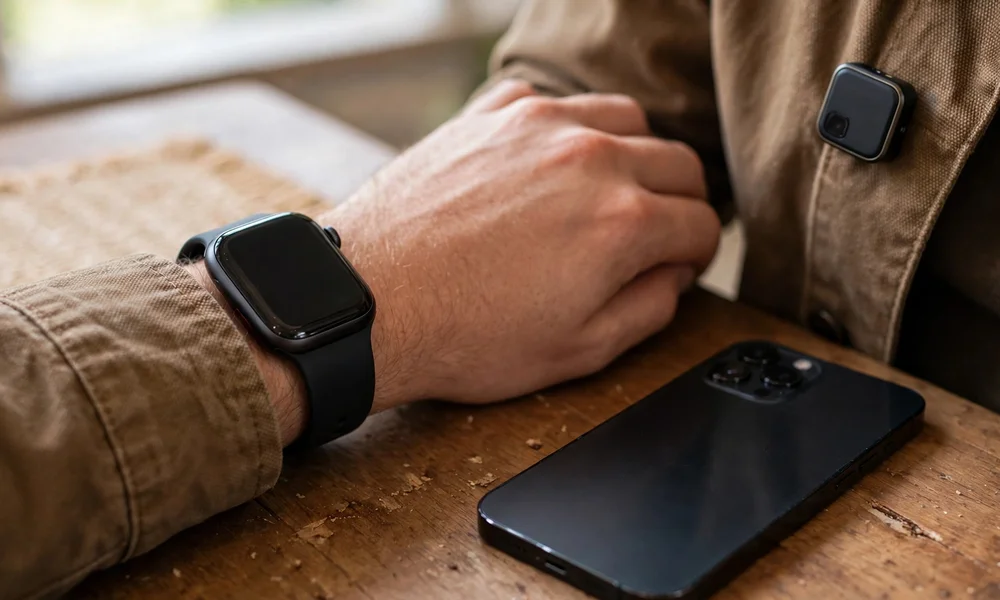
Next, the AI makes sense of that data. Simple tasks, such as recognising a wake word or counting steps, often run on the device itself. Harder tasks, such as translating a conversation or identifying an object in a photo, usually go to a more powerful AI model in the cloud, and the answer comes back in a second or two. This split between on-device and cloud processing is one of the key engineering trade-offs in the category.
Finally, the device responds: a spoken answer in your ear, a line of text on a glasses display, a vibration on your wrist, or an action such as saving a note. The best AI wearables make this feel natural — you ask a question out loud, and the answer arrives without you ever touching a screen.
The Main Types of AI Wearables
AI glasses are the most talked-about type. They look like ordinary glasses but contain a camera, microphones, and speakers, sometimes with a small display in the lens. You can ask them what you are looking at, get directions without pulling out your phone, or have a conversation translated in real time.
AI pins and pendants are small devices clipped to clothing or worn around the neck. They usually have a camera and microphone but no screen, so they respond by voice or by projecting a small display onto your hand. Their pitch is simple: an assistant that is always with you but never demands your attention the way a phone does. In practice, they have been the most controversial type, with early models criticised for overheating and short battery life.
Smartwatches and smart rings are the most mature AI wearables. A modern smartwatch can detect falls, warn about irregular heart rhythms, track sleep stages, and coach workouts with AI-generated advice. Smart rings pack similar health sensors into a much smaller device for people who do not want a screen on their wrist. For a direct comparison of the two most common wrist devices, see our smartwatch vs fitness tracker guide. Hearables — earbuds with AI built in — round out the category, offering live translation, noise control, and voice assistance in a form most people already wear daily.
Benefits of AI Wearables
The clearest benefit is hands-free help. When your hands are full, you are driving, or you are mid-task, an AI wearable lets you ask questions, set reminders, and get information without stopping what you are doing. For people who work with their hands — cooks, builders, nurses, parents — that alone can justify the device.
Real-time translation is another strong use case: AI earbuds and glasses translate conversations as they happen, and AI glasses can read signs, labels, and menus aloud — a help for travellers and people with low vision alike.
Health is the benefit with the most evidence behind it. Continuous monitoring catches things a yearly check-up cannot: an irregular heartbeat at 3 a.m., a slow decline in sleep quality, or a recovery that is not progressing after illness. AI turns that stream of data into warnings and advice personal to you. Our roundup of the best AI chatbots shows how the same models powering these wearables are reshaping everyday software.
Risks and Drawbacks to Know About
Privacy is the biggest concern. A device with a camera and microphone that is always on can record other people without their knowledge, and many AI wearables send data to the cloud for processing. Before buying, check what the device records, where that data goes, how long it is stored, and whether you can delete it. If a maker cannot answer those questions clearly, that is a warning sign.
Battery life is the most common practical complaint: AI processing is power-hungry and small devices have small batteries. Many AI glasses last a day of light use but far less with the camera running, and AI pins have struggled to last a full day at all. Accuracy is another issue — a wrong translation or a missed health warning matters more on a device you trust with your body than it does in a chatbot.
Cost is the final drawback. AI wearables are premium products, often priced well above the trackers they replace, and some require a monthly subscription on top of the hardware price. Add that up over two years before you buy — a device that ends up in a drawer after a month is the most expensive kind of all.
Real-World Uses of AI Wearables
In everyday life, AI wearables are most useful for small, frequent tasks: checking the weather while you get dressed, translating a phrase at a restaurant, or remembering what someone said in a meeting.
At work, the uses are more specific. Field technicians use AI glasses to see repair instructions overlaid on equipment, doctors use voice-capturing wearables to document patient visits without typing, and warehouse workers use voice-directed wearables to keep their hands free. In each case the value is the same: information at the exact moment it is needed, without a screen in the way.
In health and accessibility, the impact can be larger still. AI wearables help people with low vision identify objects and read text, help people with hearing loss follow conversations, and help older adults live independently with fall detection and emergency alerts. These are the uses where the technology feels least like a gadget and most like a genuine improvement to daily life. To see what else AI can do, browse our list of the best AI apps — many work alongside a wearable.
AI Wearables vs Smartwatches and Fitness Trackers
The difference comes down to what the device does with your data. A fitness tracker records your steps, heart rate, and sleep, then shows you charts. A smartwatch adds notifications, apps, and calls. An AI wearable goes further: it interprets the data and takes initiative, such as warning you that your recovery is poor and suggesting a lighter workout.
That said, the categories overlap heavily, and the best smartwatches now include AI features of their own. For most buyers, the practical question is which features you will actually use. If you want health tracking and notifications, a good smartwatch is the safer, cheaper choice. If you want hands-free AI help and real-time translation, an AI wearable is worth considering — provided you accept the trade-offs in battery life, privacy, and price.
Frequently Asked Questions
What is an AI wearable in simple terms?
It is a device you wear — glasses, a watch, a pin, a ring, or earbuds — that uses artificial intelligence to understand your surroundings and help you in real time, usually through voice, instead of making you look at a screen.
Are AI wearables worth buying in 2026?
It depends on the type. AI smartwatches and hearables are mature and worth buying for most people. AI glasses are improving fast and suit early adopters. AI pins remain the riskiest purchase — wait for the next generation unless you have a specific use in mind.
Do AI wearables record everything I say?
Not usually. Most listen for a wake word and only start recording after they hear it, while some offer an always-on mode. Check the privacy settings and the maker’s data policy before you buy, and look for a clear way to delete your recordings.
How long does the battery last on an AI wearable?
Smartwatches typically last one to two days, smart rings up to a week, and AI glasses around a day of light use. AI pins have the shortest battery life, often under a day with heavy use. Camera and translation features drain the battery fastest.
Can AI wearables replace my phone?
Not yet. Most AI wearables still need a phone nearby for connectivity and for the companion app that manages settings. They are best thought of as a companion to your phone, not a replacement — they handle quick, hands-free tasks while the phone handles the rest.
Are AI wearables safe for my health data?
They can be, but check the details. Look for on-device processing where possible, clear data-retention policies, and the ability to delete your data. Avoid devices from makers that do not explain how your health information is stored and shared.
The Bottom Line
An AI wearable is a body-worn device that uses artificial intelligence to sense your surroundings and help you in the moment, without a screen getting in the way. The category includes AI glasses, pins, smartwatches, rings, and hearables, and the most convincing uses today are hands-free help, real-time translation, and continuous health monitoring.
The technology is still young and the trade-offs are real: privacy questions, battery limits, occasional inaccuracy, and premium prices. If you are considering one, start with a mature type such as an AI smartwatch or hearables, check the privacy policy carefully, and be honest about whether you will wear it every day. Bought for the right reasons, an AI wearable can quietly make your day easier.