When Andreas Almgren crossed the finish line in Central Park on November 1, 2026, he gave Nike something money cannot buy: a win that serious runners would notice. The Swede won the New York City Marathon in his marathon debut, in 2:06:01, wearing the Nike Apex, a racing shoe that does not reach shops until January.
The New York City Marathon is one of the most watched races in the world, and Nike has made it the centrepiece of a campaign to repair its relationship with runners. The company paid for the traditional New York Times insert published the morning after the race, renewed its Chicago Marathon sponsorship through 2036, re-upped its backing of a Portland marathon, and announced a deal with the San Antonio marathon.
The stakes are high. Nike lost ground to rivals such as Hoka and On while it focused on lifestyle sneakers, and its share of the United States sports footwear market fell from 40 percent to 30 percent between 2016 and 2025, according to Euromonitor. Under chief executive Elliott Hill, the running business has grown for nine straight quarters, and the marathon is where Nike is proving the turnaround is real.
Key takeaways
- Andreas Almgren won the men’s 2026 New York City Marathon in his debut, in 2:06:01, wearing the unreleased Nike Apex racing shoe.
- Nike paid for the New York Times post-marathon insert and renewed its Chicago Marathon sponsorship through 2036.
- Nike’s running business has grown for nine straight quarters, the last six in double digits.
- The brand has climbed from fifth to third among running brands in the last 12 months, in shoes priced above $110.
- Nike’s share of the $9 billion United States sports footwear market fell from 40 percent to 30 percent between 2016 and 2025.
| Detail | What happened |
|---|---|
| New York City Marathon 2026 | Andreas Almgren won the men’s race in 2:06:01 in his marathon debut |
| Winning shoe | Nike Apex, on sale from January 2027 |
| Chicago Marathon | Sponsorship renewed through 2036, Nike’s only top-tier marathon as main gear sponsor |
| Other marathon deals | Portland renewed, San Antonio announced last month |
| Running growth | Nine straight quarters, last six in double digits |
| Brand ranking | From fifth to third in the last 12 months |
| Market share | 40 percent in 2016 to 30 percent in 2025, of a $9 billion market |
| Company revenue | $46.4 billion in the last fiscal year, down 2 percent excluding currency changes |
| Investor target | $5 billion in new annual revenue by the end of fiscal 2031 |
A debut win in a shoe nobody can buy yet
Almgren arrived in New York as the most talked-about marathon debutant in years, and he lived up to the billing. The 31-year-old Swede, a former 800-metre specialist and European 10,000-metre champion, stayed patient in a large lead group before moving to the front shortly before 40 kilometres. A second surge on Central Park South settled it, and he jogged the final metres, waving to the crowd. His 2:06:01 missed the Swedish record by four seconds.
What made the win so valuable to Nike was the footwear. Almgren raced in the Nike Apex, unveiled on September 30, 2026, which reaches the market in January. The shoe has a zero-drop 40-millimetre platform, four Air Zoom units in the forefoot and a redesigned carbon plate. Nike says it returns up to 40 percent more energy than the Alphafly 3. Several sneaker sites report a $350 price, which Nike has not confirmed.
Nike wasted no time. Almgren was put front and centre after the race and discussed the shoe at Nike’s investor day the following week. A marathon win in a shoe nobody can buy yet turns the January launch into an event runners are already waiting for. The best running watches with GPS can track a runner’s pace, but no gadget creates that kind of anticipation.
The marathon deals behind the comeback
The New York win was the most visible part of a deliberate strategy. Nike paid for the New York Times insert published the morning after the marathon, listing the names and times of most participants. It carried a tribute to the course and the runners, ending: “I can make it across the finish line anywhere.” The tone mattered: an ad Nike ran before the Boston marathon in April appeared to mock slower runners, while the New York insert spoke to every finisher.
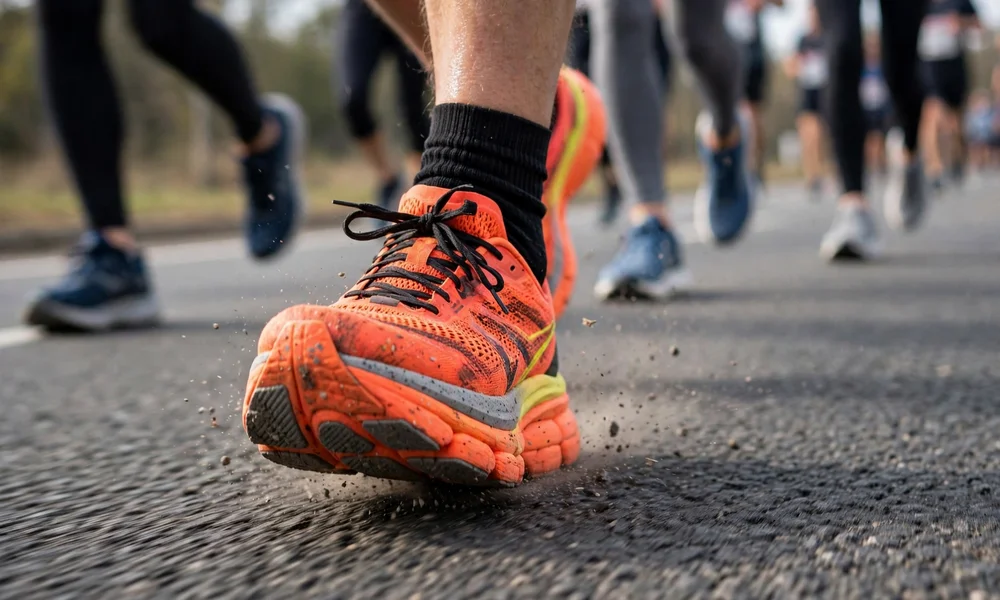
The sponsorship moves tell the same story. Nike renewed its Chicago Marathon sponsorship through 2036. Chicago is the only top-tier marathon for which Nike is the main gear sponsor, so the long renewal is a clear statement of intent. Nike has also re-upped a Portland marathon and announced a San Antonio deal last month, putting the brand where runners gather.
That presence is the point. Chief executive Elliott Hill told analysts last week that Nike went back to building deep relationships with running communities through its ground game and running experts, and that running was the first proof the model works. The marathon deals are Nike buying its way back into the races where serious runners decide which shoes to trust.
How Nike lost the runners it is now chasing
Before Hill was hired as chief executive in 2024, Nike shifted its focus away from large wholesalers to push sales through its own stores and website. In the process, it lost much of its influence at independent running stores, which are key to reaching serious runners. Those shops are where experienced runners go for advice and fittings, and Nike’s absence was noticed.
Between 2016 and 2025, Nike’s share of the $9 billion United States sports footwear market dropped from 40 percent to 30 percent, according to Euromonitor. The misstep coincided with a running boom Nike largely missed. While participation grew, Nike focused on limited-edition and lifestyle sneakers over innovative running footwear, allowing rivals like Hoka and On to take share.
Hill has described the correction simply: “We were reminded that to lead a sport, we had to live inside it. Start with the athlete and the problem that we’re solving.” That means designing shoes around what runners need, showing up at their events, and listening to specialist retailers. The best smartwatch straps for workouts matter to runners, yet the lesson was more basic: products follow the athlete, not the other way around.
Nine quarters of growth and a climb up the rankings
Nike’s running business has reported nine straight quarters of growth, with the last six in double digits. Nike does not disclose the unit’s sales separately, so its full scale is not public. Product design has changed too, now focusing on maximum cushioning, new materials, and more support and stability.
The brand’s standing has improved too. President Amy Montagne told investors running has climbed from fifth place among brands to third in the last 12 months. In shoes priced above $110, Nike gained six points of market share in the United States and Western Europe over the past year, more than any other brand. Her goal is to reclaim the number-one position. “We have to serve every runner, the elite runner chasing a record and the person training for our first 5K,” she said.
One product line shows how far the recovery has come. The Vomero collection, Nike’s largest road-running line, now brings in more than $1 billion a year. In June 2025, Hill said the Vomero had already become a $100 million business. A year later, it is ten times that size. The best VR headsets for fitness show how crowded the training market has become, but Nike’s growth suggests its running shoes are winning attention back.
What it means for Nike, runners and investors
Nike wants to use running as the template for the rest of the company, applying the same approach to training, soccer, basketball and outdoor activities. The plan, called Full Stride Ahead, was laid out at Nike’s first investor day since 2017, on November 17, 2026. It narrows the focus to five sports across 23 priority countries that should drive more than 90 percent of revenue growth.
Investors are not yet convinced. Shares fell 6 percent on investor day, while the S&P 500 fell 1 percent. Executives said revenue would return to growth in fiscal 2029, targeting $5 billion in new annual revenue by the end of fiscal 2031. In the last fiscal year, which ended in May, Nike reported $46.4 billion in revenue, down 2 percent excluding currency changes. Shares have fallen 60 percent since Hill became chief executive two years ago.
For runners, the meaning is simpler. A Nike that competes on performance shoes, sponsors marathons and listens to running shops is good for everyone who runs, whatever brand they wear. Competition pushes every company to build better shoes. The New York marathon did not fix Nike on its own, but it showed, on the biggest stage in American distance running, that the company is back in the race.
Checklist: how to judge Nike’s running comeback
- Watch whether the nine quarters of running growth continue.
- Look for the Nike Apex in January, and see whether the win turns into sales.
- Check whether Nike keeps showing up at marathons, running clubs and independent shops.
- Compare new Nike running shoes on cushioning, support and stability.
- Follow the brand ranking: the goal is to move from third back to number one among running brands.
- Remember the wider turnaround is slower, with revenue growth not expected until fiscal 2029.
Frequently asked questions
Who won the 2026 New York City Marathon?
Sweden’s Andreas Almgren won the men’s race in 2:06:01 in his marathon debut on November 1, 2026. Sheila Chepkirui of Kenya won the women’s race in 2:24:36.
What shoe did Andreas Almgren wear in New York?
Almgren wore the Nike Apex, unveiled on September 30, 2026. It has a zero-drop 40-millimetre platform, four Air Zoom units in the forefoot, and a redesigned carbon plate. It reaches shops in January 2027, and several sneaker sites report a $350 price, which Nike has not confirmed.
Why is Nike sponsoring marathons?
Nike is using marathon sponsorships to rebuild its relationship with serious runners after losing ground to Hoka and On. It renewed its Chicago Marathon deal through 2036, backed a Portland marathon, announced a San Antonio deal, and paid for the New York Times post-marathon insert.
How much has Nike’s running business grown?
Nike’s running business has grown for nine straight quarters, the last six in double digits. The brand climbed from fifth to third among running brands in the last 12 months, and the Vomero collection now earns more than $1 billion a year.
Why did Nike lose runners in the first place?
Nike shifted focus from large wholesalers to its own stores and website, losing influence at independent running stores. It also focused on limited-edition and lifestyle sneakers over innovative running footwear, missing a running boom while rivals gained share.
When will Nike’s revenue grow again?
Executives told investors revenue will return to growth in fiscal 2029, targeting $5 billion in new annual revenue by the end of fiscal 2031. Last fiscal year, which ended in May, revenue was $46.4 billion, down 2 percent excluding currency changes.
Bottom line
The 2026 New York City Marathon gave Nike the story it has been trying to tell for two years: a debut winner, in a new shoe, on the biggest stage in American running. The win, the sponsorships and nine quarters of growth all point the same way. Nike is not just advertising to runners again. It is showing up where they run, race and shop.
Whether that is enough is still open. Investors sent shares down 6 percent on investor day, and overall revenue is not expected to grow until fiscal 2029. But in running, the turnaround is visible, and the marathon is the proof. If Nike keeps winning over the runners it lost, the rest of the comeback may follow.