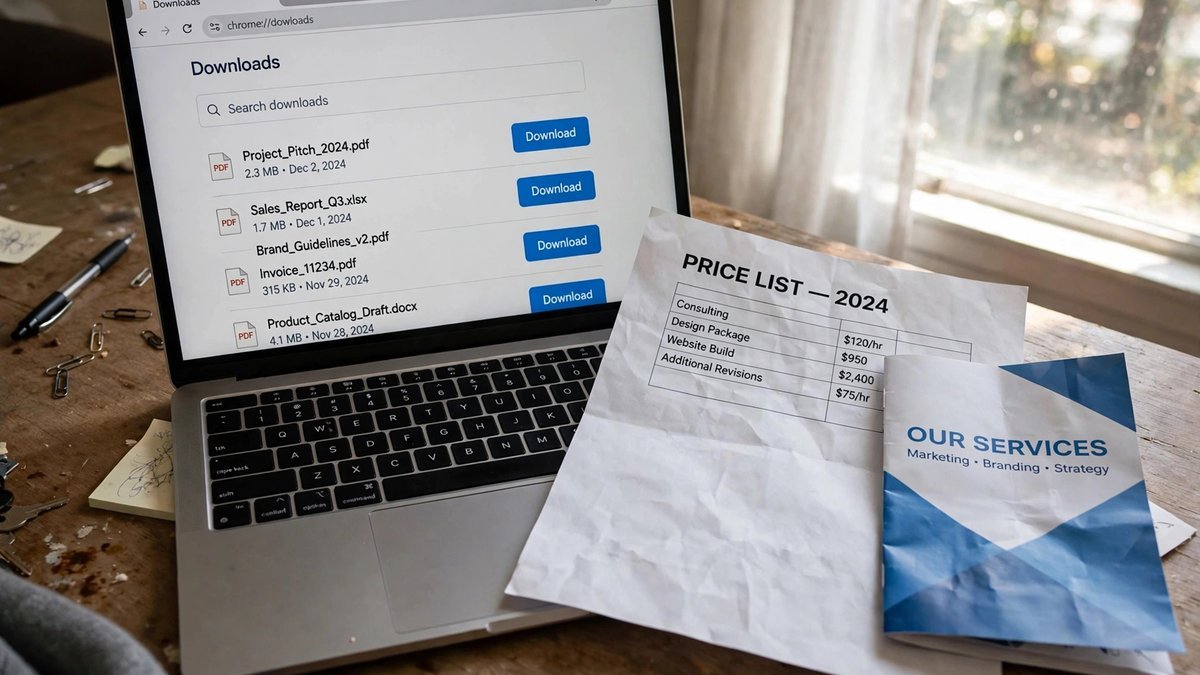
A small business owner opens a laptop and finds seven tools that all promise to improve press coverage. One tool writes the release. A second tool scores the headline. A third tool builds the media list. A fourth tool hosts the newsroom. A fifth tool tracks opens. A sixth tool schedules the send. A seventh tool reports on coverage that never arrived. The owner pays for all seven and still has no story in print.
This is my view, and it is a plain one. Press coverage does not improve because more tools watch it. It improves when one person owns the press page, one press kit stays current, and one contact answers the phone.
The habit is easy to understand. Every press tool promises a missing piece, and every missing piece feels urgent when a launch date is near. The result is a stack of subscriptions that measure each other instead of measuring coverage. This article argues for a freeze, a cull, and a single owner, and it explains why the press page needs less software and more attention.
Key takeaways
- A press page serves journalists, not software dashboards, and every tool should be judged by whether a reporter files faster.
- Seven press tools that each measure a different number create confusion, not clarity, and the team argues about numbers instead of fixing the page.
- Each new tool adds a monthly fee, a login, a dashboard, and settings that can conflict with the tools already in place.
- The press kit, the contact route, and the facts on the page matter more than any distribution feature a tool can sell.
- A freeze on new tools, a cull of the tools that add no decision, and one named owner will restore a single view of press.
What the press tool pile actually looks like
The pile usually starts with a sensible choice. A business picks a website platform, and the platform brings a built in way to publish news. Then a writing tool arrives to draft releases faster. Then a distribution tool arrives to send those releases to a media list. Then a monitoring tool arrives to watch for mentions. None of these choices is foolish on its own. Together, they turn a single page for journalists into a project with five owners and no single person who can say whether the press page is current today.
Look at the numbers that such a chain produces. The writing tool counts a release as done when the draft is saved. The distribution tool counts a release as sent when the email leaves the server. The monitoring tool counts a mention when a brand name appears anywhere, even in a comment thread that has nothing to do with the business. Four tools, four definitions of success, and not one of them can answer the only question that matters: did a journalist find what was needed and file the story.
The pile also shows up in the fee stack. A monthly fee of 29 dollars looks modest. A second fee of 49 dollars looks modest. Add the per release fee for distribution, the fee for an extra seat, and the fee for a hosted newsroom, and the total can pass 200 dollars a month before a single reporter has opened the page. The setup guide for a business website press page in 2027 shows that the page itself needs only five parts, and none of those parts needs a subscription to exist. A summary, a press kit, a coverage list, a contact route, and a news archive can live on the website the business already pays for.
Why the pile keeps growing
The pile grows because every press tool solves a real annoyance, and every annoyance feels like the reason coverage is thin. A release takes too long to write, so a writing tool arrives. A media list is out of date, so a database tool arrives. A launch gets no replies, so a follow up tool arrives. Each purchase is a reasonable answer to a real complaint.
The pile also grows because press work is easy to postpone and easy to buy instead. Updating the press kit means finding the new logo, checking the facts, and asking the founder for a current photo. That is slow, fiddly work that nobody enjoys. Buying a tool takes ten minutes and feels like action.

There is a third reason, and it is the hardest to admit. Tools give the owner something to show for the effort. A dashboard with charts looks like a press operation. A press page with correct facts looks like nothing at all, until a journalist uses it. Owners who feel behind on publicity reach for the visible proof of effort, and vendors know it.
The way out starts with a hard question for every tool in the stack: what decision does this tool change. If the answer is that the tool makes a decision faster, clearer, or cheaper, it earns its place. If the answer is that the tool produces a report nobody acts on, it is decoration.
What a journalist actually wants
A journalist on deadline wants four things, and none of them is a tool. The first is the facts: what the business does, when it started, who runs it, and what has changed since the last story. The second is the assets: a logo that downloads, a photo that is current, and a fact sheet that matches the website. The third is a human: one named contact who answers email within the hour and can arrange a quote the same day. The fourth is proof: past coverage that shows the business is real and worth the column inches.
No journalist has ever asked a small business which release writing tool it uses. No reporter has ever filed faster because a business bought a media database. The explainer on what a business website press page is for small businesses makes the same point from the other side: the page exists to shorten the distance between a question and an answer, and every extra layer between the reporter and the answer is a reason to drop the story.
This is why the opinion here is not against tools in general. One good writing tool can help a small team draft faster. One distribution list that is kept current can help a launch reach the right desks. The argument is against optimizing for every press tool, which is a different thing entirely. Optimizing for every tool means judging the press operation by how many systems it runs, how many dashboards it fills, and how many features it pays for. Optimizing for the journalist means judging it by one measure: how fast a stranger with a deadline can confirm the facts, download the assets, and reach a human.
There is also a trust effect that no tool can buy. A press page that is accurate, current, and plainly written tells a journalist that the business is careful with facts. A press page full of stale claims tells the opposite story, and it tells it before anyone picks up the phone.
The costs that matter
The real cost of the tool pile is not the subscription total, though that total is real enough. The costs below are the ones that decide whether coverage happens, and they are the costs a business should count before buying one more press tool.
| Detail | What is known |
|---|---|
| Monthly fees | Small tools look cheap alone, but a stack of five or six can pass 200 dollars a month with no coverage to show for it. |
| Conflicting numbers | Each tool defines success differently, so the team argues about which number is right instead of fixing the page. |
| Stale facts | Tool dashboards stay green while the press page lists old prices, old logos, and old photos that reporters quote as fact. |
| Slow replies | No tool answers a journalist. A press page with no named contact loses stories to rivals who reply within the hour. |
| Maintenance debt | Every tool adds logins, settings, and updates, and that time is time not spent maintaining the page. |
| False confidence | Charts and mention counts feel like progress, so the owner keeps buying tools instead of checking the page itself. |
| Lost stories | A reporter who cannot confirm facts or reach a human drops the story quietly, and the business never learns why. |
| Vendor lock in | Releases and media lists stored inside tools are hard to move, so cancelling feels harder than paying. |
Checklist: judging your press setup honestly
- Open your press page as a stranger would and time how long it takes to find the facts, the logo, and the contact.
- List every press tool you pay for and write down the last decision each one changed.
- Check every date, price, and name on the press page against the live website and fix what is wrong.
- Send a test email to your own press contact and see how long a real reply takes.
- Ask one journalist or blogger what stopped them using your press page, and listen without defending it.
- Cancel one tool this month and see whether coverage, replies, or page visits change at all.
Frequently asked questions
Do small businesses need any press tools at all?
No, not as a rule. A small business needs a current press page, a press kit, and a named contact. One writing tool can help if releases go out often, but the page comes first, and a tool cannot stand in for it.
Which press tool should a business keep if it keeps only one?
Keep the tool that changes a decision you actually make. For most small businesses that is the writing tool used most often, or the media list that is kept current. Cancel the tools whose reports nobody reads.
Does a bigger media list mean better coverage?
No. A list of five hundred cold contacts performs worse than a list of twenty journalists who cover your field and have answered before. The roundup of the best AI tools for press releases shows how much these platforms sell reach, and reach without relevance is noise.
How often should the press page be reviewed?
Every three months at least, and after every change a reporter might quote: a new price, a new product, or a new hire. A stale press page does more harm than no press page at all.
Who should own the press page inside the business?
One named person, with the job written down. Shared ownership means nobody checks the page, and the page goes stale in silence. The owner answers press email and keeps the kit current.
What is the first step in cutting the tool pile?
Freeze new purchases for three months. List what you already pay for, cancel the tool whose last report changed nothing, and spend the saved money and time on the press page itself.
The bottom line
Press coverage comes from a page a journalist can trust and a human a journalist can reach. Tools can help with the drafting and the sending, but they cannot supply the facts, the photos, or the reply. A business that optimizes for every press tool ends up with a fine stack of software and a press page that quietly turns reporters away.
The fix is smaller than the stack. Freeze the purchases, cull the tools that change no decision, name one owner, and make the page current. Do that, and the next launch will be judged by the story it earns, not by the number of dashboards that watched it happen.
Note: this is an opinion piece. Tool prices and features change often, so check current pricing before buying, and judge any press tool by whether a reporter files faster because of it.