Quick Answer: What is 6g and when is it coming?
6G is the sixth generation of mobile network technology, the planned successor to 5G. It is expected to combine super-high-frequency spectrum, AI-driven network management, and satellite coverage, with the first commercial launches targeted around 2030.
The exact technical definition is still being written. Standards bodies are only now setting the rules, so any spec sheet you see today is a research target rather than a product promise. Think of 6G as a direction of travel, not a finished destination.
Before you plan around it, weigh the standards timeline, available spectrum, device support, carrier rollout schedules, and the real cost of upgrading hardware.
Every so often, the telecom industry makes a promise so big it practically needs its own power grid. At the current pace of research, engineers talk about wireless speeds in the hundreds of gigabits per second, networks that sense objects like radar, and coverage that reaches the middle of the ocean. That is the pitch for 6G, and it is already shaping research budgets, government strategies, and the next decade of phone design. The catch? The technology that will supposedly do all this is still mostly in laboratories, and the calendar is less certain than the headlines suggest. Here is what is actually known, what is still guesswork, and what it means for anyone who buys a phone or runs a business.
How 6G Differs From 5G in Plain Terms
Most people experience a mobile generation as a speed bump. 4G made video streaming normal. 5G made it faster and, in some places, lowered delays enough for real-time apps. 6G is being designed around a broader set of goals from the start, which is why the research conversation sounds so different.
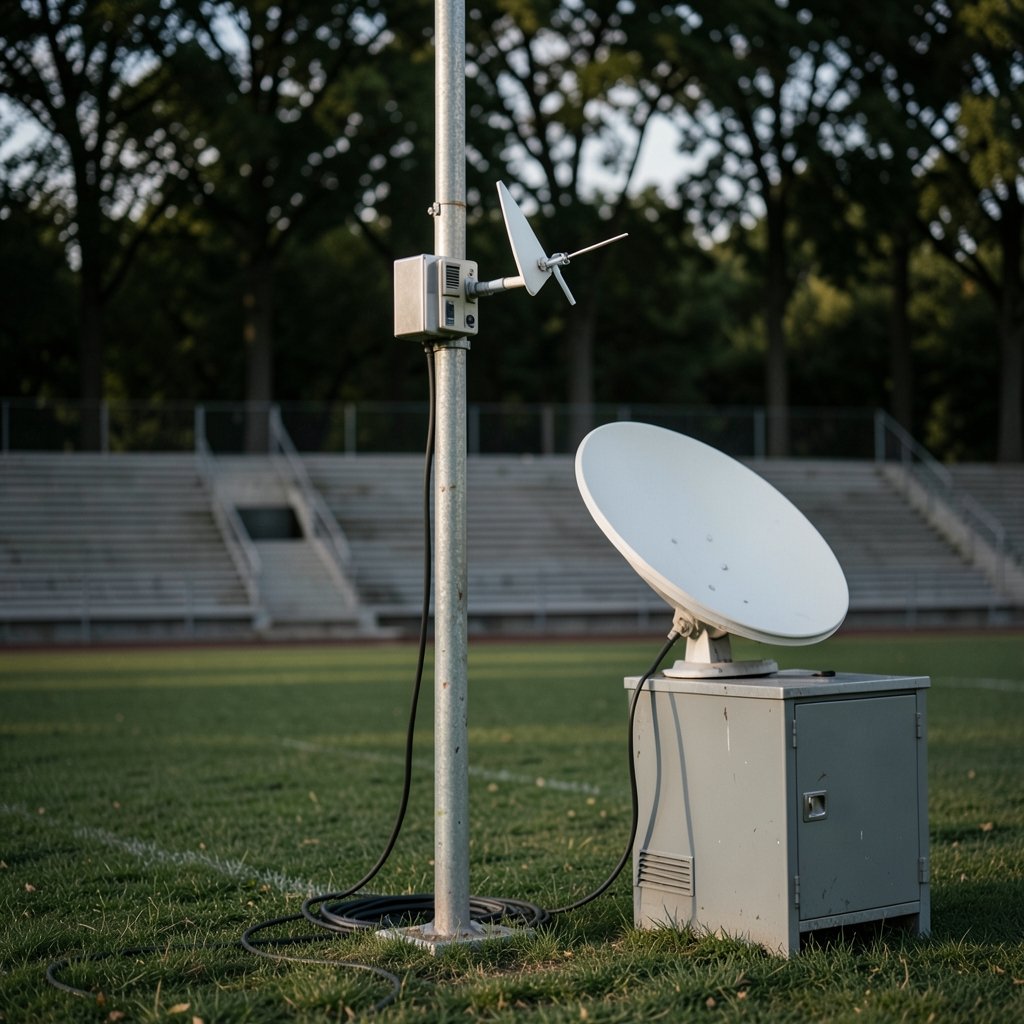
The working vision combines several ideas. First, higher frequencies, including bands above 100 GHz, which could carry enormous amounts of data over short distances. Second, AI-native networks, where machine learning handles traffic routing and maintenance rather than human engineers reacting after the fact. Third, integrated sensing and communication, meaning the network can detect objects and movement using the same signals that carry data. Fourth, non-terrestrial coverage, with satellites and high-altitude platforms filling gaps that cell towers cannot reach. (6G (network)))
Whether all four arrive together, on time, and at a price consumers accept is a separate question. Historically, each generation delivers a subset of its promises well and the rest late.
| Feature | 5G (deployed today) | 6G (research targets) |
|---|---|---|
| Peak speeds | Hundreds of Mbps to low Gbps | Hundreds of Gbps to Tbps claimed |
| Latency | A few milliseconds in good conditions | Sub-millisecond targets |
| Spectrum focus | Low, mid, and mmWave bands | Sub-terahertz plus mid and low bands |
| Network intelligence | Software-defined, partly automated | AI-native by design |
| Coverage model | Terrestrial towers | Towers plus satellites |
| Expected launch | 2019 onward | Around 2030 |
The Standards Timeline: Who Decides and When
No company launches a generation alone. The rules get written in committees, and those committees move slowly on purpose. The 3GPP is the primary body producing the technical specifications, while the ITU-R frames the overall vision through its IMT-2030 framework.
The rough sequence looks like this: vision and framework documents first, then detailed performance requirements, then formal specification work, then chipsets, then phones, then networks. Each stage takes years, and each stage can slip.
Early 6G study work is in the releases being prepared in the mid-2020s, with normative specification work following in the late 2020s. Commercial service is projected for around 2030, with broad mass-market coverage arriving later in that decade. Treat those dates as targets rather than commitments. The industry has missed generational deadlines before, and spectrum negotiations can delay launches by themselves.
For anyone tracking the software side of this transition, the hardware cycle matters just as much as the standards cycle. The same way players watch release calendars for consoles, network watchers follow chip announcements and carrier trials. If you follow consumer tech calendars closely, the pattern is familiar from the upcoming games side of the industry: big announcements come years before anything ships.
Why Spectrum Is the Real Bottleneck
Radio spectrum is a finite public resource, and governments allocate it. That makes spectrum policy the least glamorous and most decisive part of the 6G story.
Higher frequencies carry more data but travel shorter distances and struggle to pass through walls. That means dense small cells, more antennas, and higher infrastructure costs. Mid-band spectrum offers a balance, which is why it is so contested. Low-band travels far but carries less.
The practical consequence for readers is simple: a 6G phone is only as good as the spectrum its carrier owns and the density of cells in the user’s area. A handset with a 6G logo on the box will not magically deliver terabit speeds in a suburb with two towers. When the first devices appear, check which bands your carrier actually holds before assuming the upgrade is worth it.
What Governments Are Doing Behind the Scenes
6G has become a matter of national strategy alongside corporate competition. Several governments launched research programs years before any standard existed, funding university labs and consortiums to shape the rules in their favor.
China began promoting IMT-2030 research around 2019. South Korea announced a national 6G strategy in 2020. Japan set a commercialization target around 2030 through its B5G promotion program. The European Union has funded 6G work through Horizon Europe and the Hexa-X project. The United States has leaned more on research agencies and industry alliances than on a single national program. (ITU-R IMT-2030 framework for 6G)
This matters because standards are partly politics. Whichever countries and companies hold the most patents and chair the most working groups tend to shape which technical features get prioritized. That is one reason early capability claims should be read carefully. Vendor projections are marketing as much as engineering.
What 6G Might Actually Enable
Setting aside the hype, a few use cases keep coming up because they solve real problems.
Sensing and positioning could let networks detect drones, monitor infrastructure, or track movement without extra sensors. Industrial automation could run on wireless links reliable enough to replace cables in factories. Remote and rural coverage could improve through satellite integration, though capacity per user will likely stay modest compared with urban cells. Immersive computing could benefit from lower latency, assuming headsets and batteries improve too.
Notice what is missing from that list: the idea that 6G will transform everyday phone use overnight. For most people, the honest expectation is that 6G will feel like a faster, more reliable version of what they already have, with new applications arriving gradually. The pattern from 4G to 5G is instructive. The step change came from apps nobody predicted, not from the network spec itself.
Common Mistakes People Make When Following 6G News
A few traps catch almost everyone reading about next-generation wireless.
- Treating research papers as product roadmaps. A lab demonstration at 100 meters is not a network.
- Confusing peak speeds with typical speeds. Peak figures are measured under ideal conditions with a single user.
- Ignoring the device cycle. Networks and phones have to arrive together, and phone replacement cycles are long.
- Assuming a single global launch date. Rollouts are staggered by country, carrier, and city.
- Overlooking the cost. Dense small cells mean higher infrastructure spending, and some of that eventually reaches bills.
What actually works is following primary sources: the standards bodies publishing release schedules, national regulators publishing spectrum plans, and carrier earnings calls where executives discuss capital spending. Those three sources will tell you more than any keynote.
What to Watch Between Now and 2030
The next few years will settle most of the open questions. Watch for the completion of detailed technical requirements, the first spectrum auctions aimed specifically at 6G bands, and early trial networks in dense urban areas. Watch, too, for the first chipsets announced by major silicon vendors, since hardware availability usually signals that a launch is genuinely close.
It also helps to keep an eye on the broader entertainment and consumer tech pipeline, because network upgrades and device launches tend to cluster. Coverage of upcoming Switch 2 games and similar hardware cycles shows how long the gap between announcement and delivery can stretch. The same patience applies here. If you are curious how the release calendar is shaping up across the industry, the running list of games coming out in 2026 is a useful reminder that announced dates move.
Practical advice for the interim: do not delay a phone purchase waiting for 6G. A good 5G handset bought today will serve most people well past the first 6G launches, and early 6G devices will likely be expensive, power-hungry, and limited to a handful of city blocks.
Conclusion
6G is real research with a real timeline, but it is not a product you can buy, and the 2030 date is a target rather than a guarantee. The technology will likely bring faster speeds, smarter networks, and better coverage in hard-to-reach places, arriving gradually rather than all at once. The smart approach is to follow the standards bodies and regulators, ignore peak-speed marketing, and plan device purchases around what actually works today. For a wider view of what is landing on shelves before then, the upcoming PS5 games calendar is a good example of how release schedules really behave: announced early, delivered late, and worth the wait when they land.
FAQ
Will 6G replace 5G completely?
No. Generations overlap for years. 4G networks are still running and carrying traffic long after 5G launched, and the same pattern will repeat. Expect 5G to remain the workhorse for most connections well into the 2030s while 6G fills in dense areas and specific industrial uses first.
Do I need a new phone to use 6G?
Yes. 6G requires new radio hardware capable of handling higher frequency bands, so existing handsets cannot be upgraded by software. The first compatible phones are expected to arrive close to the first commercial network launches, and early models will likely be premium devices.
Is 6G dangerous or is that just a rumor?
Concerns about wireless health effects have followed every generation, and public health agencies continue to review the evidence as technology changes. Higher frequencies behave differently from lower ones, mostly by traveling shorter distances, which affects network design more than anything else. Anyone with specific health questions should consult official public health guidance rather than social media claims.
How fast will 6G actually be in real life?
Real-world speeds are always far below laboratory peaks. Expect clear improvements over 5G in dense areas, but the headline figures of hundreds of gigabits per second describe ideal conditions with a single user close to a cell. Typical speeds will depend on spectrum, tower density, and how many people are nearby.
Which countries will get 6G first?
The usual pattern is that countries with advanced 5G infrastructure and active standards participation lead. China, South Korea, Japan, parts of Europe, and the United States are all investing heavily. Commercial launches will likely begin in dense urban areas and expand outward over several years.
Should businesses plan for 6G now?
Businesses should track it, not budget for it. The sensible move is to design systems that can take advantage of better networks when they arrive, without depending on a specific launch date. Industrial and logistics operations with long equipment lifecycles are the ones most worth watching closely, since they will feel the impact first.