
Quick Answer: How mystery boxes work?
Mystery boxes work by selling a sealed package at a fixed price while hiding what is inside, so the buyer pays for a chance at items that may be worth more or less than the price. Sellers control the odds, the inventory mix, and the claimed value of rare prizes, and buyers usually cannot verify any of it before opening. The model shows up in online stores, vending machines, live “unboxing” streams, and retail grab bags, and it borrows heavily from blind boxes and loot boxes. Before buying, check the stated odds, the return policy, the seller’s track record, shipping costs, age restrictions, and whether the “guaranteed value” claim is written down anywhere enforceable.
Why People Keep Buying Boxes They Can’t See Inside
Have you ever paid for something without knowing what you’d get? Most people would say no. Yet millions of shoppers do exactly that every year, handing over money for a sealed box that might contain a rare collectible or might contain a keychain worth less than the shipping.
That is the strange pull of the mystery box: a product where the surprise itself is the product. The mechanics are simple, but the business behind them is more layered than it looks. Understanding how these boxes are built, priced, and regulated helps shoppers spot the good ones and the shady ones.
The Basic Mechanics of a Mystery Box
A mystery box is a chance-based retail product. The seller assembles a sealed package, sets a fixed price, and advertises a theme rather than specific contents. A sneaker mystery box might promise “one pair of premium sneakers.” A trading card box might promise “at least one rare card.” The buyer knows the category but not the item.
Three elements make the model work:
- Hidden contents. The value proposition depends on uncertainty. If buyers knew what was inside, the box would just be a normal product.
- A stated or implied value range. Sellers often claim boxes contain items “worth up to” some figure, which anchors the buyer’s expectations.
- A tier system. Many sellers offer budget, mid-range, and premium tiers, with better odds of rare items at higher prices.
The seller, not the buyer, controls the inventory mix. That imbalance of information is the engine of the whole category, and it is also where most consumer complaints originate. (Protecting Consumer Privacy and Security)
Blind Boxes, Loot Boxes, and Grab Bags: How They Differ
Mystery boxes are part of a family of products that all sell uncertainty, but the details matter. Here is how the main variants compare.
| Type | What the buyer gets | Typical setting | Key difference |
|---|---|---|---|
| Mystery box | A sealed package with unknown items, often themed | Online stores, live streams | Contents vary widely in value; odds often undisclosed |
| Blind box | One figure from a known set, with published odds | Retail shelves, collectible shops | Fixed assortment, rarity is designed and often printed |
| Loot box | Random in-game items | Video games | Digital only; tied to game economies and age ratings |
| Grab bag | Assorted surplus or clearance items | Retail stores, fairs | Usually sold cheaply with no value claims |
The blind box is the most transparent of the group. Collectible figure makers typically publish case ratios, so buyers know that a “secret” figure appears once in every 144 boxes, for example. Mystery boxes sold online rarely offer that level of disclosure, which is the single biggest difference between a hobby and a gamble.
The Psychology: Why Surprise Beats Certainty
The appeal lies in uncertainty: it is rewarding by itself. When a person opens a box and does not know the outcome, the brain releases dopamine in anticipation and at the moment of reward. That is why unboxing videos draw huge audiences and why the format works for live selling.
There is also the variable ratio schedule effect, a pattern well documented in behavioral psychology, where rewards delivered at unpredictable intervals produce persistent engagement. Slot machines use it. So do mystery boxes, in a milder form.
Social proof makes examples feel stronger. A streamer who pulls a rare item on camera creates a vivid, memorable example that makes the odds feel better than they are. This is a classic availability bias: one dramatic win feels more real than a thousand ordinary boxes. Practical tip: before buying, look for videos of average openings rather than highlight reels. Sellers rarely post their own duds.
How Sellers Price and Stock the Boxes
Behind every mystery box is an inventory spreadsheet. Sellers typically work backward from a target margin. If a box sells for $50 and the seller wants a 40 percent margin, the average contents must cost about $30 to source. Rare “chase” items are budgeted as marketing expenses, not as typical outcomes.
A few stocking patterns show up again and again:
- The bulk filler approach. Most boxes contain low-cost, high-margin items, with a small number of premium boxes seeded in to keep the story alive.
- The clearance dump. Unsold stock gets bundled into boxes, which is efficient for the seller but often disappointing for the buyer.
- The curated tier. Higher-priced boxes contain genuinely desirable items, and the seller relies on volume from cheaper tiers to fund them.
Common mistake: assuming “worth up to $500” means the average box is worth anywhere near that. It usually means one box in the entire run contained an item with that retail price. If a seller cannot tell you the average value of a box, treat the headline figure as advertising, not information.
Where the Money Actually Goes
Mystery boxes can be profitable for sellers because the model shifts risk to the buyer. The seller knows the inventory; the buyer does not. That asymmetry, combined with shipping fees and non-refundable “surprise” policies, means the house edge is built in.
For buyers, the math is less friendly. If a box costs $50 and the average contents retail for $35, the buyer loses $15 on average per box, before shipping. The occasional winner does not change the average. This is the same logic that makes lottery tickets a poor investment even when someone wins big.
The economics also explain why the category exploded online. Digital storefronts have almost no overhead compared to physical retail, and live-stream selling turns each opening into free marketing. A related shift is visible across the tech world, where AI is creating more work rather than less, and small sellers are using automation to run storefronts, manage inventory, and produce content at scale. The barrier to launching a mystery box shop has never been lower, which is exactly why buyers need to be more careful, not less.
The Regulatory Picture: What Rules Apply
Regulation of chance-based retail is patchwork, and it varies sharply by country.
In the United States, the Federal Trade Commission has authority over deceptive advertising and unfair business practices. Sellers who make false claims about box contents or odds can face enforcement, and the FTC has pursued cases involving misleading value claims in chance-based merchandise. The agency’s guidance on deceptive practices is worth reading before trusting any “guaranteed value” promise.
In the United Kingdom, the Gambling Commission and the Department for Culture, Media and Sport have examined loot boxes and similar mechanics, particularly around protection for minors. The debate centers on whether paid randomness in products aimed at children should be treated as gambling.
In China, the market regulator has moved toward requiring disclosure of odds and restricting sales to minors for blind box products, a sign that authorities increasingly treat the category as consumer protection rather than harmless novelty.
The practical takeaway for shoppers is simple: rules exist, but enforcement is uneven, and most mystery box purchases are small enough that pursuing a complaint costs more than the box. That reality puts the burden on the buyer to check before paying.
Red Flags That Separate Good Sellers From Bad Ones
Experience with the category produces a short list of signals that reliably separate legitimate sellers from operators running a hustle.
Green flags:
- Published odds or a stated average value per box
- A clear refund policy for damaged or missing items
- Reviews that include unflattering openings as well as wins
- A real business address and responsive support
- Age restrictions stated up front
Red flags:
- “Up to $1,000 value” with no average disclosed
- No returns under any circumstances
- Countdown timers and “only 3 left” pressure on every visit
- Testimonials that are all screenshots of rare pulls
- Payment methods with no buyer protection
A useful habit: search the seller’s name alongside the word “refund” before buying. Complaint patterns surface fast. It also helps to understand the plumbing behind any online store, from how an IP address works to how a browser works, because a storefront with broken basics, missing security certificates, or sloppy checkout is often a storefront with sloppy inventory practices too. If a site asks for unusual payment methods or pushes you off-platform to complete a purchase, walk away.
Another practical check: pay with a method that offers chargeback protection. Credit cards and major payment platforms give buyers a path to dispute a charge when a box never arrives or arrives empty. Peer-to-peer transfers do not. That single choice matters more than any review score.
How Mystery Boxes Fit Into the Wider Tech and Retail World
The mystery box is not a standalone curiosity. It sits at the intersection of e-commerce, behavioral design, and automation. Sellers use recommendation engines, dynamic pricing, and live video to keep buyers engaged. Some are experimenting with AI-generated product images and automated listing tools, and understanding how AI image generation works helps buyers spot listings where the “contents” photo is a rendering rather than a real product shot. That is a genuine red flag in this category, because the entire purchase decision rests on what the photos imply.
Security matters too. Mystery box scams often overlap with phishing and payment fraud, and knowing what malware is and how it works is useful when a “discount code” link arrives by email or message. A store that pressures buyers into installing an app or clicking a shortened link to “unlock” a box deserves suspicion.
The category also overlaps with gaming and digital goods, where loot box mechanics have drawn the most regulatory attention. As physical and digital versions converge, expect the rules to tighten. Sellers who disclose odds now will be ahead of the curve; those who rely on ambiguity will not.
What Actually Works If You Want to Buy
For readers who still want to try a box, a few practical rules improve the odds of a good experience.
- Set a hard budget and treat the money as entertainment spending, not an investment.
- Compare the average value, not the maximum. Ask the seller directly and see if the answer is specific.
- Start with the cheapest tier to test the seller’s quality and shipping before committing more.
- Buy from sellers with a public refund policy and pay with a protected method.
- Check the age rules if buying for a child, and talk to them about how odds work.
What does not work: buying multiple boxes to “chase” a rare item. That is the same trap as chasing losses at a casino, and it turns a fun purchase into a budget problem fast.
Conclusion
Mystery boxes work because uncertainty is genuinely engaging, and because sellers hold information that buyers do not. The model is not inherently dishonest. Blind boxes with published odds show that surprise and transparency can coexist. But the online mystery box market rewards sellers who keep buyers guessing, and that is where the trouble starts.
The practical takeaway is straightforward. Understand that the house controls the inventory, treat the headline value claim as advertising, check the refund policy before paying, and use a payment method that protects you. Do that, and a mystery box stays what it should be: a small, fun gamble rather than a costly lesson.
FAQ
Are mystery boxes a form of gambling?
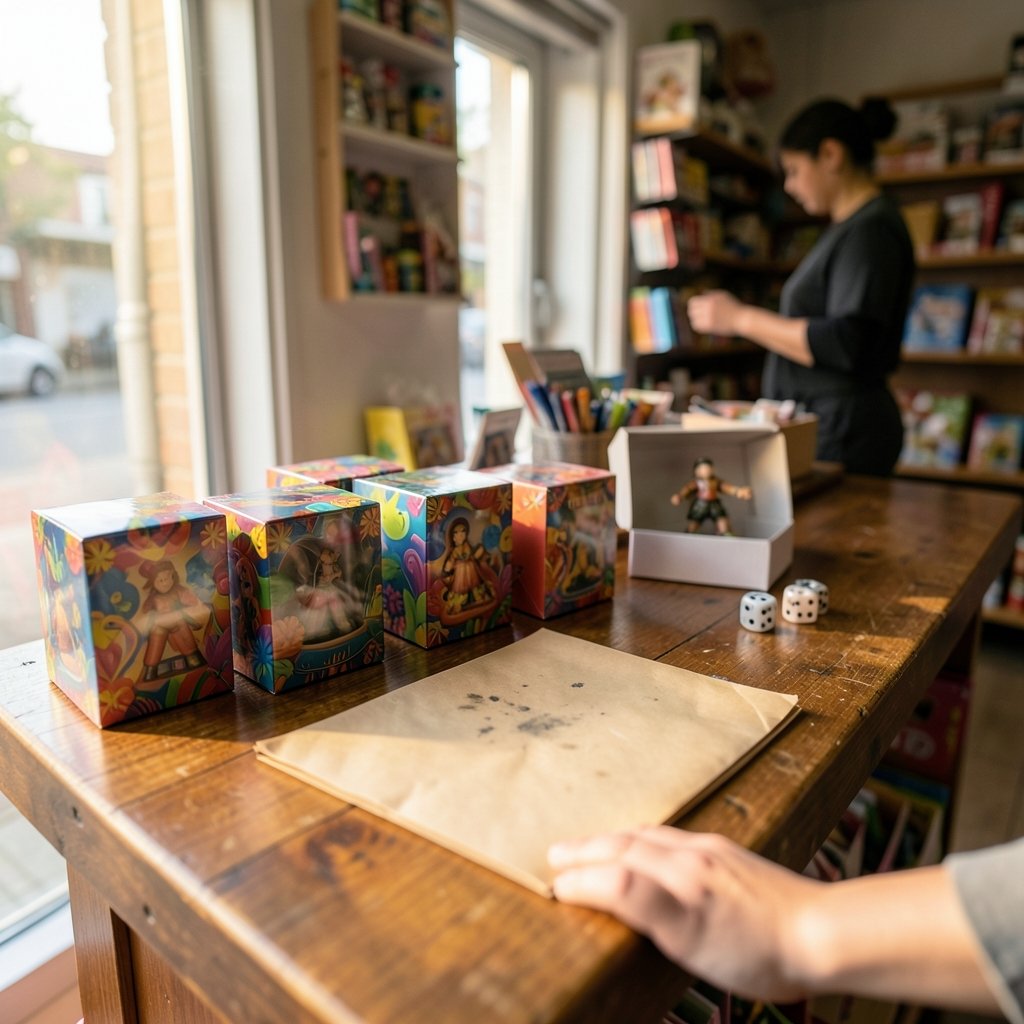
Legally, most physical mystery boxes fall outside gambling laws because the buyer always receives a product of some kind, even if its value is low. Regulators in several countries are reviewing whether paid randomness aimed at children should be treated differently, so the line is moving. Functionally, the psychology overlaps heavily with gambling.
Can I get my money back if the box contents are disappointing?
Usually not on the basis of disappointment alone. Refund rights typically cover items that are damaged, missing, or materially different from what was advertised. If a seller promised a specific category of item and delivered something else entirely, that is a stronger claim. Check the stated policy before buying, because “surprise” products often exclude returns by design.
How do sellers decide what goes into each box?
Sellers work backward from a target profit margin. They calculate what the average box can cost to fill, then stock mostly lower-cost items while seeding a small number of high-value boxes to support marketing claims. The rare items are budgeted as promotional costs, not as typical outcomes.
What is the difference between a mystery box and a blind box?
A blind box usually contains one item from a known, fixed set, and the manufacturer often publishes the odds of each item. A mystery box is broader: it can contain multiple items of widely varying value, and the odds are frequently undisclosed. Blind boxes are more standardized and easier to evaluate.
Are mystery boxes safe to buy online?
Many are, but the category attracts scammers. Buy from sellers with a real business presence, a published refund policy, and reviews that include ordinary openings. Pay with a method that offers buyer protection, and avoid sellers who push you toward peer-to-peer transfers or off-platform checkout.
Why do people keep buying boxes even after disappointing results?
Uncertainty itself is rewarding, and the occasional rare pull creates a vivid memory that outweighs many dull openings. Social media amplifies the wins and hides the averages. That combination of anticipation and selective memory keeps demand steady even when the expected value is negative.