
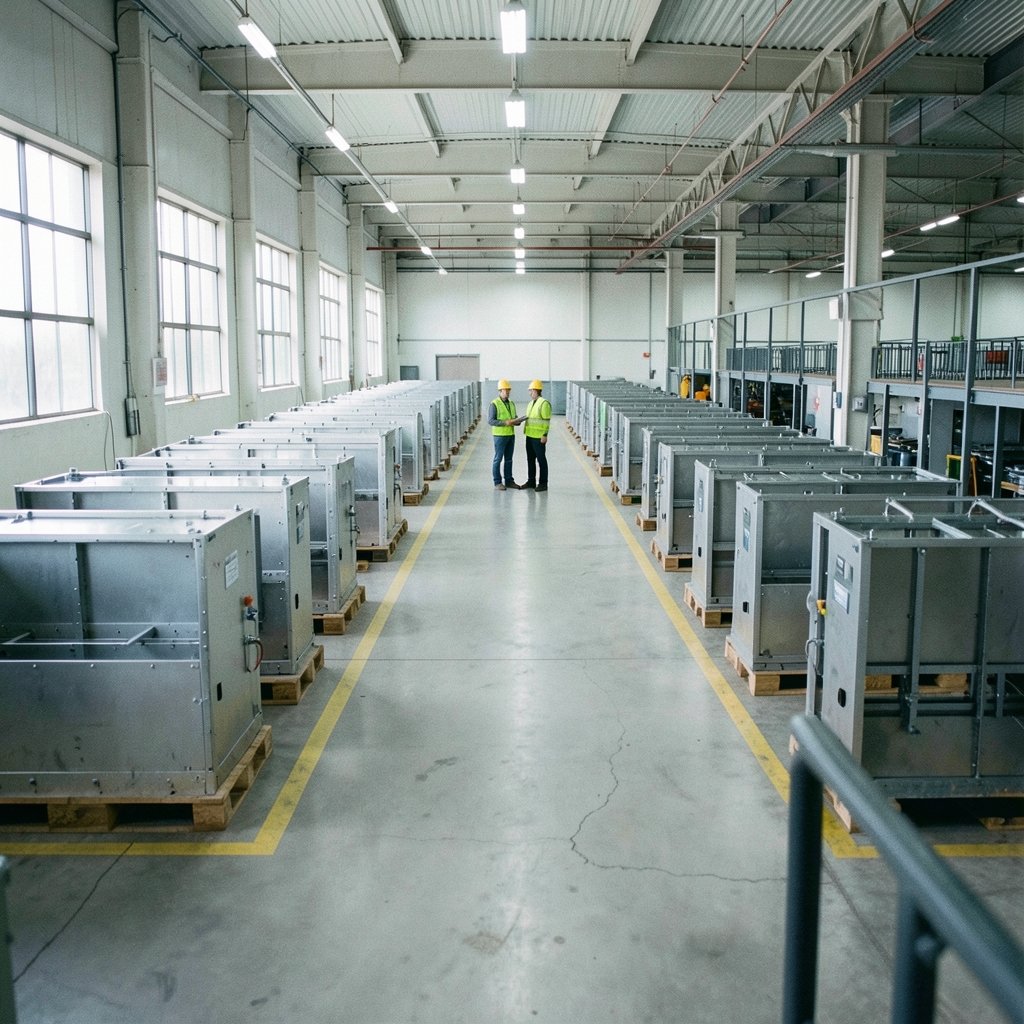
What if the most important question about a Tesla-SpaceX merger isn’t whether it will happen, but whether the companies’ hardware plans can scale fast enough to justify it? That question drives discussion of Ray Wang, the “10x scale hardware” phrase, and 2026. Investors keep hearing bold numbers. They keep seeing speculative headlines. And they keep asking the same thing: is there anything real underneath the noise?
This article takes a balanced look. It separates what is confirmed from what is rumor, explains why the “10x” framing matters, and shows how to read merger speculation without getting burned. No hype, no doom. Just a clear-eyed walk through the claims.
What Is Actually Being Discussed?
The topic bundles three separate ideas that often get mashed together:
- A Tesla-SpaceX merger. This has been speculated about for years, especially as capital structures around xAI, SpaceX, and Tesla drew attention in 2025. No confirmed transaction exists in the public record. Musk has discussed overlap between the companies historically, but talk is not a deal.
- A “Ray Wang” thesis. There is no reliable public record tying a person named Ray Wang to a specific Tesla-SpaceX merger argument. This may be a recent development, a different spelling, or a misattribution. Treat it as unverified until a primary source appears.
- A “10x scale hardware” claim. The phrase has no confirmed single source. It may relate to Tesla Optimus, Dojo, or SpaceX Starlink and Starship production scaling. The context matters enormously, and without it the number is just a slogan.
The honest takeaway: the headline is doing a lot of work that the underlying evidence hasn’t earned yet. That doesn’t make the topic worthless. It makes it a case study in how to handle a claim that sounds precise but isn’t sourced.
Why “10x” Is the Number That Matters
Forget the merger rumor for a second. The “10x scale hardware” idea deserves attention on its own because hardware scaling is where ambitious companies usually stumble.
Software scales by copying files. Hardware scales by building factories, hiring line workers, securing raw materials, and passing inspection. A 10x jump in output is not a marketing decision. It’s a capital and logistics problem.
That’s why the phrase is a useful stress test. If someone claims a company will hit 10x hardware scale, you can ask concrete questions: (SEC EDGAR Company Search)
- What is the baseline? Ten times zero is still zero. The starting number defines whether the claim is modest or wild.
- Over what time frame? A 10x increase in one year is a different animal than one over a decade.
- Which product? Vehicles, robots, satellites, and rockets have completely different scaling curves.
- What’s the bottleneck? Batteries, chips, launch cadence, or regulatory approval usually decides the outcome.
When you see a “10x” claim, run it through those four questions before you react. Most of the time, the claim either gets sharper or falls apart.
The Merger Speculation, Explained Calmly
Merger talk around Tesla and SpaceX tends to follow a predictable pattern. A public figure floats the idea. Media picks it up. Investors debate the synergies. Then everyone waits for an official announcement that may never come.
There are real reasons the idea keeps resurfacing. The companies share a founder, share engineering talent pipelines, and increasingly share strategic interests in energy, AI, and manufacturing. There are also real reasons to be skeptical. Tesla is publicly traded with its own shareholders and board. SpaceX is private with a different investor base. Combining them would raise governance, valuation, and regulatory questions that don’t disappear because the idea is exciting.
For readers tracking the financial mechanics, the discussion around a possible December 6 AGM and Barclays commentary is worth following closely, but treat it as reporting to verify rather than fact to repeat. The same caution applies to how any merger would be structured. You can read more background in this breakdown of the Tesla SpaceX merger December 6 AGM Barclays 2026 discussion, and a second explainer on the Tesla SpaceX merger December 6 AGM Barclays 2026 timeline. Both are useful for understanding the narrative, not for confirming a deal. (Tesla, Inc.)
The practical lesson: speculation is a signal of interest, not evidence of intent.
Where the Hardware Bets Actually Live
If you want to judge the “10x” claim, look at the products. The three most-cited hardware bets are the robotaxi, the Semi, and the Roadster. Each has a different scaling story, and each tells you something different about what “10x” could mean.
| Hardware bet | What “10x” could mean | Main scaling hurdle |
|---|---|---|
| Robotaxi | 10x the fleet of current ride-hail vehicles in a city | Regulation, safety validation, charging density |
| Semi | 10x heavy-truck production volume | Battery supply, factory capacity, fleet adoption |
| Roadster | 10x performance metrics versus a baseline car | Low-volume production, not mass scaling |
Notice the mismatch. A performance car doesn’t scale the way a truck fleet does. Lumping them together under one “10x” banner hides more than it reveals. For a closer look at how these bets fit together, this analysis of Tesla website robotaxi semi roadster three hardware bets 2026 is a helpful starting point.
The Robotaxi Question
Robotaxis are the most tantalizing scaling story because the unit economics look so good on paper. One vehicle, many rides, no driver. But the gap between a demo and a city-scale fleet is enormous. Safety validation alone can take years. Anyone claiming 10x robotaxi scale should be asked which city, which regulator, and which safety record.
The Semi Question
Heavy trucks are a supply chain problem disguised as an engineering one. Batteries are heavy, charging is slow, and fleet operators care about uptime above all. A 10x production target means nothing without the battery cells to match. Watch battery supply announcements, not press releases.
The Roadster Question
The Roadster is a halo product. It generates attention and proves capability, but it doesn’t need to scale like a mass-market vehicle. Using it as evidence of “10x hardware scale” is a category error. It’s a different game.
How to Read a “10x” Claim Without Getting Fooled
Most people get burned by scaling claims for the same handful of reasons. Here’s what actually works in practice.
Check the baseline first. A company that shipped 100 units and now targets 1,000 has a 10x claim that’s entirely plausible. A company that shipped 10,000 and targets 100,000 has a much harder road. The percentage is the same; the difficulty is not.
Look for the factory, not the slide. Real scaling shows up in land purchases, hiring, tooling orders, and supplier contracts. If the only evidence is a chart, wait.
Separate capability from capacity. A prototype proves capability. A production line proves capacity. “10x” claims usually blur the two, and that blurring is where investors lose money.
Watch the regulators. In vehicles, rockets, and telecom, approval is often the true bottleneck. A company can build 10x the hardware and still be stuck at 1x deployment.
Track the money. Scaling hardware costs capital. Follow the capex guidance and the financing. If the spending doesn’t match the ambition, the ambition is talk.
A common mistake is treating a single enthusiastic voice as confirmation. Another is assuming that because a claim is repeated often, it must be true. Repetition is not verification. Primary sources are.
The Competitive Context Nobody Mentions
Merger talk tends to crowd out a simpler question: how do these companies compare to their rivals on pure execution? That comparison is often more informative than speculation about corporate structure.
SpaceX’s launch dominance is well documented, and the valuation gap between it and competitors is a frequent topic. This comparison of Rocket Lab vs SpaceX 30B vs 2 2T Market Cap 2026 shows how lopsided the market’s expectations have become. When one player is priced for near-total dominance, the burden of proof on “10x” claims rises sharply.
There’s also the spectrum angle. SpaceX’s ambitions in wireless frequencies have drawn pushback from carriers, and the stakes are real. This look at carriers ctia real consequences spacex aws 3 1695 1700 mhz 2026 explains why spectrum fights matter more than most merger headlines. Hardware scale in telecom isn’t just about building equipment. It’s about winning rights to use the airwaves.
Risks, Skepticism, and the Case for Caution
A balanced view has to include the downside. Merger speculation can distort valuations. It can distract management. It can pull retail investors into positions they don’t understand.
There’s also a reputational dimension. High-profile incidents and legal outcomes shape public trust, and trust affects adoption. A five-year sentence in a Las Vegas Tesla arson case, covered in this report on the Las vegas tesla arson 5 year sentence 2026, is a reminder that brand perception and safety are part of the scaling equation, not separate from it.
And product timelines slip. Enthusiasts who penciled in a date for the next Roadster reveal have learned that lesson repeatedly. Background on the Tesla roadster unveiling october 15 2026 expectations shows how much uncertainty surrounds even well-publicized events.
Then there’s the philanthropy and ownership angle. Complex share structures and charitable pledges add layers that casual observers miss. This analysis of the ai philanthropy anthropic 5 percent musk spacex shares fine print 2026 fine print is a good example of why the details matter more than the headline.
None of this means the optimistic case is wrong. It means the optimistic case needs evidence, and evidence needs primary sources.
What Would Actually Confirm the Story
If you want to follow this topic seriously, here’s a practical checklist. It’s the same approach a careful analyst would use.
- Read the filings. Company disclosures and regulatory filings are the closest thing to ground truth. Announcements on social media are not.
- Wait for official statements. A merger requires formal communication. Until then, it’s speculation.
- Check the dates. A claim dated 2026 needs a 2026 source. Recycled 2025 speculation dressed up as new is common.
- Trace the quote. If a named person is cited, find the original context. Misattribution is rampant.
- Cross-check at least two independent sources. One outlet repeating another is not confirmation.
If you apply that checklist to the Ray Wang and “10x scale hardware” claims, you’ll likely find that the story is thinner than the headline suggests. That’s not a reason to dismiss it. It’s a reason to hold it loosely until better information arrives.
Conclusion
The Tesla-SpaceX merger story and the “10x scale hardware” claim are fascinating precisely because they sit at the intersection of ambition and evidence. The ambition is real. The companies genuinely push boundaries in manufacturing, launch, and energy. But the specific claims floating around 2026, including the Ray Wang connection and the 10x framing, don’t yet have the sourcing to support confident conclusions.
The smart move is neither blind belief nor blanket dismissal. It’s disciplined curiosity. Ask what the baseline is. Ask who confirmed it. Ask what would have to be true for the claim to hold. Then watch for the factory floors, the filings, and the regulators to answer.
Hardware scaling is hard. That’s the one thing everyone can agree on. Whether 2026 brings a merger, a 10x milestone, or just more speculation, the readers who verify before they react will be the ones who come out ahead.
FAQ
What is the Tesla-SpaceX merger rumor about?
It’s long-running speculation that the two companies could combine, driven by their shared founder, overlapping talent, and strategic interests in AI, energy, and manufacturing. No confirmed transaction exists in the public record, so treat it as speculation rather than fact.
Who is Ray Wang in this context?

There is no reliable public record tying a person named Ray Wang to a specific Tesla-SpaceX merger thesis. It may be a recent development, a different spelling, or a misattribution. Verify with a primary source before repeating the claim.
What does “10x scale hardware” mean?
It refers to the idea of increasing hardware output tenfold. The phrase has no confirmed single source and could relate to Tesla Optimus, Dojo, or SpaceX Starlink and Starship production. Without a defined baseline and time frame, the number is a slogan rather than a forecast.
Is a Tesla-SpaceX merger confirmed for 2026?
No confirmed merger exists in the public record. Any 2026-dated claim should be checked against official company statements and regulatory filings. Headlines and social media posts are not confirmation.
Why does hardware scaling matter more than merger talk?
Because scaling hardware is where ambitious plans usually fail. Software scales by copying files; hardware requires factories, suppliers, workers, and approvals. A 10x target is a capital and logistics problem, and that’s the real test of any company’s claims.
How can I verify a “10x” claim myself?
Check the baseline, the time frame, and the product. Look for factory investment, hiring, and supplier contracts rather than charts. Watch regulators and capex guidance. Cross-check at least two independent sources, and trace any quote back to its original context.



