More than 500 million smartwatches are expected to ship worldwide in 2026, according to Statista’s wearables market data. That number tells you something important: the smartwatch is no longer a niche gadget for runners and early adopters. It has become a mainstream purchase, and the “best” model depends heavily on which phone sits in your pocket. (Smartwatches)
That is the honest starting point for any 2026 smartwatch guide. There is no single winner. A Garmin that lasts three weeks between charges will frustrate someone who wants to reply to texts from their wrist, and an Apple Watch will frustrate an Android user entirely. The real question is not “which smartwatch is best?” but “which smartwatch is best for you?” (Smartwatch)
This guide breaks down the categories that matter, the trade-offs buyers consistently underestimate, and the practical mistakes that lead to regret.
Why the “Best Smartwatch” Question Has No Single Answer
Smartwatches in 2026 fall into three broad camps, and each one optimizes for something different.
Lifestyle and app-centric watches focus on app support, notifications, contactless payments, and tight integration with a phone. Fitness and endurance watches focus on battery life, GPS accuracy, and training metrics. Health-focused watches focus on sensors, sleep tracking, and long-term wellness data.
A buyer who compares a marathon-focused watch against a fashion-forward one is comparing apples to suspension bridges. Both tell time. Almost nothing else overlaps.
The practical advice is simple: decide your top two priorities before you look at specs. If battery life is number one, you can eliminate half the market immediately. If replying to messages from your wrist matters, you can eliminate the other half.
Platform Lock-In Is the Biggest Hidden Cost
This is the mistake people make most often, and it is not their fault. Marketing rarely mentions it.
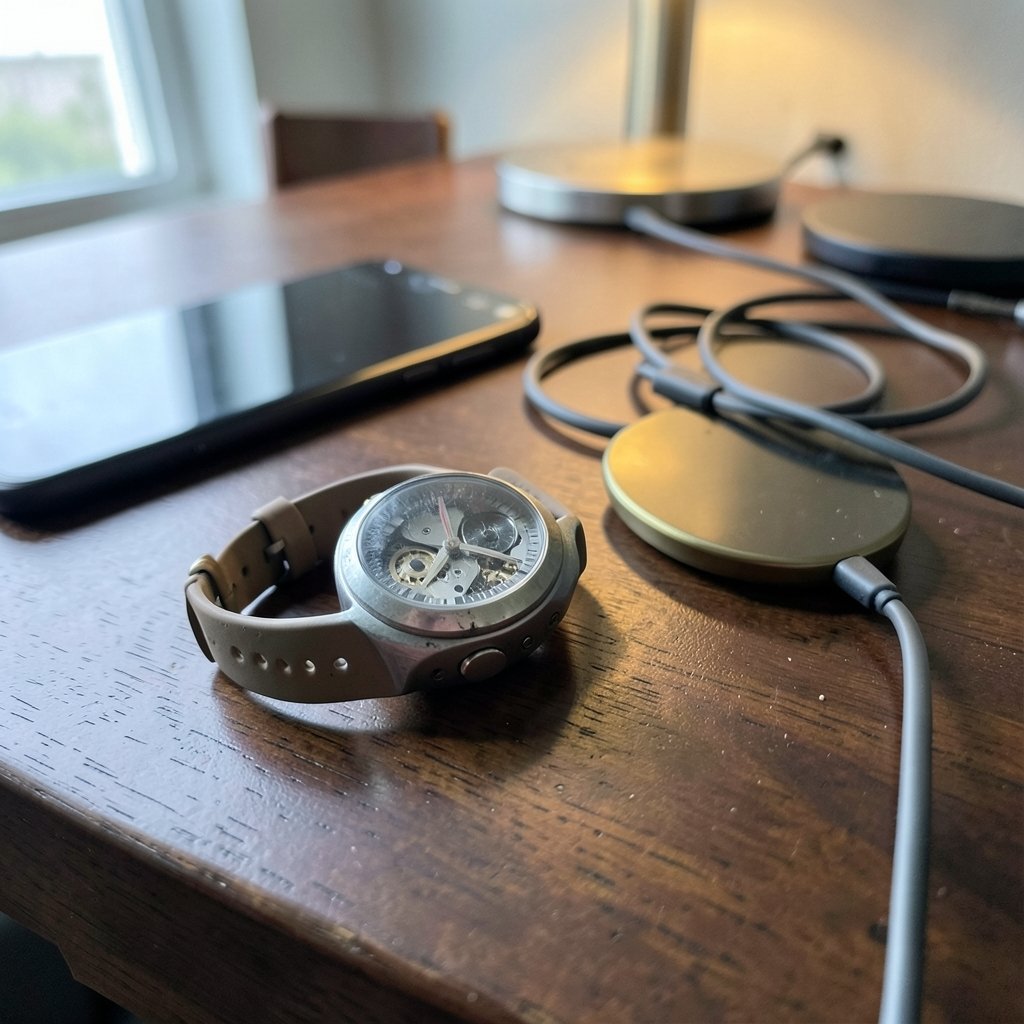
An Apple Watch only works with an iPhone. A Samsung Galaxy Watch is designed around Samsung phones, though it offers limited functionality on other Android devices. Garmin, by contrast, works with both iOS and Android, which is a major reason it attracts users who switch phones often.
If you buy a watch that only half-works with your phone, you will notice within a week. Notifications may arrive but not let you reply. Health data may sync inconsistently. Some features may simply be missing.
The lesson: check compatibility before you fall in love with a design. It sounds obvious. It is also the single most common source of buyer’s remorse in this category.
Battery Life: Claims vs. Reality
Manufacturers quote battery life under ideal conditions. Real-world use is rarely ideal.
Always-on displays, GPS workouts, sleep tracking, and frequent notifications all drain power faster than the marketing number suggests. A watch advertised at “up to 18 hours” with heavy use may need a nightly charge. A watch advertised at “up to 14 days” may drop to five or six days with GPS-heavy training.
Practical guidance that holds up across brands:
- Read independent battery tests rather than relying on the spec sheet alone.
- Mentally subtract 20 to 40 percent from the advertised figure for realistic daily use.
- Decide whether you can live with a daily charging routine. If not, choose endurance models first.
- Consider charging speed alongside capacity. A watch that tops up in 30 minutes changes how you feel about daily charging.
For context on how fast the broader consumer tech market moves, the same price volatility that hits phones and consoles also hits wearables. The Black Friday car deals and pricing trends coverage shows how seasonal discounting reshapes buying decisions across categories, and smartwatches follow a similar pattern around major sales events.
Health Sensors: Useful, But Read the Fine Print
Modern smartwatches pack an impressive sensor array: heart rate, blood oxygen, skin temperature, ECG, and in some cases blood pressure trends. The question is not whether the sensors exist, but whether their readings are cleared for medical use and how they perform in practice.
A few grounded points:
- ECG features carry regulatory clearances in some regions and not others. A watch sold in one country may have features disabled in another.
- Blood oxygen readings vary in accuracy and are best treated as trends, not diagnoses.
- Sleep tracking is genuinely useful for spotting patterns, but it is not a sleep study.
- Skin temperature is most valuable as a baseline-comparison tool, not a one-off number.
The honest framing: these sensors are excellent at nudging behavior and spotting trends. They are not replacements for a doctor. Anyone treating a wrist reading as a diagnosis is misusing the tool.
The Software Update Question Nobody Asks
Here is a spec that rarely appears in reviews but matters enormously: how long will the watch receive software updates?
A smartwatch is a small computer. When updates stop, features degrade, security patches dry up, and app compatibility erodes. A watch with a three-year update commitment is a very different purchase from one with a seven-year commitment, even at the same price.
Before buying, check the manufacturer’s stated support window. This single number often predicts how the watch will feel in year four far better than any launch-day review.
The same principle applies across consumer tech. The Apple App Store fee dispute heading to the Supreme Court is a reminder that platform economics shape what features reach your devices and at what cost. Software ecosystems are not neutral backdrops; they are active forces in product longevity.
Fitness vs. Lifestyle: Choosing Your Camp
| Priority | What to Look For | What to Accept |
|---|---|---|
| Marathon training | Dual-band GPS, long battery, training load metrics | Weaker app support, bulkier design |
| Daily notifications | Strong phone integration, payments, voice assistant | Daily or near-daily charging |
| Sleep and wellness | Reliable sleep staging, temperature trends, comfort | Fewer workout-specific tools |
| Style and wearability | Build quality, band options, slim case | Compromises on battery and sensors |
| Budget | Solid heart rate and GPS basics | Fewer sensors, shorter update windows |
The table is deliberately blunt. Every row involves a trade-off, and pretending otherwise is how buyers end up disappointed.
What About the Rest of the Tech Calendar?
Smartwatch buyers in 2026 are shopping in a crowded, fast-moving market. Phone releases influence watch features, and console and gaming hardware news often signals broader shifts in how people spend their screen time. Coverage of Tesla’s robotaxi, semi, and roadster hardware bets illustrates how ambitious hardware roadmaps reshape consumer expectations year over year.
For buyers weighing a watch against other upgrades, it helps to see the full picture. Rumors about the Nintendo Switch 2 Lite and Samsung 8LPU Plus chip show how component supply and chip design ripple across devices. The Xbox layoffs and studio sales story is a reminder that platform stability matters as much as hardware specs.
None of this is directly about watches, but it shapes the context. A smartwatch is a long-term relationship with a software platform, and platform health should factor into the decision.
Practical Buying Tips That Actually Work
Try before you commit. Case size and weight vary more than photos suggest. A 45mm watch on a small wrist feels very different from a 41mm model.
Check band compatibility. Proprietary bands lock you into one vendor’s accessories. Standard lugs give you options.
Buy last year’s flagship at a discount. The gap between generations is often smaller than the price difference. This is one of the most reliable ways to get premium features without the premium price.
Verify regional feature availability. ECG, blood pressure, and satellite features are frequently region-locked.
Read the return policy. Fit and comfort are personal. A generous return window is worth more than a small discount.
Common Mistakes to Avoid
The most frequent errors buyers make are predictable:
- Buying for the platform you wish you had rather than the phone you own.
- Trusting advertised battery life without checking independent tests.
- Ignoring the software update commitment.
- Overpaying for sensors that are not cleared for medical use in their region.
- Assuming a bigger case is always better. It is not; it is just bigger.
Avoiding these five mistakes matters more than any single spec comparison.
Conclusion
The best smartwatch in 2026 is the one that fits your phone, your priorities, and your tolerance for charging. Compatibility with your phone comes first. Battery reality comes second. Sensor claims deserve skepticism, and software support deserves more attention than it usually gets.
Buyers who decide their top two priorities before shopping consistently make better decisions than those who chase the longest feature list. The market is mature enough that every major brand makes at least one genuinely good watch. The trick is matching the watch to the person wearing it, not to a review score.
Frequently Asked Questions
Which smartwatch is best for iPhone users?
For iPhone users, an Apple Watch offers the tightest integration, the broadest app support, and the most reliable notification handling. Garmin models remain a strong alternative for endurance athletes who prioritize battery life and cross-platform flexibility, since they work with both iOS and Android.
Do smartwatches work with any phone?
No. Compatibility varies widely. Apple Watch requires an iPhone. Samsung Galaxy Watch is optimized for Samsung phones and offers limited functionality elsewhere. Garmin and several fitness-focused brands support both iOS and Android. Always verify compatibility before purchasing.
How accurate are smartwatch health sensors?
Heart rate and ECG features are generally reliable when properly worn and regionally cleared. Blood oxygen and sleep tracking are best treated as trend indicators rather than clinical measurements. No consumer smartwatch replaces a medical device or a doctor’s assessment.
How long should a smartwatch last?
Most quality smartwatches remain usable for three to five years. The limiting factor is usually software support, not hardware failure. Check the manufacturer’s stated update commitment, since a watch with a longer support window stays useful and secure far longer.
Is it worth buying last year’s smartwatch model?
Often, yes. Generational improvements are frequently incremental, while discounts on previous models can be substantial. Buyers who do not need the newest sensor or display technology typically get better value from a discounted prior-generation flagship.
What battery life should I expect in real use?
Expect 20 to 40 percent less than the advertised figure once you enable always-on display, GPS workouts, and sleep tracking. Lifestyle watches often need daily charging, while endurance-focused models can last one to three weeks depending on activity levels.
Disclosure note: some links in this article may be affiliate or partner links. This does not affect our recommendations, which are based on compatibility, battery reality, sensor accuracy, and software support rather than commission rates.
Final Word on Timing Your Purchase
If you can wait, buy during major sales windows. Smartwatches discount predictably around Black Friday, back-to-school events, and the launch of a successor model. The pattern mirrors what happens elsewhere in consumer tech, where seasonal promotions and platform announcements move prices more than any single spec upgrade. Patience is a legitimate buying strategy.
If you cannot wait, buy the previous generation at full confidence. It will serve you well for years, provided you checked compatibility, battery expectations, and update commitments first.
Whatever you choose, set a calendar reminder for the return window’s final day. Wear the watch through at least one full workout, one full night of sleep tracking, and one busy notification day before that date passes. Real-world testing in your own life beats any review, including this one. The best smartwatch in 2026 is not the one with the longest feature list. It is the one you stop thinking about because it simply works.