
Quick Answer: What is edge computing?
Edge computing is a way of processing data near the place where it is created instead of sending it all to a distant data center. In practice, that means running software on local servers, gateways, routers, or even the devices themselves so results arrive faster and less bandwidth is wasted. It differs from cloud computing, which centralizes processing in large facilities, and from fog computing, which describes a broader layer between devices and the cloud. Before committing, teams should compare latency needs, bandwidth costs, security exposure, hardware maintenance, connectivity reliability, and how the workload will be managed at scale.
The idea sounds simple, but the details decide whether a project succeeds or stalls. Edge computing is less a single product than an architecture choice, and it reshuffles where software runs, who patches it, and how data flows.
Here is a fact that surprises many people: a self-driving car generates gigabytes of data every minute, yet it cannot wait even a fraction of a second for a distant server to respond. That gap between how fast machines create data and how fast networks can ship it is exactly why edge computing exists. The concept has moved from telecom labs into factories, hospitals, and retail stores, and it now shapes how engineers design everything from smart cameras to industrial robots.
Where the idea came from
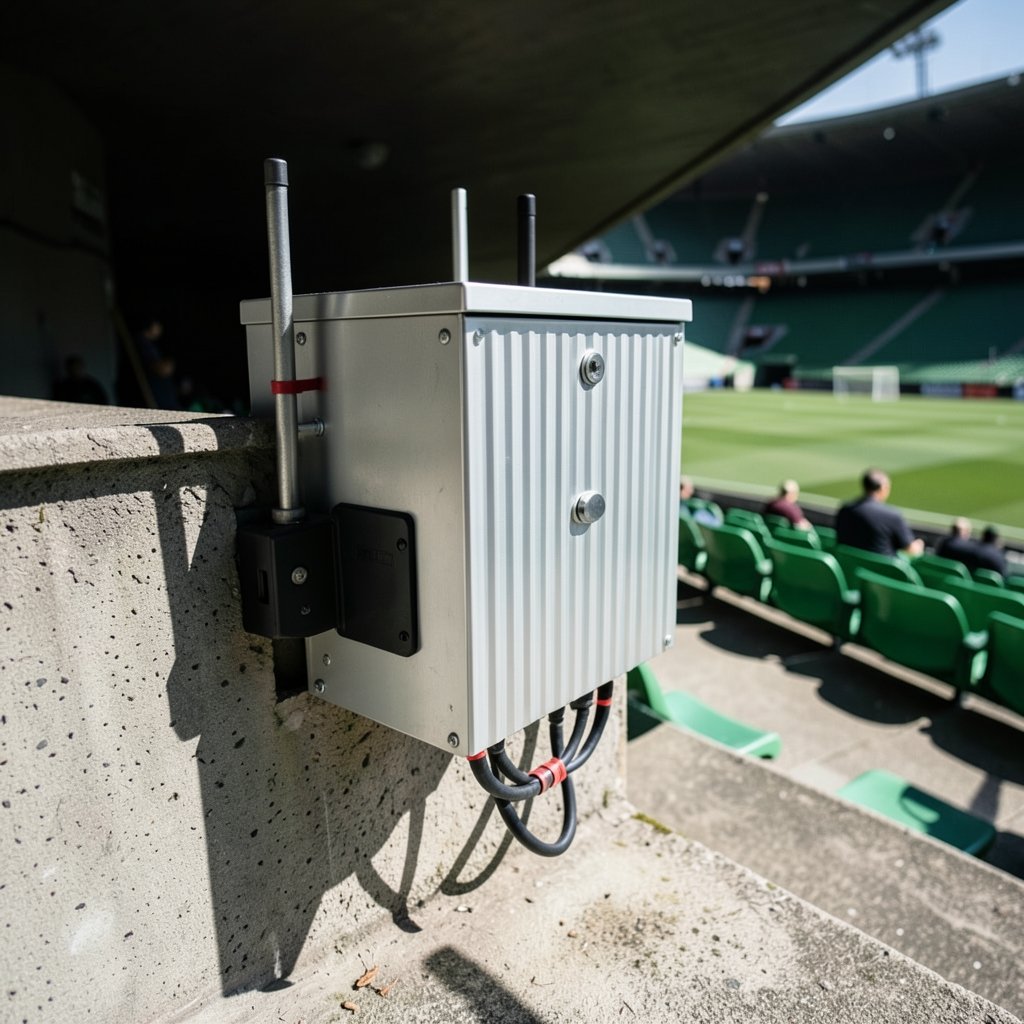
Edge computing did not appear overnight. Telecom engineers began formalizing mobile edge computing around 2014, and the standards body ETSI later broadened the term to multi-access edge computing to cover Wi-Fi and fixed networks as well. Around the same time, researchers and vendors started describing fog computing as a layer that sits between endpoint devices and centralized cloud data centers.
The open-source world followed. The Linux Foundation launched EdgeX Foundry in 2017 as a framework for making edge and IoT devices interoperate, which helped turn a vendor buzzword into something engineers could actually build on. Mobile networks also adapted: 5G standards introduced features that let traffic break out locally instead of traveling back through the core network, a change that made low-latency edge applications far more practical.
The pattern is familiar. Cloud computing centralized everything because scale was cheap. Edge computing pushes back because proximity itself has value.
How edge computing actually works
Edge computing follows a simple loop: sense, process, act. A device or sensor captures data, a nearby compute node analyzes it, and a decision happens locally. Only the summarized result, or the data that truly needs long-term storage, travels to the cloud.
That sounds like a small change. It is not. It alters the physics of an application. A factory robot detecting a jam can stop in milliseconds rather than waiting for a round trip to a data center hundreds of miles away. A retail store can run facial recognition or shelf monitoring without streaming every frame of video over a costly connection.
The layers of an edge deployment
Most real systems use several tiers rather than one.
| Layer | What lives there | Typical role |
|---|---|---|
| Device edge | Sensors, cameras, phones, wearables | Capture data, run tiny models |
| Near edge | Gateways, local servers, cell towers | Filter, aggregate, run inference |
| Far edge | Regional micro data centers | Handle bursts, local caching |
| Cloud | Centralized data centers | Training, storage, long-term analytics |
The trick is deciding what belongs where. Push too much to the device and you run out of power and memory. Push too much to the cloud and you lose the latency benefit that justified the project in the first place.
Why latency is the whole point
Latency is the delay between a request and a response. For a video stream, a few hundred milliseconds barely matters. For a surgical robot, an autonomous forklift, or an industrial safety system, it matters enormously. Processing near the source removes the network round trip, and it also removes the risk that a congested backbone network slows down a critical function.
Bandwidth follows the same logic. Sending raw video from a hundred cameras to the cloud is expensive. Sending only flagged events is cheap. Edge computing is often as much a cost decision as a speed decision.
Edge computing vs. cloud computing
The two are not rivals. They are partners with different jobs.
| Factor | Cloud computing | Edge computing |
|---|---|---|
| Location | Centralized data centers | Near devices or on-site |
| Latency | Higher, depends on distance | Low, often milliseconds |
| Bandwidth use | High, sends raw data | Low, sends filtered results |
| Scalability | Very high, elastic | Limited by local hardware |
| Management | Centralized, mature tooling | Distributed, harder to patch |
| Best for | Training, storage, analytics | Real-time decisions, autonomy |
A useful mental model: the cloud is where you learn, and the edge is where you act. Machine learning models are often trained centrally on large datasets, then deployed to edge nodes for inference. That split keeps the heavy computation where it is cheapest while keeping the fast decisions where they are needed.
This division of labor is why the debate between quantum computing vs classical computing offers a helpful parallel: different architectures solve different problems, and the smart move is usually combination rather than replacement.
Real-world uses that justify the hype
Edge computing earns its keep in places where the network is unreliable, the latency budget is tight, or the data volume is enormous.
Manufacturing. Vibration sensors and cameras watch machines for signs of failure. Local models flag anomalies instantly, so a line can stop before a part is ruined. Cloud analytics then looks for longer-term patterns across plants.
Healthcare. Wearable monitors and bedside devices can alert staff within milliseconds rather than routing every reading through a remote server. Privacy also improves when sensitive data stays on-site.
Retail. Smart shelves, checkout-free stores, and loss-prevention cameras generate enormous video streams. Filtering at the store cuts bandwidth bills dramatically.
Autonomous vehicles and drones. No car can depend on a distant server for braking decisions. Onboard compute handles the split-second work, while the cloud handles mapping updates and fleet learning.
Agriculture and utilities. Remote sensors in fields or on power lines often have poor connectivity. Local processing keeps monitoring alive when the uplink drops.
If you want to see how this connects to the broader AI story, the question of how quantum computing could change artificial intelligence shows the same theme: compute placement and compute type both reshape what applications become possible.
Edge AI: where the two trends collide
The most active corner of this field is edge AI, which means running machine learning models directly on edge hardware. Instead of shipping data to a model in the cloud, the model comes to the data.
That shift is possible because models have gotten smaller and chips have gotten more efficient. Quantization, pruning, and specialized accelerators let a vision model run on a device the size of a matchbox. For a deeper explanation, this overview of what is edge AI and how does it work walks through the mechanics.
The trade-offs are real, though. Edge devices have limited memory, tight power budgets, and no cooling fans. A model that runs beautifully in a lab can melt a device in the field. Engineers who have shipped these systems learn quickly that thermal design is a feature, not an afterthought.
Hardware and software that make it work
Edge hardware ranges from tiny microcontrollers to ruggedized servers bolted into factory cabinets. Common choices include:
- System-on-chip boards for cameras and sensors
- Edge gateways that aggregate many devices
- Micro data centers in telecom facilities
- AI accelerators tuned for inference rather than training
On the software side, containerization has become the default. Packaging an application in a container makes it portable across device types and manageable through orchestration tools. The hard part is not deployment. It is lifecycle management: updating thousands of devices in the field without bricking them.
This is where the field overlaps with what is neuromorphic computing, which explores chip designs inspired by the brain and aimed at extremely low-power inference. It is early-stage work, but it points at where edge hardware may go next.
The practical problems nobody warns you about
Anyone planning an edge project should hear the unglamorous truths first.
Security gets harder, not easier. Every edge node is another door into the network. Distributing compute across hundreds of sites expands the attack surface and complicates patching. A device that cannot be updated is a liability, not an asset.
Physical access is a real risk. A gateway in a retail back room or a roadside cabinet can be stolen, tampered with, or simply unplugged. Assume hostile physical conditions.
Management does not scale for free. Ten devices are easy. Ten thousand are a logistics problem. Fleet management, remote monitoring, and rollback plans matter more than the model accuracy you brag about in the demo.
Connectivity is not guaranteed. Design for intermittent links. Buffer locally, sync when possible, and never assume the cloud is reachable.
Costs migrate rather than vanish. You trade cloud egress fees for hardware, maintenance, and field support. Run the numbers honestly before assuming edge is cheaper.
The definition trap. Vendors use “edge” loosely. Ask exactly where the compute sits, who owns it, and what happens when it fails.
Mistakes that sink edge projects
The most common failure is starting with technology instead of a problem. Teams buy gateways and accelerators before confirming that latency is genuinely the bottleneck. Often it is not; sometimes a better database query solves the issue.
A second mistake is underestimating operations. Someone has to own the fleet. If no team is responsible for monitoring, updating, and replacing devices, the deployment quietly rots.
A third is ignoring data governance. When data spreads across hundreds of locations, knowing where it lives and who can access it becomes a compliance question and an engineering question. The what is edge ai primer is a useful starting point for teams weighing these trade-offs before they buy hardware.
The projects that work tend to start small: one site, one use case, one measurable goal. Prove the latency or cost benefit, then scale.
What to watch next
Several trends are converging. Chips built specifically for inference are getting cheaper and more power-efficient. 5G and private networks are making local breakout routine. Orchestration tools are maturing to the point where managing a thousand nodes looks more like managing a Kubernetes cluster.
The bigger shift is conceptual. Computing is spreading out again, from one giant center to thousands of small ones. That does not kill the cloud. It makes the cloud the control plane for a distributed system, which is a different and arguably harder engineering problem.
For readers tracking the wider landscape, the roundup of latest breakthroughs in quantum computing is a good reminder that architecture debates rarely end with one winner. They end with portfolios.
Conclusion
Edge computing is best understood as a relocation decision. It asks a deceptively simple question: where should this computation happen? When the answer is “close to the data,” you get lower latency, less bandwidth waste, and systems that keep working when the network does not. When the answer is “in the cloud,” you get scale, elasticity, and mature tooling.
Most serious deployments use both. The cloud trains models, stores history, and coordinates the fleet. The edge makes decisions in the moment. Getting that split right, and then surviving the operational reality of managing hardware in the field, is where the real work lives. The technology is ready. The discipline is what separates a working system from an expensive experiment.
FAQ
Is edge computing the same as cloud computing?
No. Cloud computing centralizes processing in large data centers, while edge computing moves processing near the devices generating data. Most modern systems combine both, using the cloud for training and storage and the edge for real-time decisions.
Does edge computing replace the cloud?
Rarely. Edge nodes have limited storage and compute, so they typically handle immediate tasks while the cloud handles long-term analytics, model training, and fleet coordination. The relationship is complementary rather than competitive.
What is the difference between edge and fog computing?
Fog computing describes a broader intermediate layer between devices and the cloud, often including gateways and local networks. Edge computing focuses more narrowly on compute placed close to the data source. The terms overlap heavily in practice, and vendors use them inconsistently.
Is edge computing more secure than cloud computing?
Not automatically. Keeping data local can reduce exposure during transmission, but every edge device is another potential entry point. Security depends on patching discipline, physical protection, and network segmentation rather than location alone.
What kinds of businesses benefit most from edge computing?
Organizations with strict latency requirements, poor connectivity, large data volumes, or privacy constraints see the clearest gains. Manufacturing, healthcare, retail, telecommunications, and transportation are common adopters. A business with none of those pressures may not need it.
How much does an edge deployment cost?
Costs vary enormously by scale and use case. Typical expenses include hardware, installation, connectivity, maintenance, software licensing, and staff time for fleet management. The savings usually come from reduced bandwidth and avoided downtime, so a careful comparison against cloud-only costs is essential before committing.



