
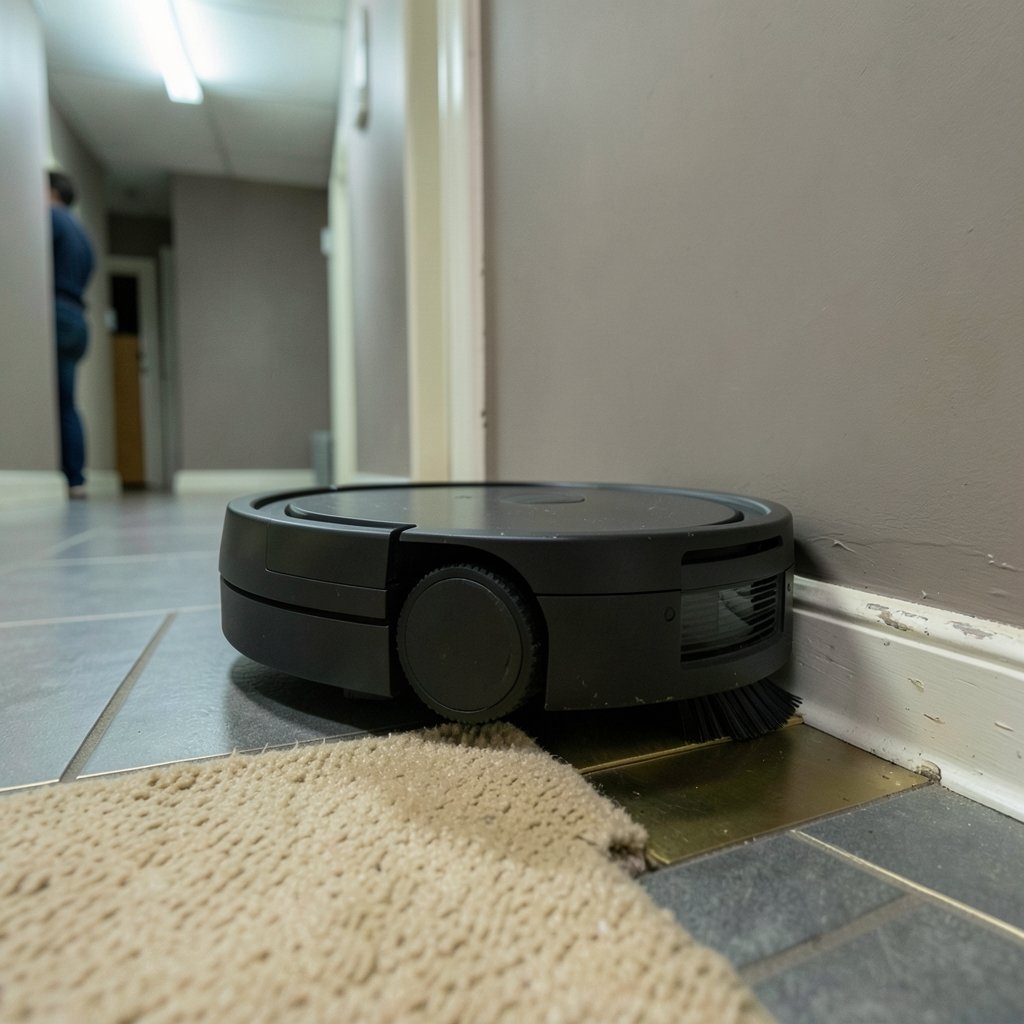
If your robot vacuum keeps catching on one doorway and spinning its wheels like a car on ice while you watch from the couch, the threshold may be the cause. Thresholds are a common reason a robot vacuum underperforms. The fix usually combines choosing the right machine with a small change to your floor. (Robotic vacuum cleaner)
This guide breaks down what “high threshold” really means, which specs matter, and how to get a robot vacuum over a lip that is taller than its rating. It also covers the mistakes people make when shopping, plus practical workarounds that cost far less than a new vacuum.
What Counts as a High Threshold for a Robot Vacuum?
Most mainstream robot vacuums are rated to climb somewhere around 15 to 20 millimeters, which is roughly 0.6 to 0.8 inches. That range covers the average doorway strip, a thin rug edge, or a small transition between tile and hardwood. Once you push past 20 millimeters, you are in high-threshold territory, and the list of capable machines shrinks fast.
The tricky part is that those numbers are not standardized. Unlike suction power or runtime, there is no widely adopted industry test that measures climb height the same way across brands. That means a “20 mm” claim from one brand and a “20 mm” claim from another may not describe the same real-world ability. Treat manufacturer ratings as a starting point, not a guarantee.
Two things shape whether a robot clears a lip:
- Height. The taller the lip, the fewer robots can manage it.
- Shape. A beveled, ramped, or rounded threshold is much easier to climb than a sharp vertical edge of the same height. A robot that fails on a 20 mm square lip may sail over a 25 mm ramp.
That second point is where most shopping advice falls short. People compare heights and ignore geometry, then wonder why their new vacuum still gets stuck.
Which Specs Actually Predict Climbing Ability?
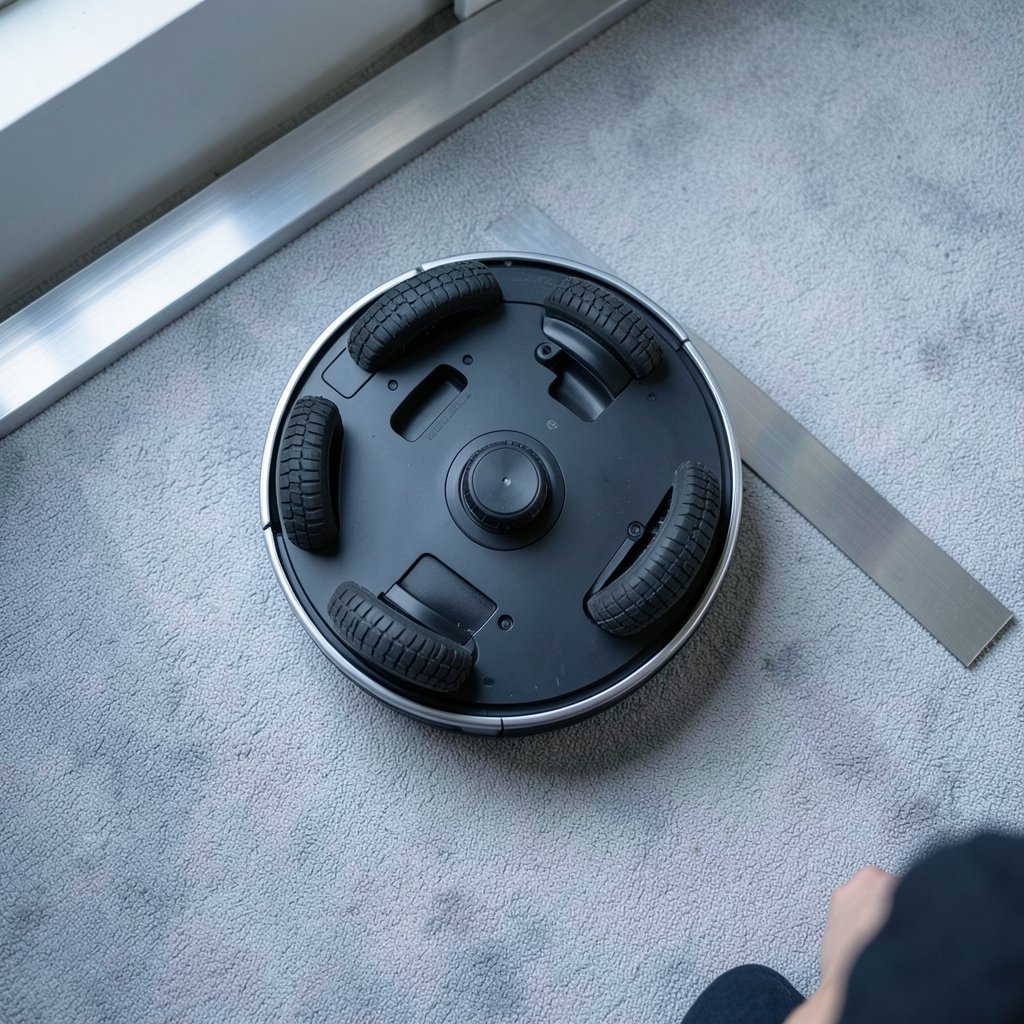
When you are comparing models, a few design details tell you more than a marketing badge ever will.
Drive wheel size and tread
Bigger drive wheels roll over obstacles more easily than small ones. Rubberized or treaded tires grip a smooth, glossy threshold better than hard plastic wheels, which tend to spin. If a robot has small, smooth wheels, expect it to struggle on polished stone or metal transition strips even at modest heights.
Wheel placement and body clearance
A robot with wheels set well forward or back can lever itself over a lip more effectively. Low ground clearance under the chassis can also make the body scrape and stall once the front wheels are up. The whole footprint matters, and that includes the wheels.
Sensor placement
Top-mounted LiDAR turrets add height to the robot. That matters less for thresholds and more for low-clearance furniture, but it is worth knowing that a tall turret can limit where the vacuum fits even if it climbs well. Some models recess the sensor to keep the profile low.
Battery behavior on climbs
Every climb costs energy. A robot that repeatedly scales a tall threshold will drain faster and may slip more as traction degrades on smooth surfaces. If your home has several high transitions, runtime estimates based on flat-floor testing will run optimistic.
| Spec | What It Tells You | What to Watch For |
|---|---|---|
| Rated climb height | Manufacturer’s claimed max lip | Not standardized, so compare cautiously |
| Drive wheel diameter | Raw obstacle-clearing ability | Larger is generally better |
| Tire material | Grip on smooth or glossy lips | Rubber or treaded beats smooth plastic |
| Chassis clearance | Whether the body scrapes after the front wheels climb | Low bodies can stall mid-climb |
| Sensor type and height | Fit under furniture, not climb height | Tall turrets limit low-clearance access |
For homes with mixed flooring and rugs, it also helps to read up on the best vacuum for carpet so you are not trading climbing ability for weak cleaning on textiles.
How to Get a Robot Vacuum Over a Threshold It Cannot Climb
Here is the good news: you often do not need a new vacuum. A small physical change to the threshold solves the problem for a fraction of the cost.
- Measure the lip precisely. Use a ruler or caliper at the highest point, not an eyeball estimate. Note whether the edge is sharp or beveled.
- Add a threshold ramp. Rubber or plastic ramps bridge the lip and turn a vertical wall into a gentle slope. This is the single most effective fix and works on almost any robot.
- Try an adhesive threshold strip. A beveled strip on the edge softens the transition. It is cheap and removable, which makes it renter-friendly.
- Check for loose or lifted flooring. A transition strip that has popped up can be reseated or replaced, often solving the problem outright.
- Map a no-go zone as a fallback. If one doorway is hopeless, most apps let you block it so the robot stops wasting battery and getting stranded there.
- Re-test after each change. Run a single-room clean and watch the climb. Small adjustments sometimes need a second pass.
A common mistake is buying the tallest-rated robot available before trying a ramp. Another is installing a ramp that is too steep or too narrow, which just moves the failure point. The ramp needs to be wide enough for the robot’s wheelbase and gentle enough that traction holds.
If you are also dealing with stairs or split levels, a machine built for multi-surface work may be worth the investment. The best vacuum mop combo roundups often flag which models handle transitions well, since mopping robots cross more thresholds than dry-only units.
Common Mistakes When Shopping for High-Threshold Performance
Plenty of buyers end up disappointed for reasons that have nothing to do with the vacuum being bad. These are the recurring traps.
Trusting a single number. A “climbs 20 mm” badge tells you almost nothing about a sharp metal strip on a glossy tile floor. Ask how the robot performs on the specific surface you have.
Ignoring threshold shape. A beveled edge and a square edge at the same height behave completely differently. If your transition is sharp, plan for a ramp regardless of the rating.
Overlooking floor friction. Smooth, polished surfaces reduce grip. A robot that climbs fine on carpet edges may spin on a glossy stone lip. Mats and rugs at the base of a threshold can actually help by giving the wheels something to grip.
Skipping the manual. Manufacturers sometimes list recommended thresholds or warn about specific surfaces. It is boring reading, but it prevents surprises.
Forgetting about furniture clearance. A robot that climbs beautifully but cannot fit under your sofa or bed base is only solving half the problem. Check both the climb rating and the overall height.
Assuming all brands test the same way. Because climb height is not standardized across the industry, cross-brand comparisons are shaky. Independent testing and real user reports fill the gap better than spec sheets alone.
Matching the Robot to Your Home, Including the Threshold
Threshold height is one variable in a bigger picture. A home with high doorways, pet hair, and a mix of hard floors and rugs needs a machine that balances climbing with cleaning power and maintenance.
If shedding is part of the equation, it is worth checking best robot vacuums for pet hair before you commit, since brush design affects both pickup and how often you are untangling rollers. Homes with cars, garages, or mudrooms may also benefit from a dedicated best car vacuum for the spots a robot cannot reach.
For anyone who wants one device to handle both sweeping and mopping, the trade-off is usually weight and clearance. Heavier mopping robots can struggle more on tall lips, so confirm the climb rating before assuming a combo unit is the answer. (Indoor Air Quality)
And if you are setting up a whole-home cleaning routine, it helps to keep the robot’s software running smoothly. Background processes and system load can affect app performance and scheduling, which is why guides like how to fix antimalware service executable high cpu usage are handy when your control app starts lagging.
Real-World Tips That Make a Difference
After the specs and the shopping advice, the practical stuff is what separates a robot that works from one that collects dust in a closet.
- Watch the first few runs. Do not trust a single clean cycle. Watch where the robot hesitates, and fix that specific spot.
- Keep wheels clean. Hair and dust wrapped around drive wheels reduce grip and climbing ability. A quick clean every couple of weeks keeps performance steady.
- Mind the battery. If the robot climbs several thresholds per run, expect shorter runtime. Schedule full cleans when the battery is fresh.
- Use virtual walls wisely. Blocking one impossible doorway is smarter than letting the robot burn battery failing at it every day.
- Re-check after flooring changes. New tile, new rugs, or a replaced transition strip can change the climb equation overnight.
Conclusion
A robot vacuum for high thresholds is less about finding a magic model and more about understanding the two things that actually matter: how tall the lip is and how it is shaped. Most robots top out around 15 to 20 millimeters, and those ratings are not standardized, so a ramp or beveled strip often solves the problem faster and cheaper than a new purchase.
Measure your threshold, check the drive wheels and tire material, and be honest about whether a ramp is the smarter fix. Do that, and your robot will spend its time cleaning instead of spinning its wheels at the doorway.
Frequently Asked Questions
What is the maximum threshold height a robot vacuum can climb?
Most mainstream robot vacuums are rated for roughly 15 to 20 millimeters, or about 0.6 to 0.8 inches. Some high-clearance models claim more, but ratings are not standardized across brands, so real-world performance varies. A beveled threshold is easier to climb than a sharp one at the same height.
Why does my robot vacuum get stuck on a threshold it should clear?
The most common causes are a sharp vertical lip, a smooth or glossy surface that reduces wheel grip, dirty or hair-wrapped wheels, or a chassis that scrapes after the front wheels climb. Threshold shape and floor friction often matter as much as the rated height.
Will a threshold ramp really fix the problem?
In most cases, yes. A ramp turns a vertical wall into a gentle slope, which is far easier for small wheels to climb. Choose one that is wide enough for the robot’s wheelbase and gentle enough that traction holds. It is usually the cheapest and most effective fix.
Do expensive robot vacuums climb better?
Not automatically. Price often reflects suction, mapping, and self-emptying features rather than climbing ability. Drive wheel size, tire material, and chassis clearance predict climbing performance better than price does. Check the specs and independent reports rather than assuming.
Can I make my robot climb a threshold without buying anything?
Sometimes. Cleaning hair and dust off the drive wheels restores grip, and placing a small rug or mat at the base of the threshold can give the wheels something to bite into. Reseating a lifted transition strip can also solve the problem outright before you spend money.
Should I block a threshold my robot cannot climb?
If a doorway is genuinely impassable, blocking it with a no-go zone is a sensible move. It stops the robot from wasting battery and getting stranded, and it protects the machine from repeated failed attempts. Revisit the block if you later add a ramp or change the flooring.



