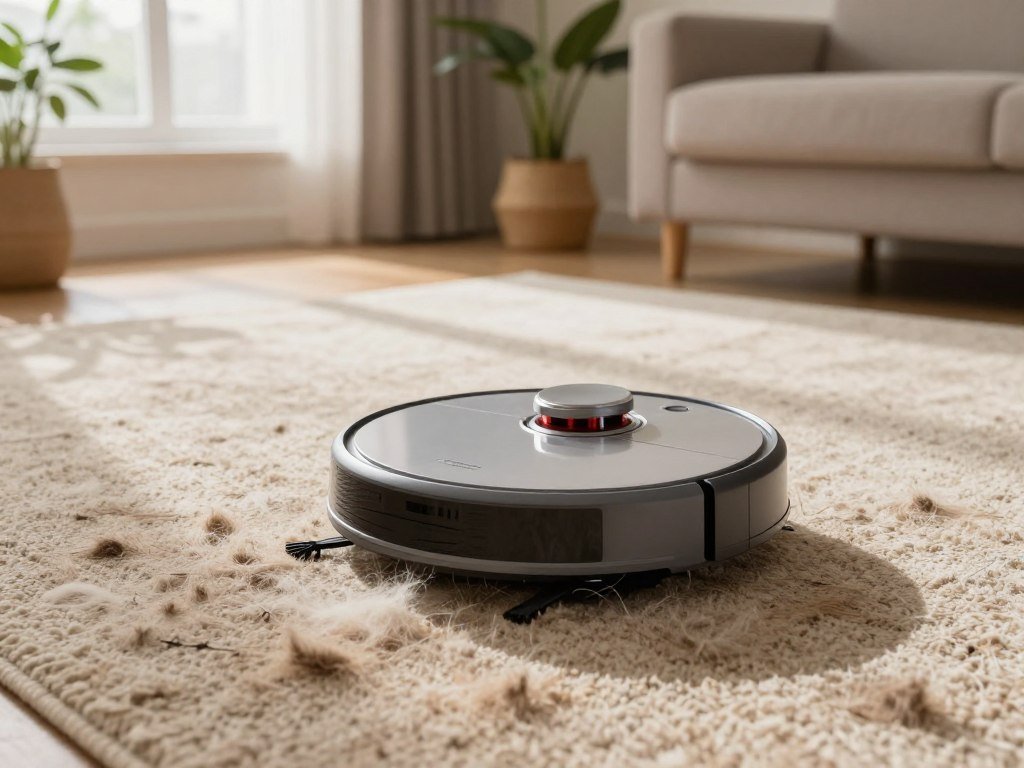
The Dreame L60 Ultra PE is the strongest starting point for most pet homes, while a budget-focused buyer or a household that prioritizes mopping may prefer a different model. Fur can build up fast on rugs, floors, and around brush rolls, so a helpful robot needs to do more than move around your home. This guide weighs pickup, tangles, navigation, and dock upkeep. The right fit depends on your carpets, floor mix, and how much owner involvement feels acceptable.
A hair-wrap rate measures the amount of test hair left wound around the main and side brushes after cleaning. That detail matters when you want the robot to run often without turning every job into brush cleanup. An app can help you set schedules and cleaning zones, but good daily performance still depends on your floors and the mess your pet leaves behind. Choose for the floor and upkeep problem that causes the most work in your home, not for the biggest suction number alone.
Key Takeaways
- Dreame L60 Ultra PE is the best starting pick for most pet homes.
- MOVA V70 Ultra Complete offers a bagless dock and hands-off mop care.
- Dreame X60 Max Ultra Complete adds premium features for demanding homes.
- Dreame D20+ pairs strong measured hair pickup with simpler obstacle handling.
- Check carpet pickup, brush wrap, threshold fit, and dock upkeep before buying.
Best Robot Vacuums for Pet Hair: Which Picks Fit Different Homes?
The Dreame L60 Ultra PE is the best all-around starting point for most pet owners because its measured hair pickup and brush-wrap results are unusually strong. It suits homes where carpet hair and brush upkeep cause the most daily trouble. The MOVA V70 Ultra Complete is a better fit if you want a bagless dock, while the X60 Max Ultra Complete brings premium hardware.
For routine dog-hair cleanup, favor proven carpet pickup and tangle resistance over a suction claim alone. An upright vacuum can still be useful for occasional deep cleaning, stairs, or furniture. The L60 Pro Ultra is another strong option when you want advanced obstacle handling and dock features.
| Model | Best fit | Listed price | Price date |
|---|---|---|---|
| Dreame L60 Ultra PE | Most pet homes | $999.99 | October 27, 2026 |
| MOVA V70 Ultra Complete | Bagless dock | $1,299.00 | October 26, 2026 |
| Dreame X60 Max Ultra Complete | Premium features | $1,699.99 | October 27, 2026 |
| Dreame L60 Pro Ultra | Advanced handling | $1,189.99 | October 27, 2026 |
Choose a robot for the mess you clean most, not the largest suction number on its box.
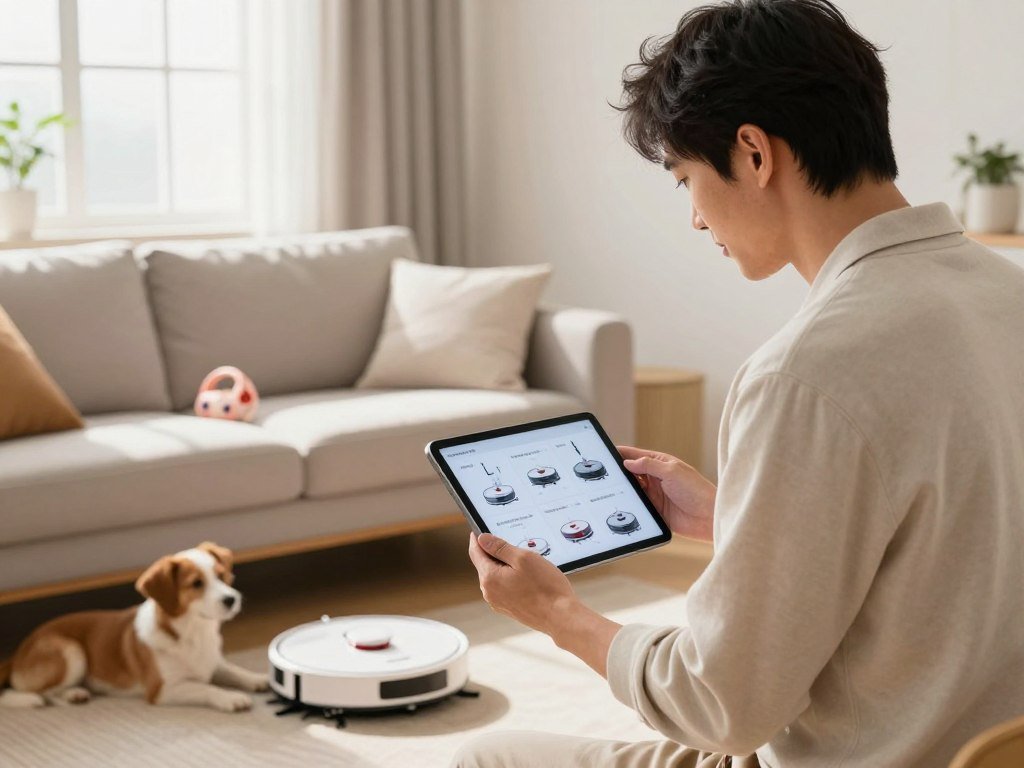
These best robot vacuums cover different budgets and upkeep styles, so the top pick is not automatically the best fit for every household. The listed price can help you compare models, but it does not show how much hands-on care each one needs. A robot vacuum should also fit your floor plan and the time you can give it.
Treat every listed price as a dated snapshot and check the current price before buying.
How Do Pet-Hair Tests Measure Pickup, Tangles, and Navigation?
A robot can collect a lot of loose hair yet still leave embedded strands in carpet or require frequent brush cleaning. Tests measure separate parts of performance because pickup, brush wrap, and obstacle handling answer different questions. A strong suction rating by itself cannot tell you how well a robot removes hair pressed into carpet.
Compare test results from the same method before treating small score differences as meaningful. The flattened-hair test presses 2 grams of 2.5-inch pet hair into carpet, then measures pickup after two cleaning runs. Consumer Reports embeds 1 gram of Maine coon fur in medium-pile carpet and weighs the captured hair.
A separate test from The Strategist covered more than 20 robot vacuums, with each model run at least three times. Its repeated runs offer another way to judge performance, but different methods should not be treated as a single score. The same rule applies when you compare other vacuums for pet hair.

Carpet tests reveal whether hair stays embedded
Flattened carpet tests press hair into fibers instead of leaving it loose on top. This helps show whether a robot’s brush and airflow can lift hair from the carpet. A high suction specification alone cannot replace a direct pickup test on the floor type you use.
Long-hair tests show how often brushes need attention
A tangle test spreads 1 gram of 7-inch hair over a 4-by-8-foot surface. After cleaning, testers measure the hair left wound around the main and side brushes. That result gives the hair-wrap rate, a useful clue about how often you may need to clear the brushes.
- Flattened carpet pickup: measures hair removed after two runs.
- Brush-wrap measurement: weighs long hair left on the brushes.
- Obstacle-course performance: records how well a robot avoids set objects.
Obstacle courses measure what happens around floor clutter
Obstacle courses can reveal whether a robot avoids objects placed in its path. They do not prove that a robot can safely handle every real pet accident. Loose cords, toys, and waste can pose different risks than test objects.
Direct carpet pickup testing can help you separate embedded hair performance from suction claims. Compare results from the same test method before treating small score differences as meaningful.
Why the Dreame L60 Ultra PE Is the Best All-Around Pick
The Dreame L60 Ultra PE pairs a perfect flattened-hair result with no measured brush wrap, making it the clearest choice for homes where carpet hair and brush upkeep are the main frustrations. It picked up 100% of flattened pet hair and scored 94% in carpet deep cleaning, the second-highest result among nearly 200 robots. Its measured results matter more than its 30,000 Pa suction claim alone.
It avoided 21 of 24 obstacles and pairs strong vacuuming with an automated dock. The dock refills water and detergent, washes and self-cleans with boiling water, then dries mop pads with hot air. That setup can reduce routine mop care, though the robot still needs space and occasional attention.

Its dual spinning mop pads turn at 165 rpm and apply 13 N of pressure. They lift 10.5 mm when the robot moves over carpet. Matter support and onboard voice control add ways to connect or direct the robot, while the app lets you set cleaning zones and schedules.
The L60 Ultra PE crossed 19 mm thresholds but failed at 25 mm. It cleaned faster than average and covered more than average per charge, though its battery efficiency was below average. Check your doorways and floor transitions instead of assuming every raised strip is passable.
Some trade-offs show up on hard floors and during detail cleaning. Fine debris scattered slightly, crevice pickup was average, and stain removal fell below average with low water output. Its dustbin is small, while suction and airflow bench scores were low.
The excellent hair results do not make it a deep scrubber or a perfect hard-floor cleaner. If you need regular stain removal, a robot mop may still need help from a manual clean. Check the highest threshold on your regular route before relying on it to move between rooms.
Is the MOVA V70 Ultra Complete a Better Fit for Hands-Off Mopping?
The MOVA V70 Ultra Complete suits pet owners who want strong hair handling and a bagless dock that takes on mop-pad washing and drying. It picked up 94% of flattened pet hair and finished the long-hair test with no tangles. Its bagless dock makes it a distinct choice for owners who want to avoid disposable dust bags.
It avoided 23 of 24 obstacles and crossed a 2-inch single threshold. The robot removed 92% of embedded sand from carpet, adding useful pickup beyond loose hair. Those results make it worth considering for homes with rugs and clutter, though they do not erase its slower navigation.

The bagless auto-empty dock washes mop pads, dries them with hot air, and dispenses cleaning solution. Its mop wash reaches 212°F, while drying air reaches 158°F. An extending mop reaches up to 17 cm, and the side brush extends about 12 cm to reach farther along edges.
The object system recognizes more than 300 object types. A hands-on MOVA V70 review also describes the extending brush and mop parts, along with dock washing and drying. The extra reach is useful around furniture, but the robot’s navigation remains slow.
Battery efficiency is below average, and the onboard dustbin is small. Water output also varies between mop settings, so the floor may not receive the same amount each time. The app has mixed user feedback, which matters if you expect to manage detailed schedules from your phone.
For a busy home, the dock can reduce mop chores but cannot speed up the robot’s route. Favor it when bagless dock upkeep matters more than quick room-to-room coverage.
What Makes the Dreame X60 Max Ultra Complete a Premium Pet-Hair Pick?
The X60 Max Ultra Complete is the premium choice for pet owners who want top-tier hair pickup alongside a low-profile body and flexible mop handling. It scored 100% in flattened pet-hair pickup and avoided 22 of 24 objects. Its premium design is most useful when rugs, raised transitions, and low furniture complicate daily cleaning.
Its 3.13-inch profile and 51 mm threshold rating suit homes with tight gaps and uneven room transitions. The dock has a 3.2 L dust bag, and the robot lists 35,000 Pa suction. Those numbers describe capacity and design, but direct carpet results still matter when hair is embedded.

Carpet pickup and brush design
The 100% flattened-hair result gives this robot a strong case for pet homes with carpet. Its carpet deep-cleaning score was 89%, so the hair result does not mean it leads every carpet measure. A raised rug edge or threshold may still shape where it can clean without help.
Mopping and carpet transitions
The mop system applies 15 N of pressure and lifts 21.5 mm above the floor. You can remove the mop system for vacuum-only runs, which helps keep mop parts away from carpet during hair pickup. This gives you more control over mixed-floor schedules.
That flexibility is valuable in homes where the robot moves between bare floors and rugs. It also means the setup can take extra attention when you change between vacuuming and mopping. The robot can detect objects as small as 1 cm, a helpful feature around small floor clutter.
Low clearance, dock capacity, and trade-offs
The large dock bag can hold more debris before you empty it, while the robot’s onboard dustbin holds 235 mL. It covered about 950 square feet per charge, and charging takes around 80 minutes. Navigation and battery efficiency were slightly below average.
The thin body may fit under furniture that blocks taller robots, but a low profile does not guarantee fast work. The recharge cycle and limited onboard bin can affect larger homes with heavy shedding. Make sure the dock footprint and recharge cycle fit your daily cleaning routine before paying for flagship features.
How Do the Dreame L60 Pro Ultra and D20+ Compare on Hair?
The L60 Pro Ultra is the better fit when obstacle handling and advanced dock features matter, while the D20+ stands out for measured carpet pickup and low hair wrap. The L60 Pro Ultra removed 93.5% of embedded pet hair from carpet and recorded 0% hair tangles. The D20+ also had no measured tangles, with strong results across several debris tests.
The D20+ avoided 0 of 24 objects, so strong pickup alone does not make it a safe hands-off choice. It has a self-emptying dock and a 500 mL onboard dustbin. It lacks dedicated small-object avoidance, so floor pickup results do not tell the whole story of unattended use.
L60 Pro Ultra for embedded carpet hair
The L60 Pro Ultra removed 90% of carpet sand, scored above average in suction and airflow, and avoided 22 of 24 objects. At 89 mm tall, it can fit through some lower-clearance spaces. It crossed a 51 mm threshold, which helps when rooms have raised transitions.
Its dock washes mop pads with 212°F water, dries them with hot air, mixes detergent, and removes the mops automatically. The robot’s mop uses 40°C heated water. Combined mopping and navigation efficiency were below average, so the advanced dock does not guarantee quick cleaning.
D20+ for strong results with fewer automation features
The D20+ picked up 91% of flattened pet hair, compared with an 82.2% test average. It had 0% hair tangle, against a 26% average, and removed 93% of embedded debris, versus a 77.86% average.
| Test | D20+ result | Test average |
|---|---|---|
| Flattened pet-hair pickup | 91% | 82.2% |
| Hair tangles | 0% | 26% |
| Carpet embedded-debris removal | 93% | 77.86% |
These results make the D20+ appealing when brush cleanup and carpet debris are your main concerns. Its self-emptying dock can reduce frequent bin work, but it does not spot small objects in its route. Choose the D20+ only if you can keep small objects out of its route.
Is the Roborock Q7 M5+ a Practical Budget Option for Pet Hair?
The Roborock Q7 M5+ is a practical fit for buyers who want an auto-empty dock and a basic mop without paying for a fully automated wash station. Its 10,000 Pa suction offers a clear spec to compare, and the dock holds debris for up to seven weeks, according to Roborock. The simple setup can suit a home that wants fewer daily bin chores.
The mop pad still needs to be washed and refilled by hand. The listed runtime is 150 minutes, and the robot uses infrared navigation. Those details do not show how well it avoids objects, so do not treat the suction figure as proof of safe obstacle handling.
The Q7 M5+ is a vacuum-mop combo, but its mop is a basic tool rather than a full wash station. You will need to rinse the pad and refill water after use. That can work for light upkeep if you are already comfortable with a small cleaning task.
ZDNET’s Roborock Q7 M5+ review describes pet-hair pickup in a multi-pet home and notes the manual mop care. Its account also points to the lack of advanced visual or AI obstacle recognition. This is a useful distinction if toys or cords often end up on your floors.
The dock can keep routine emptying simple, but mop maintenance remains part of ownership. A lower-complexity model may be easier to understand, though it offers less hands-off floor care than a wash-and-dry station. Buy it for simpler upkeep only if manually maintaining the mop pad fits your routine.
Which Roborock Upgrade Fits Your Pet Home?
Pick the Saros 10R for a slim body and threshold capability, the Saros Z70 for light objects on the floor, or the Qrevo Curv 2 Flow for a rotating roller mop. Each upgrade addresses a different household need, from tight furniture gaps to floor objects and wet cleaning. None of those features alone proves stronger pet-hair pickup.
Choose by the task you want the robot to handle, not by suction alone. The Saros 10R has 22,000 Pa suction, a 3.14-inch profile, a 270 mL dustbin, and a 65 mL water tank. Its listed battery life is 180 minutes, and its threshold rating is 4 cm.
| Model | Suction | Standout feature |
|---|---|---|
| Roborock Saros 10R | 22,000 Pa | 3.14-inch profile, 4 cm threshold rating |
| Roborock Saros Z70 | 22,000 Pa | OmniGrip arm for light objects |
| Roborock Qrevo Curv 2 Flow | 20,000 Pa | Rotating roller mop |
The Saros 10R’s slim profile can help it reach under lower furniture, while its threshold rating may suit homes with raised doorways. Confirm that the robot’s listed clearance matches the transitions in your rooms. A threshold rating does not tell you how quickly it will clean each space.
The Saros Z70’s OmniGrip arm is designed to move light objects such as socks, tissues, and slippers. That can help clear some small items, but the feature should not replace picking up hazards. The Qrevo Curv 2 Flow uses a rotating roller mop, a design choice for owners who focus on wet cleaning.
A mop feature describes floor care, not hair removal from carpet. Pay for the feature that solves a repeated household problem rather than for a longer specification list.
Is the Narwal Flow 2 the Best Choice for Pet Mess and Mopping?
The Narwal Flow 2 is the strongest fit here for pet owners who put active mopping and long intervals between dock emptying high on their list. Its mop uses 16 water nozzles that supply water heated to 140°F, with 12 N of downward pressure. That mop-focused design targets floor care, not just dry pickup.
The dock holds a 2.4 L dust bag and is described as holding up to 120 days of debris. Operating noise is listed under 56.5 dB(A), which may matter if your robot runs near living areas. The Flow 2 also has 31,000 Pa suction, but that figure does not replace direct carpet-hair results.
The nozzle system delivers heated water as the mop works, while the downward pressure helps keep the mop in contact with the floor. This setup can appeal to homes where pawprints and other tracked messes need frequent attention. A robot mop still does not scrub as well as a person cleaning by hand.
Narwal also sells the Freo 20, a separate model with 31,000 Pa suction, a 2.4 L dust bag, 16 nozzles at 140°F, and 12 N of mop pressure. The Freo 20 was listed at $1,099.99 on October 27, 2026. Keep the names distinct when comparing product pages or prices.
The Flow 2’s dock capacity and wet-cleaning system do not tell you how much hair it removes from carpet. If rugs matter, consider direct pickup evidence alongside mop features. Choose a mop-centered design only if its floor-care advantage matches the messes your pets actually leave.
Is the Roomba Max 705 Vac the Best Roomba for Pet Hair?
The Roomba Max 705 Vac is the iRobot pick in this guide for pet owners who want a self-emptying vacuum with dual rubber brushes. Its edge-sweeping brush reaches along edges, and Carpet Boost adds a carpet-focused feature. The vacuum-only design is useful if you want dry pickup without a built-in mop.
The Roomba Max 705 Vac is the pick here for a self-emptying Roomba with carpet-focused features. Its AutoEmpty dock holds debris for 75+ days and uses an enclosed bag that captures particles down to 0.7 microns. Those features reduce frequent bin handling, though they do not remove the need to keep the robot’s path clear.
ClearView Pro LiDAR and PrecisionVision AI support up to five maps. Its listed mapping rate is 1,000 square feet in eight minutes, giving you an idea of how quickly it can map an area. These mapping features help with room plans, but they are not a promise that every floor hazard will be avoided.
The rubber brushes and Carpet Boost make this the Roomba choice for carpet-focused vacuuming. It is not a vacuum-mop combo, so you will need a separate tool for wet floor care. A review of the Roomba Max 705 Combo covers the Combo model, which is different from this vacuum-only Vac version.
- Dual rubber brushes handle dry debris and hair.
- Carpet Boost adds a carpet-focused setting.
- AutoEmpty dock holds debris for 75+ days.
- Mapping supports up to five floor plans.
Even with mapping and obstacle features enabled, small floor items can still disrupt a cleaning run. Keep bowls, toys and loose cords clear of its route even when mapping and obstacle features are enabled.
Which Robot Vacuum Fits Your Floors, Pet Hair, and Litter?
Carpet, bare floors and tracked litter call for different trade-offs, so choose around the mess that recurs most often. For cat hair and litter, the MOVA V70 is a candidate for hair and everyday hard-floor debris, but no litter-specific result is promised. The right floor match depends on brush contact, mop lift, and how often you need wet cleaning.
Carpet pickup and brush contact matter more than mop features when embedded hair is the main problem. Many robot vacuum-mop combos lift mop pads before carpet cleaning, but mop hardware can still affect brush contact. Check how the robot handles your rugs and mixed floors before setting a whole-home schedule.
For carpet and rugs, prioritize proven pickup
Choose direct carpet results over suction claims when hair gets pressed into a rug. A vacuum-mop combo may lift its pads, but the mop hardware can still change how the brush meets carpet. The Roomba Max 705 Vac is the Roomba option for hardwood floors, but it is a vacuum-only model.
For hard floors, weigh hair pickup against scattered debris
Hard floors make loose hair and tracked dirt easier to see, but small debris can scatter as the robot passes. The MOVA V70 can be a candidate for cat hair and everyday litter, without a promise that it will handle every litter type or scatter pattern. Try to judge its route around bowls and litter boxes, too.
For litter, pawprints, and a built-in mop
The Roomba Max 705 Vac does not mop. If you want a Roomba vacuum-and-mop combo for pet hair, this model is not that product; the Dreame L60 Ultra PE and Narwal Flow 2 are combo alternatives. Robot mops help with routine care, but they do not scrub as well as manual cleaning.
- Carpet-heavy rooms: favor measured hair pickup and good brush contact.
- Hard floors with tracked-in dirt: consider scattered debris and edge reach.
- Homes needing both vacuuming and mopping: check pad lift and mop care.
A motorized or rubberized upholstery tool can help loosen pet hair from car seats before you vacuum. Test a small, low-risk area first if your pet scatters litter or leaves toys in the robot’s path.
How Often Should Pet Owners Run and Maintain a Robot Vacuum?
Heavy shedders usually need frequent scheduled cleaning, while a home with lighter shedding can start with several runs each week and adjust after checking the floors. Daily runs can help in homes with multiple pets or heavy shedding. Short, frequent runs can limit hair buildup before it reaches corners and brush rolls.
Inspect the brushes, axles, wheels, filter, and dock intake once a week. Regular checks can catch wrapped hair or packed dust before pickup drops. Use this five-part list as a quick check, and follow the product manual for cleaning steps.
Set a schedule that keeps shedding from building up
Start with several runs a week if your pet sheds lightly, then look at the floors after each run. Add more cleaning days when fur returns quickly or gathers around rugs and furniture. Multiple pets and heavy shedders often need a daily schedule.
Inspect brushes, filters, wheels, and the dock
A weekly look at the robot can help prevent hair and debris from slowing it down. Check these parts in order:
- Main brush: remove hair wrapped around the roller.
- Side brush: clear hair caught near the hub.
- Axles: check for hair packed around each end.
- Wheels: remove fur and debris that block movement.
- Filter and dock intake: clear dust that can restrict airflow.
Roomba Max 705 Vac owner instructions call for filter changes every 3-6 months. That interval applies to this model, not every robot vacuum. HEPA filtration can help capture fine dust, pollen, and pet dander, while camera-based pet monitoring raises separate privacy concerns.
If pickup falls off, inspect the brush, filter and dock intake before assuming the robot needs replacement.
Choose a cleaning schedule that matches what you see on the floor, then keep the weekly check short and consistent. A full dustbin or a blocked dock intake can reduce how well a robot clears debris between runs.
Conclusion
For most pet owners, the Dreame L60 Ultra PE is the easiest recommendation to start with, while the best alternative depends on your dock and floor-care priorities. The MOVA V70 suits owners who want a bagless dock, and the D20+ offers strong measured hair handling with simpler obstacle avoidance.
Before ordering, confirm the current price, the space available for the dock, and the thresholds your robot must cross. Measure the dock area and check the tightest threshold in your home before making the final choice.
FAQ
What is the best robot vacuum for dog hair in 2026?
The Dreame L60 Ultra PE is the best starting pick for most homes. It picked up 100% of flattened test hair and had 0% brush wrap, which helps limit brush cleanup after routine runs. Its dock also handles several mop-care tasks. Homes with different floor needs may favor another model, but these hair results make it a strong first choice.
Are robot vacuums any good with pet hair?
Yes, robot vacuums can help with routine pet-hair cleaning, especially when they run often. Their results vary on carpet, where hair can stay embedded, and long strands may wrap around brushes. Compare measured carpet pickup and hair-wrap performance rather than suction numbers alone. A robot can reduce daily fur, while a full-size vacuum may still suit occasional deep cleaning.
Is Roborock good for pet hair?
Roborock offers options ranging from the Q7 M5+ to the Saros models. The Q7 M5+ has an auto-empty dock and basic mopping, while the Saros models add features such as a slim body, an object-moving arm, or a roller mop. Those features do not prove stronger hair pickup. Check direct hair results and choose features that fit your floors and upkeep preferences.
Is Roomba or Roborock better for pet hair?
The Roomba Max 705 Vac is a strong pick if you want dual rubber brushes, Carpet Boost, and a self-emptying dock. Roborock models offer different combinations of floor care, mapping, and obstacle features. Neither brand is a universal winner for every pet home. Compare the exact model’s carpet performance, brush design, and navigation features against the messes you deal with most.
Which iRobot vacuum is best for pet hair?
The Roomba Max 705 Vac is the iRobot model covered here for pet-hair cleanup. It has dual rubber brushes, an edge-sweeping brush, and Carpet Boost for carpet-focused vacuuming. Its AutoEmpty dock holds debris for 75+ days. It is a vacuum-only model, so choose a separate mop if you want wet floor care.
How often should I run a robot vacuum in a home with pets?
Daily runs or several runs each week suit homes with multiple pets or heavy shedding. A home with lighter shedding can start with several runs weekly, then adjust after checking how quickly fur returns. Frequent shorter runs can keep hair from building up around brush rolls and furniture. A weekly inspection helps catch wrapped fur and blocked dust paths.
Do robot vacuum-mop combos work well for pet hair on carpet?
Some robot vacuum-mop combos handle pet hair on carpet well, but results vary by model. Check direct carpet pickup tests and see whether the mop pads lift or detach during vacuuming. Mop hardware can affect brush contact with carpet, even when the pads rise. If carpet is your main concern, prioritize hair pickup over extra mopping features.