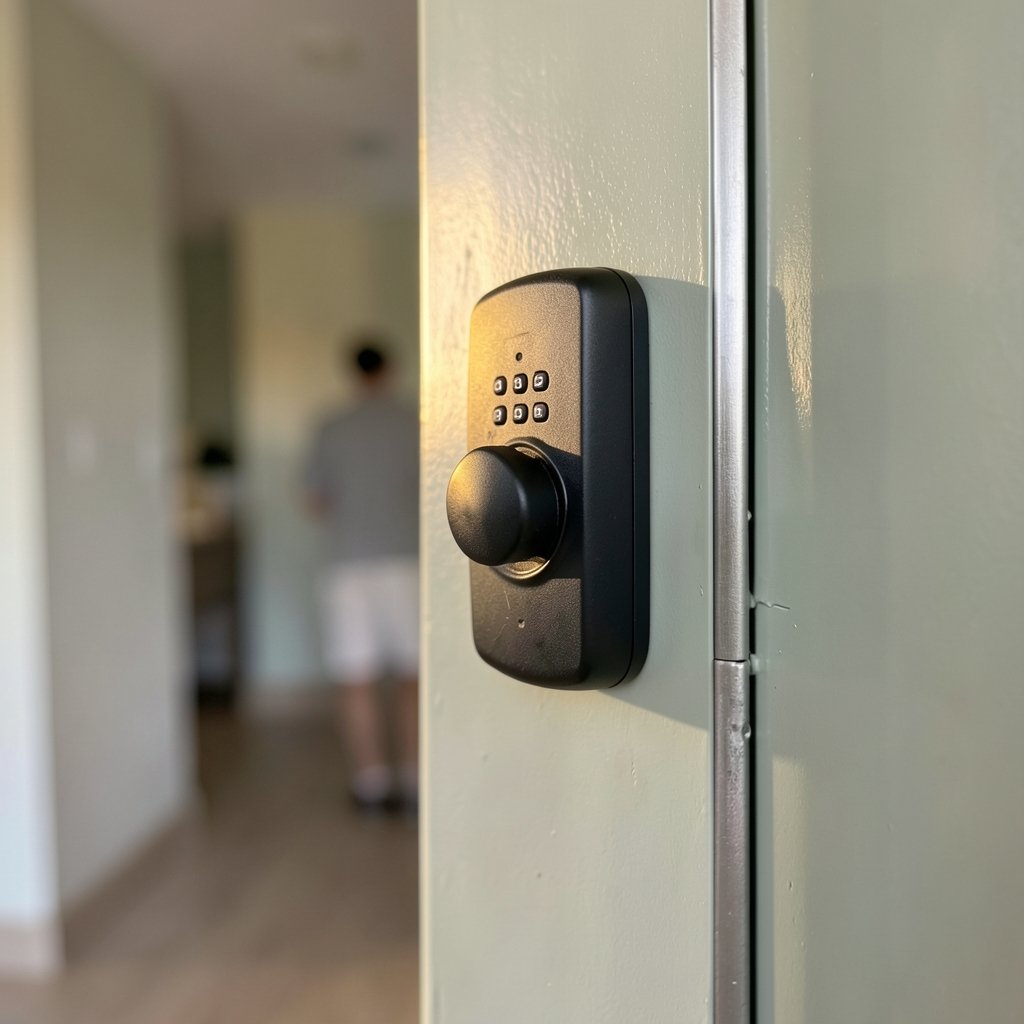
Can a smart lock really work on a steel door, or is the whole category built for wood? It is the first question most people ask after they buy a metal entry door, a fire-rated apartment door, or a commercial hollow-metal frame and then discover that the lock they wanted does not fit. The short answer: yes, smart locks for metal doors exist, but they are a different animal from the deadbolts sold in big-box stores. The lock body, the door prep, the fire rating, and the egress rules all change the buying decision. Get those four things right and a metal-door smart lock works beautifully for years. Get them wrong and you will be drilling holes in a door that was never meant to take them.
Why Metal Doors Are a Different Lock Problem
Most smart locks on the market are designed around a cylindrical deadbolt and a wood door with a standard 2-3/8-inch or 2-3/4-inch backset. Metal doors usually break that assumption. Steel entry doors, fire-rated doors, and commercial hollow-metal frames typically use a mortise lock body or a narrow-stile lock rather than a simple cylinder-and-bolt arrangement.
That matters because a mortise lock is more than a hole in the door. It is a rectangular case set into a pocket cut inside the door edge, with the latch, deadbolt, and often the handle all working from one mechanism. A smart lock for this kind of door usually does one of two things:
- It retrofits the existing mortise case, motorizing the thumbturn or replacing the cylinder while keeping the original lock body.
- It replaces the lock body entirely with a new electronic mortise case built to the same footprint.
Retrofit kits are cheaper and less invasive. Full replacements cost more but give you a cleaner, more reliable result, especially on doors that are used heavily. The deciding factor is almost always the door prep: backset, faceplate dimensions, and case size. Those vary by region too, since ANSI/BHMA-style preparations and Euro-profile cylinders are not interchangeable.
The Rules You Cannot Ignore: Fire, Egress, and Accessibility
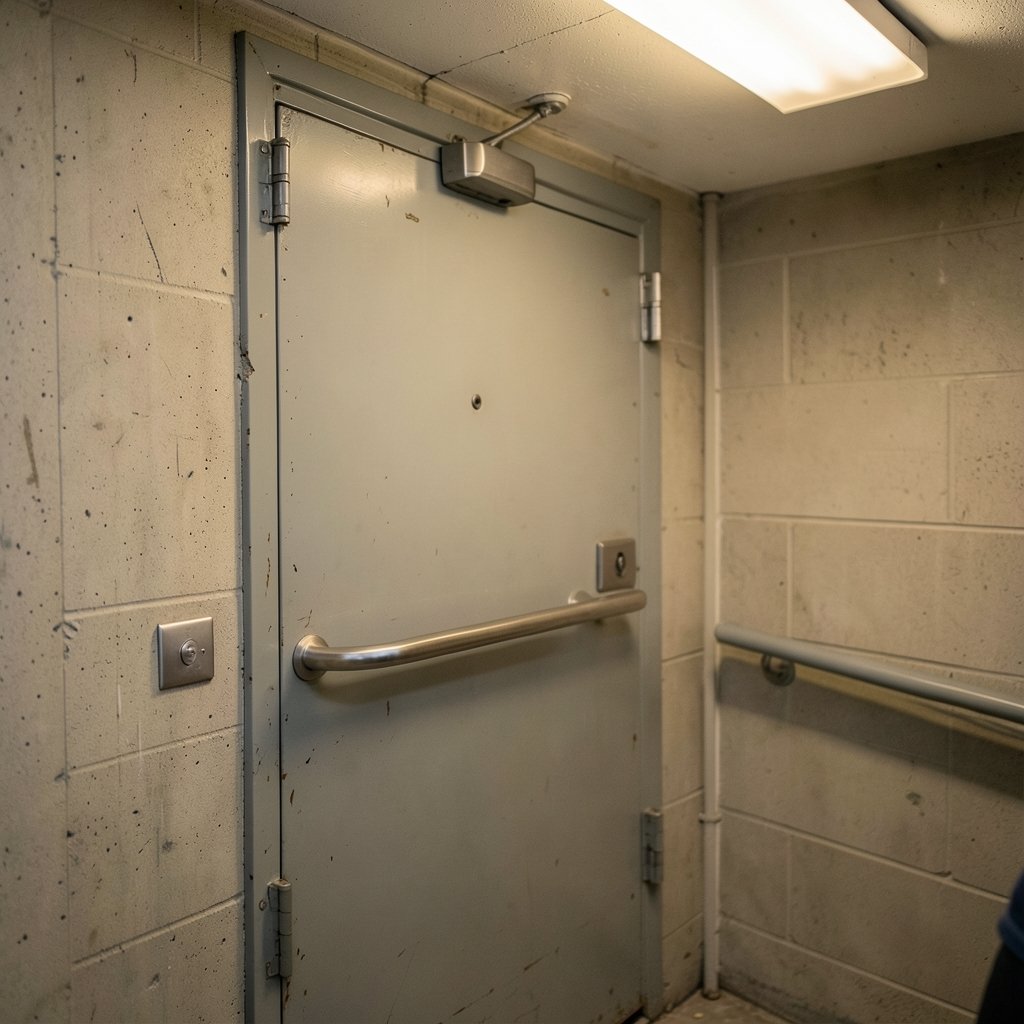
Before shopping, understand that a metal door is often a regulated door. Three sets of rules shape what you can legally install.
Fire-door rules. A fire-rated door is tested as an assembly, and field modifications can void that rating. In the US, the relevant standard is NFPA 80, the Standard for Fire Doors and Other Opening Protectives, which governs hardware changes on rated openings. Swapping locking hardware generally requires listed components, and many manufacturers will tell you plainly that improper modification ends the rating. If your door has a rating label on the hinge edge, check with your local authority having jurisdiction before you touch the lock.
Egress rules. Life-safety codes require egress doors to open from the inside without a key, special knowledge, or unusual effort. A smart lock that only opens through an app, or that needs two motions to release, can fail that test. Any electronic lock on an egress door must preserve single-motion egress, which usually means a mechanical thumbturn or lever that works even when the battery is dead.
Accessibility rules. Operable hardware on accessible routes generally must not require tight grasping, pinching, or twisting. The 2010 ADA Standards for Accessible Design spell out the operability requirements in section 404. App-only operation is a red flag here as well.
If all of that sounds like a lot, it is, but it is also the reason a metal-door lock is a more serious purchase than a $150 wood-door deadbolt. You are buying hardware, not a gadget.
How to Measure Before You Buy
The single most common mistake is ordering a lock before measuring the door. Do this first, with a tape measure and a photo of the door edge:
- Backset. Measure from the door edge to the center of the cylinder or thumbturn. Common values are 2-3/8 inches, 2-3/4 inches, and metric equivalents on imported doors.
- Faceplate dimensions. Measure the height and width of the metal plate on the door edge. A replacement body must match or the door will need new machining.
- Door thickness. Metal doors are often 1-3/4 inches, but fire doors and security doors can run thicker.
- Handing. Note whether the door is left- or right-handed and whether it swings in or out. Many electronic mortise locks are handed and cannot be flipped in the field.
- Existing wiring. If the door already has an electric strike or electrified hardware, photograph the wiring and note the voltage.
- The rating label. Photograph it. It tells you whether the door is fire-rated and what hardware is listed for it.
Take those six items to a locksmith or a manufacturer’s spec sheet. A five-minute conversation saves a return and a re-drill.
Retrofit Kit vs. Full Lock Body: A Practical Comparison
| Factor | Retrofit kit | Full lock-body replacement |
|---|---|---|
| Cost | Lower | Higher |
| Installation | Keeps existing case; often DIY-friendly | Requires precise door prep; usually professional |
| Fit risk | Depends on cylinder and thumbturn geometry | Depends on exact case and faceplate match |
| Durability | Good for light use | Better for heavy traffic |
| Fire-rated doors | Often restricted | Available with listed hardware |
| Best for | Apartments, secondary doors | Entrances, commercial, high-use doors |
The pattern in practice is fairly consistent. Retrofit kits win on price and simplicity, and they are a reasonable choice for a secondary metal door that sees a few cycles a day. Full replacements win on longevity and code compliance, and they are the only sensible route for a main entrance or anything with a fire label.
Power, Networking, and the Failure Modes That Matter
A metal door is heavy, and heavy doors put stress on motors and latches. That makes power design more important than it looks on the spec sheet.
Battery life and behavior. Check what the lock does at low battery. A good design gives weeks of warning and still lets you use a key or thumbturn. A bad design dies quietly and locks you out.
Fail-safe versus fail-secure. This is the distinction that matters most on egress doors. A fail-safe lock releases when power is lost, which is what you want on a path of travel. A fail-secure lock stays locked, which is appropriate for storage rooms but dangerous on an exit. Never put a fail-secure lock on a door people use to leave a building.
Offline operation. Ask what happens during a network outage. Credentials should be stored locally on the lock so that a dead router does not lock out the household. Cloud-only operation is a liability on a front door.
Motor torque and latch alignment. Steel frames flex less than wood, so misalignment shows up as a latch that binds. A lock with a motorized latch retraction handles this better than one that only turns a thumbturn.
If you are building out a broader system around the door, it helps to think about the whole entry rather than the lock alone. A roundup of the best smart locks for home security is a useful cross-check on features like local storage and battery reporting, and pairing the lock with a hub or voice assistant is easier if you have already chosen a platform. Buyers starting from scratch often begin with best smart home devices for beginners to avoid buying a lock that speaks a protocol nothing else in the house uses.
Matching the Lock to Your Home Automation System
A metal-door lock is usually the anchor of a small system, so protocol compatibility deserves as much attention as the hardware. The main options:
- Matter or Thread for cross-platform compatibility and local control.
- Z-Wave or Zigbee for mature hubs with long device support.
- Wi-Fi for simplicity, at the cost of battery life.
- Bluetooth-only for single-user convenience, with no remote access.
If you want voice control at the door, the speaker you choose shapes the setup. A guide to the best smart speakers for home automation covers which platforms expose lock controls and which bury them behind a skill. And if the door opens into a space where energy costs matter, a smart thermostat to save energy can share the same hub and automation routines, so opening the door triggers a comfort scene rather than a separate app.
One more practical note: enterprise and multi-unit buildings are moving toward managed access rather than standalone locks. The shift toward agent-based enterprise platforms in building management is a reminder that a lock is increasingly a node in a system, not an isolated device. For a single home, that just means buying hardware with an open API and a track record of firmware updates.
Installation: What Actually Works in Practice
The mistakes repeat. Here are the ones that show up most often, and the fixes that work.
Skipping the door-prep check. People order a lock, then discover the faceplate is 1/8 inch too tall. Measure first, order second. If a manufacturer publishes a template, print it at 100 percent scale and hold it against the door.
Ignoring handing. An electronic mortise lock that arrives in the wrong handing is a return, not a fix. Confirm before checkout.
Reusing old screws and strikes. Metal doors vibrate. Old screws work loose, and a loose strike is the number one cause of a latch that will not throw. Use the supplied hardware and check the strike alignment after installation.
Forgetting the mechanical override. Test the key or thumbturn before you trust the electronics. Then test it again with the battery removed.
Skipping the weather seal. Exterior metal doors need a gasket and a drip edge. Water in a mortise case is a slow, expensive failure.
Not telling the household. A smart lock that only one person can operate is a household hazard. Add every regular user as a credential on day one, and keep a physical key with a neighbor.
For anyone weighing a hub-based setup, the Home Center Lite smart home hub is worth a look as a low-cost controller that keeps lock automations local. And if you are managing screen time or access rules alongside door access, tools like these app blockers show the same principle: local control beats cloud dependency when reliability matters.
What to Expect on Cost and Longevity
Budget for three numbers, not one. The hardware is the visible cost. Installation is the hidden one, and on a metal door it is real: a locksmith may need to machine a pocket, and that is skilled labor. The third number is the battery and firmware upkeep over five years, which is small but not zero. (NIST Cybersecurity overview)
On longevity, the useful benchmark is cycle rating. Commercial mortise locks are graded by cycle count under ANSI/BHMA standards, and a lock rated for hundreds of thousands of cycles will outlast a residential retrofit kit by a wide margin. Ask whether the electronic component carries the same rating as the mechanical one. Often it does not, and that gap is where failures show up first.
Conclusion
A smart lock for a metal door is not a plug-and-play upgrade. It is a hardware decision shaped by door prep, fire ratings, egress rules, and power design. The buyers who end up happy are the ones who measure the door before ordering, confirm the rating label, insist on mechanical override and single-motion egress, and choose a lock that keeps working when the network does not. Do those four things and the lock disappears into daily life, which is exactly what good hardware should do. Skip them and you will spend a weekend with a drill and a door you cannot easily replace.
Frequently Asked Questions
Can you put a smart lock on a metal door?
Yes, but usually not a standard cylindrical deadbolt. Most metal doors take a mortise lock body or a narrow-stile lock, so you need either a retrofit kit that works with the existing case or a full electronic lock-body replacement matched to the door prep. Measure the backset, faceplate, and door thickness before ordering.
Do smart locks work on fire-rated metal doors?
Only with listed hardware and proper approval. Fire doors are tested as complete assemblies, and field modifications can void the rating. Check the door’s label, confirm the lock is listed for fire openings, and clear the change with your local authority having jurisdiction before installing.
What is the difference between fail-safe and fail-secure?
A fail-safe lock releases when power is lost, which is what you want on an exit path. A fail-secure lock stays locked when power is lost, which suits storage rooms but is dangerous on a door people use to leave a building. Never install fail-secure hardware on an egress door.
Will a smart lock work during a power or internet outage?
It should, if you choose the right model. Look for a lock that stores credentials locally and has a mechanical key or thumbturn override. Cloud-only locks that depend on a live connection are a poor choice for a main entrance.
How much does it cost to install a smart lock on a metal door?
Hardware ranges widely, and installation is the variable that surprises people. A retrofit kit on a standard prep is often a DIY job, while a full lock-body replacement on a steel or fire-rated door usually needs a locksmith and may require machining the door pocket. Get a quote before you buy.
Can I keep my existing keys with a smart lock?
Sometimes. Retrofit kits that replace only the cylinder or motorize the thumbturn often let you keep the original keyway, which is useful in apartment buildings with a master key system. Full lock-body replacements usually come with a new keyway, so confirm before you commit.