
Can a 3D-printed garden hook survive a full summer on a south-facing fence? That question frames the PLA versus PETG debate: the answer is less about which filament is “better” and more about which failure mode you can live with. Both materials are inexpensive, easy to print, and wildly popular. Neither was engineered for a decade of rain, frost, and ultraviolet radiation. Still, one of them handles the outdoors noticeably better, and knowing why saves you from reprinting brackets every few months.
The Short Answer, Up Front
For outdoor parts, PETG is the safer default. It tolerates higher heat, resists impact better, and holds up to moisture and sunlight longer than PLA. PLA wins on stiffness, print detail, and dimensional accuracy, but it softens at temperatures a parked car or a dark patio table reaches easily, and it degrades faster under UV exposure. If a part must live outside year-round and carry any load, PETG is the more sensible starting point, though even PETG has real limits.
How Heat Changes Everything
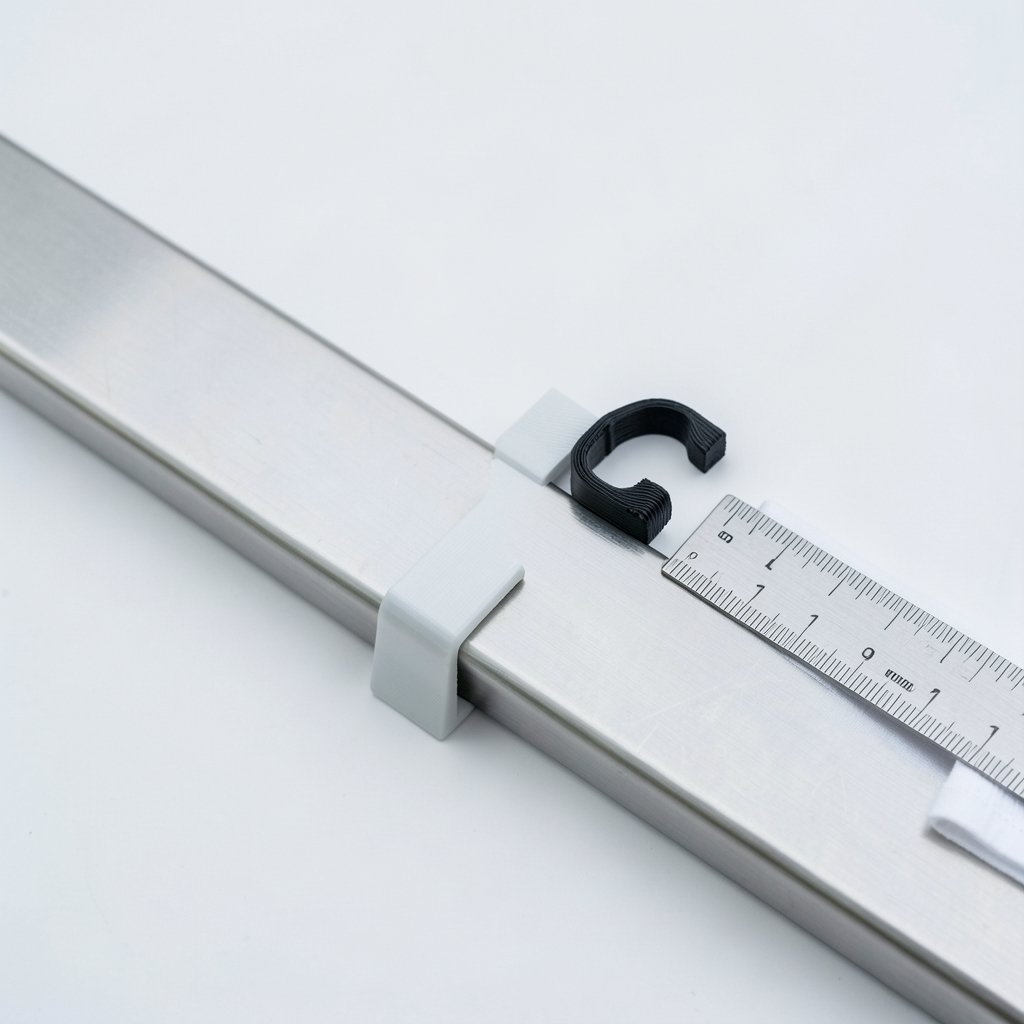
Heat is where the two materials part company most dramatically. PLA’s glass transition temperature sits around 55 to 60 °C, the point where a printed part stops behaving like a rigid solid. PETG’s glass transition is roughly 80 °C. That 20-degree gap sounds academic until you picture a black PLA bracket on a metal railing in July, where surface temperatures can climb well past 60 °C. The part does not melt into a puddle. It sags, bows, or slowly creeps out of shape under its own load, and it never springs back.
Practical tip: color matters as much as polymer. A white or light-colored PETG part runs far cooler in direct sun than the same part printed in black. If someone insists on PLA for a shaded porch ornament, at least choose a pale color and keep it out of direct afternoon sun.
UV and Weather Resistance Compared
Sunlight breaks down polymer chains over time, and both filaments suffer, just at different rates. PLA is generally considered poor for long-term outdoor exposure. It becomes brittle, chalks, and can lose strength after months of direct sun. PETG is usually described as more durable outdoors, though it is still not equivalent to ASA or UV-stabilized materials, which were formulated for exterior applications.
Moisture adds a second front. Printed parts absorb water, and repeated wet-dry and freeze-thaw cycles open up layer lines. PETG’s better layer adhesion helps here, but neither material is waterproof in the way a molded plastic part is. For anything that holds water, like a planter or a bird feeder, expect to reprint eventually or seal the surface.
| Factor | PLA | PETG |
|---|---|---|
| Glass transition temperature | Roughly 55–60 °C | Roughly 80 °C |
| Direct sun and heat | Softens, sags, creeps | Holds shape with more margin |
| UV weathering | Degrades relatively fast, turns brittle | More durable, still not ASA-grade |
| Impact resistance | Stiff but brittle | Tough, flexes before breaking |
| Moisture and layer bonding | Weaker layer adhesion | Stronger layer adhesion |
| Print difficulty | Very easy | Moderate, prone to stringing |
| Best outdoor role | Shaded, light-load, short-term | Long-term, load-bearing, exposed |
Strength, Stiffness, and What Actually Breaks
Outdoor parts rarely fail from a single dramatic overload. They fail from creep, fatigue, and small impacts. PLA is stiffer, so a PLA bracket feels solid, but it is also more brittle, and a dropped or bumped part can crack rather than flex. PETG is tougher and more impact-resistant, which matters for anything knocked around by wind, tools, or kids.
The trade-off is that PETG flexes. A long, unsupported PETG shelf will sag under steady load in a way a PLA shelf would not, at least at room temperature. Design around it: add ribs, shorten spans, and avoid cantilevers. A stiff material that softens in the sun is worse than a flexible one that keeps its shape.
Printing Both Materials Without Headaches
Both filaments are hygroscopic, meaning they pull moisture from the air, and wet filament prints badly. PETG is often reported as more prone to stringing and moisture-related defects, so dry it before a long print and store it with desiccant. (Polyethylene terephthalate)
Common mistakes people make with outdoor prints:
- Printing at the fastest speed and calling it done. Slower outer walls improve layer bonding, which is exactly what weather attacks.
- Skipping a test coupon. Print a small bracket, leave it on a sunny windowsill or in a hot car for a week, and watch what happens. It costs twenty minutes and tells you more than any spec sheet.
- Ignoring print orientation. Layer lines are the weak plane. Orient parts so loads run along the layers, not across them.
- Forgetting hardware. Metal screws, hinges, and anchors often outlast the printed part, so design for replacement. If a gate or shed project needs reliable movement, an automatic door opener for home installation pairs well with printed mounts only when those mounts are PETG and generously thick.
- Leaving sharp corners. Rounded fillets spread stress and slow cracking.
Design Tricks That Buy Extra Seasons
Whatever filament you choose, geometry does a lot of the work. Thick walls, rounded corners, and drainage holes that stop water pooling all extend life outdoors. A printed part should never trap water against itself or against the surface it mounts to.
Shade is free weatherproofing. Mounting a part under an eave or behind a fence panel cuts UV dose dramatically. So does a coat of UV-resistant spray paint or epoxy, which also hides chalky surfaces after a season or two. For parts that must be exposed, treat the print as a consumable with a known replacement interval rather than a permanent fixture.
If the project is really about family time outside rather than engineering, printed pieces work nicely as game tokens, dice towers, or lawn-game markers, and a set of countryside games for family board games and outdoor fun gives those prints a purpose without demanding structural strength. Light loads, short exposures, and shade are exactly where PLA makes sense.
Where PLA Quietly Wins
It would be unfair to write PLA off. It prints beautifully, holds fine detail, resists warping, and costs less. For seasonal decorations, shaded signage, prototype fits, or parts that come indoors after use, PLA is the pragmatic pick. It is also the better choice when dimensional accuracy matters, since PETG’s flexibility and stringiness make tight tolerances fussier.
The mistake is assuming “outdoor” means one thing. A part under a covered porch in a mild climate faces a very different environment from a mailbox flag in Arizona. Match the material to the actual exposure, not to the word on the box.
Compostability Claims Deserve Skepticism
Marketing sometimes implies PLA parts will simply biodegrade in the garden. In practice, compostability claims for PLA usually require industrial composting conditions, not backyard piles or outdoor exposure. A PLA bracket left on a fence will not vanish politely; it will first become brittle and ugly. Plan disposal accordingly and do not treat “compostable” as a license to leave prints in the landscape.
Security and Mounting Projects
Outdoor builds often involve mounting hardware, and printed brackets are a popular way to hold cameras, sensors, and lights. Here PETG’s toughness and heat tolerance matter, because a camera housing that sags in August points at the ground by September. A wireless outdoor security camera is light enough for a well-designed PETG mount, but keep the printed part out of direct sun if you can, and use metal fasteners rather than printed threads. Buyers comparing gear should also weigh outdoor security cameras without a subscription, since the mount outlives most camera models anyway. Design the bracket so a replacement camera still fits.
A Simple Decision Framework
Ask three questions before choosing filament for an outdoor print:
- How hot will it get? Direct sun on dark plastic or inside a vehicle pushes PLA past its limits.
- How long must it last? Weeks favor PLA; years favor PETG, and even PETG may need replacing.
- What happens if it fails? A decorative sign failing is annoying; a bracket holding something heavy failing is a hazard. Never print safety-critical outdoor parts in either material.
If the answers point to heat, time, and load, choose PETG, print it thick, and shade it. If the part is light, shaded, and temporary, PLA is fine and easier to work with.
Conclusion
PLA and PETG are both hobbyist materials pressed into outdoor duty they were never designed for. PETG earns the recommendation because its higher heat tolerance, better impact resistance, and stronger layer bonding give it more margin against sun, weather, and bumps. PLA remains the friendlier material to print and the smarter choice for shaded, light-load, short-term parts. Whichever you pick, test a coupon, design for drainage and shade, and treat outdoor prints as serviceable components rather than permanent structures. Honest expectations beat optimistic spec sheets every time.
Frequently Asked Questions
Can PLA be used outdoors at all?
Yes, with limits. PLA works for shaded, light-load, temporary parts, but direct sun and heat near or above its glass transition temperature of roughly 55 to 60 °C will cause sagging and creep, and UV exposure makes it brittle over time. (Frequent Questions on Recycling)
Is PETG fully weatherproof?
No. PETG is more durable outdoors than PLA, but it is not equivalent to ASA or UV-stabilized materials and will still degrade under prolonged sun and moisture. Treat it as the better hobbyist option, not a permanent exterior plastic.
Which filament is stronger for outdoor brackets?
PETG is tougher and more impact-resistant, making it the better choice for brackets that get bumped or carry steady loads. PLA is stiffer but brittle and softens in heat, so it suits light, shaded, decorative mounts only.
Does color affect how long an outdoor print lasts?
Yes. Dark colors absorb more solar heat and reach higher surface temperatures, which accelerates sagging in PLA especially. Light colors run cooler and generally last longer in direct sun.
Do outdoor prints need special post-processing?
A UV-resistant coating such as paint or epoxy helps both materials, and sealing layer lines slows water ingress. Rounded corners, thick walls, and drainage holes in the design matter just as much as any coating.
Why do people say PLA is compostable if it will not break down outside?
Compostability claims for PLA generally require industrial composting conditions with controlled heat and microbial activity, not a backyard pile or open outdoor exposure. A PLA part left in the garden will turn brittle long before it breaks down.
Is it worth sealing a PETG print with epoxy or paint?
For PETG specifically, a UV-resistant coating is worthwhile when the part faces years of direct sun, because it blocks the UV dose that slowly embrittles the surface and fills layer lines where water collects. Avoid solvent-based paints that attack the plastic; use an epoxy or a paint labeled for plastics, and apply thin coats so the part does not lose dimensional accuracy. Coatings are not a substitute for good geometry, though. A sealed part with a water trap still fails from the inside.
Final word
The honest answer to “PLA or PETG outdoors” is PETG for anything exposed, loaded, or long-lived, and PLA for everything shaded, light, and temporary. Neither is ASA, and neither should hold anything that matters if it breaks. Print a test coupon, shade what you can, and plan to replace what you cannot.



