
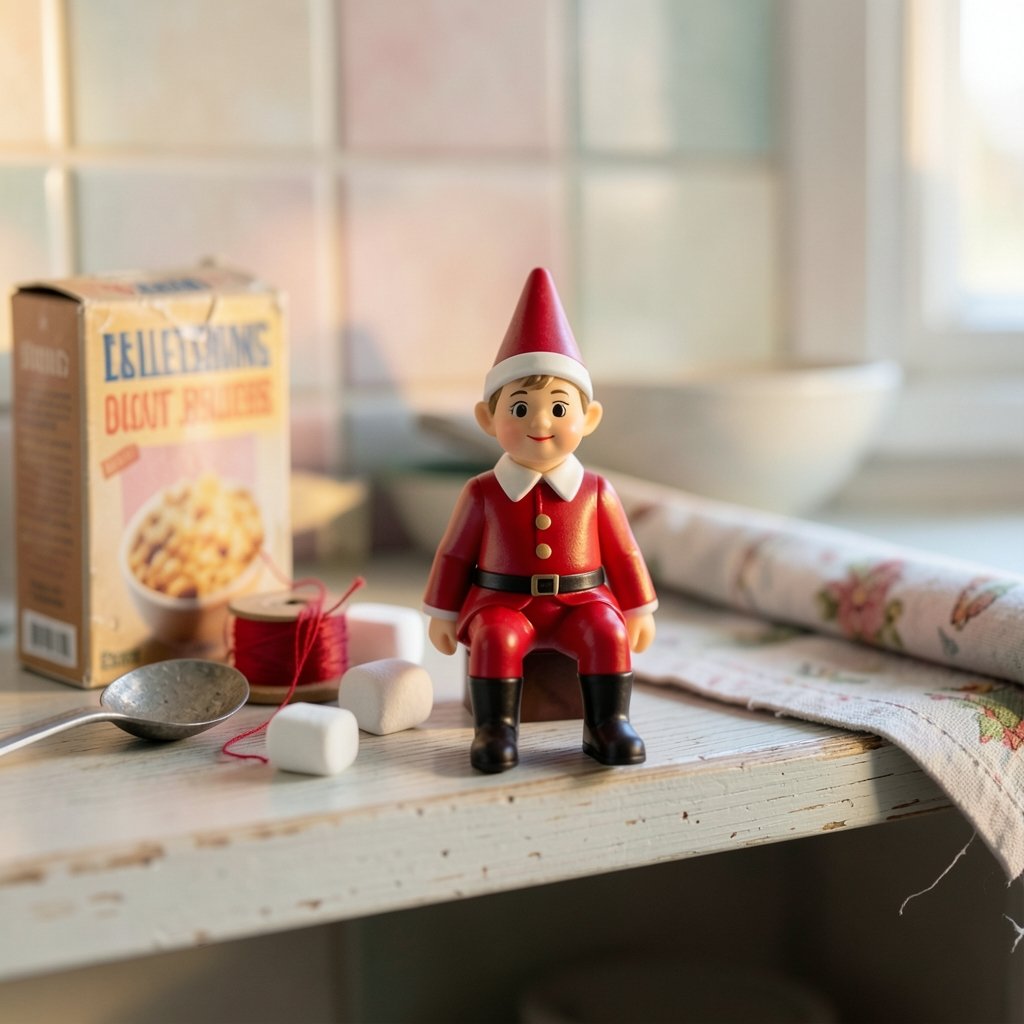
Ever set an alarm for 11 p.m. because you suddenly remembered the elf was still sitting in the exact same spot as yesterday? If so, you are in crowded company. What started as a self-published picture book in 2005 has turned into a December ritual that millions of families attempt, and a whole lot of them quietly dread. The good news: the best elf setups are rarely the most elaborate ones. They are the ones you can pull off in four minutes with whatever is already in the kitchen drawer.
This guide covers ideas by effort level, the props that genuinely earn their shelf space, the mistakes that make the tradition feel like a second job, and how to keep the whole thing safe around toddlers and pets.
What the Elf on the Shelf Tradition Actually Is
The premise is simple. The Elf on the Shelf: A Christmas Tradition, written by Carol Aebersold and her daughter Chanda Bell and illustrated by Coë Steinwart, was self-published in 2005. The story describes a scout elf sent by Santa to watch children during the day and report back at the North Pole each night. Children are told not to touch the elf, or it loses its magic.
Here is the part people forget: the book never told parents to build elaborate scenes. Posing the doll in a new spot each morning, often with props, is a parent-driven folk practice that grew up around the story over the following decade. That means there is no official rulebook, no correct number of setups, and no committee grading your marshmallow snowball fight. If you want to understand how the doll became a cultural fixture rather than just a book character, the background on the Elf on the Shelf tradition is worth a read.
“The elf is a prop, not a performance review,” says one longtime kindergarten teacher who has watched the tradition arrive in her classroom year after year. “Kids remember that the elf did something silly. They almost never remember exactly what.”
That single insight should shape every decision you make this December.
Start With a Realistic Setup Before You Plan Any Ideas
Most parents fail at elf season for one reason: they plan for their best night instead of their average one. A setup that takes 30 minutes is fine on December 3. By December 19, it is a source of resentment.
Set a ceiling before you begin. A workable rule of thumb:
- Two minutes or less for weeknight setups.
- Ten minutes maximum for weekend or “big” scenes.
- One night off per week where the elf simply moves to a new shelf, no props.
The elf does not need to move every single night. Plenty of families move it three or four times a week and let it “rest” in between. Younger children rarely audit the calendar. If you want a broader framework for low-cost, high-impact staging at home, the same thinking behind affordable home renovation ideas for beginners applies here: small, repeatable changes beat one expensive showpiece.
Quick Elf on the Shelf Ideas for Busy Weeknights
These require nothing but the elf and objects already in your home. Each one takes under two minutes.
Kitchen and pantry setups
- Sit the elf inside a cereal box with only its head and hat poking out.
- Balance it on the edge of a fruit bowl, holding a tiny piece of fruit.
- Perch it on top of the coffee maker, next to a mug.
- Tuck it into the silverware drawer with a spoon.
- Set it beside a stack of pancakes with a fork twice its size.
Bathroom and laundry setups
- Wrap the elf in a small towel like a spa guest.
- Sit it on the toilet tank reading a miniature book.
- Place it inside the washing machine drum with a sock.
- Perch it on the bathroom mirror ledge with a toothbrush.
Living room and bedroom setups
- Hang the elf from a curtain rod with a ribbon.
- Sit it in a shoe by the front door.
- Prop it against a picture frame, “admiring” the family photo.
- Place it inside a tissue box with only the hat showing.
- Sit it on a stack of books, holding a bookmark.
None of these need tape, string, or a trip to the store. That is the point.
Cheap Prop Ideas That Earn Their Keep
A small kit of reusable props will carry you through the whole month. Buy once, use twenty times.
| Prop | Cost range | Best use | Reuse potential |
|---|---|---|---|
| Miniature marshmallows | Low | Snowball fights, “bathing” scenes | High |
| Cotton balls | Low | Snow piles, beards, clouds | High |
| Toothpicks and rubber bands | Low | Tiny furniture, “weights” | Medium |
| Small gift boxes | Low | Hiding spots, “delivery” scenes | High |
| Washable markers | Low | Drawing on balloons or paper | Medium |
| Mini cookie cutters | Low | “Baking” scenes | High |
| Sticky notes | Low | Trails, signs, “to-do” lists | High |
| Small toy cars | Already owned | “Road trip” scenes | High |
The washable marker note matters. If you draw a face on a balloon or a paper plate, use washable ink and keep it away from upholstery. If you are the type who enjoys building tiny scenes with real craft, the same organizing logic behind space saving furniture ideas that work in small rooms helps: store props in one labeled bin so setup takes seconds, not a search party.
Themed Scene Ideas for Weekends and Snow Days
When you have ten minutes and a little energy, these land well with kids aged four to nine.
The snowball fight
Pile five or six miniature marshmallows beside the elf and scatter a few across the counter. Add a second toy figure if you have one. Total time: 90 seconds.
The baking disaster
Set the elf next to a bowl, a whisk, and a dusting of flour on a plate. Do not actually spill flour. A small spoon of it on a saucer reads the same and takes one wipe to clean.
The movie night
Sit the elf in front of a tablet or TV remote with a tiny bowl of popcorn (three kernels is plenty). Kids find this one weirdly delightful.
The escape artist
Tie a ribbon loosely around the elf and leave the ends trailing. The next morning, move the elf somewhere new with the ribbon draped nearby. This gives you a two-night story for one minute of work.
The good-deed assignment
Leave a sticky note from the elf asking the kids to do one kind thing that day. This is the setup parents report liking most, because it turns the elf into a prompt rather than a performance.
If you want more scene concepts to remix, there is a large pool of small-space staging and styling inspiration that translates surprisingly well to elf-sized dioramas on a kitchen counter.
Common Mistakes That Make Elf Season Exhausting
These come up again and again in parent forums and family group chats.
Going too big too early. If night one is a full carnival scene, night two has to top it. Start small so you have somewhere to go.
Forgetting the elf is supposed to move. The single most common failure is waking up and realizing the elf never left the shelf. Set a phone reminder for the same time each night, or move it the moment you make your morning coffee.
Letting the elf become a behavior threat. Using the elf as surveillance (“he’s watching, so be good”) works short-term and backfires long-term. Kids who feel watched tend to test the watcher.
Comparing setups online. Social feeds reward spectacle. Your four-year-old does not care that another family’s elf has a working zip line. This is the same trap that makes people overspend on projects they see online; the discipline described in ChatGPT prompt ideas for work that actually save time applies to elf planning too: use tools to reduce effort, not to add production value.
Skipping the touch rule conversation. If you have a toddler, decide in advance what happens when the elf gets grabbed. Most families simply say the elf “went to the doctor” and returns the next night. No drama needed.
Safety First, Especially With Toddlers and Pets
The elf itself is a soft doll, but the accessories are where risk lives. Small props like marshmallows, beads, and tiny boxes are choking hazards for children under three. Keep every setup above their reach.
Button and coin batteries deserve specific attention. Some light-up or sound-making holiday accessories contain them, and swallowed coin batteries can cause severe internal injury within hours. The U.S. Consumer Product Safety Commission publishes guidance on button and coin battery hazards that every parent of a toddler should read once. The short version: if you suspect a child swallowed a battery, get medical help immediately rather than waiting for symptoms.
A few practical rules:
- Keep the elf out of cribs and toddler beds.
- Avoid setups involving string, ribbon, or cord near a crib.
- Skip real food props that pets can reach. Chocolate and grapes are both dangerous to dogs.
- Check any prop for loose parts before it goes on display.
Ideas for Older Kids Who Have Started to Doubt
Somewhere around age nine or ten, the questions start. You have three decent options, and all of them are fine.
Hand off the job. Let the older child set up the elf for a younger sibling. This is the most popular choice and it extends the tradition by years.
Turn it into a game. Leave the elf with puzzles, riddles, or a coded note the child has to solve. The elf becomes a mystery rather than a watcher.
Retire it openly. Some families hold a small “retirement” moment and explain that the elf was a game the whole family played together. Kids usually take this better than parents expect.
Whichever route you pick, avoid the trap of pretending harder. Children who catch an adult in an obvious cover story tend to feel embarrassed rather than betrayed, but the effort of maintaining it is real. There is no prize for stretching the belief phase past its natural end. (History of Christmas)
Building a Setup Routine That Survives December
The families who enjoy elf season are almost never the ones with the best props. They are the ones with a system.
A routine that works:
- Pick a single storage bin for the elf and all props.
- Choose three “anchor spots” in the house where the elf can always go with zero planning.
- Move the elf before you go to bed, not in the morning.
- Keep a running list of five ideas you can deploy on a bad night.
- Decide in advance which nights the elf rests.
That last one is the release valve. A resting elf is not a failure. It is a parent who plans to still be having fun on December 22.
If you enjoy the creative side and want to push further next year, treat it like any other small design project: sketch a few scenes in advance, keep materials contained, and borrow structure from other low-budget creative work, like the approach in AI interior design generator tools for room ideas or the cost discipline in best startup business ideas for beginners that keep costs low. The principle is identical: constrain the budget and the timeline, then get creative inside those limits.
Conclusion
The elf on the shelf works best as a small, warm, slightly ridiculous ritual rather than a nightly production. The book gave families a premise in 2005; everything since then has been optional. A cereal box, a ribbon, and three marshmallows will delight a six-year-old just as reliably as a hand-built miniature ski lodge, and it will not cost you your December evenings.
Pick a handful of setups you can do half-asleep. Store the props in one place. Let the elf rest when you need to. And if the whole thing starts feeling like a chore, remember that the tradition belongs to your family, not to the internet.
Frequently Asked Questions
How often should the elf move?
There is no official rule. Many families move it every night, but three or four times a week works just as well and is far easier to sustain. Younger children rarely track the exact schedule. Consistency matters more than frequency.
What do you do if a child touches the elf?
Most families use a gentle story: the elf “lost its magic” or “had to visit the doctor” and returns the next night. Keep it light and brief. The goal is to preserve the fun, not to make a child feel guilty.
Do you need to buy props for elf setups?
No. The most reliable props are already in your kitchen: marshmallows, cotton balls, sticky notes, small boxes, and a ribbon. A single small storage bin keeps everything together so setup takes under two minutes.
Is the elf safe for toddlers?
The doll itself is soft, but small accessories are choking hazards for children under three. Keep setups out of reach, avoid ribbon or cord near cribs, and be careful with any accessory containing button or coin batteries, which can cause serious injury if swallowed.
What can you do when older kids stop believing?
Three options work well: hand the setup job to the older child for a younger sibling, turn the elf into a puzzle or riddle game, or retire it openly with a small family moment. All three are common and all three are fine.
Can the elf be used as a behavior tool?
It can, but it usually backfires. Framing the elf as a spy who reports on misbehavior turns a cozy tradition into surveillance and tends to increase anxiety rather than improve behavior. Families report better results when the elf delivers kind deeds, jokes, or small challenges instead.



