
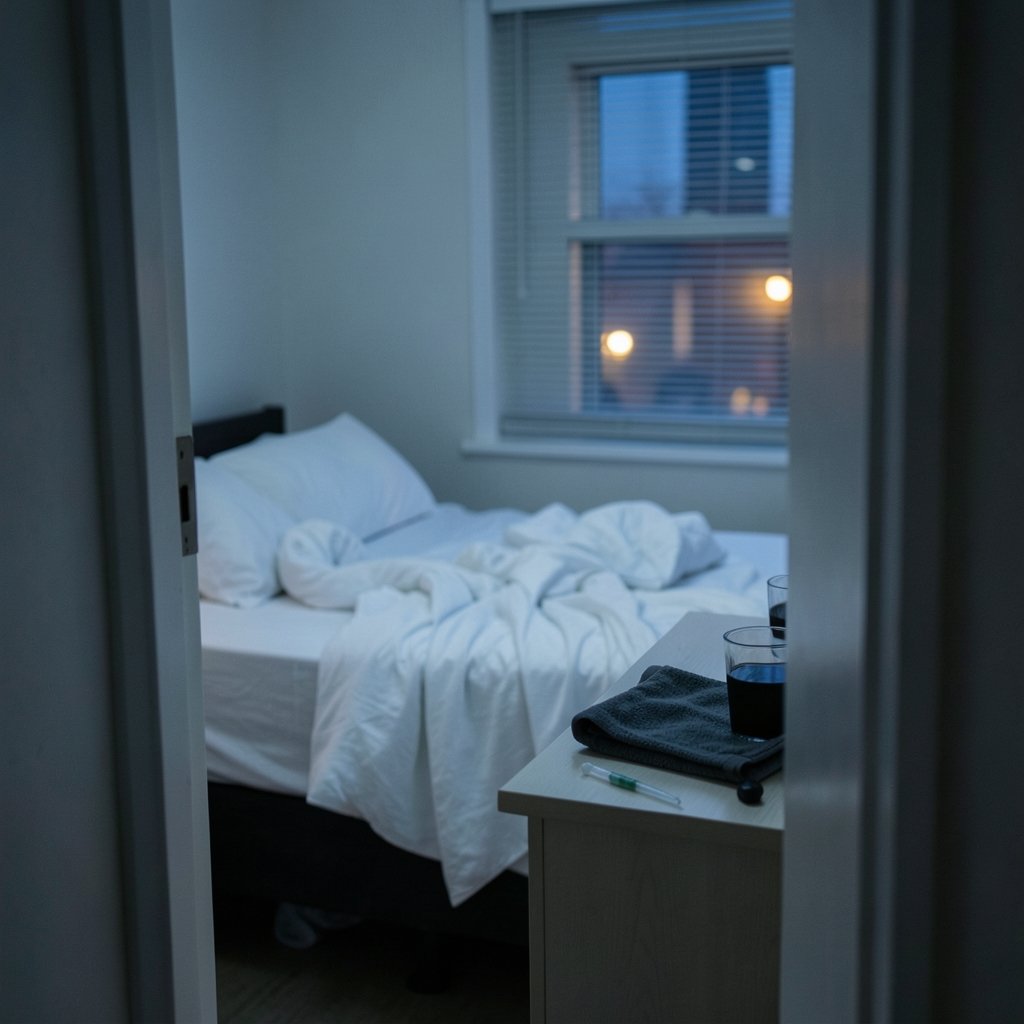
What if the strange, vivid, impossible dream you had during a fever was actually your brain’s response to a chemical signal? That question frames the “fever vs dream” puzzle. One is a measurable medical event. The other is a subjective experience that science can only study indirectly. Yet they meet constantly in real life, usually at 3 a.m., when a sick child is talking nonsense or an adult wakes from a nightmare drenched in sweat.
Sorting the two apart matters more than it might seem. A fever is a regulated rise in core body temperature, driven by immune signals and managed with specific clinical steps. A dream is a mental experience during sleep, shaped by sleep stages, memory, and emotion. When fever and dreaming overlap, the result is memorable, sometimes frightening, and often misunderstood.
What Counts as a Fever, Exactly?
Fever is not simply “feeling hot.” It is a controlled physiological response. The body raises its own temperature set point in the hypothalamus, the brain region that acts like a thermostat. Immune cells release signaling molecules called pyrogens, including interleukin-1, interleukin-6, and tumor necrosis factor. These signals push the hypothalamus to produce prostaglandin E2, which nudges the set point upward. The result is a body actively defending a higher temperature, which is why chills and shivering often come first.
The most common clinical threshold is a core temperature at or above roughly 38.0 °C (100.4 °F), though the exact number shifts depending on the guideline and where the temperature is measured. Rectal readings run higher than oral ones, and oral readings run higher than armpit readings. That variation trips people up constantly.
| Measurement site | Typical fever threshold | Notes |
|---|---|---|
| Rectal | About 38.0 °C (100.4 °F) | Closest to core temperature |
| Oral | About 37.8 °C (100.0 °F) | Affected by recent drinking or breathing through the mouth |
| Axillary (armpit) | About 37.5 °C (99.5 °F) | Least accurate, common in home settings |
| Tympanic (ear) | About 38.0 °C (100.4 °F) | Technique matters a lot |
A practical tip from clinical practice: pick one site and one thermometer and stick with it during an illness. Switching between an ear scanner and an oral thermometer creates phantom “spikes” and dips that scare people unnecessarily. Another common mistake is taking a reading right after a hot drink, a hot bath, or heavy bundling, all of which can nudge surface temperature up without any fever at all.
It also helps to separate fever from hyperthermia. Heat stroke and overheating raise body temperature without moving the hypothalamic set point. Fever is regulated; hyperthermia is not. They look similar on a thermometer and are handled very differently.
Why Fever and Sleep Collide

Fever does not politely wait until morning. It disrupts sleep architecture, and that disruption is where the dream connection begins. During illness, sleep tends to fragment. People wake more often, spend more time in lighter sleep, and often report strange or intense mental experiences around those awakenings.
Most vivid, story-like dreams are recalled after waking from REM sleep, the stage marked by rapid eye movements and high brain activity. Dream recall depends heavily on waking up during or right after REM, which is why a full night of uninterrupted sleep can leave someone remembering almost nothing. Fever changes that equation. Frequent awakenings create more chances to catch a dream mid-flight, and lighter, choppier sleep blurs the line between dreaming, drowsy half-sleep, and waking confusion.
There is a genuine scientific gap here. Studies directly linking fever to specific dream content are sparse, and much of what circulates is anecdotal. Researchers have documented fever-related confusion and febrile delirium, especially in young children, but the “fever dream” as a distinct sleep state is not a formal clinical category. Anyone who claims to know exactly why fever produces bizarre dreams is overselling the evidence. (Fever)
The “Fever Dream” in Everyday Language
Outside medicine, “fever dream” has drifted into cultural vocabulary. It describes art, films, books, and online rabbit holes that feel surreal, anxious, and slightly disjointed, as if experienced through a haze. Dictionary entries treat it as a figurative expression rather than a diagnosis. That matters for anyone searching “fever vs dream,” because two different conversations are happening at once: a clinical one about temperature and a cultural one about atmosphere.
The overlap is not accidental. Both meanings lean on the same intuition: that something is happening to your mind that you cannot fully control or explain. A feverish dream feels unearned. You did not choose the plot, the setting, or the dread. Neither did the person who describes a strange film as a fever dream.
For sports fans chasing a different kind of fever, the phrase even shows up in casual stat talk, where people joke about a player catching fire. If that is the comparison you came for, there is a breakdown of the Atlanta Dream vs Indiana Fever player stats that reads the numbers in plain language. It is a reminder that “Fever” and “Dream” are also team names, and context decides everything.
What Fever Dreams Actually Feel Like
Reports tend to cluster around a few themes. People describe looping scenarios, a sense of being trapped, distorted rooms, familiar faces that behave wrongly, and a strong emotional charge that lingers after waking. Children may cry out, sit up, or seem awake while not making sense. Parents often find this far more alarming than the fever itself.
A few patterns show up again and again in practice:
- Timing: The strangest experiences cluster in the first hours of sleep and during nighttime temperature peaks.
- Recall: People remember fragments, not full narratives, and the memory fades fast.
- Emotion over content: The feeling of unease often outlasts any actual detail.
- Age: Young children are more prone to confusion and delirium with fever than adults.
It is worth saying plainly: a single weird dream during a fever is not a warning sign. It is common, usually harmless, and typically resolves as the illness does. The picture changes when confusion persists after the temperature comes down. (Best dreamcast games)
Telling Fever Symptoms Apart from Dream Effects
Because fever and dreaming can blur together, a simple comparison helps caregivers and patients decide what they are actually dealing with.
| Feature | Fever | Dream or dream-like state |
|---|---|---|
| What it is | A regulated rise in core temperature | A mental experience during sleep or drowsiness |
| How you measure it | Thermometer at a consistent site | Self-report, behavior, recall after waking |
| Main driver | Pyrogens and hypothalamic set point change | Sleep stage, awakenings, memory, emotion |
| Typical signs | Chills, sweating, flushed skin, aches, fast heart rate | Vivid imagery, confusion on waking, fear, fragmented recall |
| Duration | Hours to days, following the illness | Minutes, fading quickly after waking |
| When to worry | Very high fever, stiff neck, rash, breathing trouble, dehydration | Confusion that continues after the fever drops |
The most useful practical rule is to treat the temperature as data and the behavior as context. A child who is confused at the peak of a fever and clear-headed an hour later looks very different from a child who stays confused. The second scenario needs medical attention.
Practical Steps That Actually Help
Managing the overlap between fever and strange dreams comes down to comfort, safety, and knowing when to escalate.
- Measure consistently. Use the same thermometer and site, and log readings with times. Patterns beat single numbers.
- Dress lightly and hydrate. Overbundling traps heat and makes everyone miserable. Small, frequent sips of fluid work better than one big glass.
- Keep the sleep environment calm and dim. Bright screens and loud rooms make fragmented sleep worse and intensify the sense of disorientation.
- Respond gently to confusion. Speak slowly, use familiar names, keep a nightlight on, and avoid arguing with someone who is disoriented.
- Write down what happened. Note the time, the temperature, and what the person said or did. This record is genuinely useful if a clinician needs to assess the situation.
- Follow label directions for any fever reducer. Dosing errors are one of the most common household mistakes, especially with children’s liquid medicines.
One mistake worth flagging: people often assume a fever must be “broken” as fast as possible. In most cases, fever is a normal immune response, and the goal is comfort rather than a perfect number on the thermometer. Chasing the number with repeated doses can cause more harm than the fever itself.
When a Fever Dream Is a Red Flag
Most fever-related dream experiences are benign. A few signs are not. Seek medical care if confusion continues after the temperature falls, if there is a stiff neck, a new rash, difficulty breathing, severe headache, repeated vomiting, or signs of dehydration such as no urination for many hours. In infants, any fever warrants prompt advice, and the threshold for concern is lower the younger the child.
Medications deserve a mention too. Some drugs, including certain antidepressants and antiparkinsonian medicines, are associated with vivid dreams as a side effect. Night sweats appear with some infections as well. These are associations, not proof of cause, but they are worth raising with a clinician when unusual dreams start alongside a new prescription.
Conclusion
Fever and dream are not opposites and they are not the same thing. Fever is a measurable, regulated immune response with a clear physiological chain from pyrogens to the hypothalamic set point. A dream is a private mental event that depends on sleep stages and awakenings. They meet in the messy middle, where fragmented sleep, lighter sleep stages, and fever-related confusion produce the strange nighttime experiences people call fever dreams.
The practical takeaway is reassuring. Most fever dreams are harmless, memorable, and short-lived. Measure temperature consistently, keep the sick person comfortable and hydrated, respond calmly to confusion, and watch for the specific signs that mean it is time to call a professional. The dream will fade. The fever will pass. Knowing which is which is what keeps a frightening night from becoming a dangerous one.
Frequently Asked Questions
What is the difference between a fever and a fever dream?
A fever is a regulated rise in core body temperature, usually at or above about 38.0 °C (100.4 °F), driven by immune signals that raise the hypothalamic set point. A fever dream is a colloquial term for vivid, strange, or disturbing mental experiences during sleep or drowsiness when someone is ill. One is measurable with a thermometer; the other is reported through memory and behavior.
Are fever dreams a real medical condition?
No. “Fever dream” is not a formal clinical diagnosis. It is a descriptive, largely cultural phrase. Clinicians do recognize fever-related confusion and febrile delirium, particularly in young children, but the specific idea of a fever dream as a distinct sleep state has no agreed medical definition.
Why do fevers cause strange or vivid dreams?
The honest answer is that the mechanism is not fully understood. Fever fragments sleep, increases awakenings, and shifts the balance of sleep stages. Because vivid dreams are most often recalled after waking from REM sleep, more awakenings mean more chances to catch a dream. Fever-related confusion and lighter sleep can blur dreaming with waking experience. Direct studies on dream content during fever remain limited.
At what temperature should a fever dream worry me?
The dream itself is not the concern. Worry about the overall picture: confusion that continues after the temperature drops, a stiff neck, a new rash, breathing difficulty, severe headache, repeated vomiting, or signs of dehydration. In infants, seek advice early regardless of the number on the thermometer.
Can medications cause vivid dreams along with fever?
Yes, some medications are associated with vivid dreams as a side effect, including certain antidepressants and antiparkinsonian drugs. Some infections are linked with night sweats. These are associations rather than proof of cause, so it is worth mentioning any new prescription to a clinician if unusual dreams begin around the same time.
How can I help someone who is confused during a fever?
Stay calm and keep the room dim. Use a nightlight, speak slowly, use familiar names, and avoid arguing with the person about what is real. Offer small sips of fluid, dress them lightly, and note the time and temperature. If the confusion does not clear once the fever comes down, get medical advice. For a lighter look at how “Fever” and “Dream” get compared elsewhere, this read on Indiana Fever vs Las Vegas Aces player stats shows how quickly the same two words change meaning with context. (High temperature (fever) in adults)



