
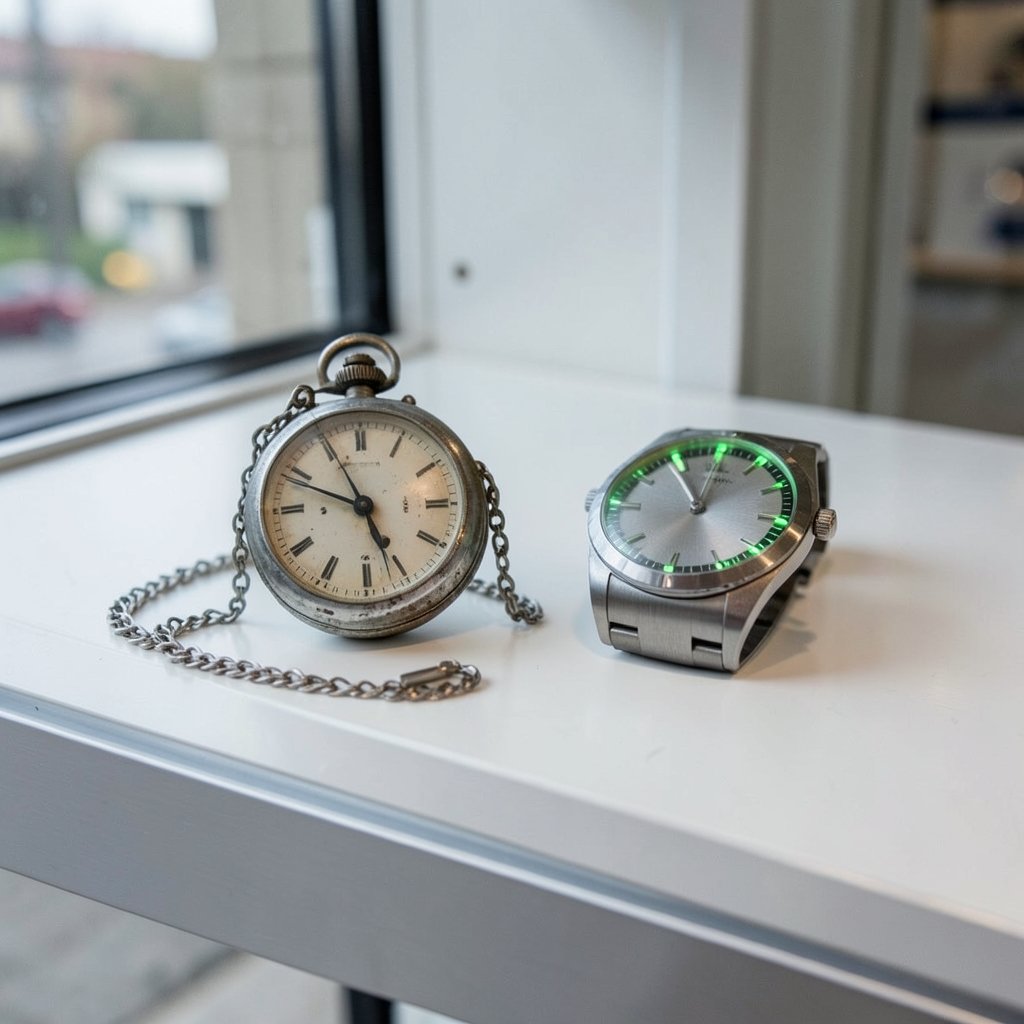
What do you picture when someone says “ball watches”? A round pocket watch dangling from a chain? A sports watch worn on a tennis court? Or a name stamped on a dial that once decided whether a train arrived safely?
That confusion is real, and it is worth clearing up early. In the watch world, Ball watches almost always means timepieces from the Ball Watch Company, a brand born out of American railroad safety rules and later reborn in Switzerland. It is a story about a man named Webb C. Ball, a deadly train wreck, and a standard so strict that it changed how an entire industry told time. It is also a story about glowing gas tubes, because the modern version of the brand has a very different personality from its ancestor.
This article sorts out what Ball watches actually are, where they came from, who buys them now, and the practical things to check before you spend money on one.
What “ball watches” usually means
The phrase is not a formal watch category. You will not find “ball watch” defined in a horology glossary as a type of case or movement. In practice, the term gets used in three ways, and only one of them is a real brand:
| What people mean | What it actually is | How common |
|---|---|---|
| Ball Watch Company timepieces | A brand founded by Webb C. Ball in 1891, revived as a Swiss brand in the 2000s | Most common by far |
| Ball-shaped cases or pendants | A descriptive term for round cases or ball-shaped winding pendants on old pocket watches | Rare, mostly collector slang |
| “Ball” model lines from other brands | Model names used by unrelated companies | Occasional |
If you are shopping, searching, or reading reviews, assume the first meaning. If someone is talking about a “ball watch” as a shape rather than a brand, ask for a photo, because the two conversations have nothing in common.
The train wreck that created a watch standard

The origin story is not marketing fluff. It is documented history.
In 1891, two trains collided near Kipton, Ohio. The cause was traced to a slow watch: a conductor’s timepiece had stopped or drifted, and the crew’s sense of timing fell apart. The railroad’s response was to appoint Webb C. Ball as chief time inspector for the Lake Shore & Michigan Southern Railway, with a mandate to make sure nothing like that happened again.
Ball’s solution was a system, not a single product. Watches used in railroad service had to meet strict accuracy standards, and they had to be checked on a regular schedule. Inspectors recorded performance. Watches that drifted out of tolerance were pulled from service. Over the 1890s and into the early 1900s, that model spread across many U.S. railroads and became something close to an industry norm.
This matters for buyers today because it explains the brand’s DNA. Ball watches were never about luxury for its own sake. They were about reliability you could verify, which is a surprisingly modern idea.
From inspector to brand name
The Ball Watch Company was established in Cleveland, Ohio, in 1891, though some accounts place the business organization slightly earlier or later. That date is one of the few genuinely fuzzy points in the story, so treat it as approximate.
Here is the part that surprises people. Early Ball watches were often made by other manufacturers, including Hamilton, Waltham, and Elgin, then branded and sold under Ball’s name. Ball’s role was closer to inspector, spec-setter, and marketer than factory owner. Whether the company ever manufactured watches fully in-house historically is a point sources disagree on, and most evidence points toward contract manufacturing rather than in-house production.
That is not a knock. It is how a lot of American watchmaking worked at the time. The value Ball added was the standard behind the dial.
Grades sold under his name, such as the Official Standard and Commercial Standard lines, were railroad-grade watches marketed against the formalized U.S. railroad standards of the early 20th century, which covered size, adjustment, and dial markings. Exact grade names and dates vary by source, so if you are collecting, verify against serial-number databases rather than trusting a single listing.
What happened to the brand, and why it looks different now
American railroad watchmaking declined through the mid-20th century as diesel, radio, and eventually digital timing took over. The Ball name went quiet for decades.
It came back as a Swiss-based brand in the 2000s, producing modern wristwatches. The revival date is often given as 2001, but that figure is worth confirming before you repeat it as fact. What is not in doubt is the brand’s modern signature: micro gas tubes, small tritium-filled capsules that glow without needing light exposure first.
That is a real functional difference. Traditional lume needs to charge in light and fades through the night. Gas tubes keep glowing for years, then dim slowly. For anyone who works nights, camps, or just hates squinting at a dark dial, it is a genuine selling point rather than a gimmick. If you are the kind of buyer who compares trackers and wearables on battery life and always-on displays, the same instinct applies here: check the illumination system before the styling. A useful parallel is how people weigh apple watch vs garmin fitness which tracker fits your needs, because the deciding factor is usually the one feature you rely on daily.
Ball watches versus the mainstream alternatives
Buyers usually arrive at Ball after considering the obvious names. Here is an honest comparison.
| Factor | Ball watches | Mainstream Swiss brands | Smartwatches |
|---|---|---|---|
| Core appeal | Legibility, durability, railroad heritage | Prestige and design | Features and connectivity |
| Night visibility | Micro gas tubes, no charging needed | Painted lume, needs light | Screen, needs charging |
| Service network | Smaller, fewer service centers | Wide | Manufacturer or mail-in |
| Resale value | Modest | Often stronger | Weak |
| Best for | Daily wear with a story | Status and variety | Fitness and notifications |
The honest trade-off is service. A smaller brand means fewer authorized repair options and potentially longer waits. If you are used to the convenience of a big ecosystem, read up on common apple watch problems fixes that actually work to see how different the support experience is on the smartwatch side. Mechanical watches fail differently: they need servicing every several years, and a local watchmaker who cannot source parts is a real problem.
Practical buying advice that actually helps
Most buying mistakes with Ball watches are avoidable. These are the ones that come up again and again.
- Decide vintage or modern first. These are two different hobbies. Vintage Ball pieces are railroad pocket watches with serial-number research attached. Modern Ball pieces are Swiss wristwatches with gas tubes. Mixing up your research wastes weeks.
- Verify the reference number, not the photos. Listings reuse images. Ask for the caseback reference and confirm it against the brand’s own materials.
- Check the gas tube condition on modern pieces. Tubes dim over years. A heavily faded dial is not broken, but it is a negotiating point.
- Ask about service history in writing. “Recently serviced” means nothing without a date and a name.
- Budget for a strap change. Many models ship on leather. A steel bracelet or a rubber strap often transforms daily wearability.
- Buy the size you will actually wear. Railroad heritage suggests big cases, but a 40mm watch worn daily beats a 46mm watch that stays in the drawer.
A common mistake is treating the brand’s history as a warranty. Heritage tells you the design philosophy; it does not tell you whether a specific used watch was treated well. The other common mistake is the opposite: dismissing the brand because it is not one of the giant names. If legibility at 3 a.m. is your priority, that dismissal costs you the one feature you wanted.
Living with one: what owners notice
The day-to-day experience is less dramatic than the marketing and more useful than the spec sheet.
The first thing people mention is the glow. It works immediately in total darkness, which sounds trivial until you have owned a watch that does not. The second is weight and presence. These are solidly built watches, and that is felt on the wrist rather than read in a table.
The third is the conversation. A Ball watch invites questions because the story is unusual and easy to tell in one sentence: a train crash, an inspector, and a standard that stuck.
The maintenance side is where expectations need managing. Mechanical watches want servicing, gaskets age, and water resistance is a perishable promise, not a permanent one. If you are used to syncing and forgetting, it helps to understand how much of modern ownership is backup and recovery rather than hardware, which is why pieces like cloud backup explained it works watch matter for the devices you pair with a watch. A mechanical watch has no backup. It has a service interval.
Who should buy one, and who should not
Ball watches suit a specific kind of buyer: someone who values legibility, durability, and a documented history more than brand recognition at the country club. Someone who likes the idea of a tool that was designed to be checked and trusted. Someone who wants a mechanical watch with a feature no luxury rival offers at the same price.
They suit you less if resale value is a priority, if you need a wide service network in your city, or if you want a watch that requires zero thought between services. None of those are flaws in the watch. They are mismatches in the buyer.
If you are weighing a first serious watch, it is worth reading apple watch worth buying beginners everyday use to see how the smartwatch case is argued, then asking whether you want a device or an object. Ball watches are firmly in the second category.
Conclusion
Ball watches are a rare thing in the watch world: a brand whose identity comes from a safety standard rather than a logo. Webb C. Ball’s inspection system grew out of the 1891 Kipton wreck and shaped how American railroads told time for decades. The modern Swiss revival kept the name and swapped in micro gas tubes, giving buyers a mechanical watch that genuinely works in the dark.
The practical takeaway is simple. Know which “ball watch” you are chasing, verify the reference and service history before money changes hands, and go in expecting a mechanical object with a service interval rather than a gadget. Do that, and the brand’s core promise, reliability you can check, still holds up more than a century later.
Frequently asked questions
Are Ball watches still made?
Yes. The brand was revived as a Swiss-based company in the 2000s and produces modern wristwatches, most known for tritium micro gas tube illumination. The revival date is often given as 2001, though it is worth confirming before citing it.
Did Ball make its own watches?
Historically, most evidence points to contract manufacturing. Early Ball watches were often produced by makers such as Hamilton, Waltham, and Elgin and then branded and sold under Ball’s name. Sources disagree on whether any fully in-house production occurred, so treat strong claims either way with caution.
What are micro gas tubes?
They are small sealed capsules filled with tritium gas that glow continuously without needing to be charged by light first. They fade slowly over many years rather than going dark each night, which is the main practical difference from painted lume.
Why is the brand linked to railroads?
Webb C. Ball was appointed chief time inspector for a major railway after the 1891 Kipton, Ohio collision, which was blamed on a slow watch. His inspection and accuracy standards spread across many U.S. railroads and became a model for the industry.
Are vintage Ball pocket watches a good investment?
They are collectible, but value depends heavily on grade, condition, and originality. Use serial-number databases to verify a piece before buying, and do not assume the Ball name alone guarantees a premium.
What should I check before buying a used Ball watch?
Confirm the reference number, ask for service history with dates and names, inspect the gas tube brightness on modern models, and check water resistance claims. Photos are reusable, so request a fresh image of the caseback and dial in daylight.



