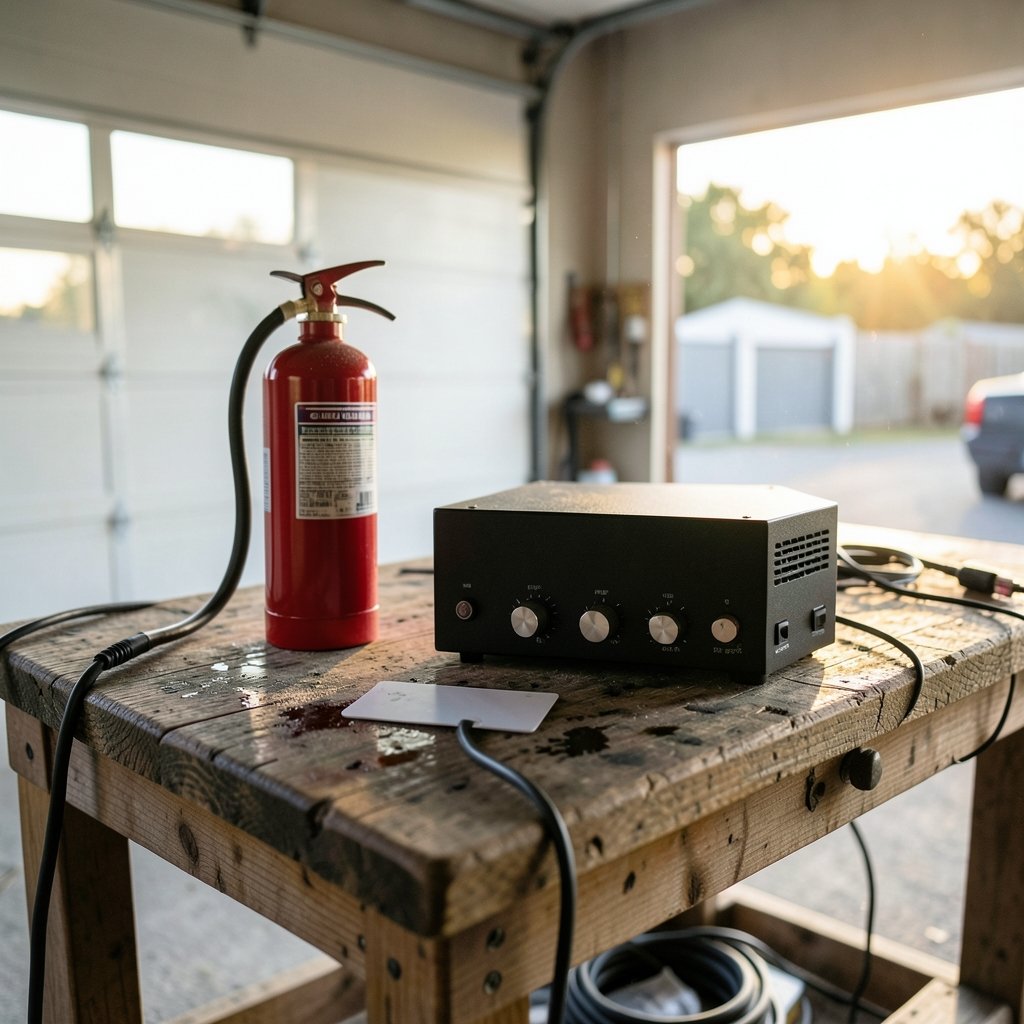
What do a fire extinguisher label, a stereo amplifier spec sheet, and a driver’s license have in common? They all use the term “class B/C” — and in each case, it means something completely different. That’s the trap. Search for “class B/C” and you’ll find pages about electrical fires sitting next to pages about audio distortion and pages about commercial trucking. None of them are wrong. They’re just answering different questions. (Classroom screen tools they actually do when they help)
This guide untangles the three main meanings, explains where the label comes from, and shows how to read a “B/C” rating correctly the next time you run into one.
Why “class B/C” is a confusing search
The core problem is that “class B/C” is rarely a single official category. In most standards, Class B and Class C are separate designations that happen to sit next to each other on a label or a spec sheet. The slash is shorthand for “B and C,” not a hybrid class of its own. (Eddie money songs hits that defined working class rocker)
That distinction matters. If you assume a “B:C” extinguisher is a special-purpose device, you might pass over the right tool. If you assume a “Class B/C” amplifier is a standard topology, you’ll misread the datasheet. And if you assume a “Class B/C” license is one thing, you’ll show up to the wrong test.
So the practical first step is always the same: figure out which domain you’re in. Fire safety, electronics, or driving. Once you know that, the rest of the label makes sense.
Class B and Class C in fire safety

In the United States, fire extinguishers are rated by the type of fire they can put out. The classification system comes from NFPA 10, the standard for portable fire extinguishers, and it’s mirrored in workplace rules like OSHA 29 CFR 1910.157.
Here’s how the classes break down:
| Class | Fuel type | Example |
|---|---|---|
| A | Ordinary combustibles | Wood, paper, cloth, trash |
| B | Flammable liquids and gases | Gasoline, paint thinner, propane |
| C | Energized electrical equipment | Live wiring, motors, appliances |
| D | Combustible metals | Magnesium, sodium, titanium |
| K | Cooking oils and fats | Commercial fryers, grease |
Notice that Class B and Class C are separate hazards. Class B is about fuel that burns as a liquid or gas. Class C is about electricity being live at the moment of the fire. They get combined on labels because many extinguishers are rated for both — a carbon dioxide unit, for example, handles flammable liquids and electrical fires well.
What a “B:C” rating actually tells you
When you see B:C printed on an extinguisher, read it as “rated for Class B and Class C fires.” The letters describe the hazards the unit was tested against. The number in front of the B (like 10B or 20B) is a size rating: it tells you how many square feet of a test fire a non-expert can extinguish. A 10B:C extinguisher handles a smaller flammable-liquid fire than a 20B:C unit.
A few practical points that trip people up:
- Class C ratings only apply while the power is on. Once you unplug the equipment or cut the breaker, the fire becomes a Class A or B fire depending on what’s burning. The C rating is about the electrical hazard, not the fuel.
- Never use a water-based extinguisher on a Class C fire. Water conducts electricity and can shock the operator. CO2 and dry chemical are the usual choices.
- A B:C extinguisher is not rated for Class A. If your workspace has paper, cardboard, or wood, you need an A rating too — often sold as an ABC multi-purpose unit.
- Check the gauge monthly and the service tag annually. The most common mistake in practice is buying the right extinguisher and then letting it sit unserviced for years.
For homes and small shops, an ABC dry chemical extinguisher covers most everyday risks. For server rooms, labs, and commercial kitchens, the specific B:C or K rating matters far more than the general-purpose label.
If you’re the type who likes digging into equipment specs and how ratings translate to real-world use, the same instinct applies to memory cards and speed classes — a topic covered in this breakdown of SD card v30 vs v60 vs v90 and which speed class your camera actually needs. The lesson carries over: the letter on the label means nothing until you know which standard wrote it.
Class B and Class C in electronics and amplifiers
Step into audio gear or radio equipment and “class B” and “class C” describe how an amplifier’s output stage conducts current. These are textbook definitions, not marketing terms.
Class B amplifiers use two output devices, each conducting for half of the signal cycle. One handles the positive half, the other the negative half. The upside is efficiency — much better than Class A, which conducts all the time. The downside is crossover distortion, a glitch that appears at the moment the signal hands off from one device to the other.
Class C amplifiers conduct for less than half of each cycle. Efficiency climbs even higher, but distortion does too. That makes Class C useless for audio reproduction and ideal for radio-frequency work, where a tuned circuit filters out the distortion and only the amplified carrier matters.
Where “class B/C” shows up loosely
Some designs switch between operating modes depending on signal level or load, and manufacturers sometimes describe them as “Class B/C” in casual spec sheets. Strictly speaking, that’s not a formal category. It usually means the amp runs near Class B at high output and drops into a lower-bias mode at low output. If a datasheet uses the term, look for the actual bias description and distortion figures rather than trusting the label.
The same “read the spec, not the badge” habit pays off with wireless audio. Codecs and radio standards get marketed with similar shorthand, and the real differences live in the technical detail — much like the ones explained in this comparison of Bluetooth LE audio vs classic audio and what actually changes for your headphones.
Class B and Class C in licensing and vehicle rules
The third common meaning comes from driving and commercial transport, where classes sort vehicles by weight and required endorsements. Exact definitions vary by state and country, but the broad pattern in US commercial licensing is:
- Class A covers the heaviest combination vehicles, typically tractor-trailers.
- Class B covers heavy single vehicles, such as large straight trucks and buses, often above 26,000 pounds.
- Class C covers smaller commercial vehicles that still require a commercial license — for example, vehicles carrying hazardous materials or a certain number of passengers.
A “Class B/C” reference in a job posting or training course usually means the position accepts either license level. Before you pay for training, confirm the exact weight thresholds and endorsements your state requires, because the numbers are not identical everywhere.
Other places the B/C labels appear
The pair shows up in several more regulatory schemes, and each has its own logic:
- Broadcast station classes. AM and FM stations are sorted into classes (A, B, C, and subclasses like C0–C3) that describe power and coverage. These are defined in federal broadcast rules, not fire codes.
- Airspace classes. In aviation, Class B is busy terminal airspace around major airports, and Class C surrounds airports with control towers. Pilots need clearance to enter either.
- Clean air rules. Air quality nonattainment areas are graded Marginal through Extreme. “Class B/C” is not standard terminology there — if you see it in that context, it’s likely a misreading.
The pattern is consistent: letters get reused across industries, and the only reliable way to interpret them is to check which standard is speaking. That’s true of everything from fire codes to film schedules — the same care you’d take reading a classic film festival lineup applies to reading a technical label.
How to read a “class B/C” label without guessing
Here’s a practical routine that works in almost any context:
- Identify the source standard. Is it NFPA 10, an amplifier datasheet, a state licensing manual, or an FCC rule? The source settles the meaning.
- Treat the slash as “and,” not “combined.” In fire safety especially, B and C are separate hazards that a single unit may cover.
- Look for the number. In extinguisher ratings, the number before the letter is the real measure of capability. In amplifiers, the numbers that matter are distortion and efficiency, not the class letter alone.
- Check the current edition. Fire codes, broadcast rules, and licensing thresholds get revised. A five-year-old chart may be out of date.
- Ask before you buy. If a product or course markets itself with “class B/C” and no further detail, request the underlying spec. A vendor who can’t explain the rating probably doesn’t understand it either.
The most common mistake people make is assuming the term is universal. It isn’t. The second most common is ignoring the number or the footnote that actually defines the rating. Both are easy to fix once you know to look.
Conclusion
“Class B/C” is less a single term than a collision of three vocabularies. In fire safety, it means an extinguisher rated for flammable liquids and energized electrical equipment — two separate hazards, often covered by one unit, with a number that tells you how much fire it can handle. In electronics, it refers to two amplifier topologies with different efficiency and distortion trade-offs, sometimes used loosely for hybrid designs. In licensing, it points to vehicle classes and the endorsements they require.
None of these meanings is obscure once you know the context. The skill worth building is the habit of asking “which standard is this?” before acting on a label. Whether you’re choosing an extinguisher for a workshop, reading an amp spec, or signing up for driver training, that one question prevents most of the confusion the term creates.
FAQ
What does a B:C fire extinguisher rating mean?
It means the extinguisher was tested and rated for Class B fires (flammable liquids and gases) and Class C fires (energized electrical equipment). The letters describe the hazards it can handle; the number before the B, such as 10B or 20B, indicates the size of flammable-liquid fire it can put out.
Is Class C the same as Class B in fire safety?
No. Class B covers flammable liquids and gases, while Class C covers fires involving energized electrical equipment. They are separate hazard classes. Many extinguishers carry both ratings because the same agent, such as carbon dioxide or dry chemical, works on both types of fire.
Can I use a B:C extinguisher on a paper fire?
Generally no. A B:C rating does not include Class A, which covers ordinary combustibles like paper, wood, and cardboard. Using a B:C-only unit on a paper fire risks re-ignition because it lacks the water-based cooling effect that Class A ratings require. Choose an ABC multi-purpose extinguisher if ordinary combustibles are present.
What is the difference between Class B and Class C amplifiers?
Class B amplifiers use two output devices that each conduct for half the signal cycle, giving good efficiency but introducing crossover distortion. Class C amplifiers conduct for less than half a cycle, which raises efficiency further but creates high distortion, making them suitable for radio-frequency applications rather than audio.
Does “class B/C” mean one license or two?
It usually means either license is acceptable for a given job or course. Class B and Class C are separate commercial license categories with different vehicle weight limits and endorsement requirements. Because the thresholds vary by state, check your local licensing authority before enrolling in training.
Why is “class B/C” used in so many different industries?
Because letters are a convenient shorthand, and separate standards bodies reuse them independently. Fire codes, electronics, broadcasting, aviation, and driver licensing each built their own letter-based classification systems. The term only makes sense once you know which standard is being referenced.