
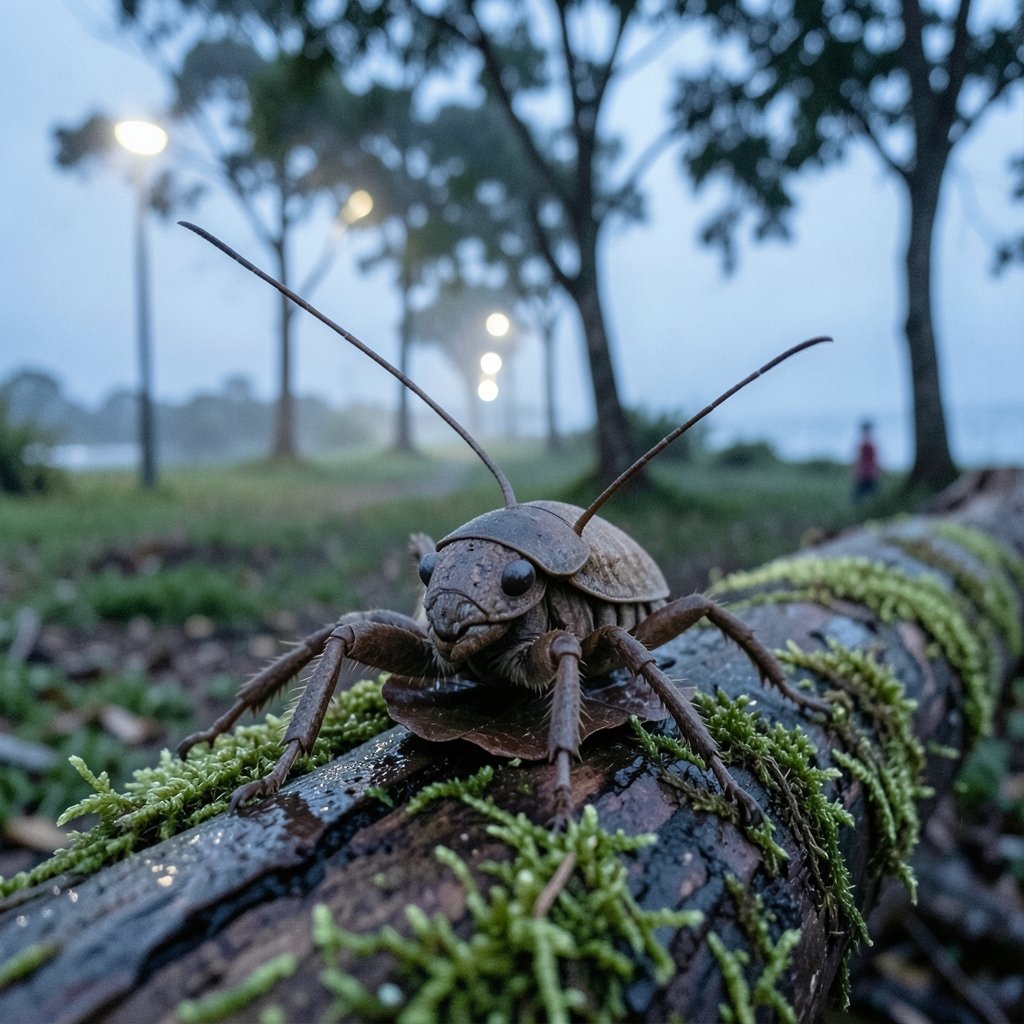
What would you say if someone told you there’s an insect heavier than a sparrow, wider than a human hand, and older than the dinosaurs’ exit from the stage? It sounds like a creature from a fantasy film, but it exists. It lives on a handful of islands off the coast of New Zealand, it comes out at night, and most people have never heard of it. Meet the giant weta, an animal that gets little attention and is poorly known.
What Exactly Is a Giant Weta?
The name “giant weta” gets thrown around a lot, and it’s often used imprecisely. Here’s the thing: giant weta aren’t a single species. The term describes a whole genus of insects called Deinacrida, which belongs to the weta family, a group of flightless, nocturnal insects found only in New Zealand.
There are roughly a dozen species in the genus, though the exact count shifts depending on which authority you ask. Some species are island specialists with tiny ranges. Others are slightly more widespread. All of them share certain traits: they’re big, they’re heavy-bodied, they can’t fly, and they’re active mostly at night.
Weta as a group are often called “New Zealand’s answer to mice” because they fill a similar ecological niche. On an island chain with no native land mammals (aside from bats), insects and birds took on the roles that mammals play elsewhere. The giant weta is the heavyweight champion of that evolutionary experiment.
The Record-Breaking Weight Explained

You’ve probably seen the headline: a giant weta that weighed as much as a sparrow. That claim is real, but it comes with important context that most articles skip.
In 2011, a captive female Little Barrier Island giant weta (Deinacrida heteracantha) was weighed at about 71 grams. That made it the heaviest insect ever recorded. For comparison, that’s heavier than a typical house sparrow and roughly the weight of a small tangerine.
But here’s the catch. That was one animal. A single captive specimen. Wild adult giant weta are generally smaller than that record-holder, and scientists don’t have a large, robust dataset of wild adult masses to compare against. So when you read that giant weta are “the heaviest insects in the world,” the statement is technically true based on that one extraordinary individual, but it’s also a bit of a statistical outlier.
| Claim | What’s Solid | What’s Shaky |
|---|---|---|
| Heaviest insect on record | Yes, about 71 g in 2011 | Based on one captive female |
| “Heavier than a sparrow” | True for that specimen | Not typical of wild adults |
| “The size of a mouse” | Roughly fair for large species | Varies hugely by species and sex |
| “Prehistoric monster” | They are ancient lineages | Not literal dinosaurs |
The practical takeaway: treat superlatives about giant weta with a little caution. They’re genuinely enormous by insect standards, but the viral numbers trace back to a single unusually large animal.
Meet the Main Species
Not all giant weta are created equal. Here’s a quick tour of the most notable ones.
Little Barrier Island Giant Weta (Deinacrida heteracantha)
This is the species that produced the record-breaker. It survives mainly on Te Hauturu-o-Toi / Little Barrier Island, a predator-free sanctuary in the Hauraki Gulf. It’s the largest of the genus and the one most often featured in news stories.
Poor Knights Giant Weta (Deinacrida fallai)
Confined to the Poor Knights Islands, this species is also massive and lives in a strictly protected island environment. Because the islands have no introduced mammals, the weta there have persisted where mainland populations vanished.
Cook Strait Giant Weta (Deinacrida rugosa)
Found on islands in the Cook Strait region, including Mana and Kapiti, this species has been the focus of translocation efforts. It’s a good example of how island sanctuaries function as lifeboats for species that can’t survive alongside rats and stoats.
Other Island Specialists
Several other Deinacrida species cling to small offshore islands. Each has its own quirks, and many are restricted to ranges so small that a single storm or accidental rat incursion could wipe them out.
Why Giant Weta Almost Disappeared
Here’s where the story gets sobering. Giant weta used to be more widespread on mainland New Zealand. Today, most species survive only on predator-free islands. What happened?
The answer is introduced mammals. Rats, stoats, and mice arrived with human settlement and spread across the country. For a large, slow, flightless, ground-active insect, that’s a disaster. Giant weta are basically a walking protein bar for a rat. They can’t fly away, they can’t run fast, and they spend their days in burrows or under cover where predators can dig them out.
Habitat loss made things worse. Forests were cleared, and the safe refuges shrank. By the twentieth century, mainland giant weta populations were largely gone.
This pattern isn’t unique to weta. Island species around the world have collapsed when mammals were introduced. It’s a recurring theme in conservation, and it’s why New Zealand’s predator-free island strategy matters so much. If you’ve ever compared how two places handle their natural assets, you might enjoy this look at how Madrid and Barcelona, Spain’s two giant cities, actually compare — different context, but the same lesson about local identity and preservation.
How Conservationists Are Saving Them
The recovery strategy for giant weta rests on a few pillars.
Translocation to Predator-Free Islands
Moving weta to islands free of rats and stoats is the core method. Conservation teams have shifted populations to sanctuaries where the insects can breed without being eaten. It’s slow, careful work, but it has kept several species from extinction.
Fenced Sanctuaries
Mainland sanctuaries with predator-proof fences, like Zealandia in Wellington, give giant weta a foothold back on the mainland. These fenced reserves aren’t perfect, but they demonstrate that with enough protection, the insects can survive near cities.
Captive Breeding
Breeding programs help build numbers before release. This is especially important for species with small remaining populations, where every individual matters.
The results are encouraging but fragile. A single biosecurity failure, like a rat swimming ashore or stowing away on a boat, can undo years of work. Conservation here is a permanent commitment, not a one-time fix.
What Giant Weta Actually Do All Day
For such a famous insect, surprisingly little is known about the daily life of some giant weta species. Here’s what’s well established.
They’re nocturnal. By day, they hide in ground burrows or under logs and vegetation. By night, they emerge to forage.
They’re herbivorous to omnivorous. Their diet includes leaves, fruit, and occasionally other invertebrates. They’re not picky eaters, which helps in captivity and during translocations.
They’re slow developers. Growth is gradual, and individuals are thought to live for a few years, though lifespan figures vary by species and aren’t well documented across the board. This slow pace makes populations vulnerable, because they can’t bounce back quickly after a bad season or a predator incursion.
They’re also surprisingly heavy for their size, with thick bodies and strong legs. They can’t fly, but they can give a decent defensive kick and produce a hissing sound when threatened.
Common Mistakes People Make When Reading About Giant Weta
A few traps catch readers and even journalists.
Mistake one: treating “giant weta” as one species. It’s a genus, not a single animal. Articles that say “the giant weta weighs 71 grams” without naming the species are imprecise. That figure belongs to one Little Barrier Island female.
Mistake two: assuming the record applies to all weta. The 71-gram specimen was captive and exceptional. Wild adults are generally lighter.
Mistake three: confusing weta with other big insects. Giant weta are often compared to Goliath beetles or stick insects, but they’re a different lineage entirely, and the comparisons get muddled fast.
Mistake four: assuming they’re safe now. Most species are still classified as At Risk or Threatened under New Zealand’s threat classification system. The Little Barrier Island giant weta was assessed as Nationally Vulnerable in the 2014 assessment, though later revisions may have updated the label. Conservation status can change, so check current assessments rather than repeating old figures.
If you like untangling these kinds of regional comparisons, this breakdown of how Mexico and South Africa, two regional giants, really compare shows how easily broad labels hide very different realities.
Why Giant Weta Matter Beyond Themselves
It’s fair to ask why anyone should care about a big insect on a distant island. There are a few good answers.
First, giant weta are evolutionary relics. They represent a branch of life that evolved in isolation for millions of years. Losing them would be losing a chapter of natural history that exists nowhere else.
Second, they’re indicators. If giant weta are thriving, it means the predator-free status of their island is holding. If they crash, something has gone wrong in the ecosystem. They function as a canary in the coal mine for island biosecurity.
Third, they’re ambassadors. A creature this strange and this large draws attention to New Zealand’s conservation story. That attention translates into funding, volunteers, and political will for predator eradication programs that protect many other species besides weta.
And honestly, there’s a simpler reason. A flightless insect the size of your palm, surviving against the odds on a handful of islands, is just a genuinely great animal. Not everything needs a utilitarian justification.
Watching Giant Weta in the Wild (and What to Expect)
If you’re the kind of person who wants to see one, here’s the practical reality.
Most giant weta live on protected islands you can’t casually visit. Access is restricted precisely because these places are sanctuaries. Some mainland fenced sanctuaries offer viewing opportunities, but even there, the insects are nocturnal and hide well. You’re not going to stroll past one on a sunny afternoon.
The realistic path is through a managed sanctuary visit or a guided night walk where guides know where to look. Bring a red-light torch (white light disturbs nocturnal wildlife), wear sturdy shoes, and manage your expectations. These animals are masters of hiding.
Also worth knowing: if you compare the effort of seeing a giant weta to catching a big sporting event on TV, the logistics are oddly similar. This guide on where to watch Dallas Cowboys vs New York Giants on TV and streaming is a reminder that access always depends on knowing the right channel. With weta, the “channel” is a predator-free island and a good guide.
Conclusion
The giant weta is one of those animals that rewards a closer look. The viral headline about a sparrow-sized insect is true, but only for one record-holding specimen. Behind that headline is a genus of roughly a dozen flightless, nocturnal species, most of them confined to predator-free islands because introduced mammals wiped them off the mainland. Their survival depends on translocations, fenced sanctuaries, and constant biosecurity vigilance.
They’re not dinosaurs, and they’re not monsters. They’re slow-moving, heavy-bodied insects that evolved in a world without mammals and nearly lost everything when mammals arrived. Today they persist through deliberate human effort, on islands where the rules are carefully enforced. That’s a fragile arrangement, but for now, it’s working. And it’s worth knowing about, even if you’ll probably never see one in person.
Frequently Asked Questions
Is the giant weta really the heaviest insect in the world?
Yes, based on a single record. A captive female Little Barrier Island giant weta was weighed at about 71 grams in 2011, making it the heaviest insect ever recorded. However, that was one exceptional captive specimen. Wild adult giant weta are generally smaller, and there’s no large dataset of wild masses to confirm the figure is typical.
How many species of giant weta are there?
Roughly a dozen, though the exact number varies by authority. They all belong to the genus Deinacrida, a group of large, flightless, nocturnal insects found only in New Zealand. Some species are restricted to tiny island ranges, while others have slightly broader distributions.
Why do giant weta only live on islands now?
Introduced mammals, especially rats, stoats, and mice, wiped out mainland populations. Giant weta are large, slow, flightless, and ground-active, which makes them easy prey. Predator-free offshore islands became their last refuges, and conservationists now use those islands, plus fenced mainland sanctuaries, to keep the species alive.
Are giant weta dangerous to humans?
No. They’re not venomous and they don’t bite people in a way that causes harm. They can hiss and deliver a defensive kick with their strong legs if handled roughly, but they’re harmless. The bigger risk runs the other way: human activity and accidental predator introductions are the main threats to them.
What do giant weta eat?
They’re herbivorous to omnivorous. Their diet includes leaves, fruit, and occasionally other invertebrates. This flexibility helps them survive in captivity and adapt during translocations to new island habitats.
Can I see a giant weta in the wild?
It’s difficult. Most species live on protected islands with restricted access, and the insects are nocturnal and skilled at hiding. Some fenced mainland sanctuaries offer guided night walks where sightings are possible, but casual encounters are unlikely. A guided visit with a red-light torch is the realistic option.



