

What if the most common cause of a sick betta isn’t disease at all, but the little jar of flakes sitting on the shelf? It sounds dramatic, but feeding mistakes are behind a huge share of the problems hobbyists run into with these fish. Bettas are not goldfish with fancy fins. They are carnivorous surface hunters with a short digestive tract, a strong opinion about what tastes good, and a talent for begging that would impress a dog. Getting their food right is one of the simplest ways to keep them healthy, colorful, and active for years rather than months.
This guide walks through what bettas actually eat, how much and how often to feed them, which foods are worth buying, and the habits that keep small tanks clean. It also covers the mistakes that show up again and again, including a few that even experienced keepers make.
What Do Bettas Eat in the Wild?
The Siamese fighting fish, Betta splendens, was first described in 1910 and comes from shallow waters in Southeast Asia, where it feeds mostly on small invertebrates. Think insect larvae, tiny crustaceans, and zooplankton near the surface. That background matters because it explains two things about the fish in an aquarium.
First, bettas are carnivores, close to obligate insectivores. Their natural diet contains very little plant material. A food that lists corn, wheat, or soy as its first ingredient is not built around what this fish evolved to eat.
Second, bettas are surface feeders. They have an upturned mouth and a labyrinth organ, a lung-like structure that lets them gulp air at the top of the water. Floating food is not a marketing gimmick. It matches how the fish actually hunts.
Why Protein and Sinking Food Matter
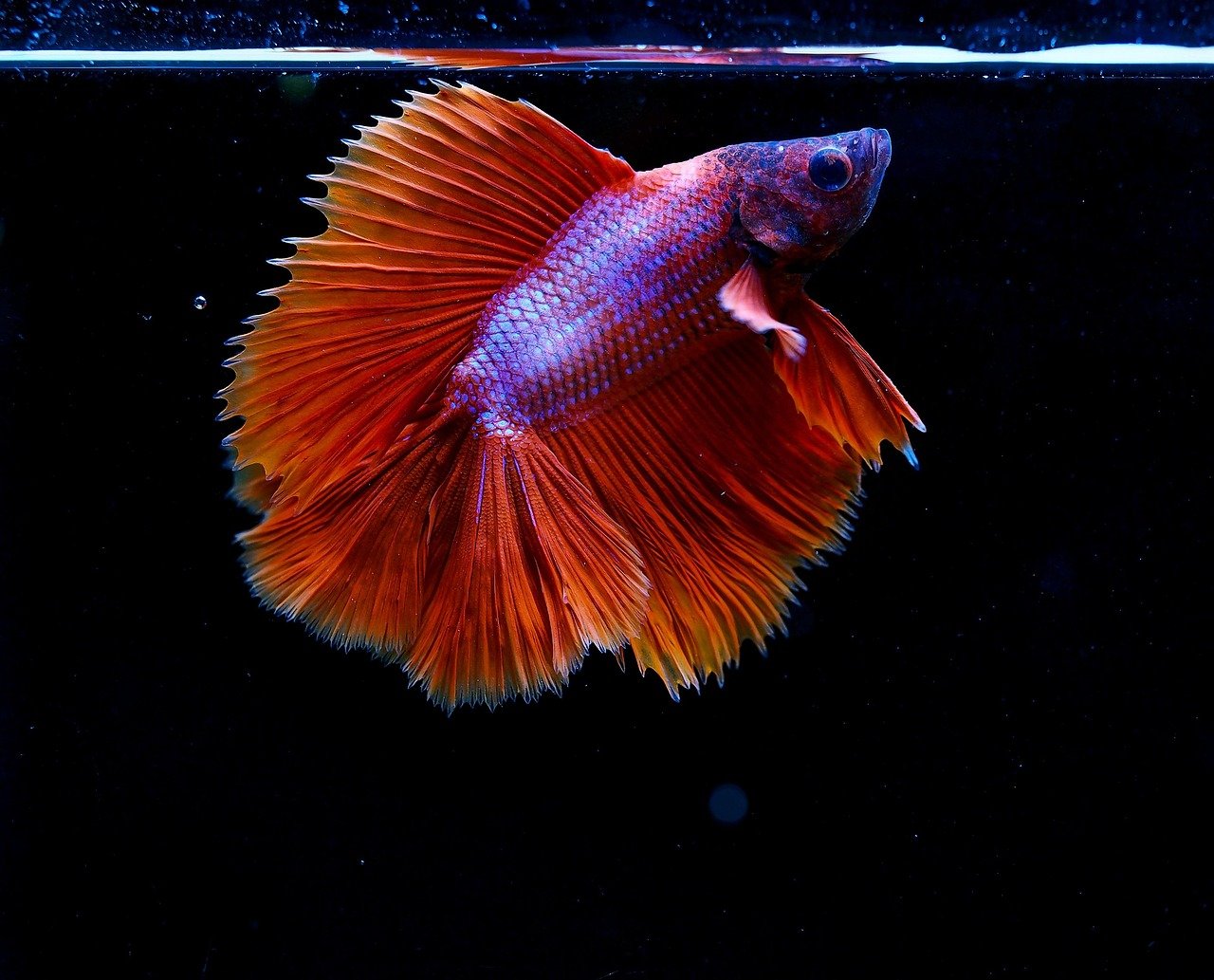
Commercial betta pellets usually sit somewhere in the range of 35 to 50 percent crude protein, though exact numbers vary by brand and there is no widely adopted nutrient standard specific to bettas. Formulations tend to follow general ornamental fish practice, so the label percentage is a starting point, not a guarantee of quality.
What matters more than a single number is the ingredient list. Fish meal, shrimp, krill, and insect meal are solid protein sources. Look for those near the top. A food with a long list of fillers and dyes tells you more about the packaging budget than the nutrition.
Floating versus sinking is a practical choice. Floating pellets let a surface feeder eat naturally and make it easy to scoop out what is not eaten. Sinking wafers are better suited to bottom dwellers and can vanish into gravel, where they rot. For a single betta in a small tank, floating is the simpler, cleaner option.
How Much and How Often Should You Feed a Betta?
Overfeeding is the single most common feeding error. A betta’s stomach is roughly the size of its eye, which is a useful mental image when a fish is acting like it has not eaten in a week.
A practical routine looks like this:
- Feed a small portion, about what the fish can eat in one to two minutes.
- Feed once or twice a day, not more.
- Remove anything still floating after a few minutes.
- Pick one day a week to skip feeding entirely, which gives the digestive system a rest.
Pellet counts help. For many adult bettas, two to four small pellets per meal is a reasonable starting point, adjusted for pellet size and the individual fish. A betta that looks bloated after a meal is being fed too much, not too little.
There is a real cost to overfeeding beyond a fat fish. Uneaten food breaks down and raises ammonia and nitrite, which is especially dangerous in small bowls or low-flow tanks where the water volume is tiny. A fish that seems fine after a big meal can crash days later when the water chemistry catches up.
Signs You Are Feeding the Right Amount
Bettas are not subtle. A well-fed betta has a gently rounded belly after eating and a flat profile between meals. It stays active, patrols the tank, and shows strong color. A fish that sits on the bottom, looks swollen around the midsection, or has stringy waste is often dealing with constipation or bloat from dry food eaten too fast.
Two habits help here. First, soak dry pellets in a little tank water for a minute before feeding. They soften and expand before they hit the fish instead of after. Second, treat freeze-dried foods the same way. Freeze-dried bloodworms are dry and expanded, and feeding them straight from the container is a common cause of digestive trouble. Rehydrate them first.
If a betta is already bloated, a day without food plus a small portion of a soft, wet food such as daphnia often helps. Persistent swelling is a different matter and worth a closer look.
The Best Types of Betta Food Compared
No single food covers everything. Most healthy bettas do best on a base of quality pellets with regular variety. Here is how the main categories stack up.
| Food type | Pros | Cons | Best use |
|---|---|---|---|
| Floating pellets | Complete nutrition, easy portion control, stays at the surface | Can be dry and expand in the stomach; quality varies widely | Daily staple |
| Frozen foods (bloodworms, brine shrimp, daphnia) | Highly palatable, close to natural diet, soft on the gut | Needs a freezer, thaws fast, messier | Two or three times a week |
| Live foods | Triggers natural hunting behavior, excellent for conditioning | Hard to store, disease risk if home-cultured poorly | Occasional treat or breeding prep |
| Freeze-dried foods | Convenient, long shelf life | Dry and buoyant, must be rehydrated | Occasional, always soaked first |
| Flakes | Cheap and easy | Messy, uneven portions, often lower protein | Emergency backup only |
The pattern is clear. Pellets do the daily work. Frozen and live foods add variety and help with picky eaters or fish being conditioned for breeding. Flakes tend to be the weakest link, mostly because they scatter and foul the water.
Anyone building a feeding routine around variety will recognize the same principle that applies to balancing flavors in a well-planned meal: a mix of textures and sources beats a single repetitive option. The same instinct that makes a good meal interesting makes a betta’s diet better.
Choosing a Quality Betta Food
Reading labels is the most underrated skill in fish keeping. A few checks do most of the work.
Look at the first three ingredients. Protein sources should dominate. “Fish meal” is fine; “corn gluten meal” as the lead ingredient is a warning sign. Watch for a named source rather than a vague category when possible.
Check the pellet size. Betta mouths are small. Oversized pellets get spat out, chewed, and spat out again, which clouds the water and wastes food. Small, soft pellets work better for most fish.
Avoid foods marketed purely on color. Ingredients that boost reds and blues can be useful, but they should not replace solid protein. A fish fed well on quality protein shows better color than one fed a mediocre food with color enhancers.
Buy small containers. A betta eats very little, and a large tub of pellets goes stale long before it is finished. Freshness matters more than bulk, which is the same logic behind choosing a lunch box that actually keeps food cold and leak free. Storage quality decides how good the food still is when it reaches the fish. (Takeout food near me find good food fast)
Common Feeding Mistakes to Avoid
A short list of habits that cause most betta feeding problems:
- Feeding on a schedule the fish demands. Bettas beg constantly. Begging is not hunger.
- Using a community flake food. Most are formulated for omnivores and are too low in protein and too high in fillers.
- Leaving uneaten food in the tank. Scoop it out. Every time.
- Feeding freeze-dried food dry. Soak it first.
- Feeding right before a water change or travel. Skip the meal instead; less waste in the water.
- Treating pellets as the whole diet. Variety is not optional for long-term health.
There is a broader lesson here about not wasting a meal on a bad choice. The same careful approach people use to find good food without wasting a meal applies to fish food: a little research up front saves a lot of waste later. Anyone who has ever compared options for good takeout food fast knows the difference a well-chosen pick makes. (Best thai food near me)
Feeding Bettas in Small Tanks and Bowls
Small water volume is unforgiving. A single uneaten pellet in a one-gallon bowl can push ammonia up faster than in a filtered ten-gallon tank. This is why feeding discipline matters more in small setups, not less.
If a betta lives in a small, unfiltered container, feed lighter portions and remove leftovers immediately. Better still, upgrade to a filtered tank with a gentle flow. Water quality and feeding are linked; you cannot out-feed poor filtration.
The same practical thinking applies when cleaning equipment between uses. A clean grill method that protects your food follows the same logic as rinsing feeding tools and thawing cups: contamination and residue cause problems long after the meal is over.
Special Cases: Fry, Picky Eaters, and Older Fish
Betta fry need different food than adults. They are too small for standard pellets and start on tiny live foods such as microworms or baby brine shrimp before graduating to crushed pellets. The same care that goes into choosing food for a growing kitten applies here: young animals need smaller portions, more frequent meals, and food sized to their mouths. (Thai food order balance flavors eat well)
Picky eaters often respond to variety. A betta that ignores pellets may chase a frozen bloodworm. Once it is eating reliably, mix pellets back in gradually.
Older bettas can slow down. Smaller meals, softer foods, and a little more patience go a long way.
Conclusion
Betta fish food is not complicated, but it is easy to get wrong. The fish is a carnivore and a surface feeder, so a quality floating pellet built on real protein is the right foundation. Feed small portions once or twice a day, scoop out what is not eaten, and add frozen or live foods for variety. Soak anything dry before it goes in the tank. Skip a day each week. Watch the belly, not the begging.
Do those things and the payoff is visible: better color, more energy, cleaner water, and a fish that lives closer to its full lifespan. The food is the easiest part of betta care to control, which makes it the smartest place to start.
Frequently Asked Questions
How many pellets should I feed my betta?
Most adult bettas do well on two to four small pellets per meal, once or twice a day. Pellet sizes vary, so judge by the fish: it should finish in a minute or two and show a gently rounded belly, not a swollen one. Adjust up or down based on body condition rather than a fixed count.
Can bettas eat regular fish flakes?
They can, but flakes are a poor staple. Most flake foods are formulated for omnivores, scatter quickly, and foul the water. Use flakes only as a backup when pellets run out, and choose a high-protein version if you must.
Do bettas need live food?
They do not need it, but they benefit from it. Live and frozen foods such as bloodworms, brine shrimp, and daphnia add variety, are highly palatable, and help with picky eaters or fish being conditioned for breeding. A quality pellet plus occasional frozen food covers most needs.
Why is my betta spitting out its food?
Spitting is normal behavior. Bettas often take a pellet, chew it, and spit it out before swallowing, especially if the pellet is too large or too hard. Try smaller pellets or soak them briefly first. A fish that spits out everything for days may be stressed or unwell.
How long can a betta go without food?
A healthy adult betta can go several days without food, and a one-day fast each week is a common, healthy practice. Beyond about a week, condition starts to decline. If you are traveling, it is safer to skip feeding than to leave extra food in the tank.
Should I feed freeze-dried bloodworms dry?
No. Freeze-dried foods should be soaked in tank water for a few minutes before feeding. They are dry and expand, and feeding them straight from the container is a common cause of bloating and digestive trouble in bettas.



