
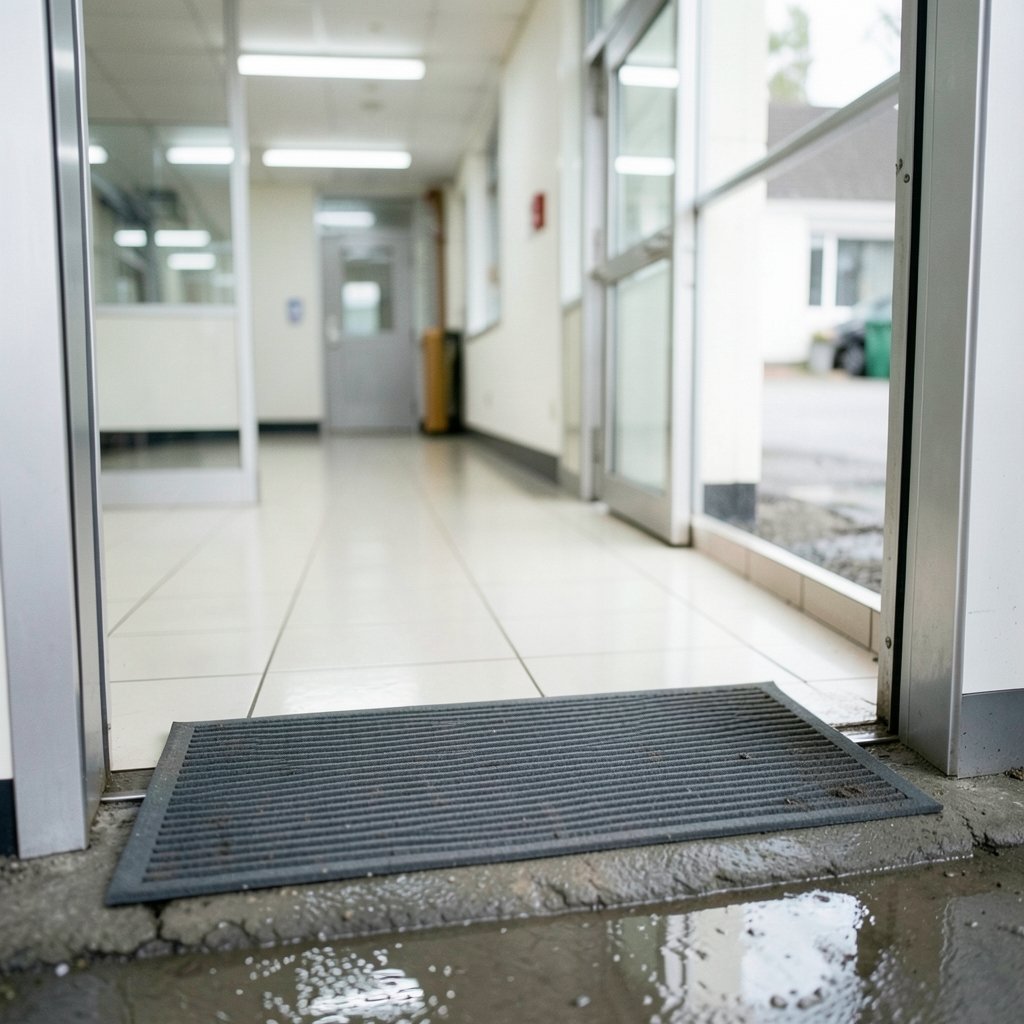
What happens to a building’s floors when a hundred people walk in from a rainstorm with wet shoes? Without a barrier at the door, that moisture travels across every hard surface, turning polished tile into a skating rink and carpet into a muddy sponge. Waterhog mats exist to stop that journey at the threshold. But the name gets thrown around loosely, and buying the wrong mat for the wrong spot wastes money and leaves the real problem unsolved. Here is a practical look at what these mats are, how they work, and how to choose and care for them.
What “Waterhog” Really Means
Waterhog is a trademarked brand name, not a generic product category. It belongs to a Tennessee-based manufacturer, Mountville Mills, and refers to a family of bi-level, rubber-backed entrance mats. The surface has raised ribs or a waffle pattern, with recessed channels sitting below foot level. Dirt and water get scraped off shoes and trapped down in those channels, away from the sole, so it doesn’t get tracked deeper into the building.
In everyday facility-management writing, though, people often use “waterhog mats” as shorthand for any bi-level scraper-wiper mat, branded or not. That’s worth knowing before you shop. If you ask a supplier for “waterhog mats,” you may get quotes for several different product lines. If you specifically want the branded product, say so. And if you just want the function, describe the function: bi-level, rubber-backed, scraper-wiper entrance matting.
This distinction matters for more than pedantry. Trademark law aside, the brand name tells you almost nothing about whether a specific mat suits your doorway. The design and placement do.
How Bi-Level Mats Trap Water and Dirt
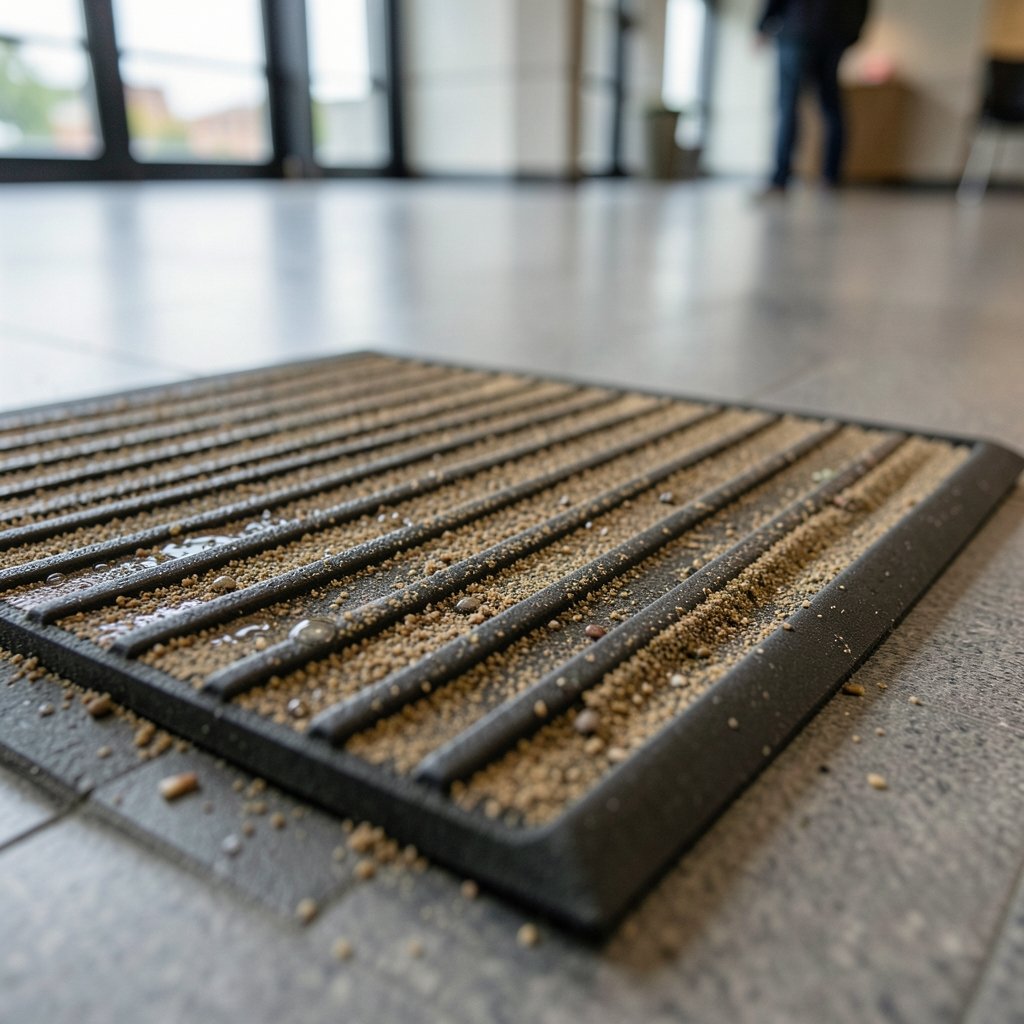
Think about what happens when someone walks in from the rain. Their soles carry a mix of water, grit, and whatever else was on the pavement. A flat mat absorbs some of it, but the moisture sits right at the surface, so the next step picks it back up.
A bi-level mat works differently. The raised ribs make contact with the shoe and scrape material loose. The recessed channels below hold that material in place. Water drains down and stays there rather than pooling on top. The result is a mat that keeps working even after it has absorbed a fair amount of moisture, which is exactly what a busy entrance needs. (Coffee makers without plastic water contact actually works)
Most of these mats pair a rubber or vinyl backing with polypropylene or nylon face yarns, and many use recycled rubber content. Exact composition varies by product line, so check the technical data sheet if recycled content or specific materials matter to your project.
Where Waterhog-Style Mats Belong in an Entrance System
Here is the mistake almost everyone makes: buying one mat and expecting it to handle everything. Entrance matting works as a system, typically laid out in three zones.
| Zone | Position | Job | Typical Mat Type |
|---|---|---|---|
| Zone 1 | Outdoors | Scrape off heavy grit, snow, and standing water | Coarse scraper mat or grating |
| Zone 2 | Just inside the door | Scrape and wipe; hold water below foot level | Bi-level scraper-wiper mat |
| Zone 3 | Further inside | Wipe remaining moisture from soles | Plush wiper mat |
Waterhog-style bi-level mats usually belong in Zone 2, the scraper-wiper position right inside the entrance. That’s where their raised ribs and recessed channels do the most good. Putting them outdoors exposes them to weather they weren’t designed for. Putting them in Zone 3 wastes their scraping ability when a softer wiper mat would finish the job better.
The zoning model also implies something people forget: length matters. A mat should be long enough that a person takes several steps on it. A single stride across a doormat barely touches the sole. Several steps give the mat time to do its work. If your doorway is short, consider whether the mat can extend into the space or whether you need a different configuration.
Why the Placement Decision Is a Safety Decision
Slip-and-fall incidents are among the most common workplace injuries, and wet floors are a leading contributor. In the United States, the Occupational Safety and Health Administration treats walking-working surfaces and housekeeping as core safety requirements under 29 CFR 1910 Subpart D, which covers keeping floors dry and clean. Entrance matting is one of the simplest controls available: it removes moisture at the source instead of waiting to mop it up later.
Accessibility adds another layer. The 2010 ADA Standards for Accessible Design require floor surfaces to be firm, stable, and slip-resistant, and they set limits on changes in level. A thick, curled, or poorly secured mat can become a trip hazard or create a level change that violates those limits. In practice, that means:
- Choose mats with beveled edges or ramped borders where the mat meets the floor.
- Make sure the mat lies flat and doesn’t slide. A rubber backing helps, but edges still curl over time.
- Check the mat’s thickness against any level-change limits that apply to your space.
- Inspect regularly. A mat that has lost its grip is worse than no mat at all.
Slip resistance itself is usually discussed in terms of coefficient of friction (COF), and testing methods vary. ASTM International publishes pendulum and tribometer standards for floor and footwear slip resistance, but which specific standard a given mat manufacturer cites is not always clear. If slip resistance is a formal requirement for your facility, ask the supplier which standard and test result they’re relying on, and check that the standard is current.
Choosing the Right Mat: A Practical Checklist
Before buying, work through these questions. They’ll save you from the most common buying mistakes.
- Where will it go? Confirm the zone. Zone 2 is the sweet spot for bi-level mats; other zones need different products.
- How much traffic? A small office lobby and a hospital entrance have very different demands. Higher traffic means heavier-duty matting and more frequent cleaning.
- How long can the mat be? Measure the space and aim for several steps of coverage. If you can’t get the length, adjust expectations.
- What’s the backing? Rubber backing grips better and holds up to washing. Check whether the backing is smooth or textured and how it interacts with your floor.
- Are edges beveled? Ramped edges reduce trip risk and help carts and wheelchairs roll over smoothly.
- What’s the cleaning plan? A mat that can’t be cleaned easily becomes a dirt reservoir. Confirm whether it can be vacuumed, hosed down, or machine-washed.
- Does it meet accessibility needs? Check thickness and edge design against the level-change limits that apply to your building.
- Is the brand claim accurate? If you need the branded product, verify it. If you need the function, describe the function.
One more practical tip: don’t oversize the mat into a walkway where people will trip on it, and don’t undersize it into a token doormat. Both failures are common, and both are avoidable with a tape measure.
Cleaning and Maintenance That Actually Works
Entrance mats fail in predictable ways. They get saturated, they get clogged with fine grit, and their edges curl. Regular care prevents all three. (Water succulents so they thrive not rot)
Vacuum bi-level mats frequently. The recessed channels collect fine dust and grit that a quick shake won’t remove. A vacuum with a brush attachment lifts material out of the channels rather than pushing it deeper. High-traffic entrances may need daily vacuuming.
Wash periodically. Many rubber-backed mats can be hosed down or machine-washed according to the manufacturer’s instructions. Check the care label before you commit. Hot water and harsh chemicals can degrade some backings, and a mat that’s still wet when it goes back down is a slip hazard in itself. Dry it thoroughly before returning it to service.
Watch the edges. Curled edges are the most common failure point and the most common trip hazard. If a mat won’t lie flat after cleaning, it may be time to replace it.
Rotate and inspect. If one area of the mat takes more wear, rotating it can extend its life. Regular inspection catches problems before someone gets hurt.
If your building also deals with moisture elsewhere, the same logic applies: catch the water early. That’s the principle behind placing a water leak sensor under a washing machine, where the right position determines whether you catch a slow leak before it spreads.
Common Mistakes People Make
The single biggest mistake is treating one mat as a complete solution. A bi-level mat in Zone 2 does its job well, but it can’t compensate for a missing outdoor scraper or an absent interior wiper. The system works together.
The second mistake is skipping maintenance. A saturated mat stops trapping water and starts releasing it. If the mat squelches when you walk on it, it’s overdue for cleaning.
The third is ignoring the edges and thickness. A mat that curls or creates a level change is a liability, not a safety feature. Beveled edges and flat installation matter more than most buyers expect.
The fourth is buying on brand name alone. The branded product is well known, but the function is what you’re paying for. Confirm the design, the backing, the size, and the care requirements before you commit.
Matching the Mat to the Mess
Different entrances bring different problems, and the mat should match the mess. A rainy climate means more water volume, so drainage and channel capacity matter most. A snowy climate brings salt and grit, which need aggressive scraping in Zone 1 and thorough cleaning of whatever the boots carry inside. A dry, dusty environment is less about water and more about fine particulate, which means frequent vacuuming and a mat that releases dirt easily.
The same matching principle shows up in other household decisions. People choosing a humidifier for hard water have to think about mineral dust, and the fix depends on understanding what the water carries. Entrance matting works the same way: understand what’s coming through the door, then choose the tool that handles it.
Conclusion
Waterhog mats are a specific branded product, but the idea behind them is what matters: a bi-level surface that scrapes dirt and traps water below foot level, placed in the scraper-wiper zone of a properly designed entrance system. Get the zone right, size the mat for several steps, choose beveled edges and a grippy backing, and keep it clean. Those choices do more for safety and floor protection than any brand name ever could. The mat at the door is the first line of defense for the whole building, and it deserves more thought than a last-minute purchase.
Frequently Asked Questions
Is Waterhog a brand or a type of mat?
It’s a brand name owned by Mountville Mills, used for a family of bi-level, rubber-backed entrance mats. In everyday use, people often apply the term to any similar scraper-wiper mat, but strictly speaking it’s a trademark rather than a generic category.
Where should a bi-level entrance mat be placed?
Usually just inside the door, in what’s called the scraper-wiper zone. That’s where the raised ribs and recessed channels can scrape material off shoes and hold water below foot level. Outdoor scraping and interior wiping are handled by different mat types in a complete system.
How long should an entrance mat be?
Long enough that a person takes several steps on it. A single stride barely contacts the sole, so a short mat does little. Measure your space and aim for multi-step coverage where possible, and consider a different configuration if the doorway is too short.
Can Waterhog-style mats go outdoors?
They’re generally designed for indoor use in the scraper-wiper position. Outdoors, you want a coarser scraper mat or grating that handles heavy grit, snow, and standing water. Using an indoor mat outside exposes it to conditions it wasn’t built for and shortens its life.
How do you clean a bi-level entrance mat?
Vacuum frequently with a brush attachment to pull grit out of the channels, then wash periodically according to the manufacturer’s instructions. Dry it thoroughly before putting it back down, since a wet mat is a slip hazard. Check the edges for curling and replace the mat if it won’t lie flat.
Do these mats help with slip-and-fall safety?
Yes, by removing moisture at the door instead of letting it spread across hard floors. Walking-working surface rules and accessibility standards both point toward keeping floors dry and avoiding trip hazards. Beveled edges, flat installation, and regular inspection are essential to getting that benefit.



