
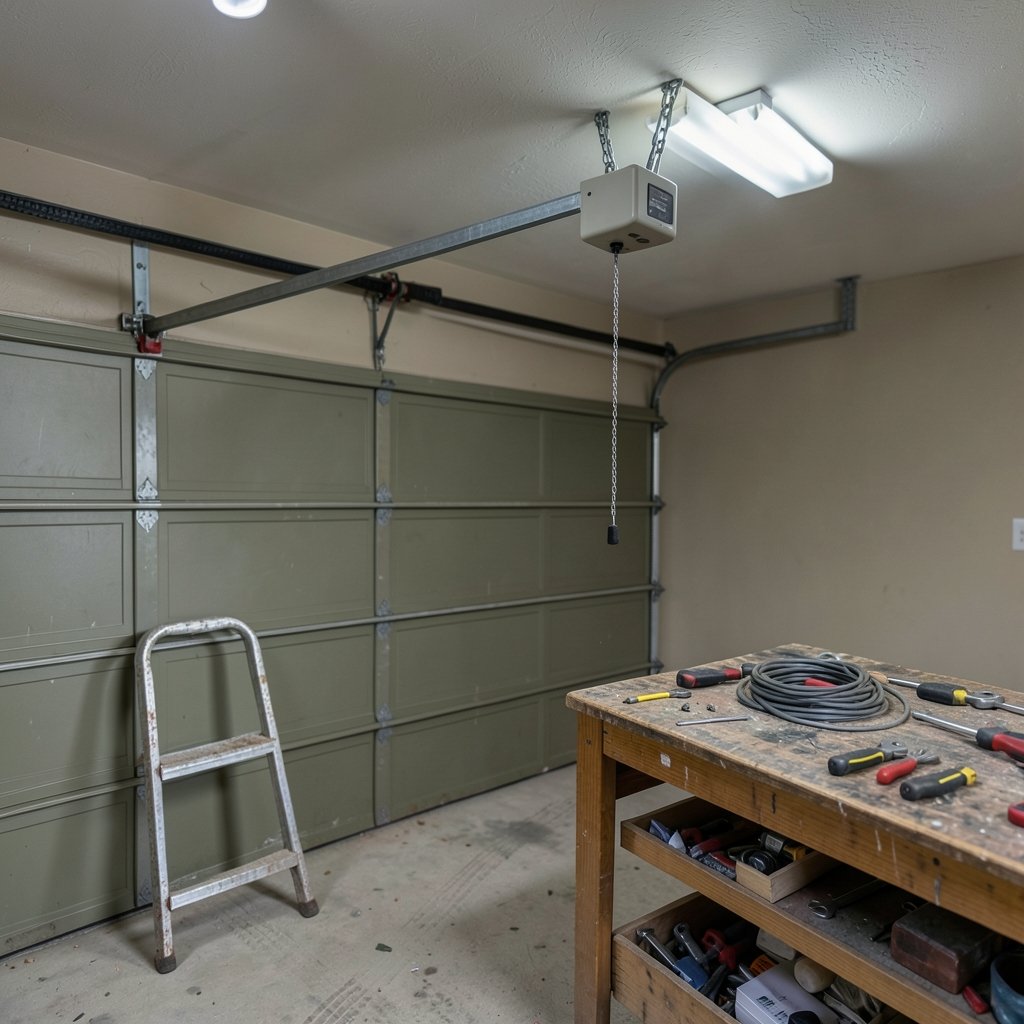
What happens when the button on your wall does nothing, the door stays shut, and your car is trapped inside? If the opener above your head says Craftsman, the answer depends on which era of that brand you own. Some Craftsman units are simple, tough, and easy to keep alive. Others sit at the center of a confusing parts and support picture that has shifted a lot since the brand changed hands.
This guide walks through the Craftsman garage door opener story in plain terms: who actually built these units, why remote compatibility trips people up, what safety rules apply, and how to decide between repair and replacement.
Who Actually Made Craftsman Garage Door Openers?
Craftsman is a tool and hardware brand long tied to Sears. That history matters because Sears rarely built openers itself. For decades, the company contracted outside manufacturers, and the biggest name in that story is The Chamberlain Group, the parent of the Chamberlain and LiftMaster brands.
The practical takeaway: many Craftsman openers are close cousins of Chamberlain or LiftMaster units from the same years. That is good news for parts hunting, because a motor, gear, or logic board that fits the Chamberlain equivalent often fits the Craftsman version too. It is also why the model number on the nameplate matters more than the brand name on the housing. A photo of the label beats a guess every time.
Ownership changed in a big way in 2017, when Stanley Black & Decker bought the Craftsman brand from Sears. That sale reshaped how the name is licensed and supported. Sears’ bankruptcy filing in October 2018 added another layer of uncertainty. Owners who once called a Sears parts line now often find themselves sourcing through Chamberlain-compatible channels or third-party suppliers instead.
The Rolling Code Story: Why Your Old Remote Won’t Work
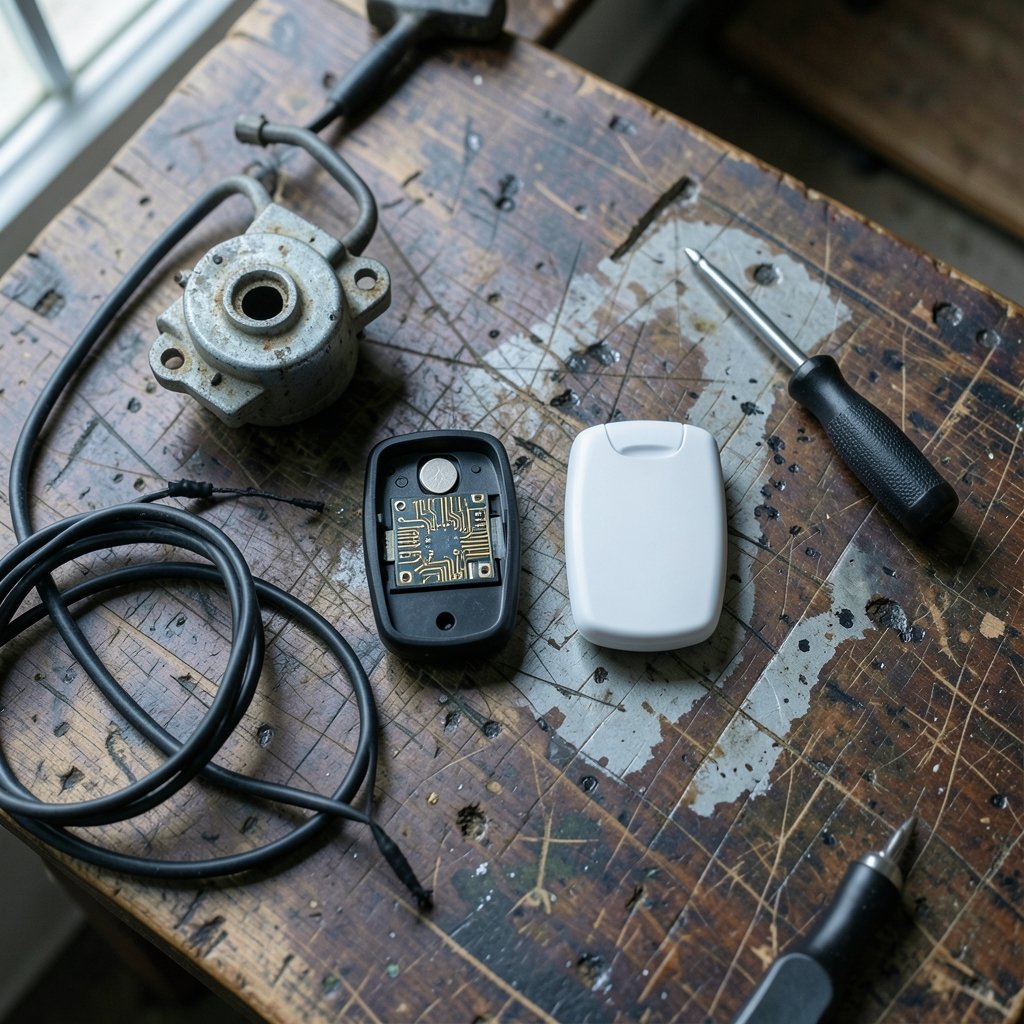
The single most common frustration with older Craftsman openers is the remote. Here is the short version of a long technical history.
Early openers used fixed codes or physical dip switches. The remote sent the same signal every time, and anyone who captured that signal could replay it. Roughly through the 1980s, this was normal across the industry.
Then came rolling code technology, which changes the code with every press so a captured signal goes stale. Chamberlain introduced its Security+ rolling-code line in the 1990s, and Craftsman units of that era used the same approach under Sears branding. Exact introduction years vary by product line, so treat any single date with caution.
Later came Security+ 2.0, introduced around 2011. This is the part that catches people: Security+ 2.0 is not backward-compatible with original Security+ remotes. A Craftsman opener from the 2010s may use either protocol depending on the model year. Buying a replacement remote online without checking is how people end up making three trips to the hardware store.
A quick compatibility checklist before you buy any remote:
| What to check | Where to find it | Why it matters |
|---|---|---|
| Model number | Nameplate on the motor unit or under the light lens | Narrows the protocol and parts family |
| Learn button color | On the motor housing near the antenna wire | Color often signals which remote family fits |
| Manufacture date | Nameplate or serial sticker | Separates older and newer protocol eras |
| Number of buttons needed | Your own count | Multi-button remotes can run several doors |
If your opener predates rolling code entirely, a modern universal receiver plus a new remote is often cheaper than chasing vintage parts. That upgrade also closes a real security gap, since fixed-code openers are vulnerable to code grabbing.
Safety Rules Every Craftsman Owner Should Know
Garage door openers sold in the United States must comply with UL 325, the standard covering entrapment protection for door, drapery, gate, and window operators. The piece most homeowners recognize is the photoelectric eye: the pair of sensors near the floor that reverses the door when something breaks the beam. Federal law required these eyes starting in 1993.
Two practical points follow from that.
First, if your Craftsman opener is older than the eye requirement, it is running without the safety feature that modern standards treat as basic. That alone is a strong argument for replacement, not repair. A door that closes on a child or a pet is not a risk worth carrying to save a few hundred dollars.
Second, the eyes fail more often than the motor does. Before you assume the opener is dying, look at the sensors. A cobweb, a bumped bracket, or a sunbeam hitting the receiving eye can stop a door cold. Straighten the brackets, wipe the lenses, and check that the indicator lights on both units are solid rather than blinking. Many “dead opener” service calls end right there.
If the door still misbehaves, a professional diagnosis is usually faster than guesswork. Finding someone reliable matters, and this guide to garage door repair near me find trustworthy pro fast covers how to vet a technician before they touch your springs or tracks.
Battery Backup, California, and Modern Requirements
California’s SB 969, effective July 1, 2019, requires battery backup on newly installed garage door openers in the state. The point is simple: during a power outage, you should still be able to get your car out. Whether a specific Craftsman model includes battery backup depends on the model and when it was installed, so check the manual or the unit itself rather than assuming.
For owners outside California, battery backup is optional but worth considering, especially in areas with wildfire shutoffs or storm outages. A dead opener during a blackout means pulling the manual release, and that cord is not always easy to reach with a car parked close to the door.
Repair or Replace? A Decision Framework
Craftsman openers can last a long time, but they do not last forever. Use this rough guide to sort the decision.
| Situation | Lean toward repair | Lean toward replace |
|---|---|---|
| Age | Under 10 years | 15 years or more |
| Safety features | Has working photoelectric eyes | No eyes or non-working eyes |
| Parts availability | Chamberlain-compatible parts exist | Parts discontinued or unclear |
| Noise and smoothness | One noisy component | Grinding, jerking, repeated reversals |
| Smart features | Not wanted | Wanted, including app control |
| Repair cost | Well under half of new unit installed | Approaching half or more |
A few rules of thumb from the field: a single failed gear or capacitor is a cheap fix on a solid unit. A failed logic board on a 20-year-old opener with no parts path is not. And if the door itself is heavy, unbalanced, or jumps its track, stop running the opener. The door is the problem, not the motor, and forcing it invites a spring failure.
Smart Home Upgrades That Work With Older Openers
You do not have to replace a working Craftsman opener to get app control. A universal smart controller wired to the wall button terminals can add phone control and scheduling to many older units. The catch is compatibility: some controllers need a specific terminal layout or a rolling-code bridge, and a few older units simply will not cooperate.
Security is the other half of the upgrade. If your entry doors still use basic hardware, the same era of technology applies there. A look at what makes smart locks safe actually protects your front door explains the encryption and access-log features that separate a real upgrade from a gadget. Owners planning a full smart entry setup often pair a garage controller with a lock, and it helps to know that best smart locks 2026 actually keeps your door secure reviews tend to focus on the same handful of standards.
One installation detail trips up more people than any other: measuring before you buy. A lock that does not match your door’s bore holes is a return-trip waiting to happen, which is why it pays to measure door backset smart lock avoid return trip before ordering. Narrow frames bring their own limits, and this piece on smart locks narrow door frames actually fits works covers the models that squeeze in where others will not.
If an electric vehicle shares the garage, the opener is not the only thing drawing power. Choosing a charger that fits your panel and your parking layout is its own project, and this guide to the best home ev chargers 2026 actually works your garage walks through the practical side.
Common Mistakes Owners Make
A short list of errors that show up again and again:
- Buying a remote by brand name only. The model number and learn button color decide compatibility, not the Craftsman logo.
- Ignoring the safety eyes. A blinking sensor light is a message, not a nuisance. Fix it before you adjust force settings.
- Cranking up the force adjustment. Turning up force to push past a binding door masks a mechanical problem and stresses the motor.
- Skipping the manual release check. That cord should pull freely. If it does not, the door or the opener needs attention.
- Letting pests settle in. Insects and debris around the sensors and tracks cause a surprising share of false failures, and the fix starts with finding the source, as this guide on how to get rid flies find source then shut door explains.
- Forgetting the insulation question. A garage that bakes in summer and freezes in winter makes the opener work harder, and insulation choices deserve a clear-eyed look, including whether garage door insulation actually works wastes money in your climate.
Keeping a Craftsman Opener Running
Maintenance is unglamorous and effective. Lubricate the door’s rollers, hinges, and springs with a proper garage door lubricant, not WD-40, a couple of times a year. Wipe the safety eye lenses monthly. Test the reverse feature by placing a roll of paper towels in the door’s path. Tighten the track bolts that vibrate loose. Listen for changes: a new rattle or a slower start is information.
Keep the manual, or download one using the model number, and write the model number inside the wall button cover for future reference. When a part does fail, search by that number plus “Chamberlain compatible” before assuming the part is gone forever.
Conclusion
A Craftsman garage door opener is often a solid piece of hardware wrapped in a complicated brand history. The name passed from Sears to Stanley Black & Decker in 2017, Sears’ 2018 bankruptcy scrambled parts support, and the units themselves were largely built by Chamberlain, which is why cross-compatible parts remain the owner’s best friend. Check the model number, respect the safety eyes, match the remote protocol, and weigh repair against replacement with clear eyes. Do that, and a Craftsman opener can keep earning its place above your car for years.
Frequently Asked Questions
Who makes Craftsman garage door openers?
Historically, The Chamberlain Group built most Craftsman openers for Sears, which is why many models share parts and remotes with Chamberlain and LiftMaster units from the same years. The Craftsman brand itself moved to Stanley Black & Decker in 2017, and licensing arrangements have changed since then, so verify current production details with the seller rather than assuming.
Why won’t my new remote work with my Craftsman opener?
The most likely cause is a protocol mismatch. Openers from around 2011 onward may use Security+ 2.0, which is not backward-compatible with original Security+ remotes. Check the model number and the color of the learn button on the motor housing, then match the remote to that family before buying.
How do I know if my Craftsman opener has rolling code security?
Look at the remote and the learn button. Dip switches on the remote mean a fixed-code system from the 1980s or earlier. A learn button with no dip switches points to rolling code, and the button color helps identify which generation. Fixed-code units are vulnerable to code grabbing and are good candidates for a receiver upgrade.
Are old Craftsman openers safe to keep using?
Safety depends on the features, not the badge. Openers without working photoelectric eyes predate the 1993 federal requirement and should be replaced or retrofitted. If your unit has functioning eyes and reverses properly when tested, age alone is not a reason to panic, though units past 15 years deserve a professional inspection.
Does my Craftsman opener need a battery backup?
California requires battery backup on newly installed openers under SB 969, effective July 1, 2019. Elsewhere it is optional. Whether a specific Craftsman model has it depends on the model and installation date, so check the manual or the unit itself.
Should I repair or replace a Craftsman opener?
Repair makes sense on a unit under about 10 years old when the fault is a single component and compatible parts exist. Replace when the opener lacks safety eyes, is 15 years or older, needs an expensive board with no parts path, or when repair cost approaches half the price of a new installed unit.



