
Quick Answer: What should I check before paying for gaming handhelds?
Before paying for a gaming handheld, confirm the real-world battery runtime, the charging standard and required wattage, and the warranty and statutory return rights in your country. Those three items decide whether the device fits your daily play habits and whether you have recourse if something fails.
Handhelds differ far more than their spec sheets suggest. A Windows-based device and an Android streaming handheld can look similar in photos but behave nothing alike in updates, repairability, and software support.
Check battery capacity in watt-hours, measured runtime at your brightness, the USB Power Delivery profile, storage type and expandability, display nits and refresh rate, the update policy, the regional model and import duties, and the return window with any restocking fees.
Why Handheld Buyers Get Burned So Often
Ever noticed how every handheld launch trailer shows a gorgeous screen, a smooth frame rate, and a battery bar that never seems to drop? That is marketing, and it works. The problem is that a gaming handheld is a small computer with a battery, a screen, and a cooling system squeezed into a plastic shell. Every compromise hides somewhere, and the spec sheet rarely tells you where.
The practical result is a wave of buyers who love a device for a week and then discover the charger from their phone tops it up at a crawl, the sticks drift after eight months, or the seller is in another region and the warranty is effectively useless. None of that is exotic. It is the normal outcome of buying on hype instead of a checklist.
This guide is that checklist. It covers what actually matters, where the fine print hides, and which mistakes are so common that they are practically a rite of passage. The same discipline applies to other gadget purchases too, as anyone comparing AI chatbot lifetime deals buyers should actually check quickly learns.
Battery Capacity and Real Runtime
Battery claims are where handheld marketing is most creative. Runtime figures are usually measured at low screen brightness, with Wi-Fi off, running a lightweight game. Your reality involves higher brightness, a demanding title, and Bluetooth headphones.
Compare devices by watt-hours, not milliamp-hours. Watt-hours account for voltage, so they let you compare a 7-inch handheld against a smaller one fairly. A device with a bigger mAh number but a lower cell voltage can hold less actual energy.
Then look for independent runtime tests at brightness levels you would actually use. A reviewer measuring 90 minutes in a demanding game at 70 percent brightness tells you more than any official number. If a device claims eight hours, assume that means a puzzle game at minimum brightness until proven otherwise.
Practical tip: think about your longest typical session without a wall outlet. A commute is 40 minutes. A long flight is six hours. Those are very different requirements, and only one of them needs a battery bank in your bag.
Charging Standards and the Charger You Already Own
Most modern handhelds charge over USB Power Delivery, but support is often partial. A device might accept 65W through its bundled brick but negotiate only 18W with a generic phone charger. That means slow top-ups and, in some cases, a battery that drains while plugged in during heavy play.
Check three things: the maximum charging wattage, whether the device needs a specific PD profile to reach it, and whether the bundled charger is included or sold separately. Some models ship without one, which quietly adds to the real price.
Common mistake: assuming any USB-C cable will do. Cheap cables can be limited to 60W or lower and may not carry the data or power profile the handheld expects. A certified cable rated above the device’s maximum is cheap insurance.
If you are also weighing a headset, the same “check the fine print first” logic appears in our guide to best gaming headsets 2026 actually matters before you buy.
Warranty, Statutory Rights, and Regional Models
Here is where buyers get genuinely confused. A manufacturer warranty and your legal rights as a consumer are two different things, and marketing often blends them.
In the EU, the Sale of Goods Directive (EU) 2019/771 requires a minimum two-year legal guarantee for goods, meaning the seller must remedy faulty products. In the UK, the Consumer Rights Act 2015 gives you 30 days to reject faulty goods outright, with remedies extending further. In the US, warranties are largely contractual, shaped by the Magnuson–Moss Warranty Act of 1975. A common myth is that UK buyers get an automatic six-year guarantee. They do not. Six years in England and Wales is a limitation period for bringing a claim, not a promise that anything will be fixed for free that long.
The regional model matters just as much. An imported handheld may arrive with a charger plug for another country, different radio bands, and a warranty that only applies where it was sold. Customs and VAT can add a meaningful chunk to the price, and returns become expensive international shipping.
| Region | Minimum legal protection | Practical note |
|---|---|---|
| EU | 2-year legal guarantee | Seller is responsible, not the maker alone |
| UK | 30 days to reject faulty goods | Further remedies depend on circumstances |
| US | Contractual warranty terms | Read the written warranty closely |
Before paying, confirm the seller’s region, whether the warranty is honored locally, and who pays return shipping.
Repairability and Parts Availability
A handheld is a wear item. Sticks drift, batteries age, and storage fills up. Whether you can fix those things changes the total cost of ownership dramatically.
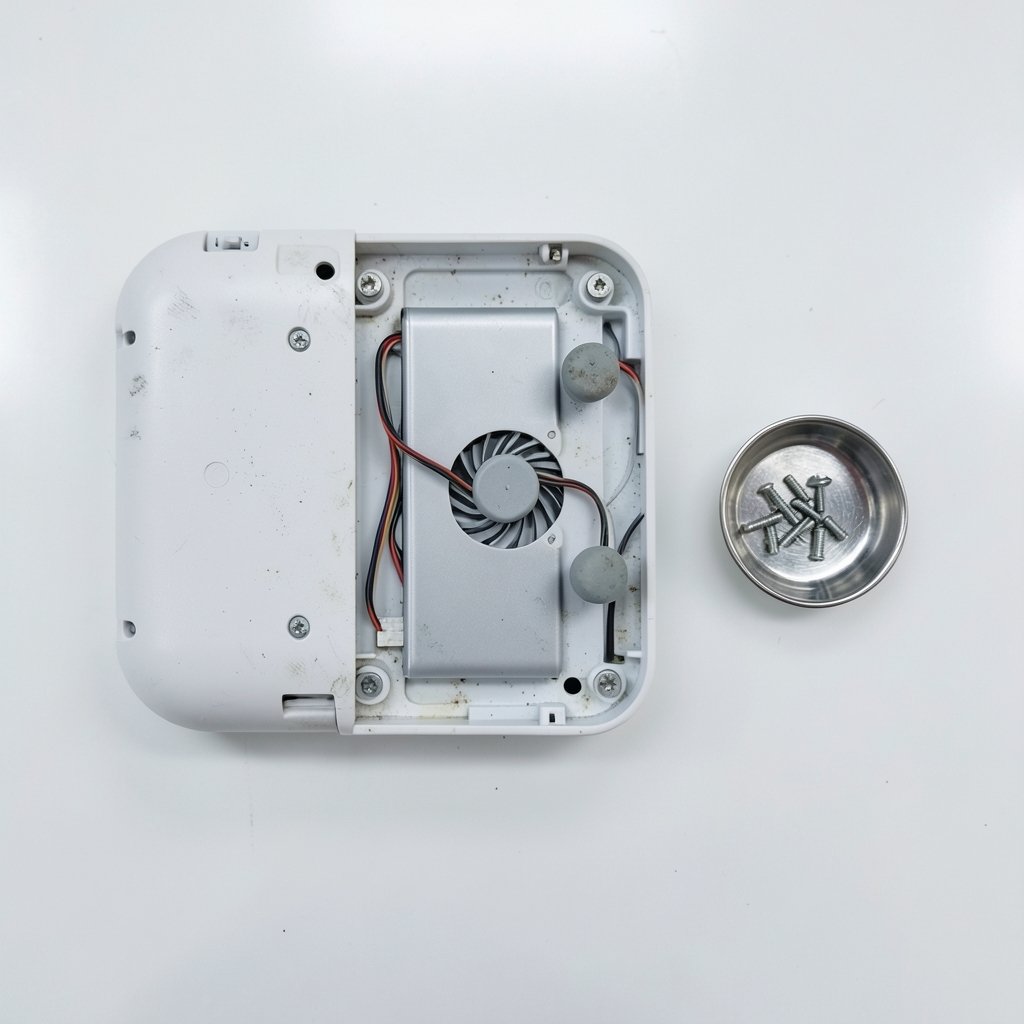
Check whether the battery, analog sticks, and storage are user-replaceable, and whether official parts are sold to the public. Some devices need only a screwdriver. Others are glued shut and require a heat gun and patience.
France’s repairability index has been mandatory since January 2021 for certain electronics, giving buyers a scored breakdown of how fixable a product is. Coverage across handheld consoles is inconsistent, so treat a missing score as unknown rather than good.
Practical approach: search for a teardown of the exact model before buying. Five minutes of watching someone open the shell tells you whether you are signing up for a hobby or a headache.
Storage, Display, and the Specs That Actually Matter
Storage type matters more than capacity. eMMC is slow and shows up in budget devices. UFS is faster. NVMe is fastest and typical of premium Windows handhelds. A 512GB eMMC drive can feel sluggish next to a 256GB NVMe one.
Check the microSD slot separately. Confirm the maximum supported card size and speed rating, and be skeptical of advertised maximums that no reviewer has tested. Slow cards are fine for indie games and miserable for large open worlds.
On the display, look past resolution. Check refresh rate, panel type (LCD versus OLED), brightness in nits, and whether variable refresh rate is supported. Brightness figures are often peak rather than sustained, so a 500-nit claim may translate to a dimmer experience outdoors.
The same caution applies across hardware categories. Buyers comparing processors face nearly identical spec-sheet games, as our breakdown of AMD vs Intel CPU check compatibility before upgrade 2027 shows.
Software Support and Update Policy
A handheld runs an operating system, and that system needs updates. Windows handhelds depend on vendor drivers, which can lag behind new game releases. Android handhelds depend on the maker for security patches. Linux-based devices depend on a community that may or may not stay interested.
Look for a stated commitment on OS and security updates, and check whether the vendor has a track record of shipping driver updates months after launch. Few companies publish firm end dates, which is itself informative.
Common mistake: buying a device for its launch-day performance and assuming it improves. Sometimes it does. Sometimes a driver update breaks sleep mode and nobody fixes it for a quarter.
Return Windows, Restocking Fees, and Import Costs
Return policies are contractual, not universal. Before paying, note the window length, the condition requirements, and whether a restocking fee applies. A 15 percent restocking fee on a $600 handheld is $90 to change your mind.
Bundle the total cost properly: device, tax, shipping, a charger if not included, a case, a screen protector, and a memory card. That number is the real price, and it is often 15 to 20 percent above the sticker.
If you are ordering across borders, check duties and VAT before checkout. Surprise fees at delivery are common and rarely refundable. The same pre-purchase skepticism pays off elsewhere, whether you are reading BMG money reviews borrowers should check before signing or planning around a 2026 2027 school calendar parents should check before booking anything non-refundable.
Benchmark Caveats and Per-Game Testing
Synthetic benchmarks and TDP figures do not predict frame rates in the games you play. They measure a workload nobody plays, under conditions nobody replicates.
Instead, find per-game tests at your target resolution and settings. Look for tests run after recent driver updates, since launch-day performance is often the worst a device will ever be. Pay attention to frame-time consistency rather than average frames per second alone. A steady 40 fps feels better than a jumpy 55.
Also check thermals and fan noise. A handheld that throttles after 20 minutes or sounds like a hairdryer on a plane is a different product from the one in the review video.
Conclusion
Buying a gaming handheld is a small research project, and the payoff is a device you keep happily for years instead of resenting by month three. The pattern is consistent: verify runtime at realistic brightness, confirm the charging profile, understand your legal rights and the seller’s region, check whether the battery and sticks are replaceable, and read per-game performance tests rather than headline benchmarks.
None of these checks takes long. Together they take maybe an hour. That hour is the difference between buying a handheld and buying a lesson.
FAQ
How long should a gaming handheld battery realistically last?
Expect roughly 1.5 to 4 hours in demanding games at moderate brightness, and considerably longer in light indie titles or streaming. Official figures usually assume low brightness and light load. If a manufacturer claims eight hours, treat that as a best-case scenario for undemanding software, and look for independent tests at brightness levels you would actually use.
Do I need the manufacturer’s charger, or will any USB-C charger work?
Any charger that supports the right USB Power Delivery profile will work, but slower chargers may only trickle power. Some handhelds need a specific wattage to charge at full speed or to avoid draining while plugged in during heavy play. Check the maximum charging wattage and whether a charger is included before assuming your phone brick is enough.
Is a manufacturer warranty the same as my legal consumer rights?
No. A manufacturer warranty is a voluntary commercial promise with its own terms and conditions. Statutory rights are set by law and typically sit with the seller. In the EU, a minimum two-year legal guarantee applies to goods. In the UK, the Consumer Rights Act 2015 gives 30 days to reject faulty goods. In the US, warranty terms are largely contractual.
Should I buy an imported handheld to save money?
Sometimes, but count the hidden costs first. Imported devices may lack a locally honored warranty, ship with a charger for another country, and support different radio bands. Customs duties and VAT can add a significant percentage, and returning a faulty unit means international shipping. Compare the landed total against a local purchase before deciding.
How can I tell if a handheld is repairable before buying?
Search for a teardown video of the exact model and look at three parts: the battery, the analog sticks, and the storage drive. If those are accessible with standard tools and official parts are sold, repairs are realistic. Glued shells and soldered components make long-term ownership more expensive. A repairability score, where one exists, is a useful shortcut but not universal.
Are benchmark scores a good way to compare two handhelds?
They are a rough starting point at best. Synthetic benchmarks measure workloads nobody plays, and TDP figures do not translate directly into frame rates. Look for per-game tests at your target resolution and settings, run after recent driver updates, and pay attention to frame-time consistency and thermal throttling over longer sessions.



