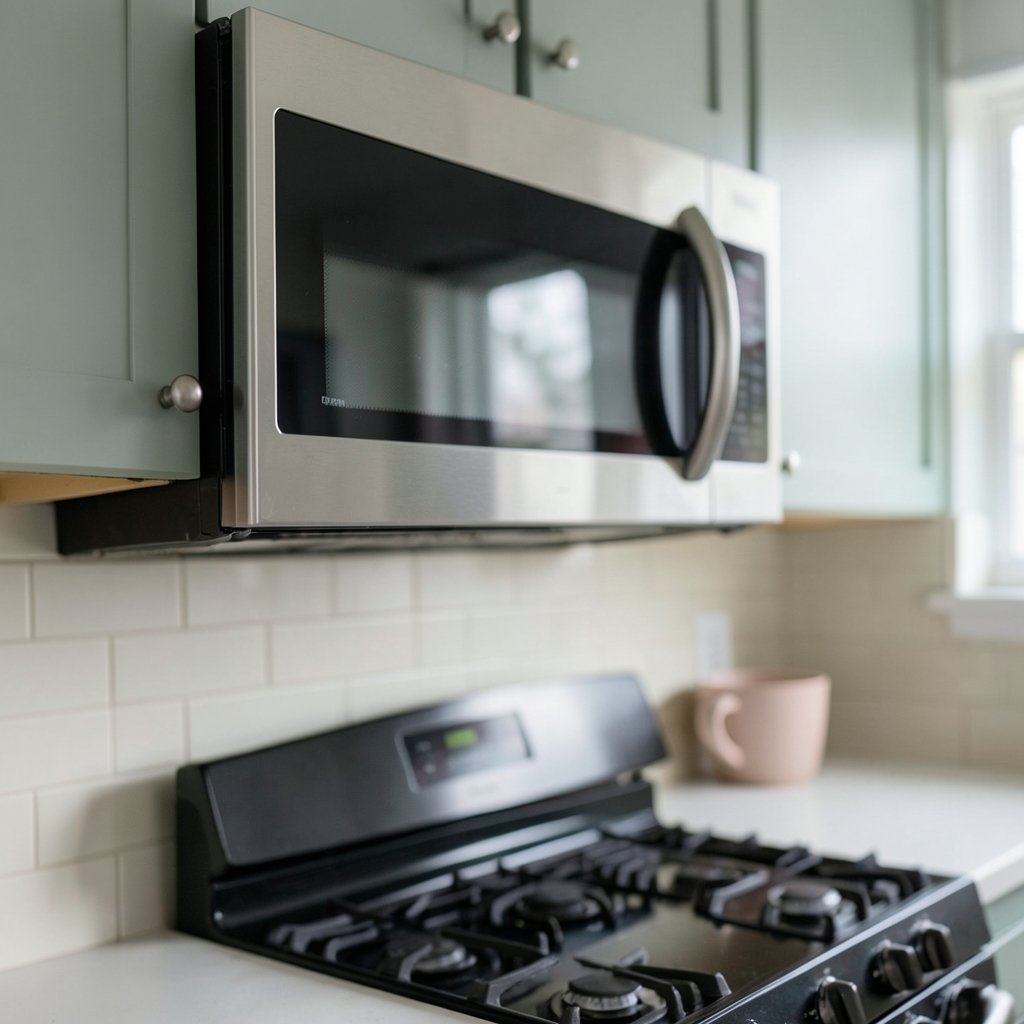
What if the most important appliance in your kitchen is the one you barely think about until it dies? That’s the above-range microwave. It handles reheating, defrosting, and popcorn duty, sure. But it also pulls double shifts as a range hood, sucking up smoke, grease, and steam while saving counter space you’d otherwise lose to a standalone unit. When it quits, the whole kitchen feels off. (Z wave long range vs z wave plus range mesh compatibility)
The trouble is that “best” means something different for every kitchen. A model that’s perfect for a vented suburban home with a 30-inch cabinet gap may be a frustrating mistake in a ductless apartment. This guide cuts through the spec-sheet noise and shows what actually matters, where shoppers go wrong, and how to pick a unit that fits your cooking habits and your cabinets.
Start With the Fit, Not the Features
Here’s the mistake that sinks more microwave purchases than any other: buying on features before confirming the fit. Above-range microwaves are built around a standard footprint, and if yours doesn’t match, you’re repacking a 60-pound box.
Most over-the-range (OTR) microwaves are 30 inches wide, matching standard 30-inch range hoods. That’s the sweet spot for the vast majority of kitchens. Wider 36-inch models exist but are far less common, so if you have a 36-inch opening, measure twice and expect a narrower selection. (Bitcoin stuck range fed midterms 2026 strategy that works)
Then there’s cabinet clearance. Installation typically requires specific clearance above the range and below the upper cabinets, and many installers work toward roughly 66 inches from the floor to the bottom of the microwave. That number is not universal. It varies by model and by local building code, so confirm it against the specific installation manual before you buy. Skipping this step is how people end up with a microwave that blocks cabinet doors or sits too close to the burners.
One practical tip from the install side: photograph your current setup, including the cabinet above, the wall behind, and the existing mounting plate, and bring those photos to the store. It saves arguments later.
Venting: The Decision That Changes Everything
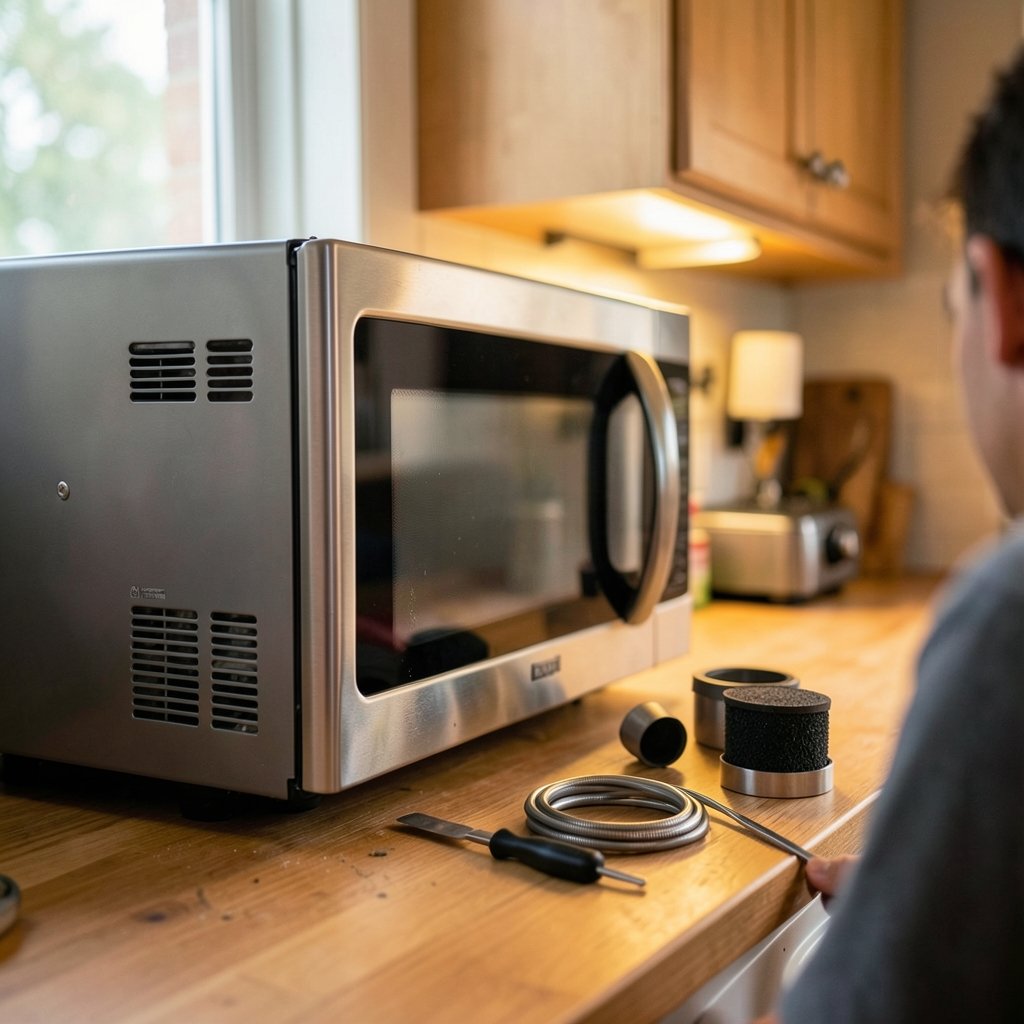
If you only research one thing, make it ventilation. An OTR microwave typically vents three ways: recirculating (ductless, using a charcoal filter), vertical ducted, or horizontal rear ducted. Each mode performs very differently, and a “best” pick for one setup can be genuinely poor for another.
| Venting Mode | How It Works | Best For | Trade-off |
|---|---|---|---|
| Recirculating | Filters air and blows it back into the room | Apartments and homes without exterior ducting | Less effective at removing smoke, moisture, and odors |
| Vertical ducted | Exhausts up through cabinets and the roof | Kitchens with overhead duct access | Requires ductwork and roof penetration |
| Horizontal rear ducted | Exhausts out the back wall | Kitchens with an exterior wall behind the range | Requires wall penetration and correct duct alignment |
Duct size matters too. Most OTR microwaves use a 3¼” x 10″ rectangular duct or a 6″ round duct for vented installation, though this varies by model, so confirm per unit. If your existing duct is a different size, you’ll need an adapter, and adapters can reduce airflow.
Recirculating mode is common in apartments without exterior ducting, and it’s fine for light cooking. But if you sear steaks, fry frequently, or wok-cook, a ducted setup is worth the effort. This is the same principle that makes people ask whether mesh wi-fi vs range extender which fixes weak signal better in networking: the answer depends entirely on the environment, not the marketing. Kitchen ventilation works the same way.
CFM, Noise, and the Specs That Actually Matter
Once fit and venting are settled, the spec sheet becomes useful. Here’s what to weigh.
CFM ratings. Vent fan ratings commonly range roughly 300 to 400 CFM on OTR microwaves. Higher CFM generally means better smoke and odor removal, but also more noise. Treat these figures as approximate, since ranges shift by model year.
Noise. Fan noise is often cited in sones or decibels, and lower is quieter. Here’s the catch: manufacturers report noise inconsistently, so cross-model comparison is unreliable. Two microwaves both claiming “quiet operation” may be measured under different conditions. The practical workaround is to listen in person if the store has a live display, or to read owner reviews that mention noise specifically during high-fan operation.
Power. Most OTR microwaves sit around 1,000 watts, with some reaching 1,100 to 1,200 watts. Wattage affects heating speed. Higher wattage is nice for leftovers, but it’s rarely the deciding factor in a purchase.
Electrical requirements. Most OTR microwaves require a dedicated 120 V, 15–20 A circuit. If you’re replacing an older unit, check the existing circuit. If you’re installing one where none existed, budget for an electrician.
Energy use. Checking certified product listings is a reliable way to compare standby power across models. Standby draw is small per unit, but it’s a fair tiebreaker between two otherwise equal machines.
Where Shoppers Go Wrong
A few recurring mistakes show up again and again in OTR microwave purchases. Each one is avoidable with five minutes of prep.
- Assuming the old unit’s dimensions match the new one. Mounting plates, vent positions, and depth vary. Measure the opening, the depth of the surrounding cabinets, and the distance to the range.
- Buying a ducted model for a ductless kitchen. If there’s no exterior vent, a ducted unit will either be installed in recirculating mode (wasting the feature you paid for) or require new ductwork.
- Ignoring the door swing and handle. A microwave that opens into a walkway or collides with a cabinet is a daily annoyance.
- Overlooking the filter. Charcoal filters (for recirculating setups) need periodic replacement. Grease filters need washing. Check how accessible they are.
- Skipping the recall check. Before buying, check federal recall listings for the specific model. It takes a minute and occasionally saves a headache.
- Forgetting the trim kit. Some installations call for a trim kit to close gaps between the microwave and cabinets. It’s a small cost that makes a big visual difference.
If you’re also shopping for a vehicle in the same season, the same principle applies: verify the details that matter to your situation rather than trusting a headline. Buyers researching range rover lease deals quickly learn that the advertised number rarely matches the final one, and microwave specs behave the same way.
Matching the Microwave to Your Cooking Style
The best above-range microwave isn’t the one with the longest feature list. It’s the one that fits how you actually cook. Here’s how different households should weight the decision.
| Cooking Style | Priority | Why |
|---|---|---|
| Light reheating, coffee, popcorn | Recirculating, mid-range CFM | Venting demands are low; simplicity wins |
| Daily family cooking, some frying | Ducted if possible, 300+ CFM | Grease and odor removal start to matter |
| Frequent searing, wok, or deep frying | Ducted, higher CFM, lower noise | Smoke volume is high; fan performance is critical |
| Small apartment, no ducting | Recirculating with quality charcoal filter | Practical constraints outweigh ideal setup |
| Remodel with new cabinets | Match width and clearance first | Fit determines everything downstream |
One underrated factor: sensor cooking and preset modes. These aren’t gimmicks for everyone, but for households that reheat a lot of leftovers, a good sensor reheat function reduces the guesswork. Similarly, a turntable versus flatbed design affects usable space. Turntables heat more evenly; flatbeds fit larger dishes. Neither is universally better.
Installation Realities Nobody Mentions
Even a well-chosen microwave can go sideways at install. A few things worth knowing before the delivery truck arrives.
The mounting plate must be anchored into studs or solid blocking. In older homes, the wall behind the range may not have convenient stud placement, and that can turn a one-hour job into an afternoon project. If you’re hiring an installer, confirm whether they handle wall anchoring and duct modification or just hang the unit.
Second, the exhaust damper and duct transition are common leak points. A poorly sealed transition sends grease-laden air into the cabinet cavity instead of outside. It’s invisible until the cabinets start feeling sticky.
Third, if you’re switching from recirculating to ducted (or the reverse), the unit usually needs to be reconfigured. Most models ship set up for one mode and require flipping a damper or removing a plate for the other. Read that part of the manual before mounting, not after.
Finally, check the electrical circuit early. A dedicated 120 V circuit is standard, but if the existing outlet is shared with other appliances, nuisance tripping is a real possibility during high-power use.
How to Compare Two Models Without Getting Fooled
When two microwaves look identical on paper, use this order of operations.
- Confirm width and clearance against your actual opening.
- Confirm venting mode compatibility with your kitchen.
- Compare CFM, then noise, then wattage.
- Check filter accessibility and replacement cost.
- Check the recall database for both models.
- Read owner reviews focused on fan noise and long-term reliability.
- Only then compare price and extras.
This sequence prevents the classic error of falling for a feature you’ll never use while missing a fit problem that will haunt you daily. The same discipline applies when comparing home networking gear: best wi fi routers 2026 actually delivers speed at range rewards readers who check real-world performance rather than spec sheets alone. Kitchens and routers both punish shoppers who trust the box.
Conclusion
The best above-range microwave is not a single model. It’s the one that matches your cabinet opening, your venting situation, and your cooking habits, in that order. Get the fit right, decide whether you’re ducted or recirculating, and only then start weighing CFM, noise, and wattage. Check recalls before you buy and read the installation manual before you mount.
Do that homework, and the appliance you barely think about will quietly do its double duty for a decade. Skip it, and you’ll be the person returning a 60-pound box to the store. The choice, as with most purchases, comes down to knowing your own kitchen before you know the product.
Frequently Asked Questions
What width are most above-range microwaves?
Most are 30 inches wide, matching standard 30-inch range hoods. Wider 36-inch models exist but are less common, so measure your opening before shopping.
Can an above-range microwave work without exterior ducting?
Yes. Recirculating mode filters air through a charcoal filter and blows it back into the room. It works for light cooking but is less effective at removing smoke, moisture, and odors than a ducted setup.
What CFM rating should I look for?
Vent fan ratings commonly range roughly 300 to 400 CFM. Higher CFM generally means better smoke removal but more noise. Treat these figures as approximate, since they shift by model year and aren’t standardized across brands.
How much clearance do I need above my range?
Installation typically requires specific clearance above the range and below the upper cabinets, and many installers work toward roughly 66 inches from floor to the bottom of the microwave. Confirm this against your model’s manual and local code, since it varies.
What electrical setup does an above-range microwave need?
Most require a dedicated 120 V, 15–20 A circuit. Check your existing circuit before buying, especially if you’re adding a microwave where none existed.
How do I check whether a microwave has been recalled?
Look up the specific model in federal recall listings before purchasing. It takes a minute and occasionally catches a safety issue before it reaches your kitchen.