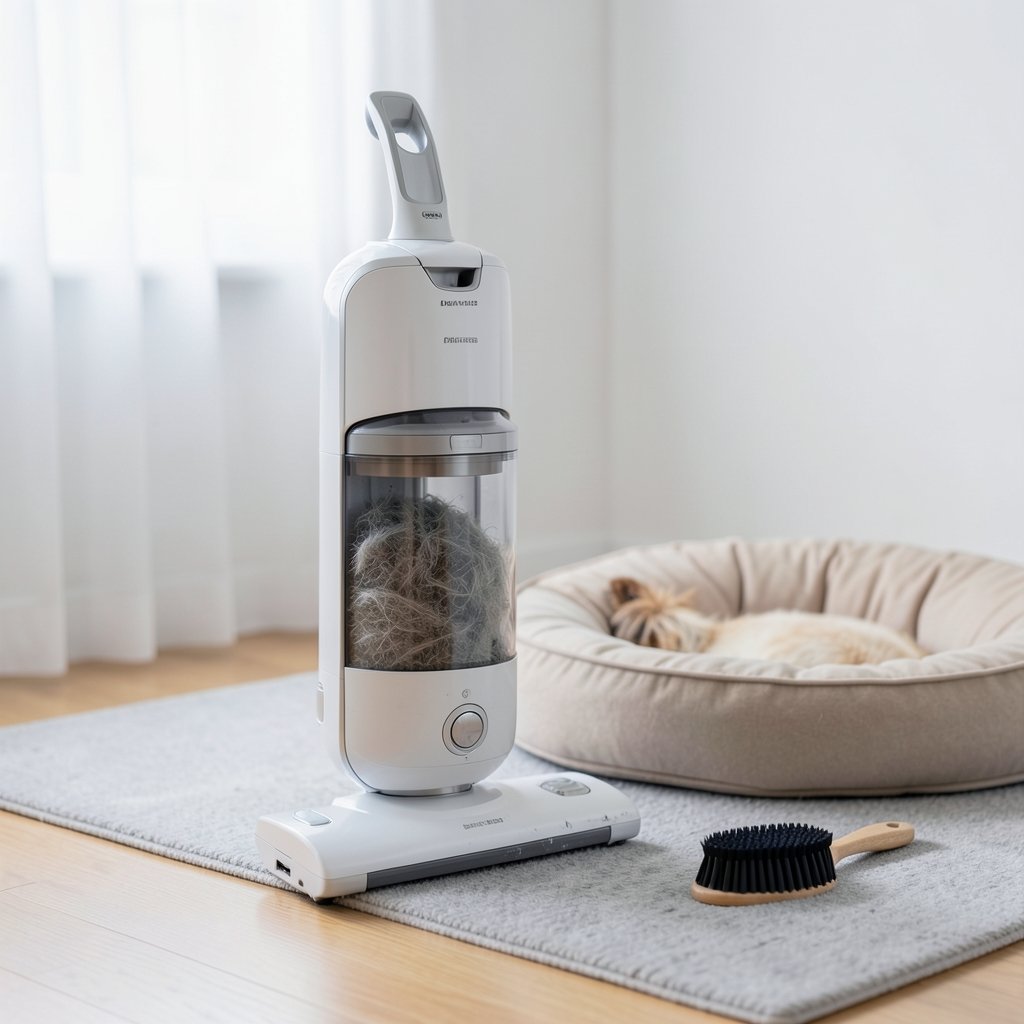
What good is a vacuum that chokes on the third pass across a shedding dog’s favorite rug? Pet owners know the routine: you finish vacuuming, empty a bin packed with grey fluff, then spot a fresh tumbleweed of hair drifting across the floor ten minutes later. The machine that survives this cycle month after month is not always the one with the biggest marketing budget. It is the one built with the right filtration, the right brush roll, and the right airflow for the mess pets create.
This guide explains what separates genuinely top-rated pet vacuums from the rest, how independent testing works, and where shoppers most often go wrong. No single model wins for every home, but the criteria below will point any pet owner toward a machine that earns its keep.
Why pet hair is a different cleaning problem
Pet hair is more than dirt with fur on it. It arrives in two forms that behave differently. Long strands wrap around brush rolls, clog filters, and tangle into ropes. Short, spiky hairs weave themselves into carpet fibers and resist light passes. Underneath both sits dander — tiny skin flakes that carry the proteins most people are actually allergic to.
Those proteins are the real long-term issue. Cat and dog allergens travel on dander and hair, settle into carpets and upholstery, and get stirred back into the air by foot traffic. Allergy guidance consistently treats frequent vacuuming of carpets and soft furnishings as a core part of keeping indoor allergen levels down. That reframes the purchase: a pet vacuum is partly a cleaning tool and partly an air-quality tool.
That dual role explains why filtration matters as much as suction. A machine that lifts hair off the floor but blows fine dust and dander back into the room has solved half the problem and created another.
What “top rated” should actually mean
Ratings are not handed down from on high. Independent test labs run standardized passes over carpet, bare floors, and pet-hair samples, then score pickup, emissions, noise, and handling. Those results are a far better basis for a buying decision than a retailer’s star average, which reflects delivery speed as often as cleaning power.
The catch is that rankings shift with every test cycle and model year. A machine that topped a list two years ago may have been replaced by a revised version with different internals. Treat any specific model name as a starting point, then check current independent results before buying.
| Test category | What it measures | Why pet owners should care |
|---|---|---|
| Carpet pickup | Deep-cleaning performance on embedded debris | Short pet hair burrows into pile |
| Bare-floor pickup | Handling of loose hair and kibble on hard floors | Hair scatters on tile and wood |
| Pet-hair test | Removal from carpet and upholstery | The headline number for this category |
| Emissions | Particles escaping back into the room | Directly affects allergy symptoms |
| Noise and handling | Real-world usability | Pets and stairs complicate everything |
| Durability and clogging | Performance after repeated use | Hair wrap kills weak designs |
A vacuum can score brilliantly on pickup and still disappoint if it clogs every few weeks. That is why repeat-use testing matters more for pet households than for anyone else.
Filtration: the spec that gets fudged most
HEPA is a defined standard, not a vibe. Certified HEPA filters capture at least 99.97% of particles at 0.3 micrometers. That number comes from a technical definition, and it only applies to filters that have actually been tested against it.
Here is where shoppers get burned. Labels reading “HEPA-type,” “HEPA-like,” or “HEPA-style” describe filters that may not meet the certified efficiency at all. The wording is legal in many markets and means very little. Look for a filter explicitly described as certified HEPA, and check whether the manufacturer names the standard it was tested against.
The second half of the equation is the seal. A perfect filter inside a leaky housing captures far less than its rating suggests, because air takes the easy path around the filter instead of through it. This is why whole-system sealing shows up as a test criterion in serious lab evaluations. Clips that feel flimsy, bags that seat loosely, and dust bins with worn gaskets all undermine an expensive filter.
Practical check: after a few minutes of vacuuming, run a hand along the machine’s seams and exhaust. A puff of warm, dusty air escaping anywhere other than the exhaust vent is a warning sign.
Brush rolls, airflow, and the tangle problem
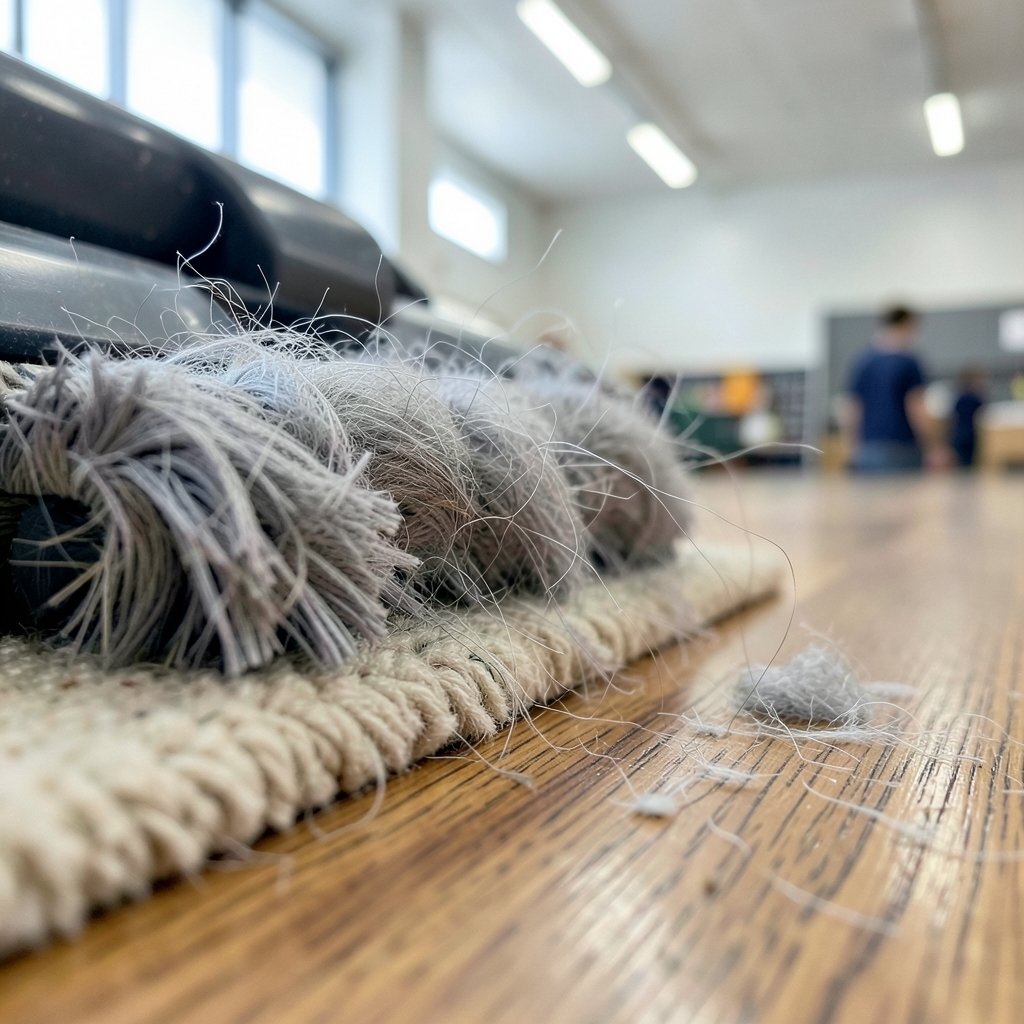
Hair wrap is the number one cause of pet-vacuum decline. Strands spiral around a spinning brush roll, pack down, and slowly strangle the bristles. Suction drops, the motor works harder, and eventually the belt complains.
Tangle-resistant brush rolls address this with combs, tapered geometry, or anti-wrap fins that flick hair into the bin before it binds. These designs have been common since the mid-2010s and genuinely reduce maintenance, though none eliminate it. Even the best anti-tangle roll needs a monthly inspection.
Airflow is the other half of pickup performance. Suction numbers printed on a box measure pressure, not movement. Hair needs volume of air to travel from carpet to bin. A machine with modest suction and excellent airflow often outperforms a high-suction model with a narrow, restrictive path.
For homes with long-haired pets, airflow and tangle resistance matter more than raw power. For homes with short, embedded hair, agitation at the brush roll does the heavy lifting.
Matching the machine type to the mess
There is no universal winner among uprights, canisters, and cordless models. Each is a trade-off, and the right pick depends on the floor plan.
| Type | Strengths | Weaknesses | Best for |
|---|---|---|---|
| Upright | Strong carpet agitation, large bins | Bulky on stairs, heavy | Wall-to-wall carpet with a big shedder |
| Canister | Reach, above-floor tools, easy stairs | Awkward to store, dragging body | Mixed floors, furniture, cars |
| Cordless stick | Grab-and-go convenience | Short runtime, small bins | Daily touch-ups between deep cleans |
| Robot | Hands-off maintenance runs | Limited deep-carpet power | Keeping hair from accumulating |
Many pet households end up with two machines: a corded workhorse for the weekly deep clean and something quick for daily hair patrol. A robot that runs while everyone is at work keeps the tumbleweeds from ever forming, which makes the weekly session far less grim. If that combination appeals, it is worth reading up on which robot vacuum and mop combos actually clean the floor rather than trusting the box claims.
Robots have their own quirks. Dark carpet can confuse cliff sensors and cause strange behavior, a known issue covered in this guide to robot vacuum cliff sensors failing on black carpet and what works. Long human hair is another common failure point, and the fixes in this piece on robot vacuums and long human hair that actually works apply to pet hair too.
Features that earn their price for pet owners
Some extras are gimmicks. Others change daily life with a shedding animal.
- Certified HEPA plus a sealed system. Non-negotiable for allergy households.
- A bin you can empty without touching the contents. Hair compacts into dense clumps that resist shaking out.
- Washable pre-motor filters. Pet fluff loads the first stage fast; a rinseable foam or mesh layer saves money.
- A dedicated pet tool with rubber nubs. Rubber edges grab hair from upholstery better than bristles.
- Swivel steering and a low profile. Hair collects under beds and sofas, and a machine that cannot reach will not clean there.
- A hose long enough for stairs and car seats. Pet hair lives in vehicles too.
One underrated feature: bin capacity. A large bin means fewer interruptions, and interruptions are where pet owners abandon the chore halfway through.
Mistakes that make any vacuum look bad
Most complaints about pet vacuums trace back to maintenance, not manufacturing.
- Letting the brush roll wrap. Check it every two weeks. Scissors and a seam ripper clear it in minutes.
- Washing filters and reinstalling them damp. A damp filter grows odor and restricts airflow. Let it dry fully, usually a full day.
- Skipping the pre-motor filter. Owners replace the HEPA filter and forget the foam layer that protects it.
- Overfilling the bin. Performance drops sharply past the fill line, and motors run hotter.
- Vacuuming dry pet food or litter with a stick vac. Hard debris can crack housings and damage brush rolls.
- Ignoring the belt. A stretched belt slips, and slipping belts smell like burning rubber.
A five-minute monthly routine — clear the brush roll, rinse the pre-filter, check the seals, wipe the bin — keeps a mid-range vacuum outperforming a neglected premium one. That is not a marketing line; it is the single most common finding in long-term owner reports.
What to check before you buy
The buying process is where pet owners either save themselves years of frustration or sign up for it.
Confirm the filter is certified, not “type.” Ask for the standard named. If the answer is vague, assume it is not certified.
Check the weight in hand, not on the spec sheet. A 7-kilogram upright feels like 15 by the third flight of stairs.
Look for a tangle-resistant brush roll and a removable one. Removable matters as much as resistant; you will need to clean it either way.
Read the emissions scores, not pickup alone. Allergy households should weight emissions heavily.
Verify the return window. Floor performance is personal. A generous trial period beats any review.
Price the consumables. Filters, belts, and bags add up over five years. A cheap vacuum with expensive filters is not cheap.
For carpet-heavy homes, matching the machine to the pile depth is worth the effort; this breakdown of what to look for in a vacuum for carpet covers pile height and agitation in more detail. If a single do-everything machine is the goal, this guide to the best vacuum and mop combo weighs the trade-offs honestly.
A few more practical notes. Noise matters more with pets than most shoppers expect; a machine that sends the dog into hiding will get used less often. Cord length determines how many times you unplug. Storage footprint decides whether the vacuum lives in a closet or blocks a hallway, and a vacuum that is annoying to retrieve gets skipped.
Conclusion
The top-rated vacuum for a pet household is not a single model — it is a set of traits. Certified HEPA filtration inside a well-sealed body, a brush roll designed to resist hair wrap, airflow tuned for volume rather than a printed suction number, and a bin large enough to finish the job. Independent lab results should anchor the shortlist, but maintenance decides whether that machine still performs in year three.
Start with the mess in your own home: long fur or short, carpet or hard floor, one shedder or three. Match the machine type to that reality, verify the filtration claims, and commit to the five-minute monthly routine. Do those three things and the tumbleweeds stop winning.
Frequently Asked Questions
Are expensive pet vacuums actually better?
Not automatically. Price buys build quality, sealed filtration, and better brush roll design, all of which matter for pet hair. But a well-maintained mid-range machine with certified HEPA filtration can outperform a neglected premium model. Check independent test results rather than assuming cost equals performance.
Is HEPA filtration necessary if nobody in the house is allergic?
It helps regardless. Pet dander is a fine particle that settles deep in carpet and gets stirred up by foot traffic. A certified HEPA filter plus a sealed system keeps more of it out of the air you breathe. For allergy households it is close to essential; for everyone else it is a strong nice-to-have.
How often should a pet vacuum’s filters be cleaned?
Rinse washable pre-motor filters monthly and let them dry completely, usually a full day, before reinstalling. Replace the HEPA filter according to the manufacturer’s interval, often every six to twelve months, and sooner in homes with heavy shedding. A clogged filter is the most common cause of sudden suction loss.
Do robot vacuums work for pet hair?
For daily maintenance, yes. Robots keep loose hair from accumulating, which makes weekly deep cleans easier. They struggle with deep embedded hair in thick carpet and with long strands that wrap around their brushes. Most pet households get the best result from a robot for daily runs plus a corded machine for weekly deep cleaning.
Why does my vacuum lose suction so quickly?
Hair wrap on the brush roll, a clogged pre-motor filter, an overfilled bin, or a blocked hose are the usual suspects, in that order. Check the brush roll first, then the filter, then the airway. If suction returns after cleaning and drops again within weeks, the brush roll design may be a poor match for your pet’s coat length.
What is the difference between HEPA and HEPA-type filters?
Certified HEPA filters are tested to capture at least 99.97% of particles at 0.3 micrometers. “HEPA-type,” “HEPA-like,” and similar labels are marketing terms with no defined efficiency requirement, and the filter may capture considerably less. Look for a filter described as certified HEPA with a named test standard.