
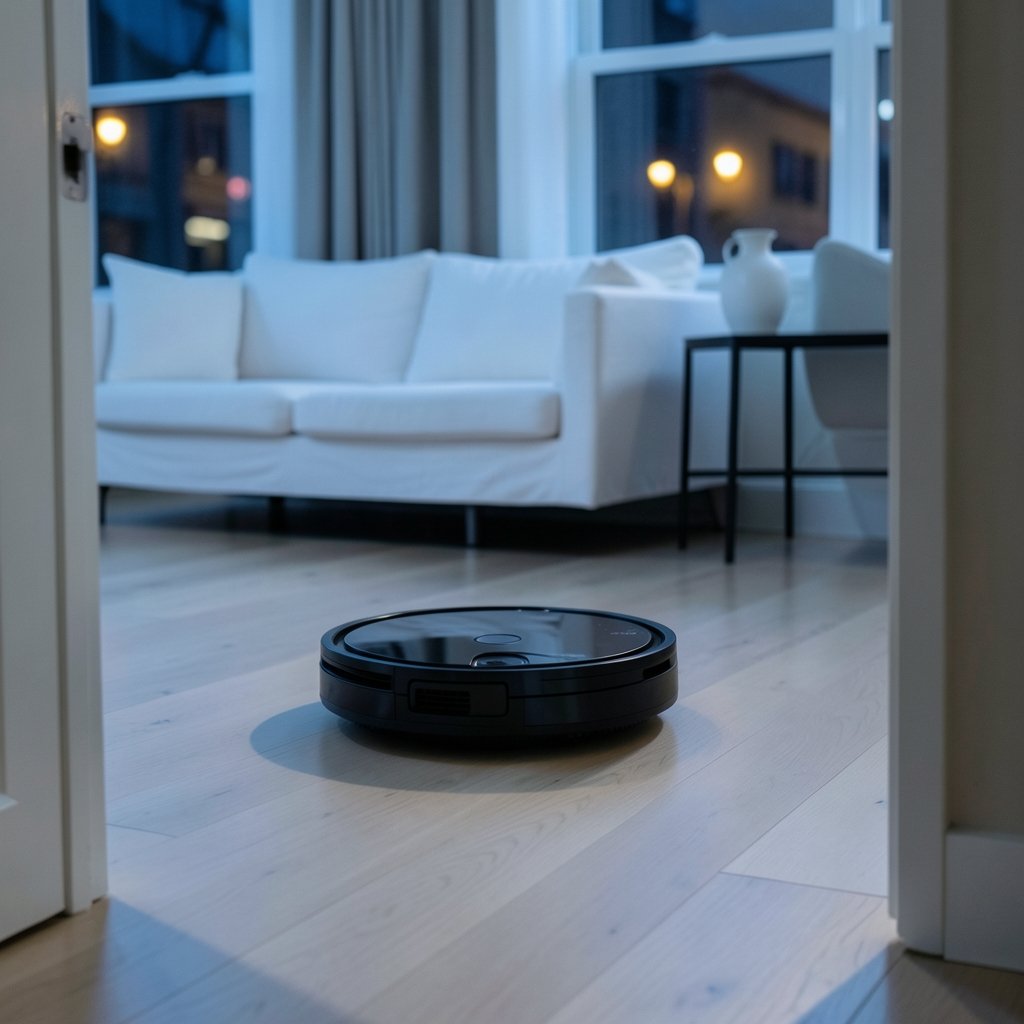
What is the fastest way to ruin a beautiful hardwood floor? Most people picture a flood or a dropped hammer, but the real culprit is often a spinning bristle brush dragging a single grain of sand across a fresh coat of polyurethane. That is why shopping for a robot vacuum on wood is a different job than shopping for one on carpet. The best robot vacuum cleaner for hardwood floors is not the one with the biggest suction number on the box. It is the one whose brush, wheels, water system, and navigation work together to lift dirt without grinding grit into a finish you paid thousands to install.
Why Hardwood Demands a Different Kind of Robot
Hardwood is a soft, scratch-prone surface, and most of it wears a finish of polyurethane, lacquer, or oil and wax. That finish is the layer you are really protecting. Grit and hard debris dragged by stiff brushes or gritty wheels can abrade it, and once the topcoat dulls or scratches, the damage is visible in raking light even when the floor looks clean.
This is why flooring guidance and manufacturer manuals generally steer people away from stiff rotating bristle brushes on finished wood. Bristle bars are built for carpet, where agitation lifts embedded fibers. On wood, that same agitation mostly flings crumbs and scatters dust, and it gives trapped sand a chance to scrub the surface.
The practical takeaway is simple: on sealed hard floors, pickup depends heavily on the airflow path and the brush or roller design. Carpet performance leans on agitation and raw suction. Wood performance leans on gentleness and control. A robot tuned for carpet is not automatically tuned for your oak.
The Brush Question: Soft Rollers Beat Bristle Bars
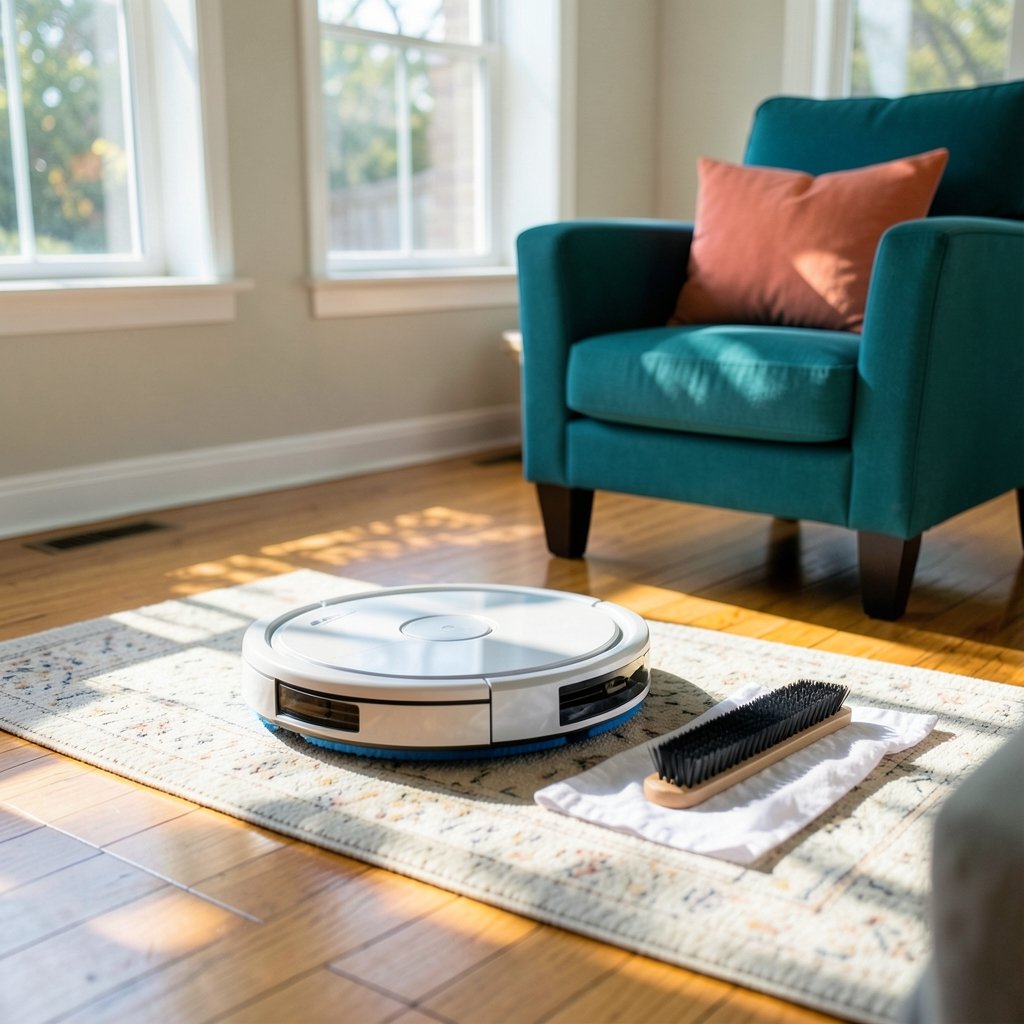
If you remember one buying rule, make it this one. Look for a soft roller or a rubber-blade roller rather than a bristle bar. Soft rollers are the recurring recommendation for hard floors because they sweep debris into the airflow instead of batting it around, and they are less likely to scratch or scatter.
Some robots ship with an interchangeable brush setup: a bristle bar for rugs and a soft roller for bare floors. That combo is genuinely useful in a home with both, but only if you actually swap them. Plenty of owners leave the bristle bar installed year-round and never think about it again. If you want a deeper comparison of how brush and mop hardware interact, the breakdown of best robot vacuum mop combos that actually clean floors is worth a read before you commit.
Rubber-blade rollers are the other common design. They resist hair tangles better than bristles and handle fine dust well. The tradeoff is that some rubber rollers are stiffer than a plush soft roller, so on a high-gloss finish you want to check owner reports about scuffing rather than assume.
A second, quieter brush issue: side brushes. Stiff three-arm side brushes spin fast and can flick debris across the floor or bat at rug edges. Softer side brushes and adjustable speed settings reduce that. It sounds minor until you watch a robot chase the same cheerio around a kitchen for ten minutes.
Mopping and Wood: The Risk Nobody Talks About
Two-in-one units that vacuum and mop are everywhere now, and on tile they are great. On wood, they carry real risk. Excess water can damage or dull wood finishes, and manufacturers typically specify water-tank settings or advise against wet mopping on unfinished or oiled wood entirely.
The mistake people make is treating a mop combo as a free upgrade. It is not. If your floor is oiled or waxed rather than sealed with polyurethane, wet mopping can cloud the surface or leave streaks that are hard to reverse. Even on sealed wood, a robot that lays down too much water and then drags a wet pad around is asking for trouble near seams and board edges.
What actually works in practice:
- Check the manual’s surface restrictions before the first mop run, not after.
- Start on the lowest water setting and increase only if the floor dries within a minute or two.
- Skip mopping on oiled, waxed, or unfinished wood unless the manufacturer explicitly allows it.
- Keep the mop pad clean and swap it often, because a dirty pad just smears grit around.
- Check whether the warranty excludes damage from wet mopping, since some do.
If you do want a combo, read the fine print on water control. A unit with a liftable mop pad that raises itself on carpet is a nice touch, but water volume on hard floors is the number that matters for wood.
Navigation, Sensors, and the Details That Save Your Floor
Navigation sounds like a luxury feature until you live with a robot that bumps into everything. On wood, repeated collisions with furniture legs and baseboards are exactly where finish wear shows up first. Two navigation families dominate, and the choice affects how your robot handles thresholds, rug edges, and chair legs. The comparison of robot vacuum lidar vs camera navigation key differences to pick explains the tradeoffs in plain terms.
LiDAR units map with a spinning laser and tend to be methodical and reliable in the dark. Camera-based units rely on visual landmarks and often cost less, but they can struggle in low light or when furniture moves. Neither is universally better. What matters on wood is consistent coverage without repeated ramming.
Cliff sensors are the other safety-critical piece. They stop a robot from tumbling down stairs, and they are the reason a robot can clean a landing without a nervous owner hovering nearby. They are not perfect, though. Dark flooring and black rugs can confuse some sensors, which is why robot vacuum cliff sensors fail on black carpet and how it works is a genuinely useful read if your wood is dark-stained or you have deep-toned rugs at the top of a staircase.
Then there are the small physical details. Low-profile bodies slide under sofas and toe-kicks. Rubberized or wide wheels spread weight and grip better than narrow hard plastic ones. A robot that climbs a thick rug edge and drops back down repeatedly is also a robot that is scuffing your floor at the same spot. If you have both wood and deep pile, the guidance on robot vacuum shag rugs that actually works on deep pile helps you avoid a robot that fights every transition.
Filtration and Dust: The Invisible Half of Clean
Here is a fact that surprises people: a lot of what makes a floor feel dirty is fine dust that settles back down after a mediocre vacuum pass. HEPA filtration and a well-sealed system reduce that re-release. HEPA is a defined filtration standard rather than a marketing word, and it matters most for allergy sufferers and homes with pets.
On wood specifically, fine dust is also abrasive. A robot that stirs it into the air and lets it settle again is not solving your problem. Look for a sealed dust path, a washable or replaceable HEPA filter, and a dustbin you can empty without dumping a cloud back onto the floor.
Battery runtime and dustbin size are the practical limits on whole-floor cleaning. Runtime figures are usually measured in eco mode and vary by surface, so treat the box number as a best case. A big open-plan wood floor with a large bin and a genuinely long runtime means fewer interruptions and less chance of the robot quitting mid-room and leaving a stripe of dust behind.
A Practical Comparison Framework
Rather than chase model names that change every few months, compare candidates on the features that actually decide wood-floor performance.
| Feature | What to look for on wood | Why it matters |
|---|---|---|
| Main brush | Soft roller or rubber blade | Less scratching and scattering than bristles |
| Side brush | Soft, speed-adjustable | Stops debris flicking and rug-edge batting |
| Water control | Low-flow, adjustable, liftable pad | Prevents finish dulling and seam damage |
| Navigation | LiDAR or mature camera mapping | Fewer collisions and repeat passes |
| Cliff sensors | Reliable on dark floors | Prevents falls and sensor false alarms |
| Wheels | Wide, rubberized | Better grip, less concentrated wear |
| Filtration | Sealed path plus HEPA | Keeps fine abrasive dust out of the air |
| Runtime and bin | Long runtime, large bin | Fewer stops on open floors |
Use the table as a filter, then read owner reports about your specific finish. There is no independent standard that ranks robots by hardwood scratch risk, and reviewers disagree about whether soft rollers or rubber brushes are best. Any “best” claim, including the one in this article’s framing, is editorial judgment rather than a certified result.
Maintenance Habits That Protect the Finish
Most floor damage from robot vacuums is cumulative and boring. A worn brush, a wheel with hair wrapped around the axle, or a gritty roller deposits micro-scratches over months. The fix is unglamorous but effective.
Clean the roller and wheels weekly if you have pets or kids. Rinse and dry a mop pad after every use. Empty the bin before it hits the max line, because an overfull bin drops debris. Check the side brushes for bent arms. And if the robot starts behaving oddly, like stopping in place or refusing to move, deal with it early rather than letting it grind against a baseboard. The guide to fixing a robot vacuum wheel stuck error when it happens and how to fix it fast covers the common causes, and the same logic applies to a robot that keeps losing its bearings, which is often a mapping issue covered in robot vacuum keeps deleting map and how to fix it.
One more habit: use the right cleaning solution. Harsh or foaming solutions can leave residue that attracts dust or dulls a finish. The rundown of robot vacuum cleaning solution alternatives that actually work is a good sanity check before you refill a tank. And if long hair is a constant battle in your house, the notes on robot vacuum long human hair that actually works will save you from a roller that turns into a hairball.
Conclusion
The best robot vacuum cleaner for hardwood floors protects the finish rather than only removing dirt. Prioritize a soft roller or rubber blade over bristles, control water carefully or skip mopping on oiled and waxed wood, and pick navigation that avoids repeated collisions. Add sealed HEPA filtration, a bin and battery sized to your floor, and a weekly cleaning routine for the roller and wheels. That setup makes the robot an ally for your wood rather than a slow, quiet source of scratches. The floor will still look new in raking light, which is the only test that really counts.
FAQ
Is it safe to use a robot vacuum on hardwood floors every day?
Yes, daily vacuuming is generally safe on sealed hardwood, and frequent light passes actually remove abrasive grit before it gets ground in. The caveats are brush type and maintenance. A robot with a soft roller and clean wheels is a low-risk daily tool. A robot with a stiff bristle bar and a gritty roller is a daily scratch risk, so match the hardware to the floor and keep it clean.
Do robot vacuums scratch hardwood floors?
They can, but usually indirectly. The robot itself rarely scratches wood. The damage comes from grit trapped in a stiff brush or dirty wheels being dragged across the finish, or from repeated collisions with baseboards and furniture legs. Soft rollers, rubberized wheels, and reliable navigation sharply reduce that risk. Worn brushes and overfull bins make it worse, so replace parts on schedule.
Should I use the mop function on wood floors?
Only if the manufacturer allows it for your specific finish. Sealed polyurethane floors usually tolerate light damp mopping on a low water setting. Oiled, waxed, and unfinished wood generally should not be wet mopped, because excess water can dull or damage the surface. Check the manual and warranty terms first, start on the lowest water setting, and confirm the floor dries quickly.
Are bristle brushes ever okay on hardwood?
They are okay on rugs and carpet, which is what they are designed for. On bare wood they are a compromise at best. Bristles agitate debris, which helps on carpet but tends to scatter crumbs and give trapped grit more chances to abrade the finish. If your robot came with both, swap to the soft roller for wood and save the bristle bar for area rugs.
How often should I clean the roller and wheels?
Weekly is a sensible baseline in most homes, and more often if you have pets, kids, or long hair in the house. Hair wrapped around an axle and grit packed into a roller are the two most common causes of both poor pickup and micro-scratching. A two-minute check after each full-house run catches most problems before they affect the floor.
Does HEPA filtration matter on hard floors?
It matters more than most people expect. Fine dust is abrasive, and a vacuum that stirs it into the air only to let it settle again leaves a gritty film on the floor. A sealed dust path with a HEPA filter reduces that re-release, which helps both the finish and indoor air quality. Empty the bin regularly so the filter can do its job.



