
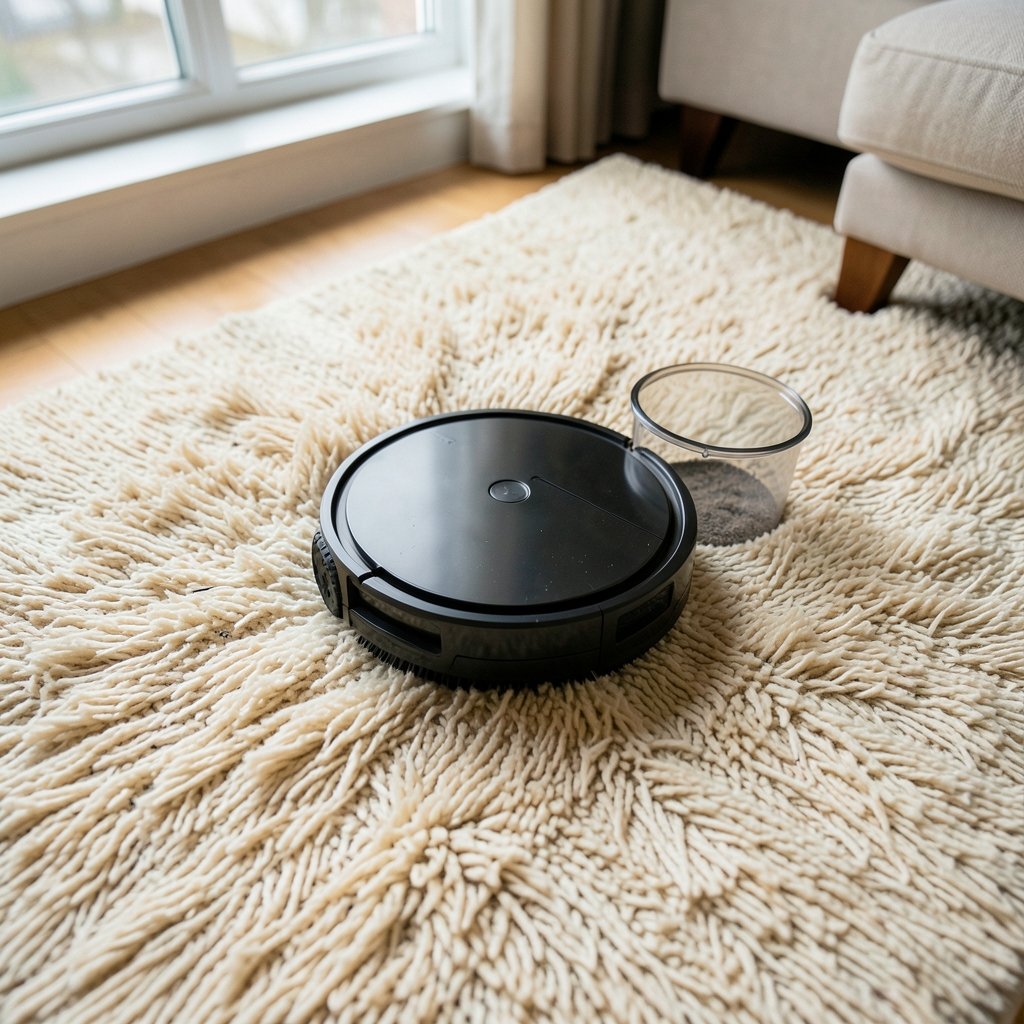
Can any robot vacuum really handle a shag rug, or is this one of those purchases people regret within a week? It is a fair question, and the honest answer sits somewhere between “sometimes” and “usually not without help.” Shag rugs are soft, deep, and wonderful underfoot. They are also close to a worst-case surface for a small machine that weighs a few pounds and runs on two drive wheels. Understanding why that is, and which features give a robot the best fighting chance, saves shoppers from a disappointing return.
Why Shag Rugs Defeat Most Robot Vacuums
A robot vacuum is engineered around a narrow set of assumptions: floors that are flat, surfaces that stay put, and debris that sits loosely on top. High-pile shag breaks all three. The fibers can run an inch or more deep, and that depth swallows the robot’s body, traps crumbs at the base of the tufts, and blocks the airflow that carries dirt into the bin.
The pile height is the headline problem. Most manufacturers rate their robots for low-to-medium pile carpet, and many manuals explicitly warn against high-pile. When a robot’s chassis sinks into deep fibers, the brush roll loses contact with the surface, the wheels spin without traction, and the machine either stalls or wanders off in a wrong direction. Cliff sensors can also misread the soft, uneven surface, causing the robot to stop short or behave erratically.
Then there is the agitation problem. Brush rolls are designed to beat dust out of carpet fibers. On long shag, those same bristles can snag, twist, and fray the tufts. Over months, a robot that “works” on a shag rug may quietly damage it. That is why many manufacturers advise against bristle brushes on high-pile and recommend rubber rollers instead, which are gentler but less effective at deep cleaning.
Finally, suction alone does not solve shag. Deep pile resists airflow. The vacuum pulls, the carpet holds, and the debris stays put. Anyone who expects a robot to replace a full-size vacuum on a shag rug will be disappointed.
What to Look For in a Robot Vacuum for Shag
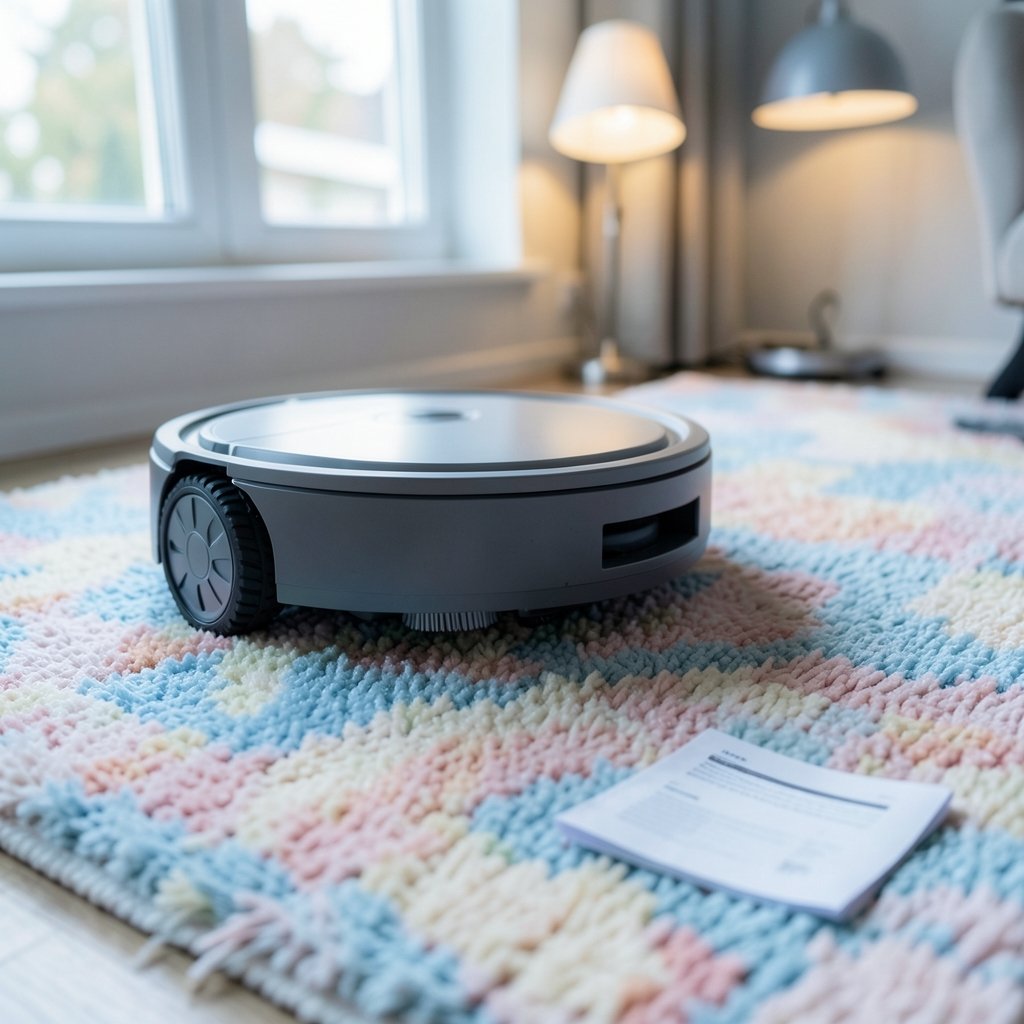
Not every feature matters equally here. The list below ranks what actually moves the needle on deep pile.
| Feature | Why It Matters on Shag | What to Avoid |
|---|---|---|
| Adjustable suction | Lets the robot raise power on carpet and drop it on hard floors | Single-speed models with weak carpet modes |
| Rubber rollers | Gentler on long fibers than bristle brushes | Stiff bristle brush rolls that snag tufts |
| Carpet boost / auto-detect | Increases suction automatically when it senses pile | Models with no floor-type detection |
| Large, grippy drive wheels | Better traction on soft, uneven surfaces | Small smooth wheels that spin out |
| High ground clearance | Clears thicker pile without bottoming out | Very low-profile bodies that dig in |
| Strong battery runtime | Deep pile drains power fast | Short runtimes that quit mid-rug |
A useful rule of thumb: the deeper and shaggier the rug, the more the robot needs traction and clearance along with raw suction. A machine with excellent suction but tiny wheels will stall on a thick shag every time.
Check the Manual Before You Buy
This is the single most overlooked step. Manufacturers publish carpet-height guidance in their manuals and spec sheets, and the language is often blunt: “not for high-pile carpets,” “designed for low-to-medium pile,” or a specific pile measurement. That document is the most reliable source available, and it usually contradicts the marketing copy on the box.
“Sag” is not a standardized term either. Fiber length, density, and backing vary wildly from rug to rug, so a manufacturer’s pile threshold is only approximate. A thin shag and a plush, inch-deep shag can both carry the label while behaving completely differently under a robot.
The Practical Reality: What Works and What Doesn’t
In practice, robots tend to fall into three performance bands on shag.
Low shag and “shag-style” rugs with shorter fibers often work fine. These behave more like medium-pile carpet, and a robot with carpet boost and rubber rollers can maintain them between deeper cleanings.
Medium shag is a coin flip. Some robots manage it with reduced suction and gentle rollers; others bog down, tangle, or leave visible tracks. Owners frequently report that the robot cleans the edges well but struggles in the center, where the pile is deepest.
True high-pile shag is usually outside the supported range. The robot may climb on, stall, or refuse to enter at all. Even when it moves, the cleaning is superficial.
A realistic workflow for shag owners looks like this:
- Run the robot on hard floors and low-pile areas where it performs reliably.
- Use a full-size vacuum with a height-adjustable head for the shag itself, ideally weekly.
- Set a no-go zone or boundary around the shag rug so the robot does not tangle, stall, or damage the fibers.
- Spot-clean spills by hand rather than waiting for the robot to find them.
That combination gets the best of both worlds: automation where it works, and manual effort where it is genuinely needed. For readers comparing machines for other surfaces, guides like the best vacuum for carpet and the best vacuum mop combo cover the upright and hybrid options that handle deep pile far better than any robot. (Vacuum cleaner)
Common Mistakes Shag Owners Make
The same errors show up again and again. Buying on suction specs alone is the big one. A robot rated for enormous suction can still fail on shag because the limiting factor is traction and airflow, not raw power. Another frequent mistake is skipping the boundary setup, then blaming the robot when it chews a fringe or stalls in the middle of the rug. A third is expecting the robot to replace a full-size vacuum entirely. On shag, it is a maintenance tool at best.
There is also the fringe problem. Tassels and loose edges are magnets for brush rolls and side brushes. Robots will grab them, wrap them, and sometimes pull them loose. Trimming or tucking fringe, or blocking the robot from the edge, prevents most of this.
How Shag Compares to Other Floor Types
Shag is an outlier, and it helps to see where it sits relative to surfaces robots handle well.
| Floor Type | Robot Performance | Notes |
|---|---|---|
| Hardwood and tile | Excellent | The robot’s home turf |
| Low-pile carpet | Very good | Carpet boost handles most debris |
| Medium-pile carpet | Good | Rubber rollers help; watch for tangles |
| High-pile shag | Poor to fair | Often outside supported range |
| Fringe and tassels | Poor | Tangles brushes; block or trim |
Pet owners face an extra wrinkle. Shag traps pet hair deep in the fibers, and a robot’s airflow often cannot reach it. That is why many households with shedding pets pair a robot for daily surface work with a full-size machine for the rug. The best robot vacuums for pet hair roundup covers which models handle hair best on standard surfaces, though none of them turn a high-pile shag into a robot-friendly floor.
Do Robot Vacuums Damage Shag Rugs?
They can, and it is worth being direct about it. The main risks are fiber fraying from bristle brushes, fringe tangling from side brushes, and matting where the robot repeatedly stalls and grinds in the same spot. Warranty language sometimes excludes damage caused by high-pile carpets, so it pays to read the fine print before running a robot on an expensive rug.
Rubber rollers reduce the fraying risk considerably. Setting the robot to a lower suction level on the rug, if the model allows per-zone settings, also helps. And keeping the robot off the deepest sections entirely is the safest option of all.
Smart Settings That Make Shag Less Painful
Modern robots offer features that soften the shag problem even when they cannot solve it.
No-go zones and virtual walls let owners fence off the shag rug entirely. This is the most reliable protection available.
Per-room suction profiles allow lower power on delicate rugs and full power on hard floors, which reduces both fiber stress and battery drain.
Scheduling matters more than people expect. Running the robot on hard floors daily keeps grit from being tracked onto the shag in the first place, which cuts down on how often the rug needs a full vacuum.
Mapping helps the robot avoid the rug after a few failed attempts, though behavior varies by model. Some robots learn; others keep trying and keep stalling.
For anyone curious about how these navigation systems behave in trickier real-world scenarios, the coverage of the man trapped in a self-driving car and robotaxi incidents is a useful reminder that autonomy in messy environments is still a work in progress, whether the machine is on the road or on the rug. The same theme runs through the Tesla robotaxi, semi, and roadster hardware bets analysis: sensors and software improve, but edge cases persist.
The Verdict: Buy for the Floor, Not the Rug
A robot vacuum is a genuinely useful appliance. It is just not a shag-rug appliance. Shoppers who want automation should buy a model with adjustable suction, rubber rollers, and strong traction, then set boundaries around the deep-pile rugs and let a full-size vacuum handle those. That approach protects the rug, protects the robot, and keeps expectations honest. (Indoor Air Quality (IAQ))
The research supports a cautious stance. Manufacturer manuals routinely cap supported pile height, “shag” has no standard definition, and marketing claims often conflict with the fine print. When in doubt, the manual wins. Readers weighing other cleaning categories, from cars to pools, can find practical comparisons in the best car vacuum and best pool vacuum guides, while puzzle fans curious about how machines “think” might enjoy the I Am Not a Robot game browser quizzes.
Conclusion
Shag rugs and robot vacuums are a difficult match, and no amount of marketing changes that. The physics is simple: deep fibers swallow small machines, block airflow, and tangle brushes. A robot with rubber rollers, adjustable suction, and good traction can maintain low and medium shag, but true high-pile shag usually needs a full-size vacuum with a height-adjustable head. The smartest approach is to let the robot handle the floors it was built for, fence off the shag with no-go zones, and keep a proper vacuum for the deep pile. Buy for the floor, not the rug, and both the machine and the rug will last longer.
FAQ
Can a robot vacuum go on a shag rug?
Sometimes, but rarely well. Low and medium shag may be manageable with a robot that has rubber rollers, adjustable suction, and strong traction. True high-pile shag is usually outside the supported range, and many manufacturer manuals explicitly warn against it. Check the manual’s carpet-height guidance before running any robot on a shag rug.
Will a robot vacuum ruin a shag rug?
It can cause problems. Bristle brushes may snag and fray long fibers, side brushes can tangle fringe, and a robot that repeatedly stalls in the same spot can mat the pile. Rubber rollers and no-go zones reduce the risk considerably. Warranty terms sometimes exclude high-pile carpet damage, so read the fine print first.
What is the best robot vacuum for high-pile carpet?
No robot is truly built for high-pile shag. The best compromise is a model with adjustable suction, rubber rollers instead of bristle brushes, carpet boost, large grippy wheels, and good ground clearance. Even then, expect surface cleaning rather than deep cleaning, and plan to use a full-size vacuum for the rug itself.
Why does my robot vacuum get stuck on my shag rug?
Deep pile swallows the chassis, lifts the drive wheels off solid ground, and kills traction. The robot spins, stalls, or misreads the surface with its cliff sensors. Fringe and long fibers can also wrap around brushes. Setting a no-go zone around the rug is the most reliable fix.
Should I use a no-go zone on my shag rug?
For high-pile shag, yes. A no-go zone or virtual wall keeps the robot off the rug entirely, preventing tangles, stalls, and fiber damage. For lower shag, try the robot on a short test run first. If it climbs on, moves smoothly, and does not tangle, it may be fine for light maintenance.
Can a robot vacuum replace a regular vacuum for shag?
No. A robot cannot generate the airflow or agitation needed to clean deep pile thoroughly. It works as a maintenance tool on hard floors and low-pile carpet, while a full-size vacuum with a height-adjustable head remains essential for shag. Treat the two as a team rather than substitutes.



