Start with the pool’s size, surface, and usual debris before comparing features or price; the best pool vacuum depends on that mix. A pool’s cleaning needs can change with leaf fall, fine dirt, and how often you want to manage equipment. The right choice depends on your pool, the mess it collects, and how hands-on you want to be.
This roundup focuses on robotic models and explains how they compare with manual and pump-connected choices. You’ll find practical options for above-ground and inground pools, along with ways to judge fine dirt, leaves, coverage, and upkeep. No single cleaner suits every pool, so match the model to the work it needs to do. A micron is a unit used to describe the size of particles a filter can capture.
Key Takeaways
- Choose by pool type, size, surface, and debris.
- Check whether the cleaner reaches the floor, walls, and waterline.
- Fine dirt calls for fine filtration, not suction alone.
- Timers can reduce the need to start each cleaning cycle by hand.
- A cordless cleaner avoids a cable but needs charging between runs.
- Keep the pool’s main cleaning problem in mind as you compare the options.
What Kind of Pool Vacuum Fits Your Setup?
A robotic cleaner is the most self-contained option, while manual and pump-connected cleaners rely more on the pool owner’s equipment or effort. Robotic pool cleaners move on their own, while other pool cleaners draw power or water flow from existing gear. Choose by how much work you want the cleaner and your pool equipment to handle.

Robotic cleaners work independently
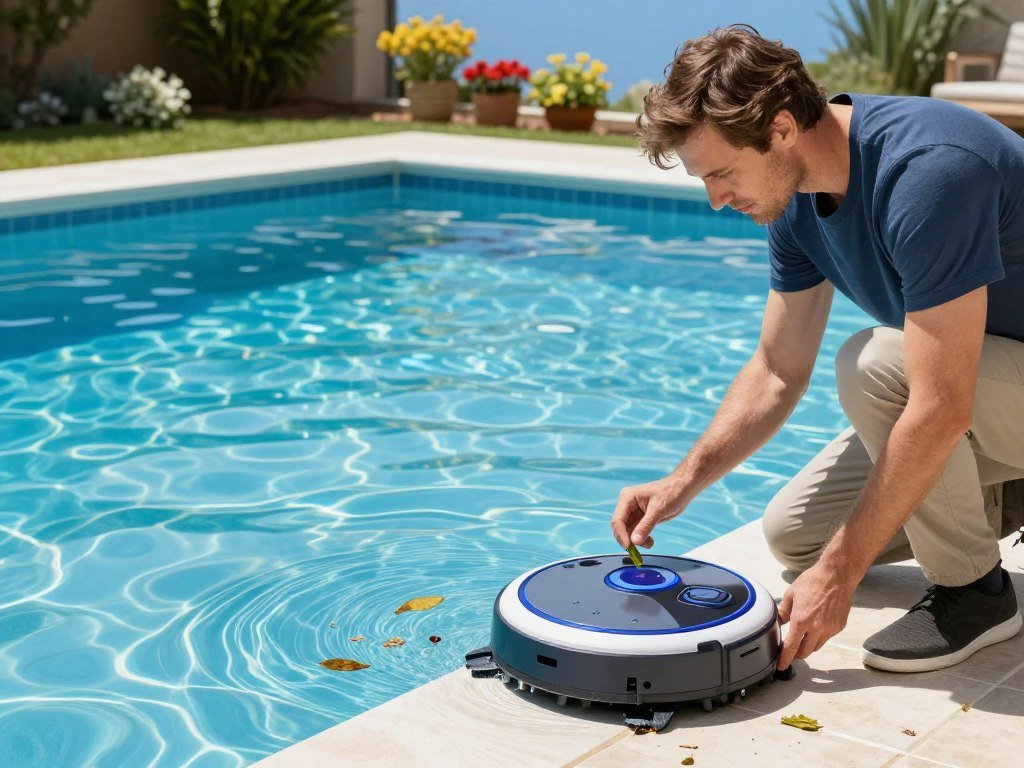
A robotic pool cleaner uses its own motor to move through the water and collect debris in an onboard filter. It does not rely on the pool’s circulation pump to create suction or push it around. A pool robot can be set in the water and run as a separate cleaning unit.
That setup gives you a simple way to remove debris without routing it through the pool’s main filter. The cleaner still needs regular filter care, and its movement depends on its design and coverage features. Robotic pool cleaners can suit owners who want the cleaning cycle to happen with less direct effort.
Manual, suction-side, and pressure-side options
Manual hose-powered vacuums need you to guide the head across the pool. The PoolWhale manual vacuum uses garden-hose water pressure to draw debris into a mesh bag. A small mess in one spot may make this hands-on option useful, even if it is not a set-and-forget cleaner.
Suction-side cleaners connect to the pool system and use its pump and filter to pull in debris. Hayward ThePoolCleaner connects to the pool pump and filter, so its fit depends on that setup. Pressure-side cleaners use water returning to the pool to move and collect debris.
- Robotic cleaner: uses its own motor and onboard filter.
- Manual hose-powered cleaner: uses a hose and needs hands-on guidance.
- Suction-side cleaner: connects to the pool pump and filter.
- Pressure-side cleaner: runs on pool return pressure.
The Polaris 280 is a pressure-side cleaner, while the Polaris 360 is a budget pressure-side model. These choices use the pool’s circulation equipment in a different way from a robotic cleaner. Check whether a pump-connected cleaner is compatible with the pool’s existing circulation setup before choosing it.
Which Best Pool Vacuum Picks Fit Different Needs in 2026?
For most owners seeking a capable, automated cleaner, the Dolphin Premier is the broadest starting point, while pool type and cordless preference can change the best fit. These seven picks cover different needs, not one winner for every pool. Choose for pool conditions and upkeep preferences, not rankings alone.

| Model | Best-fit use | Key distinction |
|---|---|---|
| Dolphin Premier | Best overall | Mixed debris and full-pool care |
| Dolphin Escape | Entry-level and above-ground value | Floor-focused design |
| Dolphin Quantum Pro | Inground pools | Newer Quantum model with Wi-Fi app control |
| Dolphin Sigma | Splurge | Three-motor platform and app controls |
| Beatbot AquaSense 2 Ultra | Cordless pick | Floor, wall, waterline, and surface cleaning |
The Dolphin Cayman is the overall choice in the 2026 above-ground robotic-cleaner rankings. The Clear UV is the newcomer pick, bringing the full roundup to seven products alongside the table’s five models.
The 2026 guide reports testing more than 30 robotic cleaners, while the broader review page reports more than 44 cleaners tested across brands. Those counts cover different scopes, so they do not describe the same set of models. Use each ranking as a starting point, then weigh your own pool’s surfaces and debris.
A model’s place on a list cannot tell you whether it fits a narrow step or a heavy leaf load. Confirm the pool’s size, needed coverage, and preferred maintenance routine before settling on a pick. Treat the shortlist as a way to narrow the field, then confirm that a model suits the pool’s size and surface.
How Should Pool Type and Size Shape Your Choice?
A pool’s construction and layout can rule out a cleaner before its feature list matters. Above-ground and inground pools can call for different designs and coverage. Match the cleaner’s stated pool range to the pool’s shape and the surfaces you need cleaned.
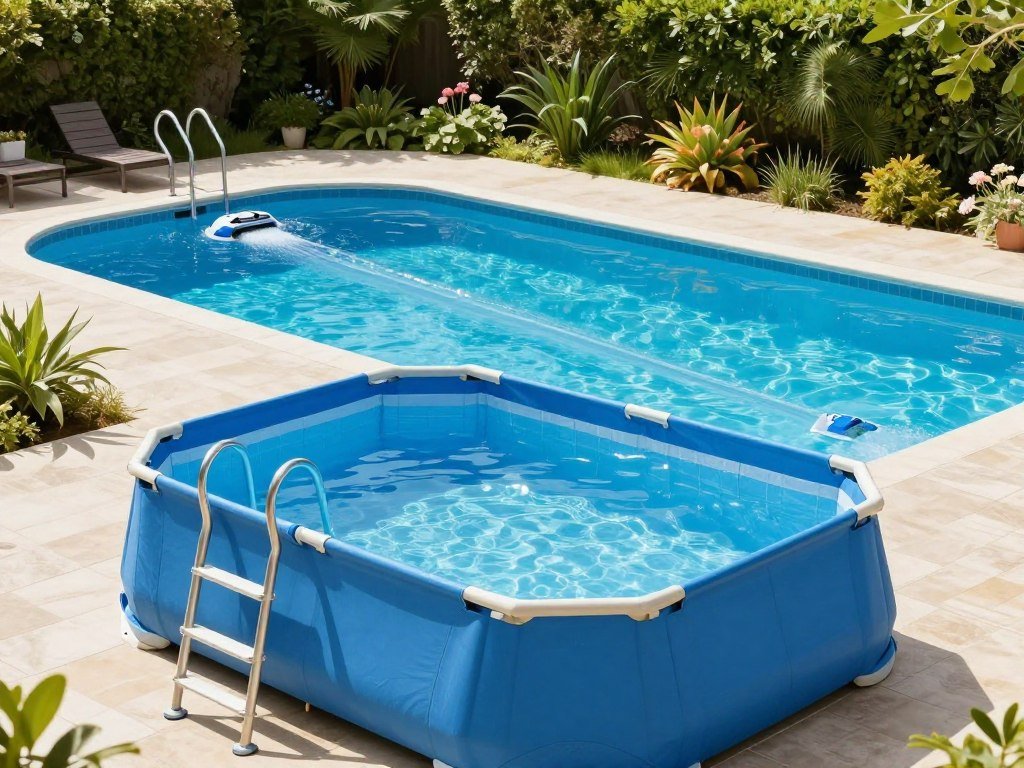
Match the cleaner to an inground or above-ground pool
Above-ground pools benefit from a cleaner designed for their size and layout. A floor-focused model may cover the main area, while an inground pool may need wall and waterline cleaning as well. A best pool vacuum for an inground pool should cover the floor, walls, and waterline when those areas need routine cleaning.
Some models clean only the floor, which can fit a simple above-ground setup. Others climb walls or reach the waterline, which matters when those surfaces collect dirt. Do not assume that a cleaner designed for one pool type will suit another just because its name sounds similar.
Check dimensions and cleaning limits
Check the stated pool-length rating and the cable’s reach before choosing a model. The Dolphin Escape is rated for pools up to 33 feet and has a 40-foot cable. That rating gives you a useful starting point, but the pool’s shape can affect how easily the cleaner reaches each area.
Steps, corners, ledges, and unusual curves can change the route a robot takes. Look at the manufacturer’s stated limits for the exact model, then compare them with the pool’s longest span and layout. Use this checklist before weighing extra features:
- Pool type and surface
- Pool dimensions and shape
- Required cleaning areas
The Dolphin E10 is an entry-level above-ground floor cleaner, and it does not climb walls. That may be enough for a pool that needs floor cleaning only, but not for routine wall care. Measure the longest pool span and note any steps or shallow ledges before comparing model ratings.
Is a Corded or Cordless Pool Cleaner Better?
A corded cleaner is the more practical default when continuous power and frequent scheduled runs matter most. Cordless pool robots can suit owners who want the cable off the pool deck. Choose corded for sustained cleaning, or cordless when removing the cable matters more.
| Cleaner type | Power or recharge pattern | Practical tradeoff |
|---|---|---|
| Corded robotic cleaner | Continuous power; 4,000 or more gallons per hour | Fits sustained cleaning and frequent scheduled runs |
| Cordless robotic cleaner | Typically 60-90 minutes per charge; 3-5 hours to recharge | Removes the cable from the pool deck |
| Dolphin Escape and Dolphin Cayman | Corded; 4,000 gallons per hour | Known corded examples with continuous flow |
With a corded robotic cleaner, you do not have to plan a charge between cycles. That steady power can help when you want frequent runs through a busy pool season. The cable is part of the setup, so you will need to place and manage it around the pool.
A cordless cleaner takes away that cable but adds charging to the upkeep routine. Cordless pool cleaners typically run for 60-90 minutes and take 3-5 hours to recharge. That timing can affect how often you can run one, especially after a heavy debris load.
The CPSC recalled 22,000 Aiper Elite Pro units because of battery overheating and short-circuit risks. That recall concerns the named model and its stated hazards, not every cordless pool robot. Check the exact model’s battery and charging instructions before leaving any cordless unit to recharge.
Which Filter Handles Fine Dirt, Leaves, and Algae?
For fine dirt, filter quality matters as much as the cleaner’s ability to move water. Fine filtration can capture small particles that coarse mesh may miss. For dirt, pair a fine filter with a cleaner that can collect small particles.

Fine dirt needs finer filtration
Standard mesh filters catch larger debris but can let fine dirt and algae pass through. A finer filter can hold smaller particles, including dirt that stays suspended in the water. More suction alone may not solve the problem if the filter openings are too large.
A pool cleaner’s filter needs to match the debris you see most often. A coarse screen may be practical for large leaves, while fine dirt calls for smaller openings. The filter particle-size unit is the micron, which describes the size of particles a filter can capture.
Leaves and algae need the right pickup approach
Loose leaves and twigs need space in the filter or debris bag. Algae attached to a wall or floor is different: it needs brushing or rotating scrubbing to loosen it before collection. A cleaner may gather loosened algae, but it cannot replace proper pool care.
Consider the type of mess before choosing a filter or brush. A pool with fine dust needs a different pickup approach from one with leaves or surface growth. Use these common debris types to guide your comparison:
- Fine dirt
- Sand
- Leaves and twigs
- Attached algae
For the best pool vacuum for dirt, choose fine filtration alongside the ability to collect small particles. A filter that fills with leaves may need a different setup from one used for dust. Empty and rinse the filter when its debris load begins to restrict flow.
Does the Cleaner Reach Every Surface That Needs Cleaning?
A cleaner that only reaches the floor cannot replace brushing the walls or waterline. Surface coverage tells you which parts of the pool a robot can reach. Match the listed coverage to the surfaces that collect dirt in your pool.
Compare floor, wall, and waterline coverage
Floor-only cleaning can work when the pool’s sides stay clean or you handle them another way. Floor, wall, and waterline coverage can reduce the need to clean each area by hand. Check the exact coverage list, since not every robotic pool cleaner reaches every surface.
The Dolphin EON 120d is rated for pools up to 15 m / 50 ft. Its listed coverage includes floors, walls, waterlines, tanning ledges, steps, corners, and benches. The model’s DebrisLock filtration captures particles at 15 microns in independent turbidity testing.
Check steps, ledges, and handling
Look beyond the main wall and floor claims if your pool has steps, tanning ledges, corners, or benches. A robot’s listed coverage should name those areas if you expect it to clean them. A compact product comparison can also show how handling and cleaning details differ.
The EON 120d weighs 11 kg, or 24 pounds, while the EON 100 weighs 10 kg, or 22 pounds. The 120d has a stated runtime of up to four hours and a three-year warranty. The EON 100 has a stated runtime of up to two hours and a two-year warranty.
Weight matters when you retrieve a cleaner from the water, and runtime affects the length of its cleaning cycle. Those details can shape daily use as much as the coverage list. Compare the coverage list with the actual shape and features of the pool, not just its length.
Which Features Make Pool Cleaning Easier to Automate?
A weekly timer is the most useful automation feature for owners who want regular cleaning without starting each cycle themselves. Scheduling can cut down repeated manual starts and keep cleaning on a steady routine. An app helps only when remote control or more specific scheduling matters to you.
| Model | Timer or scheduling method | Available schedule |
|---|---|---|
| Dolphin Cayman | Timer at the power supply | Weekly timer |
| Dolphin Premier | Weekly timer at the power supply | Weekly timer |
| Dolphin Sigma | myDolphin Plus app | App-based scheduling |
A weekly timer can schedule daily, every-other-day, or every-third-day cleaning. You can pick a pattern that suits the pool’s debris and the time you want to spend on upkeep. A timer can make a routine easier to follow, even if you do not need phone control.
The Dolphin Escape offers a timer as a $99 power-supply upgrade. That add-on may matter if you prefer scheduled starts but want to keep the cleaner simple. App features are useful when remote control or more detailed scheduling solves a real need.
Before choosing a pool cleaner, consider which setup details will make regular use easier:
- Timer schedule
- App features needed
- Filter-cleaning routine
A schedule can keep the cleaner running without a fresh start each time, but it cannot tell you when the filter is full. Set the schedule around the pool’s real debris load, then check that the filter is still easy to reach.
Best Overall: Dolphin Premier
For an owner who wants one corded cleaner to handle varied debris and full-pool coverage, the Premier is the strongest all-around choice. Its interchangeable filtration lets you adjust the setup for routine dirt or heavier leaves. The oversized leaf bag makes it a strong candidate for pools with substantial leaf debris.
The Dolphin Premier has dual motors, waterline cleaning, a weekly timer, and a three-year warranty. Its Multi-Media filtration offers four choices for different debris needs. You can switch the filter setup instead of expecting one filter to suit every cleanup.
The four options are NanoFilters, standard cartridge filters, an oversized leaf bag, and optional disposable debris bags. NanoFilters and cartridge filters suit different routine cleaning needs. The large leaf bag gives leaves and other bulky debris room to collect.
That flexibility makes the Premier a useful pool robot for owners who see mixed debris through the season. It can address waterline cleaning while also allowing a different filter choice for a heavy leaf week. A pool with a large amount of loose leaves can benefit from the bag’s extra capacity.
The best filter still depends on the debris mix. Fine particles may call for a finer filter, while a leaf-heavy cleanup may fill a bag quickly. Match the filter option to the week’s debris rather than using a fine filter for every cleanup.
Best Above-Ground Value: Dolphin Escape
Above-ground owners who want a purpose-designed robotic cleaner at an entry level should start with the Escape. Its floor-focused design keeps the job straightforward for pools that need floor cleaning. HyperBrush scrubbing helps loosen debris, and a large MaxBin holds more before emptying.
The Dolphin Escape is designed for above-ground pools and offers a simple way to automate floor cleaning. Its HyperBrush helps work debris loose as the robot moves across the surface. The large MaxBin can reduce interruptions when leaves and dirt build up.
That brush can help when algae grows on the pool floor, since scrubbing helps dislodge growth before the cleaner collects it. A robotic cleaner is not a substitute for correcting water chemistry or brushing areas it cannot reach. Algae control still depends on keeping the pool water in balance.
The Escape is a floor-focused choice, so it does not suit every pool layout. Owners who need wall climbing should compare models with the coverage they want. A basic floor cleaner may be a good fit when the pool’s sides and waterline do not need routine robot cleaning.
Think about the pool’s regular cleaning workload, not only its price or brush design. A larger debris bin can help during busy periods, but the cleaner still needs the right coverage. Confirm that floor-only cleaning is enough for the pool before choosing this model.
Best Above-Ground Overall: Dolphin Cayman
Choose the Cayman when an above-ground pool owner wants navigation and a built-in weekly timer rather than the simplest floor-cleaning setup. SmartNav 2.0 is its navigation feature, while the timer supports scheduled cleaning. The Cayman holds an overall place in the 2026 above-ground rankings.
The Dolphin Cayman is the overall pick in the 2026 above-ground robotic-cleaner rankings. Its SmartNav 2.0 navigation feature is designed to guide its cleaning path through the pool. That makes it a value-oriented choice for owners who want more than a basic floor-cleaning setup.
The built-in weekly timer can help maintain a regular cleaning routine without starting every cycle by hand. That feature gives the Cayman a different appeal from an entry-level model focused on simple floor care. Owners can weigh the convenience of navigation and scheduling against the pool’s actual needs.
The Dolphin Cayman is also the best-value pick in the 2026 robotic-cleaner guide. That ranking describes its position among the models reviewed, not a promise that it has the lowest current price. Compare the features you will use with the upkeep you want to handle.
A pool’s shape and required cleaning surfaces still matter more than a ranking. If the pool needs wall or waterline cleaning, check that the exact model offers the coverage you expect. Check that the pool’s shape and required cleaning surfaces fit the model before comparing its features with the Escape.
Best Inground Pool Pick: Dolphin Quantum Pro
Inground pool owners who want a more connected Quantum model should put the Quantum Pro on their shortlist. The newer Quantum model adds Wi-Fi app control and updated navigation. Check the exact configuration for the surfaces it covers before relying on its model name.
The Dolphin Quantum Pro is the inground-pool pick among the featured robotic pool cleaners. It belongs to the Quantum line and is the newer Quantum model. Its updated navigation and Wi-Fi app control are the main changes highlighted for this version.
App control can give owners a connected way to manage the cleaner, while updated navigation can guide its movement through the pool. Those features do not by themselves confirm which surfaces a specific unit can clean. Pool owners should compare the exact configuration with the surfaces that need regular care.
Similar product names can refer to models with different features, so read the model label closely. Do not assume a Quantum with a similar name has the same app controls or coverage. That check helps avoid choosing a cleaner that misses a surface you expected it to reach.
The Quantum Pro can suit an owner who values its connected controls and updated navigation. Its fit still depends on the pool’s real cleaning needs and the included features of the unit. Verify the model name and included features on the unit being considered before making the final comparison.
Best Splurge: Dolphin Sigma
The Sigma is the premium choice for owners who will use its extra motor power and connected controls. Its three-motor platform sets it apart from simpler residential cleaners. The Sigma fits owners who want advanced control and strong coverage, not every pool.
The Dolphin Sigma uses three commercial-grade motors on a residential cleaner and comes with a three-year warranty. That motor setup is its clearest product distinction. It offers an advanced platform for owners who expect regular cleaning and want more control over the process.
The Sigma includes app control and gyroscope navigation. Its listed coverage includes the pool floor, walls, and waterline. Those features can matter when the pool needs care across several surfaces and you want connected controls.
A higher-end cleaner does not automatically make sense for a pool with simple cleaning needs. The Sigma’s extra features are most useful when its motor platform, navigation, and app control support tasks you do often. Owners who rarely use connected controls may gain little from paying for them.
Consider how the pool collects debris and which areas need routine attention. A premium pool robot can be a practical choice when its features address a repeated maintenance task. Decide whether the advanced controls solve a regular maintenance need before paying for features that may go unused.
Best Newcomer: Clear UV
Clear UV stands out for adding a UV-C lamp to a corded cleaner, not for replacing routine pool sanitation. The built-in lamp works alongside the unit’s filtration. Its long-term reliability has not been established through extended use.
The Clear UV is a corded robotic pool cleaner with a built-in UV-C lamp, four motors, and filtration rated to 1 micron. The lamp adds a sanitation feature as the cleaner runs and filters water. It does not replace normal pool chemical care or the work of collecting debris.
Debris pickup and sanitation are different jobs. A filter gathers particles, while pool chemicals help maintain safe water conditions. The UV-C feature adds another function, but its rating alone does not prove long-term results in everyday pool use.
The four-motor design and 1-micron filtration rating may appeal to owners interested in its mix of features. Buyers who prefer products with a longer track record may want to wait for more use over time. A newer model can be promising while still carrying uncertainty about long-term reliability.
Weigh the Clear UV’s cleaning features separately from its UV-C lamp. The lamp is an extra, not a replacement for routine sanitation or water care. Treat the UV-C feature as an extra, and weigh its unproven long-term reliability against the cleaner’s other capabilities.
Best Cordless Pool Cleaner: Beatbot AquaSense 2 Ultra
For buyers who put avoiding a pool cable first, the AquaSense 2 Ultra is the leading cordless option in this roundup. Its wide coverage includes the pool floor, walls, and waterline. The 29-pound weight may make retrieval awkward for some owners.
What the AquaSense 2 Ultra adds
The Beatbot AquaSense 2 Ultra cleans floors, walls, and waterlines, and it can skim the water’s surface. That mix covers more than a floor-only cleaning job. Its app adds another way to manage a cordless pool cleaner.
The model is the cordless pick in the 2026 robotic-cleaner rankings. Its surface-skimming function can collect debris floating above the pool while the robot handles underwater areas. That can suit owners who want one unit to address several parts of the pool.
What to weigh before choosing cordless
A cordless design removes the cable from the pool deck, but it still needs a charging routine between runs. The AquaSense 2 Ultra weighs 29 pounds, which may be difficult to lift from the water. Consider who will retrieve and carry it after each cycle.
Before choosing a cordless pool robot, check whether its daily demands fit your household:
- Required coverage
- Comfort lifting the unit
- Willingness to charge it between runs
Its broad surface coverage may suit a pool that needs regular care in several areas. The weight can matter just as much as its app or cleaning features if one person handles it. Check the cleaner’s weight against who will retrieve it after each cycle.
When Does a Polaris Cleaner Make More Sense Than a Dolphin?
Dolphin is the better starting point for most owners comparing robotic models, while Polaris fits buyers seeking its cordless or pressure-side options. Polaris has distinct choices for owners who prefer those cleaning systems. Choose by cleaner type and upkeep needs, not brand name alone.
| Model | Cleaner type | Distinguishing feature |
|---|---|---|
| Polaris Freedom | Cordless robotic cleaner | 4-litre filter basket |
| Polaris 9650 IQ | Robotic cleaner | Four-wheel drive and app connectivity |
| Polaris 280 | Pressure-side cleaner | Uses pool return pressure |
| Polaris 360 | Budget pressure-side cleaner | Pressure-side option at a budget level |
The Polaris Freedom is the highest-ranked cordless model in the 2026 Polaris-cleaner rankings. Its 4-litre filter basket offers space for debris, and its cordless design may suit owners who want to avoid a cable. The Dolphin EON 120d uses dual brushes, while the Freedom uses a single suction motor.
The Polaris 9650 IQ cleans floors, walls, and waterlines and has four-wheel drive and iAquaLink app connectivity. It uses one scrubbing brush and a standard fine filter. That setup is worth weighing against your pool’s scrubbing and filtration needs.
Polaris can also suit an owner who wants pressure-side equipment rather than a robotic pool cleaner. The Polaris 280 and 360 are pressure-side options, with the 360 positioned as a budget model. Choose by the cleaning system and upkeep routine that match the pool, not by brand name alone.
Conclusion
The right cleaner is the one that covers the pool’s real problem areas and fits the owner’s upkeep routine. Coverage and filtration should match the debris and surfaces that need attention. Choose a power type and schedule you can maintain.
Once those needs are clear, compare the exact model’s stated features and limits. A practical match can make regular cleaning easier without adding features you will not use. Measure the pool and note its problem areas before checking the final model specifications.
FAQ
Is Polaris or Dolphin better?
Dolphin is a better starting point for owners seeking a corded robotic cleaner, while Polaris can suit buyers who want cordless or pressure-side equipment. The right choice depends on the cleaning system your pool can use and the surfaces that need care. Compare the exact model’s coverage and upkeep needs, rather than choosing by brand name alone.
How do I get fine dirt particles out of my pool?
Use a pool cleaner with fine filtration to collect suspended dirt particles. Coarse mesh can let small dirt pass through, even when the cleaner moves water well. Rinse the filter regularly, since a clogged filter can restrict flow. If fine dirt returns quickly, check whether the filter matches the size of particles you want the cleaner to capture.
What is the best portable vacuum cleaner for a pool?
A manual handheld cleaner is a practical portable choice for spot-cleaning. Match its pickup method and power source to the job, since a small patch of dirt differs from a pool-wide cleanup. A hose-powered vacuum can work for local debris, while a battery-powered handheld unit avoids a hose. Check how its debris container is emptied before use.
What do professional pool cleaners use to vacuum a pool?
Professional pool cleaners may use manual vacuums connected to pool circulation equipment or robotic cleaners. The pool’s size, surface, debris, and service routine shape the choice. A manual vacuum gives the operator direct control over a specific area. A robotic cleaner can handle a cycle with less direct guidance, though its filter still needs care.
Can a robotic pool cleaner remove algae?
A robotic pool cleaner can collect algae after scrubbing helps loosen it from a surface. Attached algae may need brushing, especially in spots the cleaner cannot reach. Cleaning equipment does not replace proper pool chemistry or routine water care. If algae keeps returning, address the water conditions as well as the visible growth on the pool floor or walls.
How often should a pool robot run?
A weekly timer can offer daily, every-other-day, or every-third-day schedules. Set the routine to match how much debris enters the pool and how quickly the filter fills. A pool under trees may need more frequent cleaning than one with little nearby debris. Check the filter during the first few cycles to see whether your chosen schedule suits the load.
Can I leave a cordless pool robot in the water?
Follow the instructions for the specific cordless model, and remove it when it needs charging. Cordless units need to leave the pool for charging, and taking them out also gives you a chance to clean the filter. Leaving a cleaner in the water between runs may depend on the model’s instructions. Do not charge a wet unit unless its directions allow it.