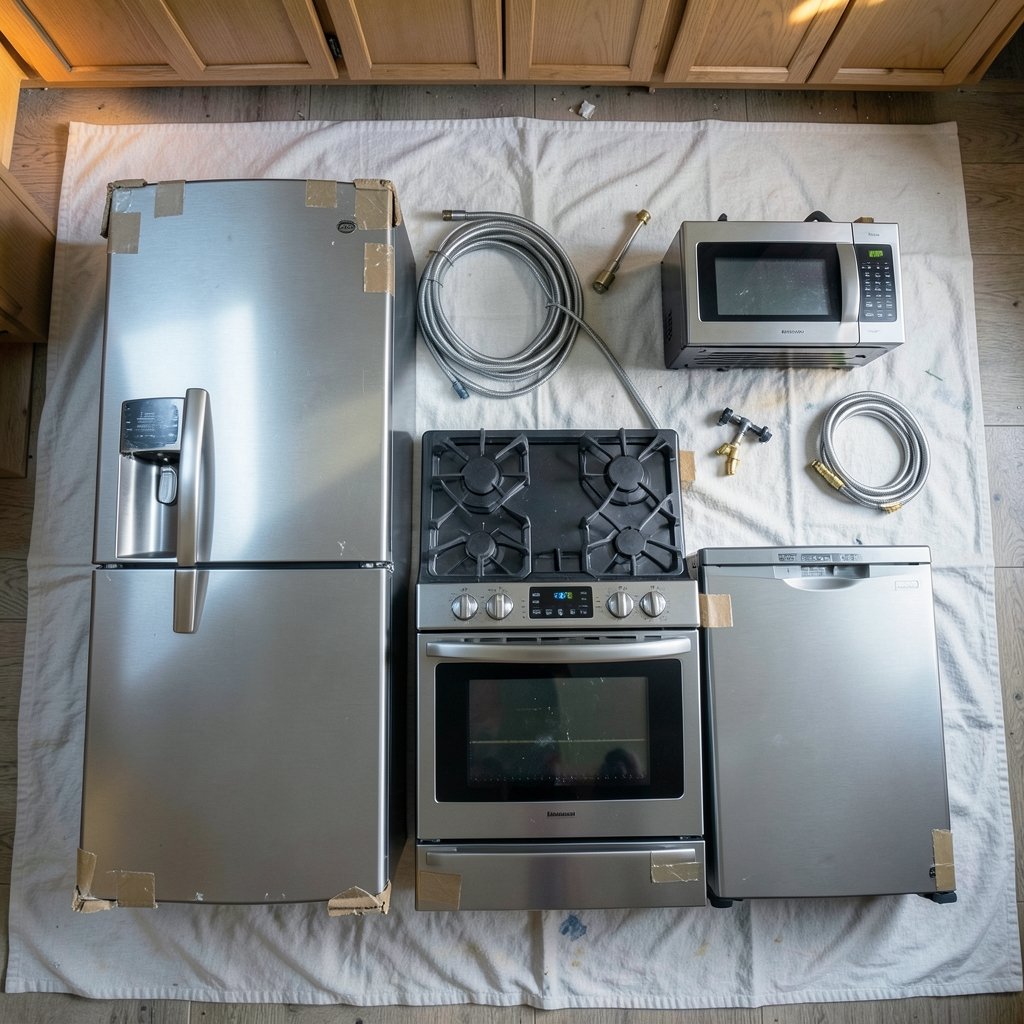
Picture this: your refrigerator is making a noise like a dying lawnmower, the dishwasher leaves grit on every glass, and the dryer takes two cycles to finish a load. Do you really want to shop for three separate appliances, negotiate three deliveries, and juggle three rebate forms? That is exactly the question appliance package deals are designed to answer. Bundling a fridge, range, dishwasher, and microwave into one purchase can save real money and a pile of hassle, but only if you know what you are actually agreeing to. This guide walks through how these deals work, where the savings hide, and the mistakes that quietly eat the discount.
What an Appliance Package Deal Actually Is
Here is the first thing to understand, and it surprises a lot of shoppers: “package deal” is not a regulated term in the United States. No federal rule defines what counts as an appliance bundle or what a package discount must include. Retailers set their own terms, which means two stores can advertise the same four-appliance bundle with wildly different fine print.
In practice, a package deal usually takes one of three shapes:
| Package type | How it works | Best for |
|---|---|---|
| Same-brand bundle | Buy several appliances from one manufacturer, often at a tiered discount | Matching finishes and a single warranty contact |
| Retailer bundle | Store discounts the total when you buy a set number of items | One delivery, one return policy |
| Room-based package | Kitchen or laundry set sold as a group | Remodelers who need everything at once |
Each format has trade-offs. A same-brand bundle looks sharp in a showroom, but you may end up paying more for a brand’s weakest category, say, a mediocre dishwasher, just to get the discount on the refrigerator. A retailer bundle gives you flexibility to mix brands but can come with stricter return windows. Knowing which structure you are looking at is half the battle.
Where the Real Savings Come From

Advertised package prices are usually the least interesting number on the page. The genuine savings show up in three places: the discount structure, the delivery and installation terms, and the incentives that stack on top.
The discount structure
Many retailers use tiered discounts, where buying three appliances gets you one percentage off and buying four or more gets a bigger one. The jump between tiers is where the math gets interesting. If adding a $400 microwave pushes your whole order into a higher discount tier, that microwave can effectively pay for itself. Run the numbers both ways before you commit.
Delivery, installation, and haul-away
These fees are commonly excluded from advertised package prices, and they are a frequent source of complaints. Water-line hookups for refrigerators, gas connections for ranges, and disposal of your old units can each carry a charge. A bundle that saves $300 on paper but adds $250 in fees is not much of a deal. Ask for an itemized out-the-door quote before you sign anything.
Rebates and efficiency incentives
ENERGY STAR is a joint EPA and Department of Energy program, and qualifying appliances meet efficiency criteria above the federal minimum. Utility and state rebates sometimes stack with retailer packages, which can shift the math considerably. The catch is timing: rebate programs change often and carry deadlines, and many require proof of purchase within a set window. A package deal’s true net cost can depend on rebates that expire before your appliances are even delivered.
One more layer worth checking is the EnergyGuide label. Because major appliances fall under federal energy-conservation standards, every unit carries an estimate of annual operating cost. A package that mixes efficiency tiers can hide operating-cost differences that outweigh the sticker discount over five or ten years. A cheaper fridge that costs $40 more per year to run is not cheaper for long.
The Hidden Costs That Sink a Good Bundle
Most appliance package regrets trace back to a handful of recurring issues. Here is what actually goes wrong, and how to sidestep it.
Extended warranties sold at the register. Protection plans are frequently high-margin add-ons, and they are pushed hardest during big package purchases. Before saying yes, check whether the manufacturer’s warranty or your credit card’s purchase protection already covers the item. Many shoppers pay for overlapping coverage they never use.
Return windows that do not match your timeline. The FTC’s cooling-off rule, which gives buyers three business days to cancel certain door-to-door and off-premises sales, generally does not cover purchases made in a store, and online and in-store appliance buys usually fall outside it too. That means returns depend entirely on the retailer’s own policy. If your kitchen remodel finishes six weeks after delivery, a 14-day return window is worthless. Confirm the policy in writing.
Delivery delays with no leverage. If you order a package online and the delivery slips, the FTC’s Mail, Internet, or Telephone Order Merchandise Rule requires sellers to ship within the stated time, or within 30 days if no time is stated, and to offer cancellation or a refund if they cannot. That is real protection, but it only helps if you know it exists. Keep your order confirmation with the promised delivery date.
Measurement mistakes. A package deal feels efficient until the range will not fit through the doorway. Measure the opening, not just the old appliance, and check clearance for doors and drawers. This single step prevents more returns than any other.
Model-year mismatches. Bundles sometimes pair a current-year model with last year’s floor stock. That is not automatically bad, but you should know what you are getting so you can price it fairly.
Timing Your Purchase Matters More Than You Think
Appliance pricing follows a calendar, and shoppers who ignore it leave money on the table. New model lines typically arrive in fall, which pushes older inventory into clearance. Holiday weekends bring some of the year’s most aggressive promotions, and the period around Black Friday is when retailers compete hardest on big-ticket bundles. If you can wait, planning a kitchen refresh around those windows is one of the simplest ways to cut costs, much like timing a Black Friday car deal around end-of-year inventory pushes.
There is a flip side, though. Holiday promotions often come with the longest delivery lead times, because everyone else is buying at the same moment. If your old fridge is on its last legs, a slightly smaller discount with next-week delivery may beat a deep discount with a six-week wait.
How to Compare Packages Without Getting Fooled
The FTC’s consumer guidance is blunt about this: compare total cost, not headline price. That sounds obvious until you are staring at four tabs of appliance listings at midnight. A simple framework keeps you honest.
- Build a must-have list first. List the appliances you actually need, with sizes and fuel types. Do not let a package add a microwave you did not want.
- Get out-the-door quotes. Ask each retailer for the full price including delivery, installation, haul-away, taxes, and any required parts.
- Check the efficiency math. Compare annual operating costs on the EnergyGuide labels across the units in each bundle.
- Verify rebate eligibility. Confirm the specific model numbers qualify, and note the purchase-by and claim-by deadlines.
- Read the return and warranty terms side by side. Write them down. A promise from a salesperson is not a policy.
- Decide on the protection plan last. Only after you know what the manufacturer and your card already cover.
Shoppers who follow this sequence usually find that the cheapest advertised bundle is not the cheapest bundle. The gap is often a few hundred dollars, which is worth an hour of homework.
Mixing Appliance Deals With Other Big Purchases
Appliance packages rarely happen in isolation. A kitchen remodel often overlaps with a garage cleanout, a new vehicle, or a home office refresh, and the same negotiation instincts carry over. If you are also shopping for a vehicle, the logic behind used car deals is nearly identical: verify the total cost, check what is excluded, and read the fine print on protection plans. The same goes for anyone comparing Range Rover lease deals alongside a home upgrade budget, since both hinge on understanding what the advertised number leaves out.
Storage is another crossover. If the new appliances arrive before the remodel is finished, or the old ones need a temporary home, storage unit deals can bridge the gap more cheaply than rescheduling a delivery. And for households juggling a lease and a renovation at once, watching Honda CR-V deals and lease offers alongside appliance promotions is a reminder that bundling language is everywhere, and the same skepticism applies.
When a Package Deal Is the Wrong Choice
Bundles are not universally better, and it is worth saying so plainly. Three situations argue for buying separately.
You only need one appliance. Tiered discounts reward volume, so a single purchase rarely benefits. Buying one great refrigerator on sale usually beats buying three mediocre appliances to hit a discount threshold.
You have strong brand preferences per category. If you love one brand’s range but another’s dishwasher, forcing a same-brand bundle means compromising on the item you use most.
You are mid-remodel with an unpredictable timeline. Package deals often require delivery within a set window to keep the discount. If your contractor’s schedule is fluid, a bundle can create more pressure than it relieves.
There is also the question of state-level protections. Lemon laws and implied-warranty rules can apply to appliances, but coverage varies widely by state and by whether the item is new or refurbished. Your state attorney general’s consumer page is the place to check before assuming you have recourse.
Practical Tips From the Showroom Floor
A few habits separate calm bundle buyers from frustrated ones.
Bring your measurements, including doorway width and the depth of your cabinet cutout. Photograph your current hookups, gas or electric, so a salesperson cannot talk you into the wrong configuration. Ask which specific model numbers are in the bundle, then look up each one’s specifications rather than trusting the display card. Confirm whether the discount applies before or after rebates, because the order changes your net price. And get the delivery window in writing, with the understanding that federal shipping rules give you leverage if the retailer misses it.
Finally, do not let a countdown timer rush you. Package promotions run for weeks, and the pressure to buy “today only” is a sales tactic, not a fact about the market.
Conclusion
Appliance package deals can genuinely save money, time, and a stack of delivery headaches, but only when you treat the advertised price as a starting point rather than a finish line. The savings live in the tier structure, the delivery terms, and the rebates that stack on top, while the losses hide in excluded fees, overlapping warranties, and return windows that expire before your kitchen is ready. Build your must-have list, demand out-the-door quotes, check the efficiency math, and read the fine print on every protection plan. Do that, and a bundle becomes what it should be: a simpler way to replace a kitchen, not a more expensive one.
Frequently Asked Questions
Are appliance package deals actually cheaper than buying separately?
Often, but not always. Bundles typically save money when you need three or more appliances and the discount tier rewards volume. If you only need one or two items, or if the bundle forces you into a brand you would not otherwise choose, buying separately on sale usually wins. Always compare out-the-door totals including delivery, installation, and haul-away.
What is usually not included in an advertised package price?
Delivery, installation, haul-away of old units, water or gas connection parts, and taxes are commonly excluded. Extended protection plans are almost always extra. Ask for an itemized quote so you can see exactly what the headline price covers and what it does not.
Can I cancel an appliance order after I buy it?
It depends on where and how you bought it. The FTC’s three-day cooling-off rule generally covers certain door-to-door and off-premises sales, not in-store purchases, and online and in-store appliance buys usually fall outside it. For online orders, federal rules require sellers to ship within the stated time, or within 30 days if no time is stated, and to offer cancellation or a refund if they cannot. Otherwise, the retailer’s own return policy governs.
Do rebates really stack with package discounts?
Sometimes, and the stacking rules vary by program. Utility and state rebates often require specific model numbers and proof of purchase within a deadline, and programs change frequently. Confirm eligibility before you buy, and note both the purchase-by and claim-by dates so a rebate does not expire while you wait for delivery.
Is an extended warranty worth it on a bundled appliance package?
Usually not, unless the manufacturer’s warranty is short and your credit card offers no purchase protection. Protection plans are high-margin add-ons and frequently overlap with coverage you already have. Check both before agreeing, and price the plan against the cost of a typical repair.
When is the best time of year to buy an appliance package?
Late fall and holiday weekends tend to bring the deepest promotions, and fall is also when new model lines arrive and push older inventory into clearance. The trade-off is longer delivery times during peak buying periods. If you need appliances quickly, a modest discount with fast delivery often beats a deep discount with a six-week wait.