
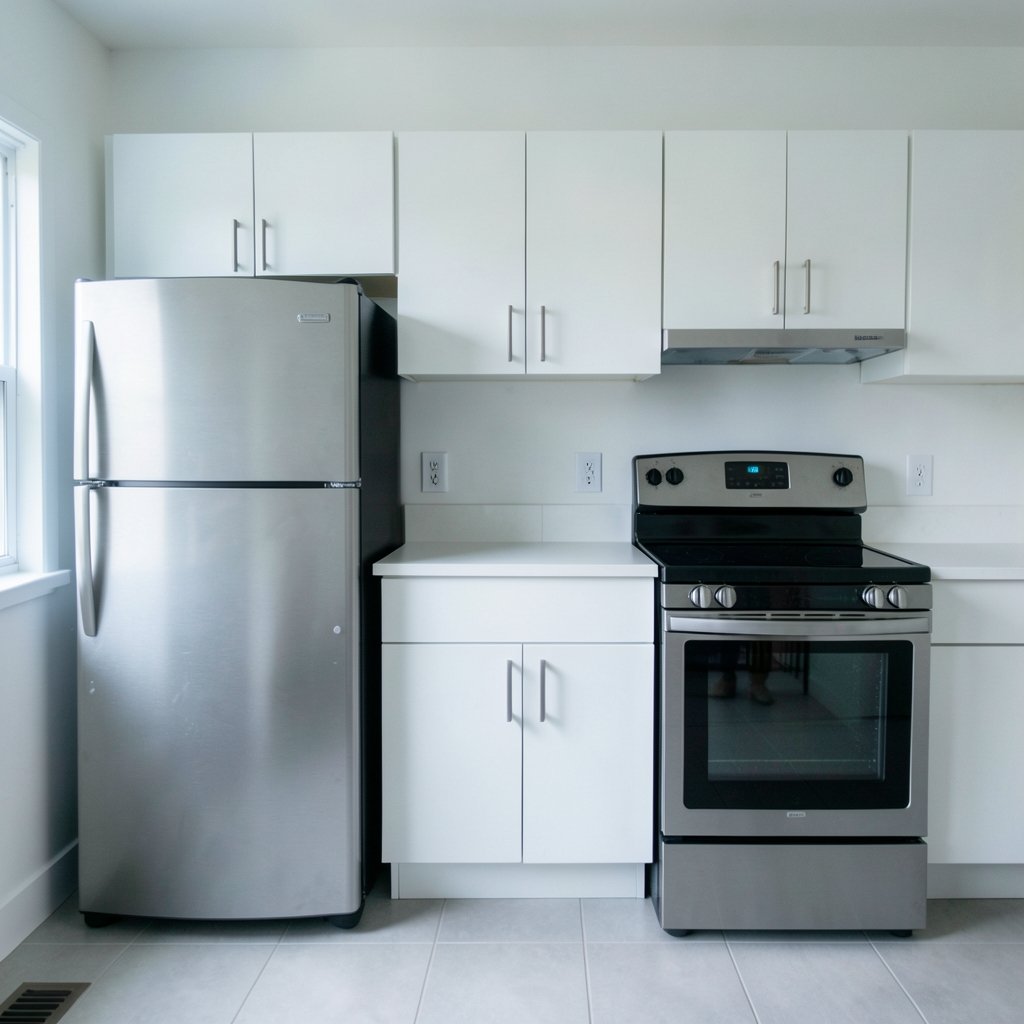
What exactly is a “fridge and stove combo” anyway? Type the phrase into a search bar and you get a confusing mix of results: matched appliance pairs, tiny all-in-one kitchenettes, and even odd vintage units from decades past. The term is not an official product category, and that ambiguity trips up a lot of buyers before they ever reach checkout.
This guide sorts out what the phrase actually covers, how the options compare, and which practical details decide whether a combo works well in a real kitchen or becomes a daily annoyance.
What “Fridge and Stove Combo” Actually Covers
Retailers use the phrase loosely, so it helps to pin down the three things people usually mean.
Matched appliance pairs. A full-size refrigerator and a range sold as a coordinated set. They share a finish, handle style and sometimes a brand’s design language, but they are two separate appliances with two separate power connections.
Compact kitchenette units. Small all-in-one modules that combine a mini-fridge, a sink and a one- or two-burner cooktop in a single cabinet. These show up in dorms, offices, studio apartments and tiny homes. They are genuinely combined products, not merely coordinated ones.
Integrated kitchen modules. Built-in systems where refrigeration and cooking sit in one continuous run of cabinetry, common in small European-style kitchens.
The distinction matters because each type carries different installation rules, different safety certifications and very different price points. Before shopping, decide which one you actually need. A matched pair solves a design problem; a kitchenette solves a space problem.
The Big Caveat: There Is No Single Safety Standard for a Combo
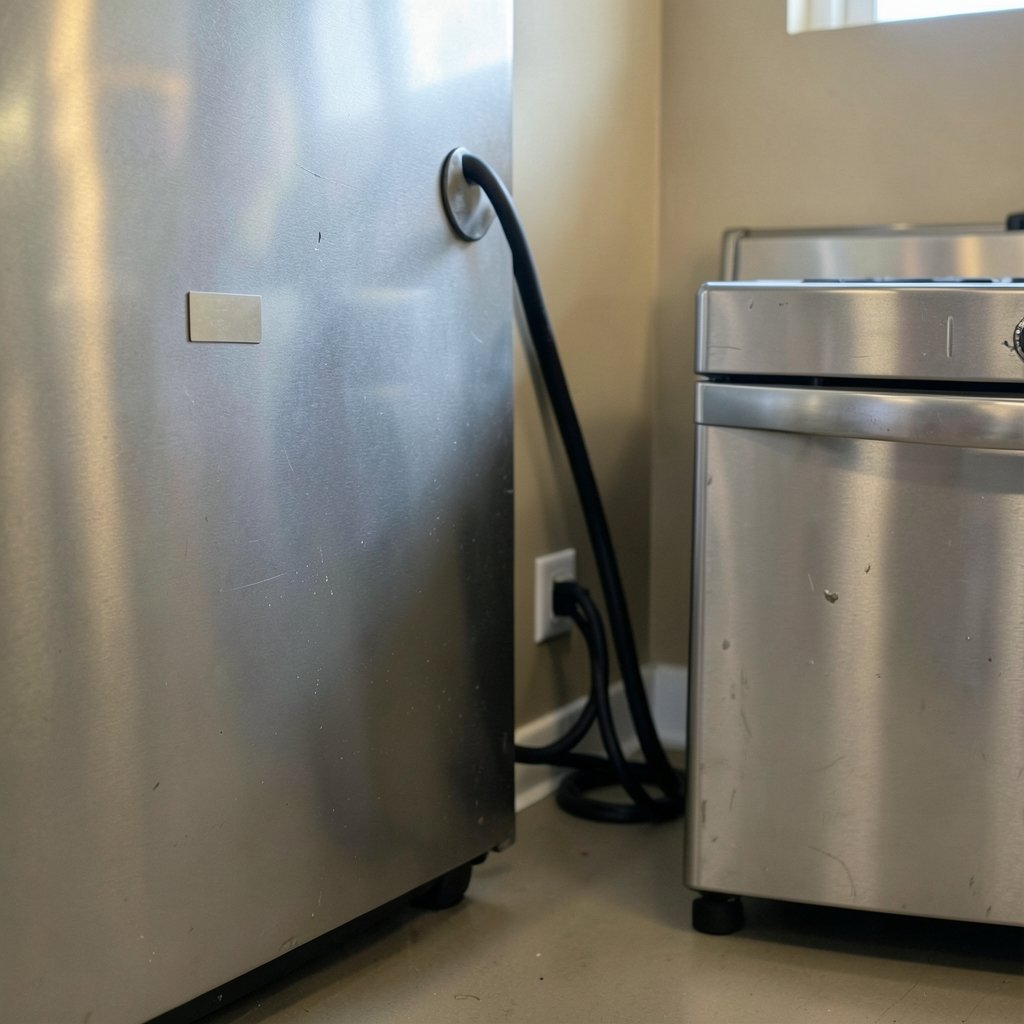
Here is something most shoppers never hear. Household refrigerators and household ranges are certified under separate standards. In the United States, refrigerators fall under UL 60335-2-24 and ranges under UL 858. A “combo” is generally tested and certified as two appliances, not one.
The same logic applies to energy labels. Refrigerator energy use is measured under Department of Energy test procedures in 10 CFR Part 430, and the results appear on the FTC EnergyGuide label. Ranges are rated separately. In the European Union, refrigerating appliances follow their own energy-labelling regulation, Regulation (EU) 2019/2016, while cooking appliances fall under separate ecodesign and labelling rules.
What does this mean in practice? You will never see a single combined energy rating for a fridge-plus-stove combo. If a sales listing implies one, treat that as marketing noise. Check each appliance’s individual label and compare those numbers.
Clearance and Heat: Where Combos Go Wrong
The single most common mistake with a fridge and stove combo is placing the two appliances too close together. Range manufacturers typically specify minimum clearances to adjacent cabinetry and to refrigerators because of heat output. Those figures vary by model, and the installation manual for your specific unit is the only authoritative source.
Why does it matter so much? A refrigerator dumps heat through its condenser, and a stove generates its own heat. Put them side by side with no breathing room and the fridge has to work harder to stay cold, which raises energy use and puts extra stress on the compressor over time.
Practical rules that hold up across most installations:
- Read both manuals before you finalize a layout, not after delivery.
- Leave the clearance the range manual specifies on the side facing the fridge.
- Avoid butting a fridge directly against a range with no gap or barrier.
- Check that doors and oven handles can open fully without hitting each other.
- Confirm the fridge door swing works with the cabinetry you have planned.
If a kitchen is tight, a small landing space or a heat-resistant panel between the two appliances often solves the problem more cheaply than rearranging the whole room.
Ventilation and Code Requirements Do Not Disappear
A combo unit does not exempt a kitchen from ventilation rules. In the United States, kitchen ventilation is addressed by the International Residential Code and the International Mechanical Code, and local amendments vary from place to place. If your kitchen needs a range hood or exhaust system with a standard range, it still needs one with a combo.
The same goes for electrical work. Compact kitchenette units are typically low-power, but many still require a dedicated circuit. Electrical requirements are set by the National Electrical Code and by local rules, and a licensed electrician should confirm what your unit needs.
This is where buyers get burned. Someone buys a compact kitchenette for a basement office, plugs it into an existing circuit, and trips the breaker every time the cooktop and fridge run together. The fix is usually a dedicated circuit, but it is far easier to plan for that before the unit arrives.
Comparing the Main Options
Different combo types suit different situations. Here is how they stack up.
| Option | Best for | Typical strengths | Watch out for |
|---|---|---|---|
| Matched full-size pair | Family kitchens, remodels | Full capacity, coordinated look, easy service | Needs proper clearance and two power connections |
| Compact kitchenette | Dorms, offices, tiny homes, studios | Small footprint, single purchase, plug-in simplicity | Limited capacity, may need a dedicated circuit |
| Integrated kitchen module | Small apartments, design-led builds | Seamless look, efficient use of space | Higher cost, less flexibility if you move |
| Stacked or side-by-side set | Rental units, tight galley kitchens | Space-efficient, familiar appliances | Clearance planning is critical |
Notice that none of these is universally “best.” The right pick depends on how much cooking you actually do, how much space you have, and whether you own the place. A renter in a studio apartment and a homeowner remodeling a family kitchen are solving completely different problems.
How to Choose Without Regret
A few habits separate buyers who end up happy from those who end up returning appliances.
Measure the opening, not the old appliance. Cabinet openings are rarely perfectly square, and door swings eat more space than people expect. Measure twice, and account for handles.
Check the service network. A matched pair from one brand often means one service contact. A mix of brands can mean two. That is fine, but know it going in.
Read the actual installation manual online before buying. Manufacturers publish these, and they contain the clearance figures, electrical requirements and ventilation notes that matter. Fifteen minutes of reading beats a failed delivery.
Plan for replacement when you buy. If the fridge dies in five years, can you find a matching replacement for the range? Coordinated sets sometimes get discontinued. Neutral finishes age better than trendy ones.
Budget for the extras. Delivery, haul-away, a new circuit, a hood upgrade and installation labor can add meaningfully to the sticker price. A combo that looks affordable online can cost considerably more once it is actually running.
If your combo includes a compact or built-in fridge, keep in mind that small appliances have their own quirks. The same planning mindset that applies to choosing the best vacuum mop combo for a small kitchen floor applies here: match the tool to the space, not to the marketing photos.
Common Mistakes People Make
Some errors come up again and again in combo purchases.
Assuming “combo” means one plug. It almost never does. Full-size pairs need separate connections, and even compact units often need more than a standard outlet can comfortably supply.
Skipping the ventilation question. Buyers focus on the appliances and forget the hood, then discover the ducting does not exist or the recirculating option is inadequate.
Ignoring the heat relationship. Putting a fridge in the hottest corner of the kitchen, right beside the range, is a recipe for higher energy bills and a shorter fridge lifespan.
Buying for looks first. A coordinated set photographs beautifully. It also has to fit, vent, and open without banging into cabinets.
Forgetting about the floor and doorway. Delivery crews need a path. Measure doorways, stairwells and turns before ordering anything full-size.
People make similar planning errors with other multi-part purchases. The same discipline that helps you make stovetop popcorn that pops almost every kernel (right heat, right pot, right timing) applies to appliance planning: small details decide the outcome.
Where Combos Fit in a Smaller Kitchen
For studio apartments, in-law suites and tiny homes, the compact kitchenette is often the only realistic option. These units pack a mini-fridge, a sink and a small cooktop into a footprint that fits along one wall.
A few practical notes for this category:
- Confirm the total amperage draw and whether a dedicated circuit is required.
- Check the fridge compartment size against your actual grocery habits. Mini-fridges fill up fast.
- Look at the cooktop type. One or two burners is common, and some units use induction or solid plate elements.
- Verify the unit’s ventilation needs. Even small cooktops produce grease and moisture.
- Plan for water connections if the unit includes a sink.
If the space also needs connectivity and entertainment planning, the same “measure and verify” approach applies to gear like a modem router combo, where the all-in-one appeal only pays off if the specs match the space.
What About Energy Costs?
Because there is no combined rating, the honest answer is that you add up the individual numbers. Compare the EnergyGuide figures for the fridge and the range separately, then factor in how you actually cook.
Two households with identical combos can have very different energy bills. A household that runs the oven daily and opens the fridge constantly will spend more than one that microwaves most meals. The appliance choice sets the baseline; habits set the rest.
One underrated tip: keep the fridge away from the range’s heat zone and out of direct sun. That single placement decision can matter more than a small difference in rated efficiency between two fridge models.
Frequently Asked Questions
Is a fridge and stove combo a single appliance?
Usually not. Most “combos” are two separate appliances sold together as a matched set, each certified and energy-rated on its own. Compact kitchenette units are the exception, since they genuinely combine refrigeration and cooking in one cabinet, but even those are typically rated as separate functions.
Can I put a refrigerator right next to a stove?
It depends on the models. Range manufacturers specify minimum clearances to adjacent appliances and cabinetry because of heat, and those figures vary. Check both installation manuals. As a general habit, leave the specified gap and avoid pressing a fridge directly against a range with no barrier.
Do I need a range hood with a combo?
If your local code requires ventilation for a standard range, it requires it for a combo too. Kitchen ventilation is addressed by model codes such as the International Residential Code and International Mechanical Code, with local amendments. A combo does not create an exemption.
Are compact kitchenettes hard to install?
They are simpler than full kitchens but not plug-and-play. Many need a dedicated circuit, and units with a sink need water supply and drainage. Confirm the electrical requirements with a licensed electrician and check the unit’s manual before purchase.
How do I compare energy use between combos?
Compare each appliance’s individual label. In the US, refrigerators carry an FTC EnergyGuide label based on Department of Energy test procedures. In the EU, refrigerating appliances follow Regulation (EU) 2019/2016. There is no single combined rating, so add the individual figures and factor in your cooking habits.
What is the biggest mistake buyers make?
Skipping the installation manual. Clearance figures, electrical requirements and ventilation notes live there, and they decide whether the combo fits safely. Measuring the space and reading both manuals before ordering prevents most delivery-day disasters.
Conclusion
A fridge and stove combo is less a single product than a buying strategy, and the phrase covers everything from matched full-size pairs to compact kitchenettes. The appliances themselves are usually fine. What separates a good outcome from a frustrating one is the planning around them: clearance from heat, proper ventilation, adequate electrical circuits, and honest measurements of the space.
Start with the installation manuals, confirm the code requirements for your area, and compare energy labels appliance by appliance rather than looking for one combined number. Do that groundwork first, and a combo can deliver exactly what it promises: a coordinated, space-smart kitchen without surprises. Skip it, and you will spend far more time fixing problems than cooking.



