
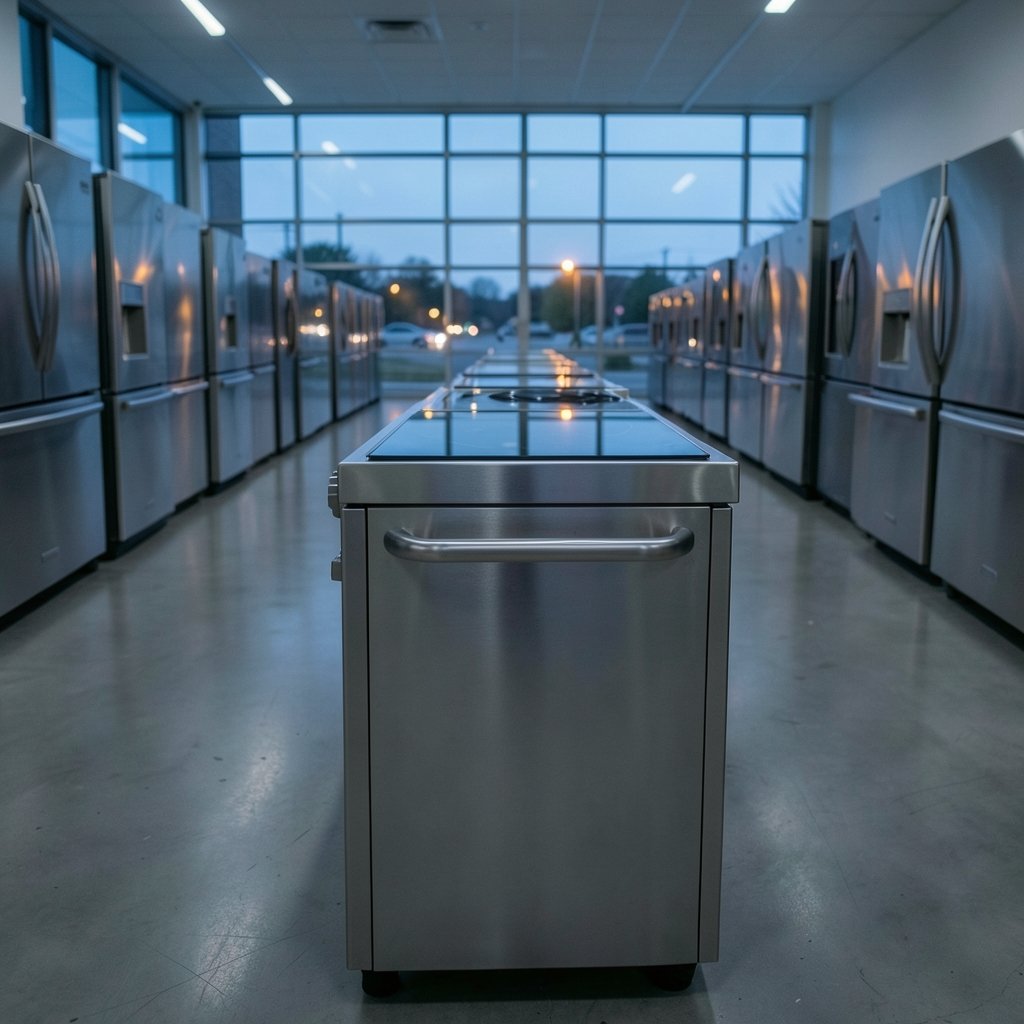
Walk into any appliance showroom and you will see the same phrase stitched onto steel: “Made in USA.” It sounds simple. It is not. The label on a refrigerator door, the ownership of the brand above the door, and the country where the compressor inside it was built are three different facts. Shoppers who want to buy American often assume all three line up. They usually don’t.
That gap matters more than ever. Appliance buyers are weighing price against durability, and many are willing to pay a premium for a machine they believe supports domestic jobs. The trouble is that “American made” has no single legal meaning, brand nationality is not the same as factory location, and even a unit assembled in Tennessee may be full of imported parts. This guide sorts out what the label really promises, which brands actually build here, and how to check a claim before you spend four figures on a range.
The FTC Sets the Rules, and the Rules Have Tiers
The federal government does regulate the phrase, just not the way most shoppers expect. Under the Made in USA standard enforced by the Federal Trade Commission, an unqualified claim means three things must be true: the product’s final assembly or processing happens in the United States, all significant processing happens here, and all or virtually all ingredients or components are made and sourced here. The FTC’s current Made in USA Labeling Rule, which took effect in 2021, codified that standard for many products.
“All or virtually all” is the phrase that trips people up. It allows for a small amount of foreign content, but not much. In practice, very few appliances clear that bar, because compressors, semiconductors, displays, and specialty motors are global products.
Then there is a softer tier. “Assembled in USA” is allowed when the product’s principal assembly happens domestically and those U.S. assembly operations are substantial, even if many components are imported. That is a real distinction, and it is the one most appliance shoppers are actually looking at without knowing it. A dishwasher whose cabinet, wiring, and final build happen in Ohio but whose control board comes from Asia can often be labeled “Assembled in USA.” It cannot honestly be labeled “Made in USA.”
There is also a middle ground the FTC permits: qualified claims. A company can say “Made in USA with imported parts” or “60% U.S. content” as long as the qualifier is clear and not buried. When you see a qualifier, read it. It is the manufacturer telling you exactly where the line falls.
Why the Label Is So Hard to Earn in This Industry
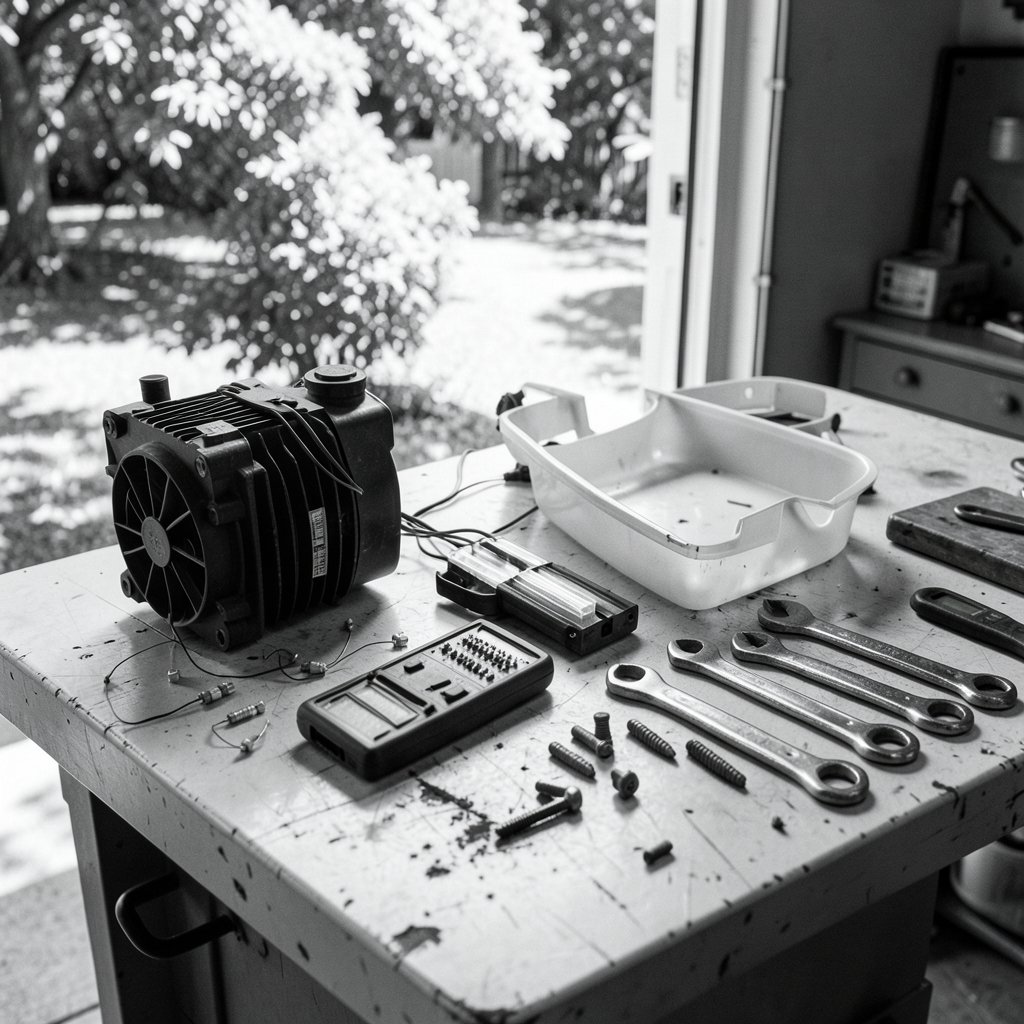
Appliances are heavy, complicated machines assembled from hundreds of parts. A single refrigerator might contain a compressor, a condenser fan motor, thermistors, LED lighting, a control board, and plastic interior liners, each with its own supply chain. Making all of that domestically at competitive cost is difficult, and no major brand does it fully.
That is why the honest answer to “are there American-made appliances?” is: there are American-assembled appliances with varying domestic content, and a small number of premium products that come close to the full standard. Knowing this saves you from being misled by a flag sticker.
The economics shifted further in 2018. That January, the federal government imposed safeguard tariffs on imported large residential washing machines under Section 201 of the Trade Act of 1974, initially at 20% on the first 1.2 million units and declining over three years. Whirlpool had petitioned for the relief. Weeks later, Section 232 steel and aluminum tariffs raised input costs for domestic manufacturers. The net effect on prices is debated among economists, so treat any single-cause explanation with suspicion. What is clear is that sourcing decisions in the appliance industry are shaped by trade policy as much as by patriotism.
Brand Nationality Versus Factory Location
Here is where shoppers get confused most often. The name on the door tells you who owns the brand. It does not tell you where the machine was built. Several iconic American appliance names are now owned by foreign companies, and some foreign brands assemble machines on U.S. soil.
| Brand | Parent company | Home country | Notable U.S. manufacturing |
|---|---|---|---|
| Whirlpool | Whirlpool Corporation | United States | Multiple U.S. plants; headquartered in Benton Harbor, Michigan |
| GE Appliances | Haier (acquired 2016) | China | Major operations in Louisville, Kentucky |
| Frigidaire | Electrolux | Sweden | Some U.S. assembly; components global |
| Bosch / Siemens | BSH | Germany | Mostly imported for U.S. market |
| LG / Samsung | LG Corp. / Samsung | South Korea | Growing U.S. assembly, heavy imported content |
| Sub-Zero / Wolf | Sub-Zero Group | United States | Assembled in Madison, Wisconsin |
| Viking | Viking Range | United States | Assembled in Greenwood, Mississippi |
| Speed Queen | Alliance Laundry Systems | United States | Laundry equipment assembled in Ripon, Wisconsin |
Read that table carefully and a pattern emerges. Ownership and assembly are separate questions. GE Appliances is foreign-owned but runs substantial American factories. Electrolux is Swedish but has assembled appliances in the United States for decades. If your goal is supporting American factory jobs, the plant location matters more than the logo. If your goal is American corporate ownership, that is a different purchase entirely. Decide which one you actually care about before you shop.
How to Verify a Claim Before You Buy
Manufacturers know shoppers respond to flags and eagles. Some claims are rigorous; some are marketing. Here is a practical routine that separates them.
- Look for the exact wording. “Made in USA” and “Assembled in USA” are not interchangeable. If the box says “Built in America” or “American quality,” that is advertising language, not a regulated claim.
- Check for a qualifier. “Made in USA with imported parts” is honest and common. An unqualified claim on a complex appliance deserves scrutiny.
- Find the country of origin on the spec sheet. It is usually listed near the model number, sometimes in small print online rather than on the showroom floor.
- Ask where the specific model is built. Brands often make some models domestically and import others. A salesperson who cannot answer is telling you something.
- Check the parent company. A quick search reveals ownership in seconds, and ownership tells you where profits and corporate decisions land.
- Weigh domestic content against your real priorities. A machine assembled here from global parts still supports U.S. assembly jobs, local suppliers, and domestic service networks.
The most common mistake is assuming a high price equals domestic content. Premium imported brands cost more than American-assembled ones all the time. The second most common mistake is trusting a flag icon. Icons are not regulated the way the phrase is.
What “American Made” Buys You in Practice
Setting aside the labeling debate, there are concrete practical reasons to favor appliances assembled domestically, and they have nothing to do with sentiment.
Parts availability tends to be faster. Machines built in U.S. plants usually draw on domestic parts distribution networks, which can shorten repair waits. A broken control board on a domestically supported model may arrive in days rather than weeks.
Service networks are denser. Brands with a large U.S. footprint typically have more authorized technicians, which matters when a refrigerator fails in July.
Warranty handling is simpler. Domestic assembly often means domestic warranty administration, though this varies by brand and should be checked model by model.
You can visit the factory, in some cases. Several American plants offer tours or have visitor centers, which is a genuinely unusual way to verify a claim.
The counterweight is cost. Domestic assembly carries higher labor costs, and those show up in the sticker price. Buyers should decide whether the premium is worth it for their budget rather than assuming American always means better build quality. It does not. A well-engineered imported appliance can outlast a poorly built domestic one, and the reverse is equally true. Assembly location is one factor among many, alongside reliability ratings, repair history, and how the machine fits your kitchen.
The Bigger Picture: Money, Manufacturing, and Meaning
The phrase “American made” carries emotional weight that goes beyond specifications. It connects to a long story about how value gets created and where it flows, a story that runs through everything from the design of currency to the way wealth passes between generations. If the appeal of buying domestic is partly about fairness and partly about identity, it is worth understanding how those ideas shape the economy more broadly. The same questions about inherited advantage and self-made success show up in debates about old money versus new money and what inherited and self-made wealth really mean, and they echo in how Americans talk about which products deserve their loyalty.
Manufacturing also has a physical story that most shoppers never see. The journey from raw steel to a finished range involves stamping, coating, assembly, and testing, and the facilities that do this work are a world unto themselves. For a sense of how industrial production actually happens at scale, it helps to look at how money is made, from paper and metal to digital ledgers, because the same questions about labor, materials, and national capacity apply. Appliances are, in a small way, a test of whether a country can still build complex things from scratch.
There is also a cultural dimension. Products become symbols, and symbols get songs, slogans, and stories attached to them. The way cash shows up in song choruses and hooks is a reminder that buying decisions are never purely rational. People buy American because it feels like something. That feeling is real, and it is worth examining rather than dismissing.
Conclusion
American-made appliances exist, but the phrase covers a spectrum rather than a single standard. At one end sit premium products assembled in U.S. plants with high domestic content. At the other sit machines with an American logo and a foreign factory behind them. Most appliances live in the middle, assembled here from parts sourced everywhere.
The practical path is to stop trusting the flag and start asking three questions: Where was this specific model assembled? Who owns the brand? And what does the label actually say, word for word? Answer those and you will know exactly what you are buying. That is a better foundation for a four-figure purchase than any sticker, and it lets you support American manufacturing with your eyes open rather than your hopes up.
Frequently Asked Questions
Are there any appliances that are truly 100% made in America?
Almost none. The FTC’s “all or virtually all” standard is extremely difficult to meet for a complex machine, because compressors, control boards, and displays are globally sourced. A small number of premium products come close, but shoppers should expect qualified claims like “Made in USA with imported parts” rather than a pure domestic product.
What is the difference between “Made in USA” and “Assembled in USA”?
“Made in USA” requires final assembly, all significant processing, and all or virtually all components to be domestic. “Assembled in USA” only requires that principal assembly happen here and that those operations be substantial, even if many components are imported. The second claim is far more common in appliances.
Is GE Appliances still an American company?
GE Appliances is owned by Haier, a Chinese company that acquired the business in 2016. However, the brand still operates major U.S. manufacturing, including refrigerator and range production in Louisville, Kentucky. Ownership and factory location are separate questions, so decide which one matters more to you.
Do foreign-owned brands build appliances in the United States?
Yes. Electrolux, a Swedish company, has assembled appliances in the U.S. for decades, and LG and Samsung have expanded American assembly in recent years. Foreign ownership does not rule out domestic factories, and domestic ownership does not guarantee that every model is built here.
Did tariffs make American-made appliances cheaper or more expensive?
It is complicated. The 2018 washing machine safeguard tariffs raised prices on imported machines and encouraged some domestic production, while steel and aluminum tariffs raised input costs for U.S. manufacturers. Economists debate the net effect, so be wary of anyone who credits a single cause for appliance pricing.
How can I tell where a specific appliance was built?
Check the country of origin on the specification sheet, usually listed near the model number online. Look for the exact FTC-regulated wording on the packaging, and ask the retailer directly about that specific model, since brands often build some models domestically and import others.



