
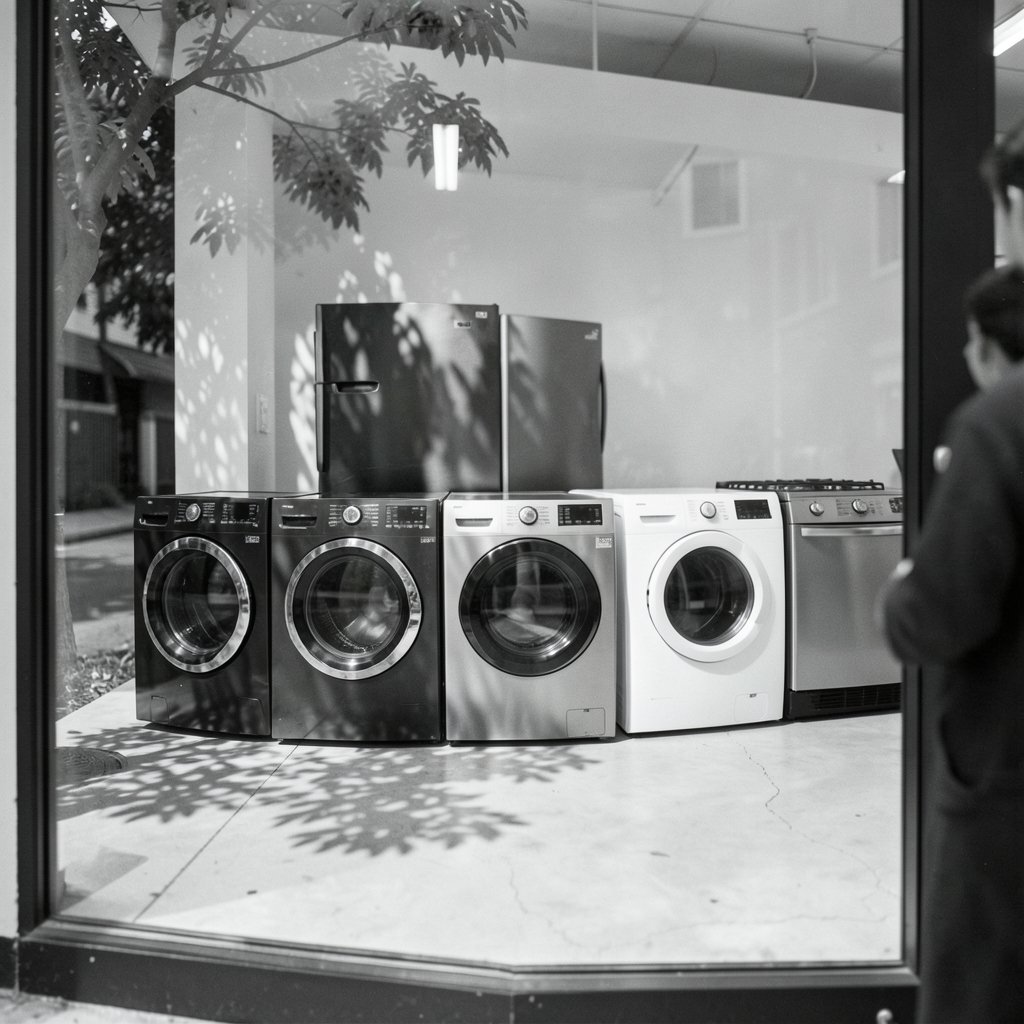
Ever stared at a wall of washing machines and wondered why three different logos look suspiciously similar? You are not imagining it. The appliance aisle is a puzzle box of parent companies, regional names, and shared factories. A brand that sounds American may be owned by a Chinese giant. A “German” label might be built in Turkey. And the premium name your neighbor swears by could roll off the same line as a budget model.
That overlap is exactly why shopping by logo alone is a trap. This guide untangles the big home appliance brands, explains who actually owns them, and shows how to pick a brand that fits your kitchen, your budget, and your patience for repairs.
The Big Ownership Map Behind Home Appliance Brands
Most shoppers assume every logo is an independent company. In reality, a handful of corporations control a huge share of the market. Knowing the family tree helps you spot when you are paying for engineering and when you are paying for a badge.
| Parent company | Home country | Brands commonly under it |
|---|---|---|
| Whirlpool Corporation | United States | Whirlpool, Maytag, KitchenAid, Jenn-Air, Amana |
| Electrolux | Sweden | Electrolux, Frigidaire, AEG, Zanussi |
| BSH Hausgeräte | Germany | Bosch, Siemens, Gaggenau, Neff |
| Haier | China | Haier, GE Appliances (US) |
| Arçelik | Turkey | Beko and related value brands |
| LG Electronics | South Korea | LG |
| Samsung Electronics | South Korea | Samsung |
A few dates matter here. Whirlpool acquired Maytag in 2006. Electrolux bought Frigidaire’s parent, White Consolidated Industries, back in 1986. BSH began as a Bosch and Siemens joint venture in 1967. And Haier picked up GE Appliances from General Electric in 2016, though the GE Appliances name still appears on US store shelves.
Here is the catch that most buying guides skip: ownership changes. Whirlpool announced in 2023 that it would sell its European major-appliance business to Arçelik. That single deal reshuffles who makes what across an entire continent. So treat any “who owns whom” chart, including this one, as a snapshot with a date stamp, not a permanent truth.
Why “Top Brand” Lists Disagree So Much
Search for the best appliance brands and you will find wildly different rankings. That is not laziness. It is a definition problem.
Some lists count only major appliances like refrigerators, ranges, and dishwashers. Others lump in TVs, phones, and small kitchen gadgets. LG and Samsung both build excellent appliances, but they are also electronics giants, so their “appliance” ranking swings depending on whether a television counts. Market-share data from research firms also varies by category and region.
The practical takeaway: a brand’s overall size tells you almost nothing about whether its dishwasher is reliable. A giant corporation can make a brilliant oven and a mediocre microwave under different badges. Judge the specific product, not the corporate logo.
Premium, Mid-Market, and Value Tiers
Brands cluster into rough tiers. These labels are editorial, not official, but they help frame expectations.
Premium tier includes Miele, the German family-owned company that has been building appliances since 1899, and Sub-Zero/Wolf in the US. You pay more up front. In exchange you typically get longer design lives, better service networks, and parts that stay available for years.
Mid-market covers names like Bosch, Siemens, LG, Samsung, Whirlpool, and Electrolux. This is where most households land. Features are generous, prices are negotiable, and reliability is generally solid.
Value tier includes Beko and Hisense, plus store brands. These are often built to hit a price, and that shows in noise levels, plastic quality, and feature depth rather than in outright failure.
A smart move: pick your tier first, then shop within it. People who start with features and work backward usually overspend on a badge they did not need.
What Actually Separates One Brand From Another
Strip away the marketing and a few concrete factors do the real work.
Spare parts and repairability
This is the most underrated factor. In the EU, ecodesign rules adopted around 2021 require spare-part availability for washing machines, dishwashers, and refrigerators. That pushes brands toward designs you can actually fix. In the US, there is no equivalent blanket rule, so repairability varies wildly. Before buying, check whether the brand sells parts directly and whether local technicians service it. A brilliant machine with no repair network nearby becomes scrap the moment a control board fails.
Energy efficiency and running costs
Labels shape competition. In the EU, the energy label was rescaled back to A–G classes from 2021 for several product groups, which is why a machine that was “A+++” a few years ago now reads as a lower grade. In the US, ENERGY STAR is a voluntary program, so a machine without the badge is not necessarily inefficient. Running costs over ten years often dwarf the purchase price difference between two brands, so compare annual energy figures rather than sticker price alone.
Noise, build feel, and controls
Two fridges with identical capacity can differ by ten decibels and by how the door closes. Brands that invest in insulation and hinges show it. Brands that cut corners hide it in the spec sheet. If quiet matters, look up decibel ratings rather than trusting showroom impressions.
Smart features and app ecosystems
Connected appliances are now a real differentiator, and the platform you already live in matters. If your home runs on one voice assistant, check compatibility before you buy a connected oven. A little research on how the major smart-home platforms compare for compatibility, privacy, and cost can save you from a fridge that refuses to talk to your speaker. Pairing appliances with the right hub is a lot like choosing smart speakers for home automation: the ecosystem decides more than the hardware. (How to stop snoring at night home remedies)
Common Mistakes People Make When Brand Shopping
These come up again and again, and each one is avoidable.
- Buying a whole kitchen from one brand. Package deals feel tidy, but no single company is best at every category. Mixing brands is normal and often smarter.
- Assuming a shared parent means shared quality. A premium badge and a budget badge under the same corporation can be built in different plants to different standards.
- Ignoring the service network. Check who repairs the brand near you before you buy, not after it breaks.
- Trusting the logo over the model number. Within one brand, a great series and a weak series can sit side by side on the same shelf.
- Skipping the energy math. A cheaper machine with a higher annual energy draw can cost more within five years.
How to Choose a Brand That Fits Your Life
Start with the constraint, not the logo.
If you renovate a kitchen, the layout and installation needs come first, and it is worth talking to home renovation contractors about plumbing, venting, and electrical capacity before you fix appliance sizes. If budget is the real constraint, compare financing routes such as a home equity loan versus a line of credit before stretching for a premium tier you will pay off for years. (Best smart speakers for home automation)
Then work through this order:
- Measure the space, including door swing and clearance.
- Set a total budget for the whole set, not per item.
- Choose your tier, then shortlist two or three models per category.
- Verify parts availability and local service.
- Compare annual energy use and noise ratings.
- Check smart compatibility with your existing setup.
That sequence keeps you from falling for a showroom demo of features you will never use. It also mirrors how people sensibly shop for other big-ticket home gear, whether that is picking an e-bike brand that fits your life or choosing a home espresso machine by matching the machine to daily habits rather than to spec-sheet bragging rights.
Where Regional Brands Still Win
Global consolidation has not erased regional strengths. European buyers often favor brands with dense local service networks and long spare-part commitments. North American shoppers lean toward names with wide dealer coverage. In parts of Asia, local manufacturers dominate on price and feature density.
This matters because a brand’s reputation is partly a story about service geography. A mid-tier brand with a technician twenty minutes away can beat a premium brand with a four-week wait. Before you commit, ask one blunt question: who fixes this, and how fast?
Reading Reviews Without Getting Fooled
Online reviews skew toward two extremes: delighted new owners and furious people with a broken unit in month thirteen. Both are real, but neither tells you the failure rate. Look instead for patterns across many reviews, especially complaints about the same part. Repeated mentions of a failed door latch or a noisy compressor are signal. One angry review is noise.
Also check how long a model has been on the market. First-year models carry more risk, and brands sometimes quietly revise problem parts in later production runs.
Conclusion
Home appliance brands are less independent than their logos suggest. A few corporations own most of the names on the showroom floor, and ownership shifts often enough that any chart needs a date. That is not a reason to despair. It is a reason to shop differently: pick your tier, judge the specific model, confirm that parts and service exist near you, and do the energy math before the sticker price wins the argument. The right brand is rarely the loudest one. It is the one whose machine you can still get fixed in year eight, in your own kitchen, without a saga.
FAQ
Who owns the most home appliance brands?
No single company owns most brands, but Whirlpool Corporation controls a large portfolio including Whirlpool, Maytag, KitchenAid, Jenn-Air, and Amana. Electrolux, BSH, and Haier also hold multiple well-known names. Ownership changes regularly, so verify current portfolios before relying on any list.
Is a premium appliance brand actually worth the extra money?
Sometimes. Premium brands like Miele and Sub-Zero/Wolf typically offer longer design lives, better service networks, and spare parts that stay available for years. If you plan to stay in your home and value repairability, the math often works. If you are outfitting a rental or moving soon, a solid mid-market brand is usually the better call.
Are Bosch and Siemens the same company?
They share a parent. BSH Hausgeräte is a German joint venture of Bosch and Siemens, formed in 1967, and it sells Bosch, Siemens, Gaggenau, and Neff appliances. The brands target different buyers and price points, but they sit under one corporate roof.
Why do appliance brand rankings differ so much between websites?
Because they define the category differently. Some count only major appliances, while others include TVs, phones, and small kitchen gadgets. Market-share data also varies by research source and region. A brand’s overall size says little about whether a specific model is reliable.
Does the energy label really matter when choosing a brand?
Yes, over time. The EU rescaled its label to A–G classes from 2021 for several product groups, and the US runs the voluntary ENERGY STAR program. Running costs across a decade often exceed the price gap between two brands, so compare annual energy figures rather than the purchase price alone.
How do I check if a brand can be repaired where I live?
Look for a brand that sells spare parts directly and has authorized technicians in your area. In the EU, ecodesign rules adopted around 2021 require spare-part availability for washing machines, dishwashers, and refrigerators. Elsewhere, call a local repair shop and ask which brands they service most easily before you buy.



